
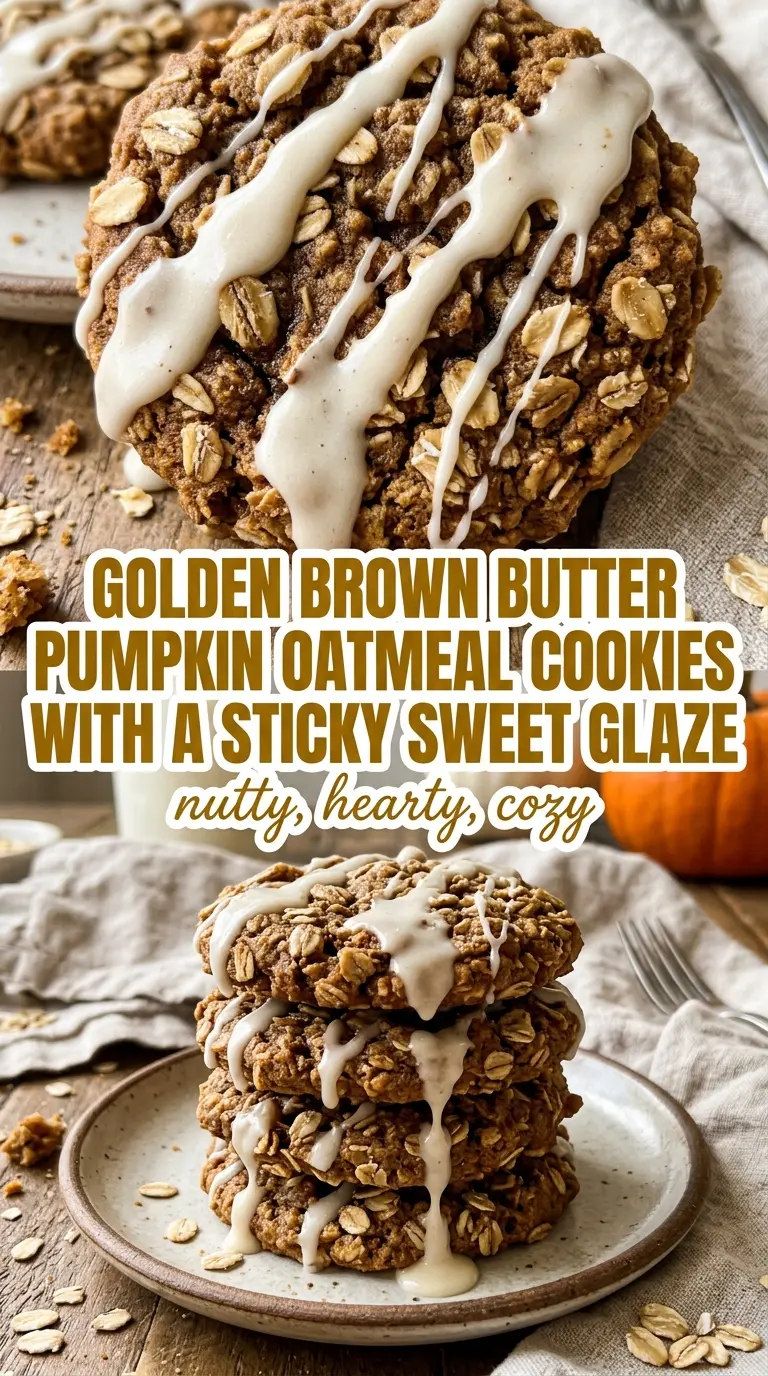
Nutty brown butter gives these pumpkin oatmeal cookies a deeper, toastier flavor than the usual soft pumpkin cookie, and the rolled oats keep the centers chewy instead of cakey. The glaze on top adds just enough sweetness to balance the earthy pumpkin and warm spice without drowning out that browned-butter flavor. They bake up with crisp edges, tender middles, and a texture that stays interesting for days.
The part that makes this version worth keeping is the way the butter is browned first, then cooled just enough before it goes into the dough. That step adds a caramel note you can taste in the finished cookie, but if the butter is too hot, it can scramble the egg or throw off the dough texture. I also lean on old-fashioned rolled oats here, not quick oats, because they hold their shape and give you that chewy bite instead of turning soft and muddy.
Below, I’ve included the exact visual cues I use for browned butter, the reason pumpkin puree works best when it’s mixed in with the sugar, and a few practical swaps if you need to change the flour or skip the glaze.
The brown butter made these taste bakery-level, and the oats kept them chewy even the next day. I was worried the pumpkin would make them cakey, but they baked up with soft centers and crisp edges just like you said.
Save these brown butter pumpkin oatmeal cookies for the kind of bake that stays chewy, warmly spiced, and drizzled with glaze.
The reason these cookies stay chewy instead of cakey
Pumpkin cookies have a bad habit of turning soft in a way that feels more like muffin tops than cookies. The problem usually comes from too much moisture and not enough structure. Brown butter helps here because it adds flavor without extra water, and the oats give the dough enough bite to hold onto that cookie texture after baking.
The other detail that matters is how you mix the pumpkin. If you beat it straight into hot butter, the mixture can look broken or greasy, and the egg won’t distribute evenly. When the browned butter cools slightly and gets mixed with the pumpkin and sugar first, the dough comes together more cleanly and bakes into cookies with edges that set without drying out the center.
What Each Ingredient Is Actually Doing in This Dish
- Brown butter — This is the flavor engine. It gives the cookies a toasted, nutty note that regular melted butter can’t match, so don’t skip the browning step if you want the full effect.
- Pumpkin puree — Use plain pumpkin puree, not pumpkin pie filling. Pie filling already has sugar and spices mixed in, which throws off both flavor and texture.
- Old-fashioned rolled oats — These give the cookies their chew. Quick oats will soften too much and make the dough read more like a thick batter.
- Pumpkin pie spice — This is what makes the cookies taste complete, but you can swap in cinnamon plus a pinch of ginger and nutmeg if that’s what you have on hand.
- Powdered sugar glaze — The glaze is optional, but it adds a light, sticky finish that works well with the earthy pumpkin. Keep it thin enough to drizzle, not so thin that it disappears into the cookie.
Building the dough without losing the brown butter
Brown the butter until it smells like toasted nuts
Melt the butter in a saucepan over medium heat and keep it moving so the milk solids don’t burn before they toast. You’re looking for golden-brown flecks at the bottom and a nutty aroma that smells almost caramel-like. Pull it off the heat as soon as it reaches that point; if you wait until it turns deep brown in the pan, it goes from nutty to bitter fast.
Mix the wet ingredients after the butter cools a bit
Let the browned butter sit long enough that it’s warm, not hot. Then beat it with the pumpkin puree and brown sugar until the mixture looks thick and glossy, and add the egg after that. If the butter is still scorching, the egg can scramble in streaks and the dough won’t emulsify cleanly.
Fold the oats and flour just until the dough comes together
Once the dry ingredients go in, stop mixing when you no longer see pockets of flour. Overmixing tightens the dough and makes the cookies dense, especially once the oats start soaking up moisture. The dough should be soft and scoopable, not pourable.
Bake until the centers look set at the edges
Scoop the dough onto a lined baking sheet and bake at 350°F until the edges are set and the tops lose their raw sheen, usually 12 to 14 minutes. They’ll look a little soft in the middle when they come out, and that’s correct. Let them sit on the pan for a few minutes so they finish setting without overbaking.
How to adapt these pumpkin oatmeal cookies without wrecking the texture
Gluten-free version with a better chance of holding together
Swap the all-purpose flour for a good 1:1 gluten-free baking blend that includes xanthan gum. The oats are already doing some of the structural work, so the cookies usually hold up well, but the blend needs to mimic the starch and binding the original flour provides. The texture will be a little more delicate, not crumbly, if you don’t overbake them.
Dairy-free without losing the browned-butter flavor
Use a plant-based butter that browns well, not a soft tub spread. Some dairy-free butters have too much water and won’t develop the same toasted notes, so check the package and choose one meant for baking. The glaze can be made with a dairy-free milk and still drizzles nicely.
Skip the glaze for a less-sweet cookie
Leave off the powdered sugar glaze if you want the browned butter and pumpkin spice to come forward more clearly. The cookies will still be soft and chewy, just less sticky on top. If you want a little finish without the full glaze, dust them lightly with powdered sugar after they cool.
Storage and Reheating
- Refrigerator: Store in an airtight container for 4 to 5 days. The cookies soften a little as they sit, but the oats keep them pleasantly chewy.
- Freezer: Freeze baked cookies for up to 2 months. Layer parchment between them so the glaze doesn’t stick, or freeze the unglazed cookies and add the glaze after thawing.
- Reheating: Warm a cookie for 8 to 10 seconds in the microwave if you want it just barely soft again. Longer heating makes the glaze melt and can turn the centers gummy.
Questions I Get Asked About This Recipe
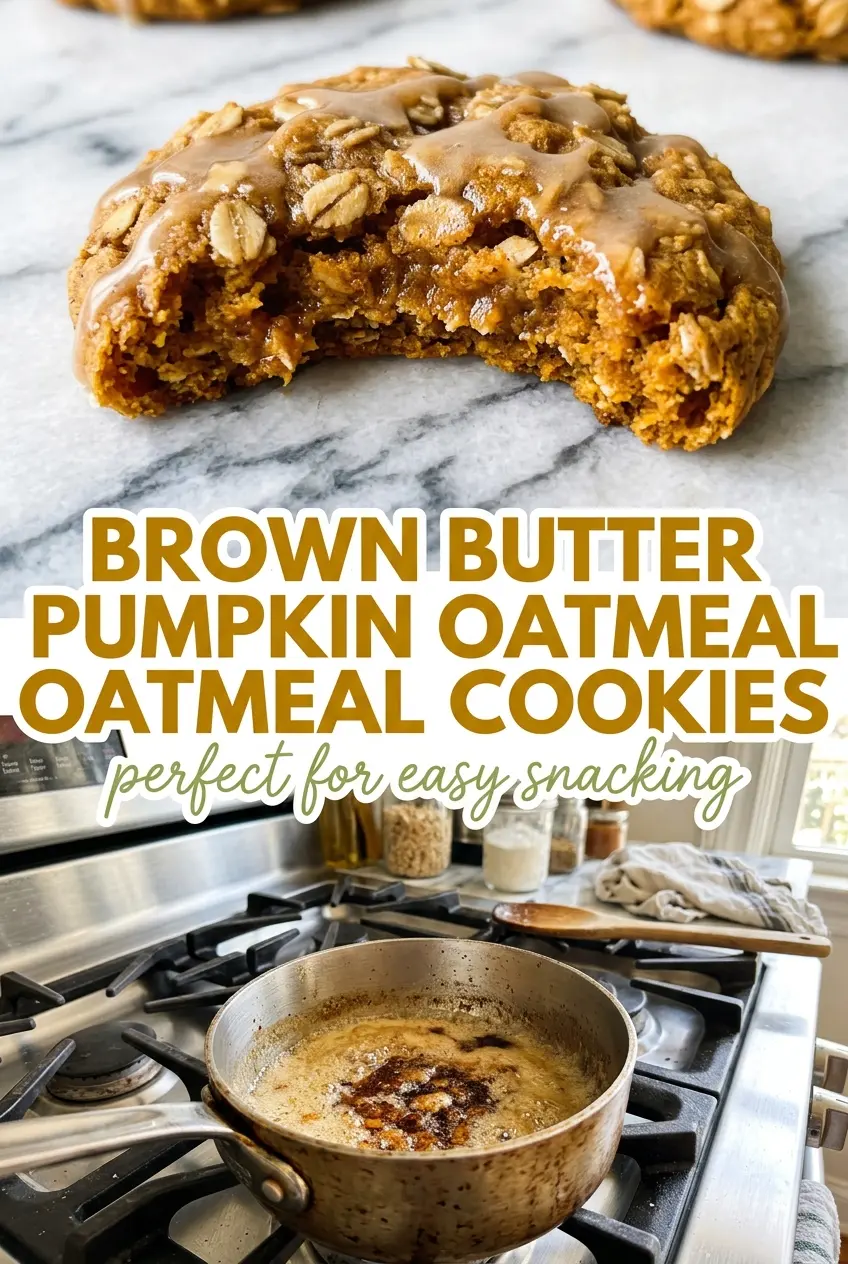
Brown Butter Pumpkin Oatmeal Cookies
Ingredients
Equipment
Method
- Melt the unsalted butter in a saucepan over medium heat until golden brown and nutty, then cool slightly (about 5 minutes) before using.
- Whisk the rolled oats, all-purpose flour, baking soda, and pumpkin pie spice together in a bowl until evenly combined.
- Beat the browned butter, pumpkin puree, and brown sugar until combined, then beat in the large egg just until smooth.
- Fold the dry ingredients into the wet mixture until combined, stopping as soon as no dry streaks remain.
- Scoop the dough onto a lined baking sheet, spacing the mounds evenly.
- Bake at 350°F for 12-14 minutes, until the edges look set and the centers still look slightly soft.
- Whisk the powdered sugar with the milk and drizzle over the cooled cookies.