
Pillowy gnocchi, caramelized butternut squash, and nutty brown butter belong together in a way that feels richer than the ingredient list has any right to be. The butter turns deep gold and picks up a toasted, almost hazelnut aroma, the sage crisps at the edges, and the squash brings little sweet pockets that keep the whole dish from tipping too heavy. It lands on the plate looking simple and tasting layered.
The trick is timing. Brown the butter until the milk solids are amber and fragrant, not pale gold, then get the sage in while the pan is hot enough to crisp it without burning it. Roasting the squash first matters too, because steamed squash turns soft and watery while roasted cubes keep their shape and bring that caramelized edge that plays so well against the butter.
Below, I walk through how to keep the butter from going from nutty to burnt, which gnocchi texture works best, and how to turn this into a vegetarian main that still feels like dinner, not a side dish.
The butter turned perfectly nutty and the sage got crisp without burning, which made the gnocchi taste way fancier than the effort involved. I roasted the squash earlier in the day and dinner came together in minutes.
Save this brown butter sage gnocchi for the night you want a fast dinner that still has that toasted, restaurant-style finish.
The Butter Browned at the Wrong Time, and That’s What Ruins This Dish
Most people rush brown butter because they’re watching for color and forget that the smell is the real signal. If you wait until it looks dark in the pan before pulling it off the heat, it’s already headed toward burnt, especially once the sage hits and the pan stays hot. The better move is to watch for the foam to thin, the milk solids to turn amber, and the aroma to shift from milky to toasted.
Gnocchi has its own trap too. If it sits too long after draining, the surface gets sticky and the dumplings start clumping in the skillet instead of coating evenly. That’s why the squash and butter should be ready before the gnocchi goes into the pot. This is a fast finish dish, not a linger-and-think-about-it one.
- The butter should smell nutty and look like it has tiny golden bits at the bottom. Those browned solids carry the flavor.
- The sage crisps in seconds, so it goes in after the butter has browned, not before.
- The gnocchi should be added as soon as it’s drained so it still slides easily through the pan.
- Roasted squash needs to be tender with browned edges, not soft enough to collapse when tossed.
What Each Ingredient Is Actually Doing in This Dish
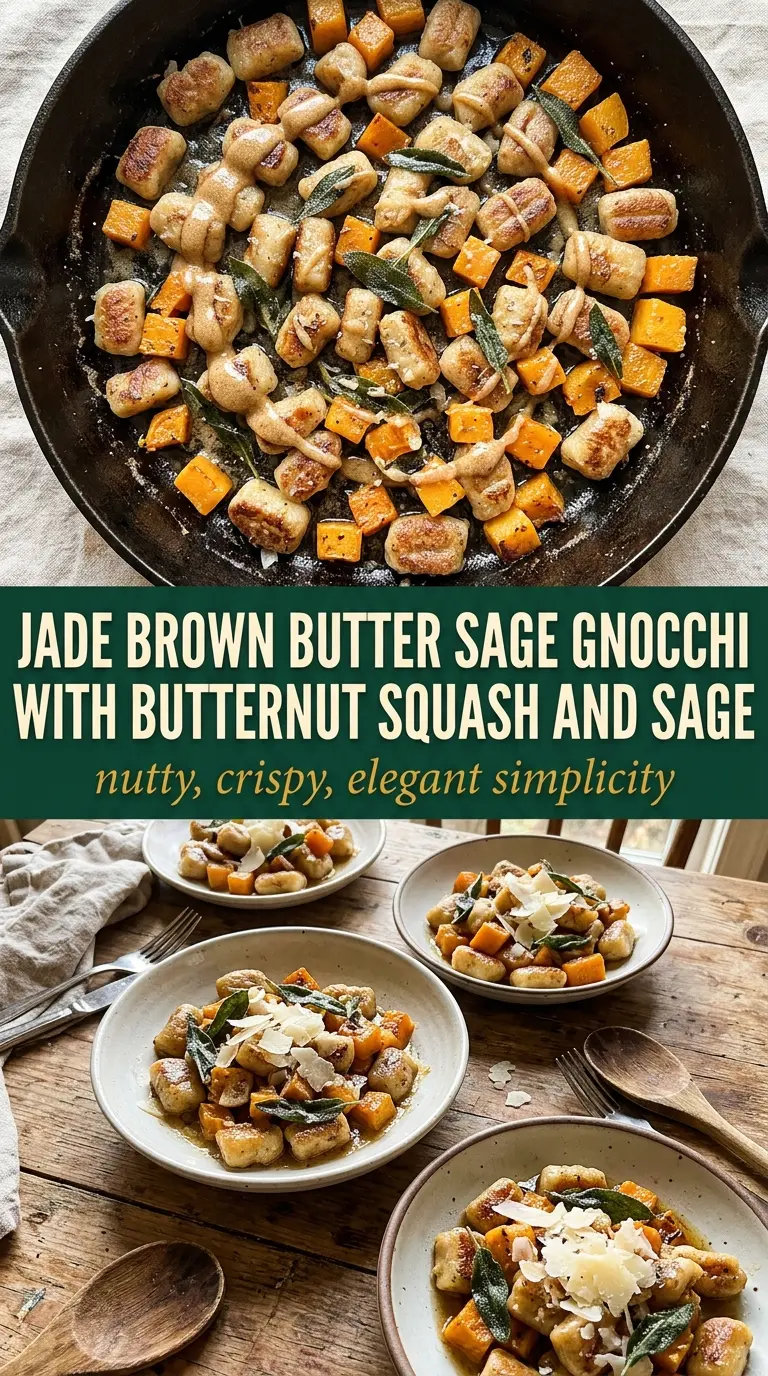
- Potato gnocchi — This is the soft base that catches the butter in every crease. Shelf-stable gnocchi works fine here, and it’s often the easiest to handle without falling apart. If you use fresh gnocchi, boil it gently and move it straight to the skillet so it doesn’t get waterlogged.
- Butternut squash — Roasting matters more than the exact cut size. Cubes that are close in size cook evenly and caramelize instead of drying out. If you’re short on time, pre-cut squash is worth buying because the knife work is the slow part.
- Unsalted butter — Unsalted gives you control while the milk solids brown. Salted butter can work, but it’s harder to judge the final seasoning once the butter has reduced a bit. Don’t swap in oil here; you’d lose the nutty flavor that defines the dish.
- Fresh sage — Fresh leaves crisp beautifully and perfume the butter in a way dried sage can’t match. Dried sage tastes flatter and can go dusty in the pan. If fresh sage is unavailable, use a smaller amount of dried sage only in a pinch, and stir it into the butter briefly rather than trying to fry it.
- Parmesan — The salty finish sharpens the sweetness of the squash and deepens the butter flavor. Use finely grated parmesan so it melts into the hot gnocchi instead of clumping. The pre-grated shelf-stable kind works, but real Parmigiano-Reggiano gives the cleanest finish.
Getting the Brown Butter and Sage to Finish at the Same Time
Roast the Squash Until the Edges Caramelize
Spread the squash on a baking sheet with room around each cube so the edges can brown. If the pan is crowded, the squash steams and turns soft instead of developing those darker edges that hold up in the butter. Pull it when the centers are tender and the edges have a little color.
Brown the Butter in a Light Pan
Use a skillet with a light-colored bottom if you have one, because the color change is easier to see. Melt the butter over medium heat and keep it moving as it foams; the foam will subside and the solids at the bottom will turn golden-brown. The second you smell toasted nuts, lower the heat or take the pan off the burner.
Crisp the Sage, Then Stop the Heat
Add the sage leaves when the butter is ready and let them sizzle until they look darker, smaller, and slightly curled at the edges. That happens fast, usually in about a minute. If the leaves blacken, the butter was too hot; take the pan off the heat before the sage goes in next time.
Toss Fast So the Gnocchi Stays Tender
Add the drained gnocchi and roasted squash right away and toss gently to coat. You’re warming and glazing the dumplings, not frying them hard. If the pan looks dry, add a spoonful of the gnocchi cooking water to loosen the butter into a light sauce that clings instead of pooling.
How to Adapt This for Dairy-Free, Gluten-Free, or a Bigger Dinner
Dairy-Free Browned Butter Flavor
Use a good dairy-free butter substitute that browns, not a plain margarine. The flavor won’t be identical, but you can still get a toasty finish if the substitute contains enough fat to take on color. Add an extra pinch of salt and a little more parmesan-style dairy-free topping at the end if you use one.
Gluten-Free Gnocchi
Swap in gluten-free gnocchi and boil it gently, because some gluten-free versions are softer and can break if the water is rolling too hard. The sauce and squash work exactly the same way, so the dish still feels complete rather than adapted.
Turn It Into a Fuller Main
Add sautéed mushrooms, wilted spinach, or browned Italian sausage at the end if you want more heft. Mushrooms echo the nutty butter, spinach cuts the richness, and sausage turns this into a one-pan dinner with more protein. Keep the additions modest so the gnocchi still stays the focus.
Storage and Reheating
- Refrigerator: Store leftovers in an airtight container for up to 3 days. The gnocchi firms up a little as it chills, but the flavor stays good.
- Freezer: This dish doesn’t freeze well once assembled because the gnocchi texture turns gummy and the squash softens too much. If you want to get ahead, freeze the roasted squash separately and cook the gnocchi fresh.
- Reheating: Warm it in a skillet over low heat with a splash of water or broth to loosen the butter back into a coating. Microwaving works in a pinch, but it can make the gnocchi rubbery and the squash mushy.
Answers to the Questions Worth Asking
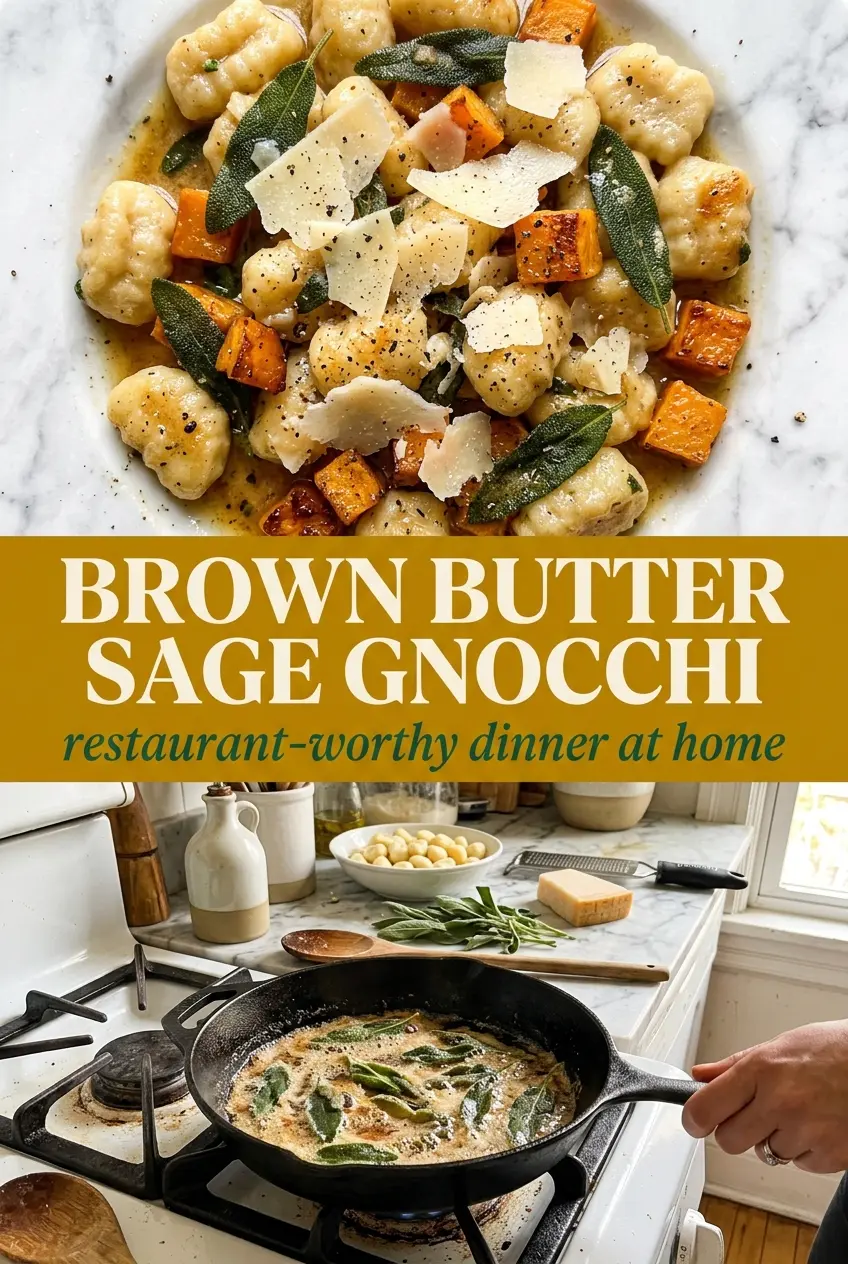
Brown Butter Sage Gnocchi With Butternut Squash
Ingredients
Equipment
Method
- Heat oven to 400°F and roast butternut squash cubes on a sheet pan for 25 minutes, stirring once, until tender and caramelized with browned edges.
- Remove squash from the oven and set aside while you cook the gnocchi and brown the butter.
- Bring a pot of salted water to a boil and cook potato gnocchi according to package directions, then drain well.
- Melt unsalted butter in a large skillet over medium heat and cook until golden brown and nutty, swirling the pan as it toasts.
- Add fresh sage leaves to the brown butter and fry until crispy, about 1 minute, turning once if needed to evenly crisp.
- Add drained cooked gnocchi and roasted butternut squash to the skillet and toss to coat thoroughly in the brown butter.
- Remove from heat, top with grated parmesan cheese, and season with salt and pepper before serving.