
Burst cherry tomato pasta lands in that sweet spot between fast and worth repeating. The tomatoes soften just enough to collapse into a glossy sauce, the garlic perfumes the whole pan without turning bitter, and the basil keeps the finish bright instead of heavy. When the pasta gets tossed straight into that skillet, every strand picks up the tomato juices and olive oil in a way a separate sauce never quite does.
The trick here is patience in one small place and speed everywhere else. Garlic only needs a minute or two in the oil before the tomatoes go in, and once the tomatoes start blistering, you want to let them cook until they split on their own instead of chasing them around the pan. A little reserved pasta water loosens the sauce just enough to coat the noodles, while Parmesan adds a salty edge that pulls the whole dish together.
Below, I’ve included the detail that matters most if your tomatoes seem stubborn, plus the swaps that still keep this pasta lively and weeknight-friendly.
The tomatoes broke down into this shiny, garlicky sauce and the pasta water made it cling instead of pooling at the bottom. I’ve made it twice now and the basil on top is what makes it taste fresh at the end.
Burst cherry tomato pasta with garlic and basil earns a spot in the rotation when you want glossy tomato sauce and almost no cleanup.
The Reason the Tomatoes Need Space to Burst
Cherry tomatoes won’t turn into a proper sauce if they’re crowded into a pan that’s too small. They steam first, then collapse into soft skins with watery centers, which is how you end up with a pale skillet of juice instead of something glossy and concentrated. Give them room in a wide skillet so the heat can hit the skins directly and the bottoms can blister before the whole batch turns loose.
The other mistake is pulling the pan too early. A few split tomatoes are not enough. You want most of them softened, wrinkled, and releasing their juices so the liquid can reduce around the garlic and oil. That’s where the flavor builds.
- Wide skillet — The surface area matters more than the exact material. Stainless steel or cast iron both work; a small nonstick pan just traps moisture.
- Red pepper flakes — They bloom in the oil and give the sauce a little heat that fades into the tomatoes. If you want less spice, cut them back to a pinch instead of skipping them entirely.
- Reserved pasta water — This is the piece that turns tomato juices and oil into a sauce that clings. The starch helps emulsify everything, so don’t drain the pot without saving at least a cup.
What Each Ingredient Is Doing in This Dish
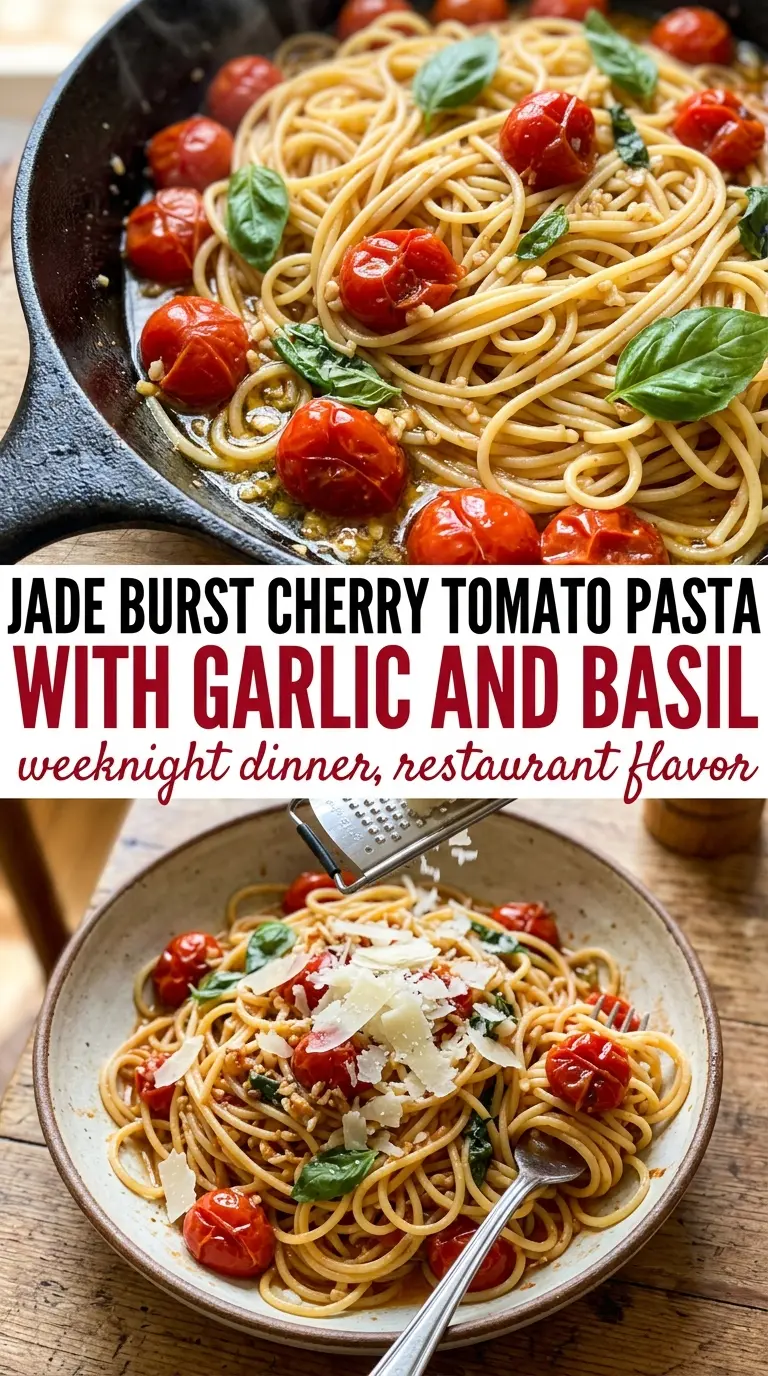
- Spaghetti or linguine — Long pasta works best because the sauce wraps around it instead of sinking to the bottom of a bowl. Short shapes can work, but they won’t catch the basil and tomato in the same way.
- Olive oil — This carries the garlic flavor and becomes part of the sauce itself. Use a decent one since it stays front and center, especially in a simple dish like this.
- Garlic — Sliced garlic gives you gentle, toasty edges without disappearing into the sauce. Minced garlic can burn faster, so slice it if you want more control.
- Cherry tomatoes — This is where the sauce comes from. Good ripe tomatoes burst more readily and taste sweeter, but even standard grocery-store tomatoes work once they’ve had time to cook down and concentrate.
- Fresh basil — Add it at the end so it stays fragrant and green. Dried basil won’t give the same lift here.
- Parmesan — It adds salt and body, and it melts into the sauce instead of sitting on top. Grate it finely so it disappears into the noodles rather than clumping.
Building the Sauce in the Right Order
Start with the pasta, not the pan
Cook the pasta until it’s just shy of fully tender, then reserve a full cup of the cooking water before draining. That water is part of the sauce, not an afterthought. If the noodles sit too long in the strainer, they clump and the sauce won’t settle onto them evenly once they hit the skillet.
Wake up the garlic in the oil
Heat the olive oil over medium heat and add the sliced garlic. You’re looking for fragrance and pale golden edges, not browned garlic; once it goes dark, it turns bitter fast. If the pan is too hot, lower the heat before the garlic starts to color.
Let the tomatoes collapse on their own
Add the cherry tomatoes and red pepper flakes, then leave them alone long enough to blister. Stir occasionally, but don’t keep smashing them from the start or they’ll release all their juice before they’ve had a chance to caramelize a little. Once they’ve split and the pan looks glossy with tomato liquid, use a spoon to mash some of them so the sauce turns chunky instead of soupy.
Toss the pasta into the skillet
Add the drained pasta directly to the tomatoes, then splash in some reserved pasta water and toss until the noodles look coated rather than wet. If the sauce seems tight, add another spoonful of pasta water instead of more oil; starch will loosen and bind at the same time, while extra oil just makes the dish slick. Finish with basil and Parmesan off the heat so the cheese melts into the sauce instead of seizing in clumps.
Three Ways to Adjust This Pasta Without Losing What Makes It Good
Make it dairy-free
Skip the Parmesan and finish with an extra drizzle of olive oil plus a pinch of salt. You lose the salty nuttiness, but the tomato and basil still carry the dish. A spoonful of nutritional yeast can add back some savory depth if you like that flavor.
Make it gluten-free
Use your favorite gluten-free spaghetti and cook it just to al dente, since it can go soft fast once it’s tossed with hot sauce. Save the pasta water if the brand gives you starchier cooking liquid, but don’t rely on it as heavily as you would with wheat pasta. A little extra stirring helps the sauce cling.
Add protein without weighing it down
Toss in grilled chicken, shrimp, or white beans at the very end. Anything that’s already cooked should only warm through, not simmer in the tomato sauce, or it steals the freshness from the basil. White beans are the most seamless vegetarian option because they soak up the sauce without changing the texture much.
Storage and Reheating
- Refrigerator: Store leftovers in an airtight container for up to 3 days. The pasta absorbs some of the sauce, so it thickens as it sits.
- Freezer: It freezes, but the fresh basil and tomato texture soften after thawing. If you do freeze it, leave out the basil and add fresh leaves after reheating.
- Reheating: Warm gently in a skillet over low heat with a splash of water to loosen the sauce. Microwaving works in a pinch, but it tends to dry the pasta out unless you cover it and stir halfway through.
Questions I Get Asked About This Recipe
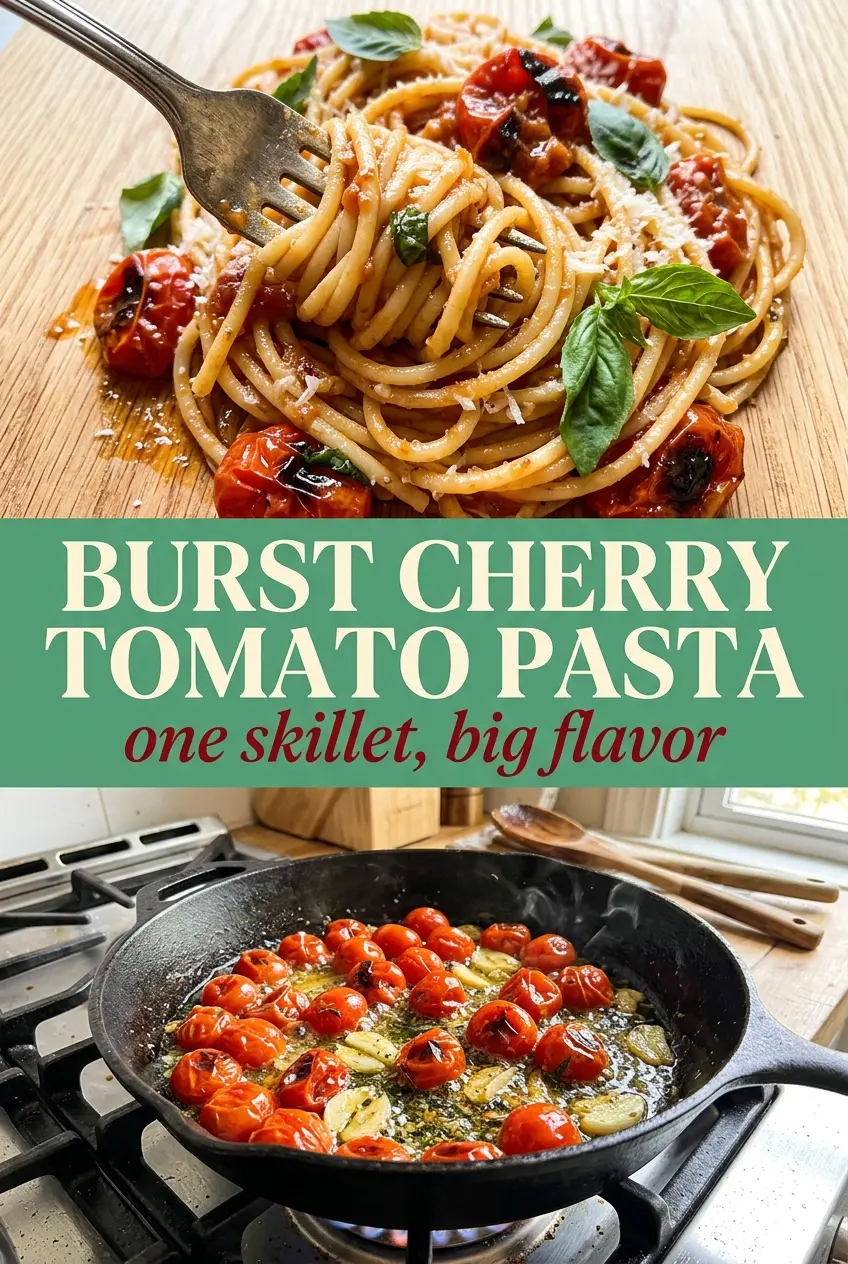
Burst Cherry Tomato Pasta With Garlic And Basil
Ingredients
Equipment
Method
- Cook the spaghetti or linguine in salted boiling water until al dente, then reserve 1 cup of pasta water before draining.
- Set the drained pasta aside while you start the sauce in the skillet.
- Heat the olive oil in a large skillet over medium heat and add the sliced garlic, cooking until fragrant.
- Add the cherry tomatoes and red pepper flakes, cooking until the tomatoes blister and burst, about 8-10 minutes.
- Mash some of the tomatoes with a spoon to create a chunky sauce.
- Add the cooked pasta to the skillet along with a splash of the reserved pasta water, tossing to coat.
- Stir in the torn basil and Parmesan.
- Season with salt and pepper to taste and serve immediately.