
Salty prosciutto, creamy brie, sharp cheddar, and a scatter of sweet and briny little bites turn a charcuterie board into the kind of spread people drift back to all evening. The trick isn’t piling everything in one place. It’s giving each item room to breathe so the board looks abundant instead of crowded, with enough contrast that every cracker lands differently.
What makes this version work is the balance. Folded prosciutto brings softness and shape, salami adds a firmer, savory bite, and the brie gives you something rich enough to catch a drizzle of honey. The grapes, olives, apricots, and walnuts aren’t filler; they reset the palate between bites and keep the board from tasting one-note.
Below, I’ll show you how to place the bigger items first, where honey helps most, and how to swap ingredients without losing the look or the balance. A good board doesn’t need fancy tools. It just needs a little structure and the right mix of textures.
I loved how the brie and honey anchored the board, and the tip about starting with the biggest items first made it look full without being messy. The salami stayed neat, and the grapes and apricots filled every gap perfectly.
A layered charcuterie board with prosciutto, brie, honey, and bright fruit looks polished and disappears fast.
The Reason a Charcuterie Board Looks Full Before It Feels Empty
Most boards go wrong because the cook starts scattering small things everywhere and leaves no anchor points. A charcuterie board needs the large items first: cheese wedges, a brie wheel, folded meat, and maybe a bowl if you’re using one. Those bigger shapes create structure, and the smaller ingredients can then tuck into the spaces around them instead of floating around with no purpose.
The other mistake is treating every item as equal. It isn’t. Brie wants honey. Salty meats want something sweet nearby. Crisp crackers need open space so they don’t pick up crumbs and crack under the weight of too many toppings. If you build in layers like that, the board feels intentional, not like a grocery bag emptied onto wood.
- Cheese — Use a mix of textures so the board doesn’t all melt into one soft note. A firm cheddar gives clean slices, while brie adds richness and gives the honey somewhere to go.
- Meat — Prosciutto folds into ribbons and salami can be rolled into neat little bites. That difference matters visually and keeps the board from looking flat.
- Fruit and olives — Grapes and olives do more than add color. They create sweet and briny breaks between richer bites, which keeps people coming back for another round.
- Honey — A small drizzle over the brie is enough. Too much and it runs into the crackers; just enough turns the cheese into the center of the board.
What Each Ingredient Is Doing on the Board
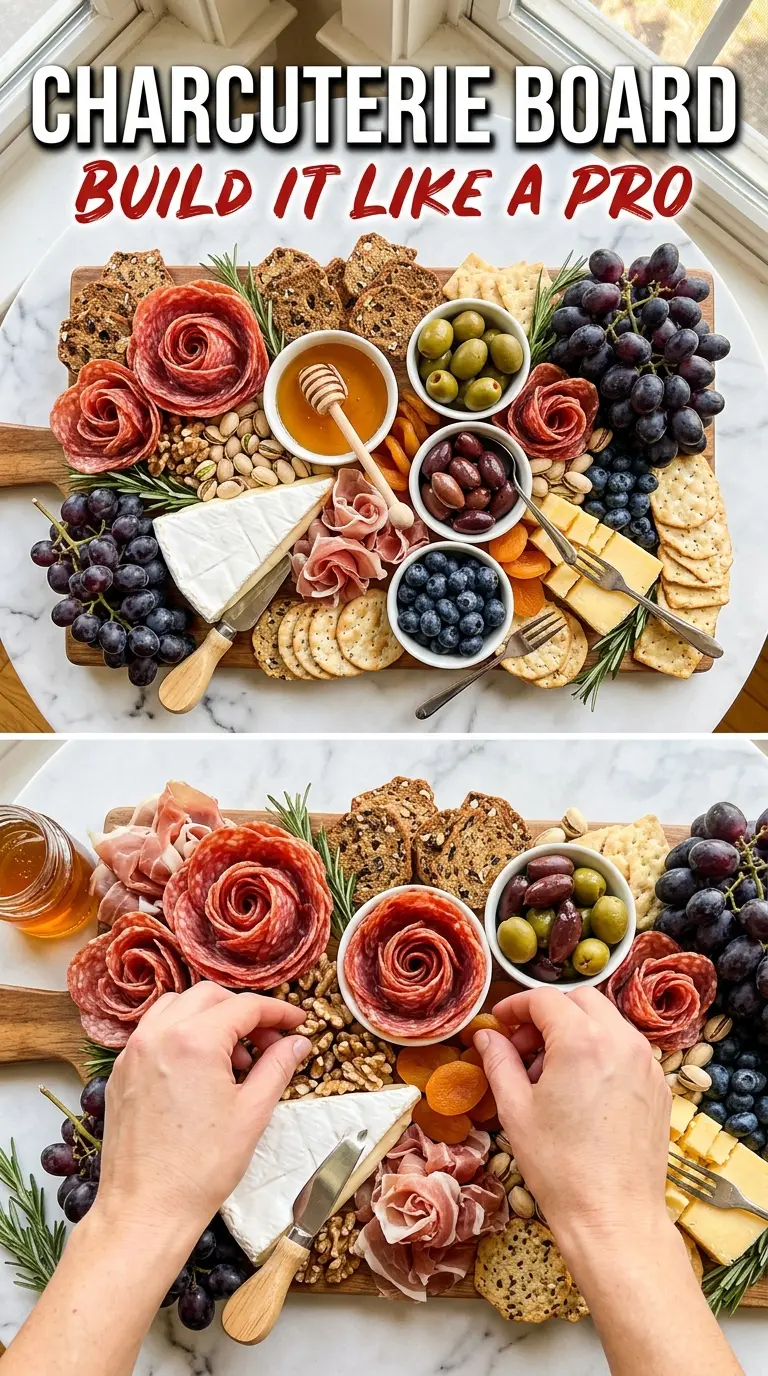
- Prosciutto — This is the soft, elegant piece that drapes across the board. If you use a thicker cured meat, fold it into loose ribbons so it still looks airy instead of heavy.
- Salami — The best move is to roll it so the edges stand up. That gives the board height and keeps the slices from looking like a stack of coins.
- Aged cheddar — Sharp cheddar earns its place because it cuts through the richness of the brie and meats. A good block is better than pre-shredded anything here, since you want clean wedges or cubes.
- Brie wheel — Let it sit at room temperature long enough to soften slightly before serving. Cold brie stays chalky; softened brie spreads onto crackers and catches the honey properly.
- Red grapes and green olives — These give you the color contrast that makes the board pop. Use firm grapes and well-drained olives so the board doesn’t get watery.
- Dried apricots and walnuts — The apricots add chew and sweetness, while the walnuts bring a little crunch. If you need a nut-free board, swap in extra crackers or more fruit instead of trying to mimic the texture with something sticky.
- Crackers and bread — Pick one sturdy cracker and one soft bread if you can. The mix gives guests options without making the board feel repetitive.
How to Build the Board So It Looks Abundant, Not Crowded
Start With the Largest Shapes
Place the cheese first, spacing the pieces across the board so the eye has somewhere to land. Set the brie in one zone, put the cheddar in another, and leave enough room between them for the smaller ingredients to frame the cheese instead of hiding it. If you skip this part and start with the little things, you’ll end up filling yourself into a corner and the board will look cluttered before it looks full.
Fold the Meat With Purpose
Prosciutto looks best when it’s gently folded into loose ribbons rather than laid flat. Salami works well rolled into small rounds or folded in half and tucked near the cheese. The goal is height and movement, not perfect symmetry. If the meat tears, just stack it in a second layer; no one is grading the folds.
Fill the Gaps Like You Mean It
Add grapes, olives, apricots, and walnuts into the open spaces after the main shapes are set. Those smaller items should look like they belong between the larger pieces, not like they were added because there was room left over. Finish with crackers around the edges or in a separate cluster so they stay crisp and easy to reach.
Finish With the Honey Last
Drizzle honey over the brie right before serving so it stays glossy and doesn’t soak into the board. A little goes a long way here. If you pour it too early, it can run into the crackers or make the cheese look messy instead of inviting.
How to Adapt This for Different Guests and Different Boards
Make It Gluten-Free
Use gluten-free crackers and skip bread entirely. The rest of the board already works naturally, and the key is to choose crackers sturdy enough to handle the brie and honey without crumbling immediately.
Build a Dairy-Free Board
Replace the cheddar and brie with a good dairy-free cheese spread or firm plant-based slices that can still be cut and plated cleanly. You’ll lose some of the creamy richness, so add more fruit and nuts to keep the board balanced.
Turn It Into a Vegetarian Board
Drop the meats and replace them with extra cheese, marinated artichokes, roasted peppers, or more nuts and dried fruit. Vegetarian boards need a little more contrast, so keep the sweet, salty, creamy, and crunchy elements in balance.
Storage and Reheating
- Refrigerator: Store the components separately for up to 2 days. Once assembled, the crackers soften and the board loses its clean look.
- Freezer: This doesn’t freeze well as a finished board. The cheeses change texture and the fruit turns mushy.
- Reheating: No reheating needed. If you chilled the cheese, let it sit out 20 to 30 minutes before serving so the brie softens and the cheddar doesn’t taste dull.
Answers to the Questions Worth Asking
Charcuterie Board
Ingredients
Equipment
Method
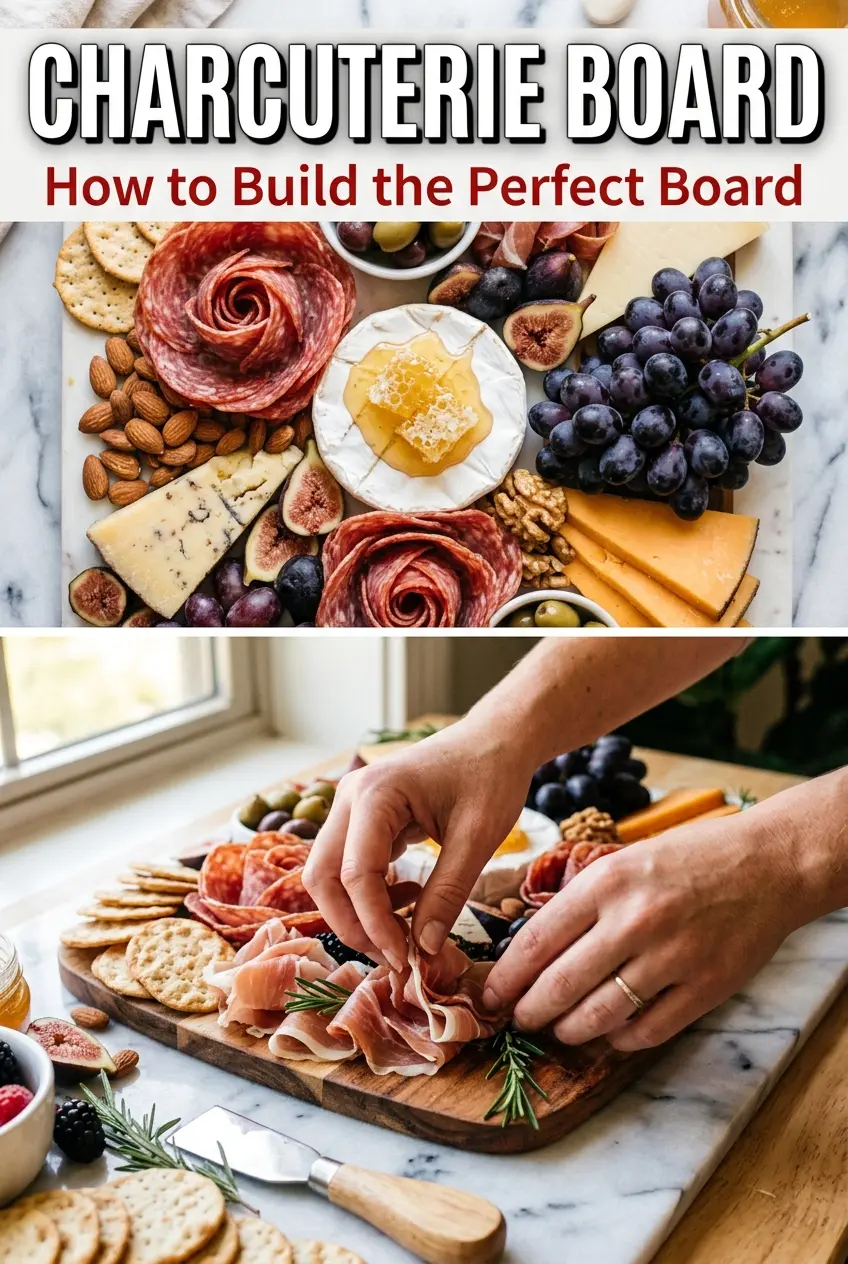
- Place cheese in different zones of a large board so each type has its own space and you can build around them visually.
- Add meats by folding prosciutto and rolling salami, then position them between the cheese sections to create repeating patterns.
- Fill the gaps with grapes, green olives, dried apricots, and walnuts until the board looks evenly covered from edge to edge.
- Add crackers and bread near the center-front of the board for easy grabbing, leaving a clear path where people will reach.
- Drizzle honey over brie so it pools slightly and gives a glossy contrast to the cloud-white surface right before serving.