
Blistered cherry tomatoes melt into sweet, jammy little bursts while the garlic and thyme perfume the olive oil around them. Spooned over cool whipped ricotta and crusty bread, the whole thing lands somewhere between appetizer and no-effort dinner, with enough contrast in temperature and texture to keep every bite interesting. The best part is that the oven does almost all the work; what you get back is concentrated tomato flavor, soft roasted garlic, and glossy oil that soaks into the bread instead of pooling on the plate.
This version works because the tomatoes roast low and slow instead of being blasted at high heat. That gives them time to collapse without drying out, and it keeps the garlic mellow rather than sharp. The sugar is tiny, but it nudges the tomatoes toward deeper caramelized sweetness, while the ricotta gets blended with olive oil until it turns spreadable instead of grainy.
Below, I’ll show you how to keep the tomatoes from scorching, how to get the ricotta extra smooth, and how to turn the leftover confit oil into the best part of the dish.
The tomatoes turned jammy instead of watery, and that garlicky oil soaked right into the ricotta and bread. I made it for guests and they kept asking what I put in the oil.
Love the jammy tomatoes and whipped ricotta? Save this confit-on-ricotta appetizer for your next easy bread board.
The Slow Roast That Turns Cherry Tomatoes Into Confit Instead of Sauce
The difference between confit and a pan of sad roasted tomatoes comes down to temperature and time. At 300°F, the tomatoes soften from the inside out while the skins blister and the juices thicken in the oil instead of evaporating away. If you crank the oven hotter, the edges can char before the centers collapse, and you lose that silky, spoonable texture.
The other piece people miss is the oil. The tomatoes need enough olive oil to partially bathe, not just lightly coat, because that’s what carries the garlic, thyme, and pepper flakes through the dish. When it comes out of the oven, the oil should look deeply tinted and smell sweet, not bitter. If it smells harsh, the oven ran too hot.
What Each Ingredient Is Actually Doing in This Dish
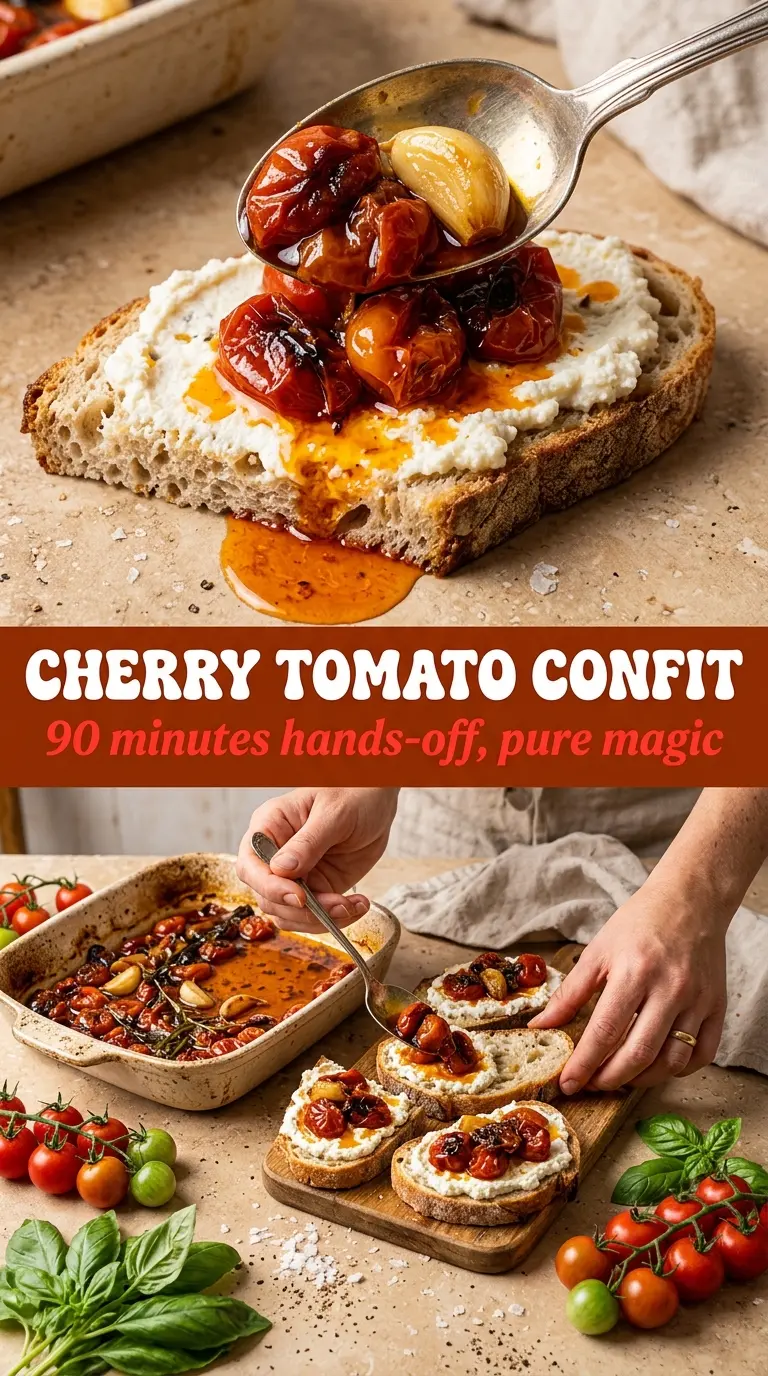
- Cherry tomatoes — Mixed colors give you the prettiest finish, but the bigger reason to use cherry tomatoes is their higher skin-to-flesh ratio. They hold their shape long enough to blister, then collapse into little sweet pockets. Grape tomatoes work too, but they usually give a tighter, less juicy confit.
- Olive oil — This is not the place to skimp. The oil becomes part of the sauce and part of the spread, so use one you actually like the taste of. A peppery extra-virgin oil is great here, but if yours is expensive, a mid-range bottle works fine because the garlic and herbs carry a lot of the flavor.
- Ricotta — Whipping it with olive oil and salt takes it from slightly grainy to cloud-smooth. If your ricotta is wet, drain it in a fine strainer first or it can slide around on the bread instead of holding the tomatoes. Whole-milk ricotta gives the richest result.
- Garlic and thyme — These roast gently and flavor the oil without overpowering the tomatoes. Smashed garlic cloves mellow as they cook; sliced garlic can brown too quickly and turn sharp. Fresh thyme is worth using here because it stays aromatic in the oven.
- Red pepper flakes — You’re not trying to make this spicy. The flakes give the oil a little background heat that keeps the ricotta from tasting flat. If you want more bite, add a pinch more at the table instead of loading the dish up early.
Roasting, Whipping, and Bringing It All Together
Building the Confit Base
Use a baking dish that gives the tomatoes room to sit in a loose single layer. Toss them with the garlic, thyme, sugar, salt, pepper, and red pepper flakes, then pour the olive oil over the top so the aromatics can work in the oil as the tomatoes soften. If the tomatoes are piled too deep, they steam before they roast, and you lose the jammy edges that make this dish worth serving.
Knowing When the Tomatoes Are Done
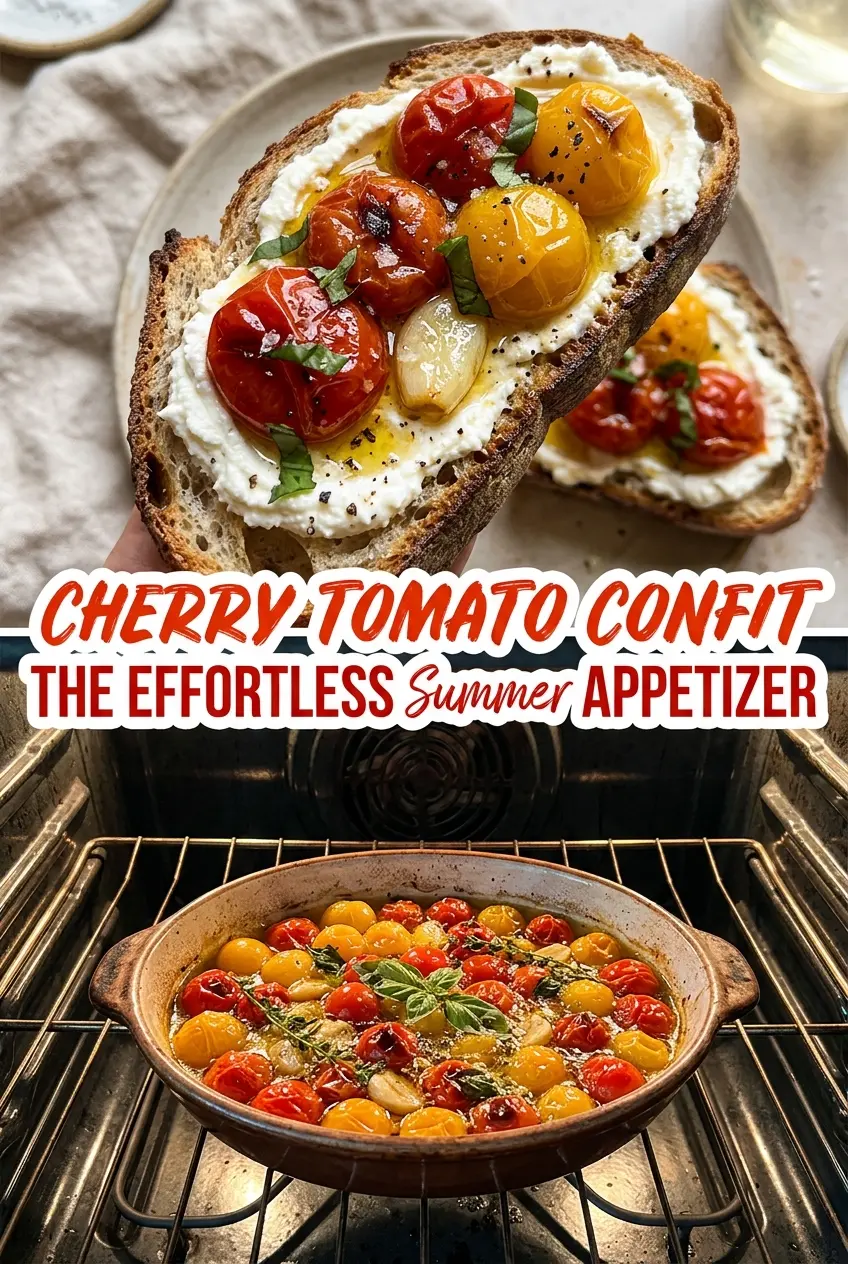
Roast for about 1 1/2 hours until the skins wrinkle and a few tomatoes have burst open. You want the oil to look tinted red-orange and the tomatoes to slump without disintegrating into complete mush. If they’re still firm in the center, give them another 10 to 15 minutes. If the garlic is taking on too much color before the tomatoes are ready, lower the oven by 25 degrees.
Whipping the Ricotta Until It Spreads Cleanly
Blend the ricotta with olive oil and salt until it looks glossy and smooth, almost like a soft cheese spread. A food processor gives the easiest texture, but a bowl and a sturdy whisk work if the ricotta starts out dry. If it still tastes chalky, it usually needs a little more oil and a pinch more salt, not more lemon or more heat.
Finishing on Bread Without Losing the Oil
Toast the bread just enough that it holds up under the tomatoes, then spread on the ricotta while the bread is still warm. Spoon over the confit and finish with fresh basil and flaky salt, letting some of the oil run into the bread instead of wiping it away. That oil is the point; it carries the garlic and tomato flavor into every bite.
How to Adapt This for Different Tables and Different Diets
Make It Dairy-Free
Swap the ricotta for a dairy-free whipped spread or a thick cashew cream. You want something cool, dense, and mildly tangy so it can balance the sweet tomatoes; thin dairy-free yogurt won’t hold up as well under the oil.
Serve It Over Polenta Instead of Bread
Warm, soft polenta turns this into a small meal instead of an appetizer. The confit oil still matters here, so spoon it over the top just before serving. The texture shifts from crisp-and-creamy to spoonable and rich.
Make the Tomato Confit Ahead
The tomatoes can be roasted a day or two ahead and stored in their oil. The flavor deepens overnight, and they’re even better once the garlic has had time to settle in. Bring them back to room temperature before serving so the oil loosens and the ricotta stays creamy underneath.
Turn It Into a Gluten-Free Appetizer Board
Use gluten-free toast, crackers, or cucumber rounds if you want a lighter base. The confit itself is naturally gluten-free, so the only thing that changes is how you carry it to your mouth. Choose something sturdy enough to catch the oil.
Storage and Reheating
- Refrigerator: Store the tomato confit and ricotta separately for up to 4 days. The oil will firm up in the fridge, and the tomatoes will taste even more concentrated.
- Freezer: The tomatoes freeze better than the ricotta. Freeze the confit in a sealed container for up to 2 months, but don’t freeze the whipped ricotta if you want it to stay smooth.
- Reheating: Warm the tomatoes gently on the stove or in a low oven until the oil loosens. Don’t microwave them hard, or the tomatoes can burst and the oil can separate in an odd way.
Questions I Get Asked About This Recipe
Cherry Tomato Confit on Whipped Ricotta
Ingredients
Equipment
Method
- Preheat the oven to 300°F to get steady, gentle heat for jammy tomatoes.
- Place cherry tomatoes, smashed garlic cloves, fresh thyme sprigs, and red pepper flakes in a baking dish so they roast together and perfume the oil.
- Pour olive oil over everything and season with sugar, salt, and black pepper; stir gently so the tomatoes are coated and glisten.
- Roast for 1.5 hours at 300°F until the tomatoes are jammy and their skins are blistered, with the oil taking on a golden garlic-herb color.
- Whip ricotta with olive oil and salt until cloud-smooth and spreadable.
- Spread whipped ricotta on crusty bread or crostini to form an even creamy base.
- Spoon the cherry tomato confit over the ricotta with all the garlicky oil so each bite gets tomatoes and concentrated sauce.
- Finish with fresh basil and flaky salt so the top looks bright and the flavor pops.