
Golden chicken thighs tucked into a peppery Dijon cream sauce are the kind of dinner that lands with a little silence at the table, then a request for more bread to mop up the pan. The skin stays deeply browned, the potatoes soak in the sauce without turning to mush, and the whole dish tastes like it took more work than it did. That’s the sweet spot: enough technique to feel special, not so much that you’re stuck fussing over it.
What makes this version work is the balance of sharp mustard, white wine, and cream in the same pan the chicken was seared in. Those browned bits at the bottom carry the real flavor, so the sauce gets built there instead of in a separate pot. Whole-grain Dijon matters here because the mustard seeds give the sauce texture and keep the mustard flavor rounded, not harsh. The fingerling potatoes hold their shape in the oven and turn tender at the edges while they catch the sauce underneath.
Below, I’ll walk through the part that matters most: getting the chicken skin properly browned before the sauce goes in, then finishing the dish so the cream stays silky. I’ve also included a few swaps and a smart way to handle leftovers, because this is one of those meals that’s just as useful on a Tuesday as it is when you want dinner to look a little more polished than usual.
The sauce thickened up beautifully and the mustard seed texture made it feel restaurant-worthy. I served it with crusty bread and my husband kept saying the potatoes were the best part because they soaked up all that cream sauce.
Save these Dijon cream chicken thighs for a dinner that gives you crisp skin, tender potatoes, and a glossy mustard sauce in one pan.
The Secret to Keeping the Dijon Sauce Creamy, Not Grainy
The part that trips people up is the mustard-and-cream stage. If the pan is too hot when the cream goes in, the sauce can look split or a little sandy instead of silky. The fix is straightforward: deglaze with wine, then add the broth and cream while the pan is at a gentle simmer, not a hard boil. That gives the dairy time to thicken without shocking it.
Another thing worth noticing is how the sauce changes once the potatoes go in. Fingerlings release just enough starch to help the sauce cling, but they don’t break apart the way larger, floury potatoes can. If your pan looks crowded, it’s better to use a wide skillet or roasting dish so the chicken skin can stay above the sauce as it finishes cooking.
What Each Ingredient Is Actually Doing in This Dish
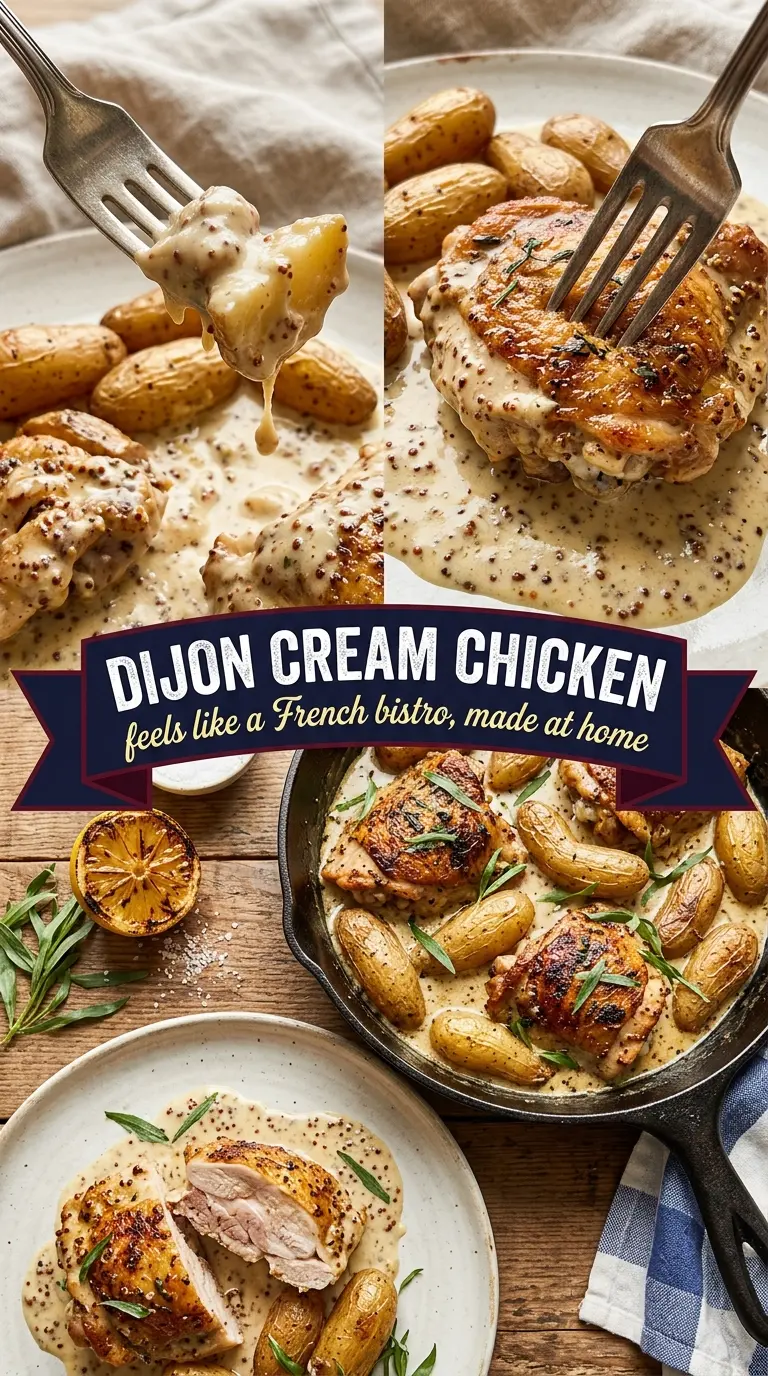
- Chicken thighs — Bone-in, skin-on thighs hold up best here. The skin renders and browns, and the meat stays juicy through the roast. Boneless thighs work in a pinch, but they’ll cook faster and won’t give you the same depth.
- Whole-grain Dijon mustard — This is the flavor anchor. Smooth Dijon works, but you’ll lose the visible seeds and some of the texture that makes the sauce feel special. If you only have smooth mustard, use it and add a teaspoon of extra whole mustard seeds if you have them.
- Heavy cream — This is what keeps the sauce lush and stable. Half-and-half can curdle more easily and won’t coat the potatoes the same way. If you need a lighter version, use half cream and half broth, but expect a thinner sauce.
- Dry white wine — It wakes up the browned bits in the pan and gives the sauce a clean edge. If you don’t cook with wine, use extra chicken broth with a small splash of white wine vinegar or lemon juice at the end.
- Fingerling potatoes — Their waxy texture is the reason they work so well. They stay intact while the sauce surrounds them. Halving them helps them cook at the same pace as the chicken.
- Crispy capers and lemon zest — Don’t skip the finish. The capers bring salt and crunch, and the lemon zest cuts through the cream so the dish doesn’t feel heavy.
How to Build the Pan Sauce and Roast Everything at the Right Pace
Getting the Chicken Skin Deeply Golden
Season the thighs well, then set them skin-side down in hot oil and let them sit until the skin is a deep amber color and releases cleanly from the pan. If they stick, they’re not ready yet. That first sear is where you build the flavor for the whole dish, so don’t rush it or move the pieces around. You want rendered fat in the pan and crisp skin on top, not pale skin that softens later.
De-glazing Without Losing the Brown Bits
Once the chicken comes out, pour in the white wine and scrape the bottom of the pan with a wooden spoon. Those browned spots should dissolve into the liquid instead of burning off. Add the garlic next, then the broth, cream, and Dijon, stirring until the sauce looks smooth and lightly speckled. Keep the heat moderate; a fast boil is what turns a good cream sauce into a broken one.
Roasting the Potatoes Under the Chicken
Add the halved potatoes to the sauce, then nestle the chicken back in with the skin exposed. The potatoes should be mostly submerged but not buried so deep that they steam without absorbing flavor. Roast until the chicken reaches doneness and the potatoes are tender when pierced with a knife. If the sauce looks a little loose at the beginning, it will tighten as the potatoes soften and the whole pan comes up to temperature.
The Finish That Makes It Taste Complete
Fresh tarragon, crispy capers, and lemon zest go on at the end, not before. Tarragon loses its brightness if it cooks too long, and the capers lose their crunch. The lemon zest should smell fresh the second it hits the hot sauce. That final contrast is what keeps the dish from tasting one-note.
Three Smart Ways to Adapt This Without Losing What Makes It Good
Dairy-Free Version That Still Feels Rich
Use full-fat coconut cream or an unsweetened dairy-free cooking cream in place of the heavy cream. The sauce will be a little less classic and more rounded, with a subtle sweetness, but it still clings well if you keep the simmer gentle. Skip any dairy-based butter finish and use olive oil for the capers.
Gluten-Free by Default
This dish is naturally gluten-free as written, as long as your broth and mustard are certified gluten-free. The sauce doesn’t rely on flour, so the texture stays silky without any special thickener. That makes it a good one to keep in rotation when you’re cooking for mixed diets.
No Wine, Still Good
Use extra chicken broth and finish with a teaspoon of lemon juice or white wine vinegar to replace the lift the wine gives the sauce. You’ll lose a little of the bistro-style depth, but the mustard, garlic, and tarragon still carry the dish. This is the swap I use when I want the same dinner without opening a bottle.
Make It for a Crowd
Brown the chicken in batches so the skin actually sears instead of steaming, then assemble everything in a wide roasting dish. The sauce can be scaled up, but keep the pan shallow enough that the potatoes roast through evenly. A crowded dish will still taste good, but it won’t give you those crisp edges.
Storage and Reheating
- Refrigerator: Store leftovers in an airtight container for up to 3 days. The sauce will thicken as it chills and the potatoes will soften a bit.
- Freezer: It freezes, but the cream sauce can separate slightly when thawed. If you do freeze it, cool completely first and rewarm gently, whisking as it heats.
- Reheating: Reheat covered over low heat on the stove with a splash of broth to loosen the sauce, or use a 325°F oven until hot. The common mistake is blasting it with high heat, which tightens the chicken and can make the sauce look broken.
Questions I Get Asked About This Recipe
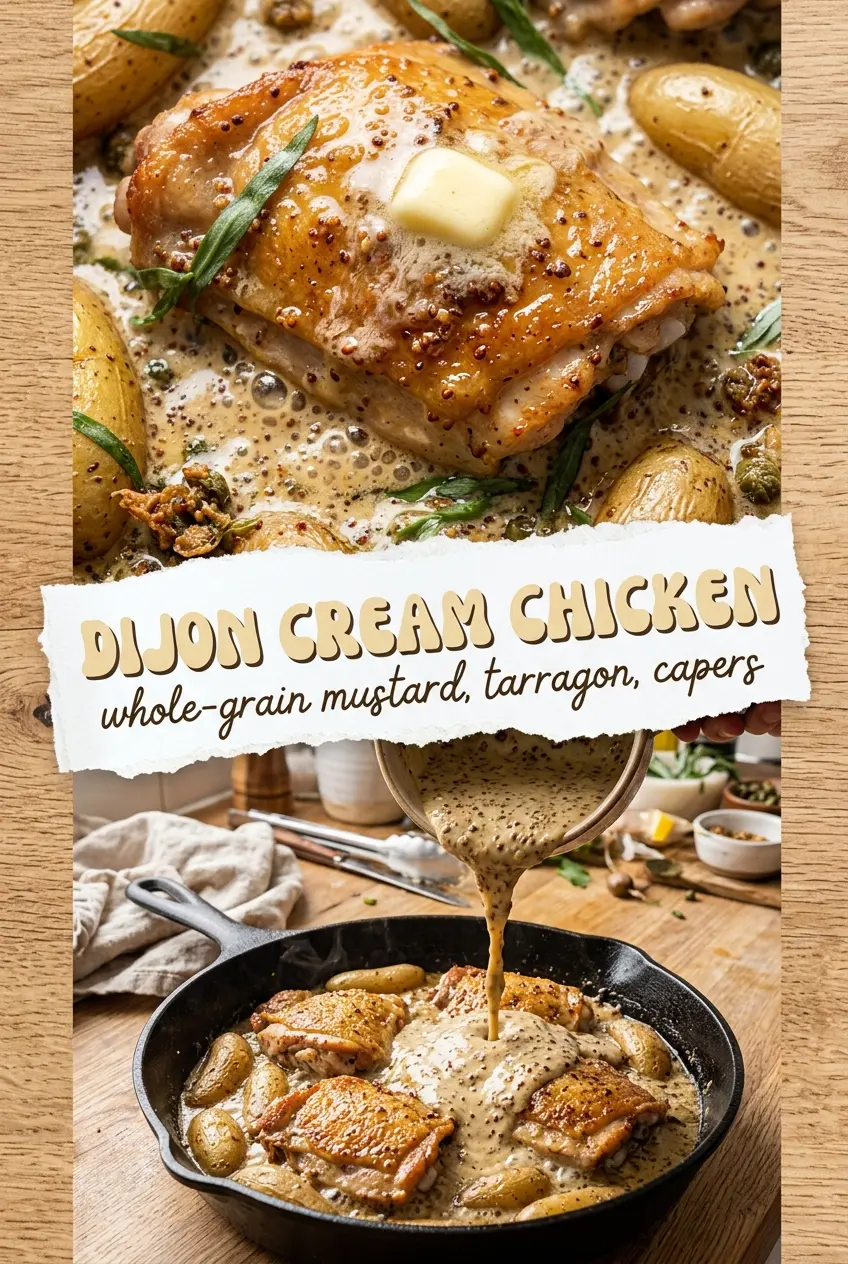
Chicken And Potatoes With Dijon Cream Sauce
Ingredients
Equipment
Method
- Season the chicken thighs with salt and pepper, then heat olive oil in a Dutch oven over medium-high heat and sear for about 6–8 minutes per side until the skin is deeply golden.
- Reduce heat to medium and briefly render any remaining fat in the pan, keeping the chicken skin-side up while you move to deglazing.
- Pour in the dry white wine and deglaze the Dutch oven, scraping up the browned bits from the bottom, until the liquid is bubbling (about 1–2 minutes).
- Add minced garlic and stir for 30 seconds, then pour in the chicken broth, heavy cream, and whole-grain Dijon mustard and stir until the sauce looks speckled and cohesive (about 2 minutes).
- Nestle the halved fingerling potatoes into the sauce, then place the chicken back into the Dutch oven so the thighs are surrounded by sauce and potatoes.
- Roast at 400°F for 35 minutes, until the chicken is cooked through and potatoes are tender.
- Spoon some sauce over the chicken and sprinkle with fresh tarragon + thyme right after roasting so the herbs stay bright and green.
- Top with crispy capers and lemon zest to finish, then let rest 5 minutes before serving to help the sauce cling to the chicken.