
Lasagna soup gives you all the comfort of the baked classic without waiting on a layered casserole to come out of the oven. The broth turns deep and savory, the broken noodles soak up the tomato and sausage flavor, and the ricotta on top melts at the edges into little creamy pockets. What you get in the bowl feels familiar, but lighter and a lot easier to pull off on a regular night.
The difference here is in the layering. Sweet Italian sausage brings the backbone, fennel seeds push it toward that true lasagna flavor, and tomato paste gets cooked long enough to lose the raw edge before the broth goes in. San Marzano tomatoes matter here because their sweetness keeps the soup from tasting harsh or flat, especially once the noodles start softening into the pot.
Below, I’ll walk through the part that keeps the broth from tasting thin, plus the small finishing step that makes each bowl look and taste like you meant it.
The broth was rich and not watery at all, and the broken noodles stayed tender without turning mushy. I added a little extra ricotta on top and my husband said it tasted like lasagna in a bowl.
Save this lasagna soup for the nights when you want baked-pasta flavor from one pot and a creamy ricotta finish.
The Secret to Lasagna Soup That Tastes Like More Than Tomato Broth
The common mistake with lasagna soup is treating it like a shortcut pasta soup and skipping the flavor build. Then it tastes thin, even after you add the noodles and cheese. The answer is to brown the sausage until it leaves actual fond in the pot, then cook the tomato paste long enough to darken slightly and lose its raw sweetness. That step gives the broth a deeper, rounder base before any liquid goes in.
The noodles also need attention. If you add them too early, they soak up broth and turn the soup starchy and overcooked before dinner hits the table. Add them after the tomato base has simmered, then cook just until tender with a little bite left in the center. They’ll keep softening in the hot broth, so pulling the pot off the heat a minute early gives you a better bowl.
What Each Ingredient Is Actually Doing in This Bowl
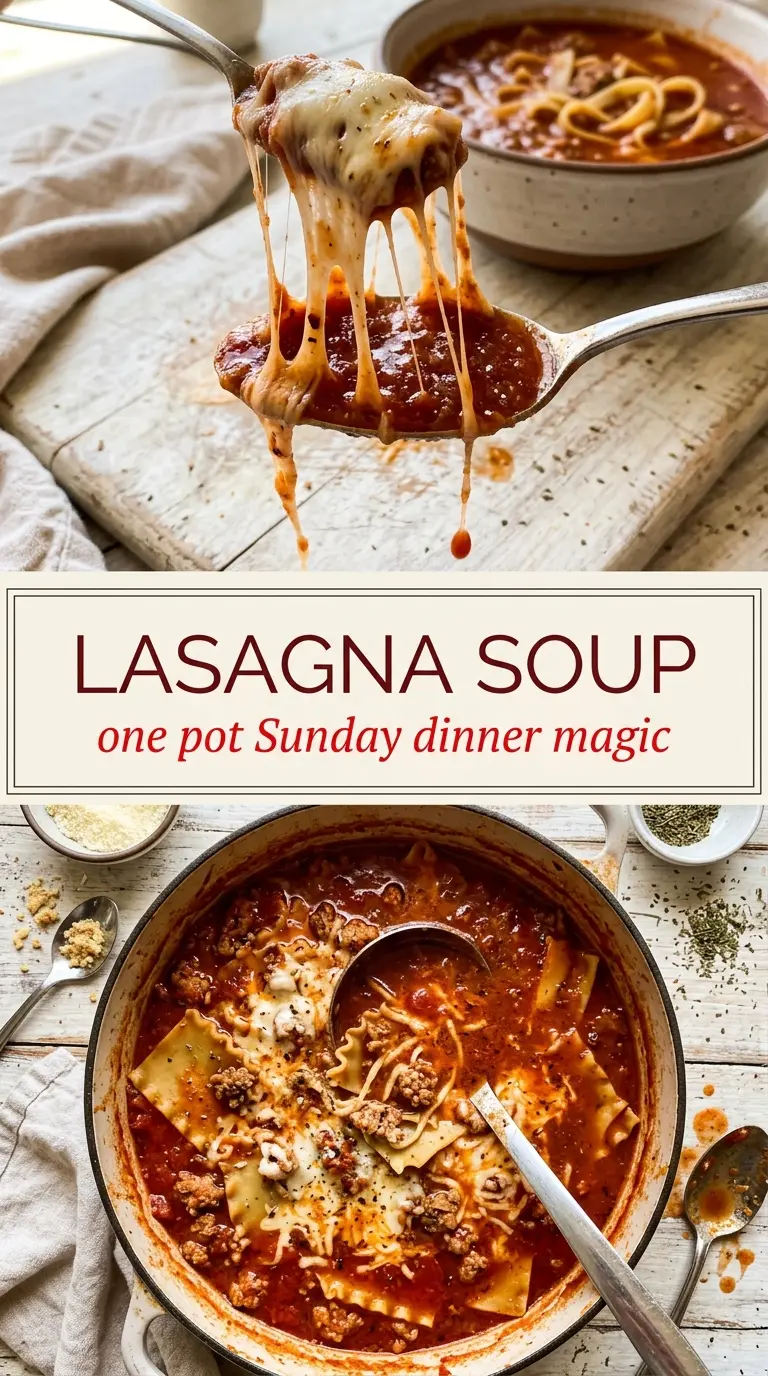
- Sweet Italian sausage — This does the heavy lifting for the broth. The seasoning already carries garlic, herbs, and fat, so the soup tastes layered without needing a long simmer. If you swap in plain ground pork, add extra fennel, salt, and Italian seasoning or the soup will taste flatter.
- Fennel seeds — This is the detail that pushes the flavor toward lasagna instead of generic tomato soup. Crush them lightly in your hand before they hit the pan so they bloom faster in the sausage fat.
- San Marzano crushed tomatoes — Quality matters here. These are sweeter and less acidic, which keeps the broth balanced once the sausage and parmesan go in. If you use another brand, choose a tomato that tastes bright and not aggressively sharp.
- Tomato paste — This deepens the color and builds body. Cook it for the full 2 minutes so it loses the metallic edge that canned tomato paste can have straight from the tube or can.
- Broken lasagna noodles — They give you the right texture and the right visual cue for the dish. Break them into rough pieces, not tiny shards, so they hold their shape and eat like lasagna instead of soup spaghetti.
- Ricotta, mozzarella, and parmesan — The ricotta gives you the creamy lasagna effect, mozzarella brings the melt, and parmesan sharpens everything at the end. Whole-milk ricotta is worth using because it stays richer and less grainy.
Building the Broth Before the Noodles Go In
Browning the Sausage
Start with the sausage and fennel in a heavy pot over medium-high heat. You want the meat browned in spots, not just gray and cooked through, because those caramelized bits are the backbone of the broth. Break it up as it cooks, but leave some small crumbles for texture. If the pan looks dry before the sausage is finished, the heat is too high and the meat is scorching instead of browning.
Cooking Out the Tomato Paste
Add the onion and garlic after the sausage has rendered some fat, then stir in the tomato paste and cook it until it darkens slightly and sticks to the bottom of the pot in a thick layer. That’s the point where the raw canned taste disappears. If you rush this stage and add liquid too soon, the broth stays sharp and one-note. Scrape the bottom well once the broth goes in so none of that flavor stays trapped.
Simmering Before the Pasta
Pour in the crushed tomatoes and broth, then let the pot simmer for about 10 minutes before the noodles go in. This short simmer gives the sausage and tomato time to marry without reducing the soup into something overly thick. You’re looking for a steady bubble at the edges, not a hard boil, because boiling can make the sausage greasy and the broth cloudy.
Cooking the Noodles to the Right Bite
Add the broken lasagna noodles and stir them a few times so they don’t clump at the bottom. Cook just until they’re tender with a little resistance in the center. If the soup seems thicker than you want, add a splash of broth or water at the end; noodles keep absorbing liquid as they sit, and this recipe rewards a broth that still moves in the bowl.
Finishing Each Bowl
Ladle the soup into bowls first, then top each one with a scoop of ricotta and a shower of mozzarella and parmesan. The heat from the broth softens the cheeses without fully dissolving them, which is what gives the dish its lasagna feel. Finish with basil and red pepper flakes while the soup is still steaming so the herbs wake up instead of sitting flat on top.
How to Adapt This for Lighter, Meatless, or Extra-Cheesy Nights
Make It Vegetarian Without Losing Body
Swap the sausage for well-browned mushrooms and a little fennel-seasoned plant-based Italian sausage, then use vegetable broth instead of beef broth. The mushrooms add the savory depth the meat would normally provide, and browning them hard is what keeps the soup from tasting thin.
Make It Dairy-Free
Skip the ricotta, mozzarella, and parmesan, then finish with a drizzle of good olive oil and extra basil. You’ll lose the creamy top layer, but the broth itself still carries the lasagna flavor if you keep the sausage and tomato base strong.
Use Gluten-Free Pasta
Use a sturdy gluten-free lasagna-style noodle and cook it separately if your brand tends to break down fast. Gluten-free pasta can cloud the broth and go soft quickly, so keeping it out of the main pot until serving gives you a better texture.
Make It Ahead for Busy Nights
Cook the soup base without the noodles, then cool and refrigerate it. Add the pasta when you reheat, and the noodles will taste fresher and hold their shape instead of turning bloated in the fridge.
Storage and Reheating
- Refrigerator: 3 to 4 days. The noodles keep absorbing broth, so expect the soup to thicken.
- Freezer: The base freezes well without the noodles or dairy toppings. Freeze the soup before adding pasta and cheese for the best texture.
- Reheating: Rewarm gently on the stove over medium-low with a splash of broth. If you heat it hard, the noodles go mushy and the cheese can turn greasy when added back in.
Answers to the Questions Worth Asking
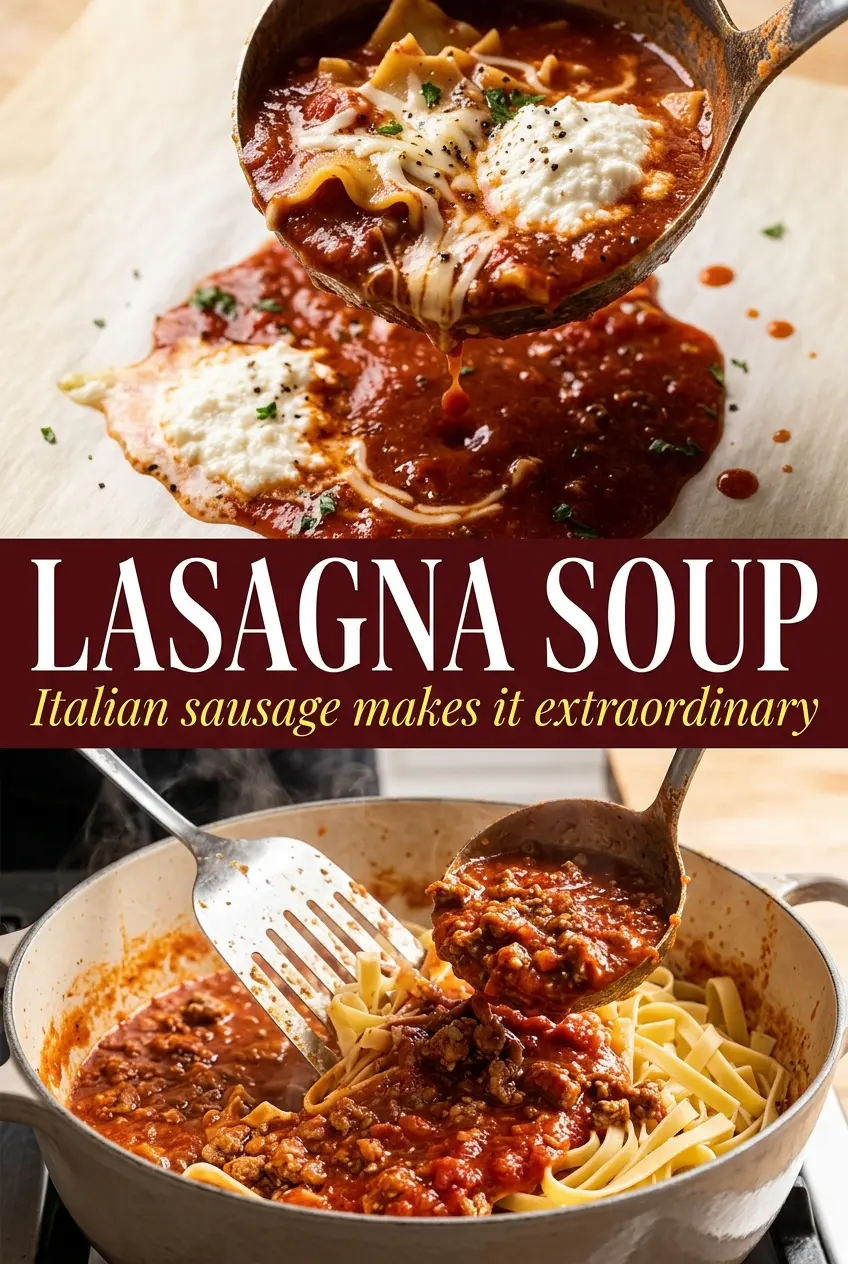
Lasagna Soup
Ingredients
Equipment
Method
- In a Dutch oven, brown the sweet Italian sausage over medium-high heat with fennel seeds until no longer pink, 8 to 10 minutes, stirring as needed and letting browned bits form on the bottom (visual cue: golden-brown sausage).
- Add the diced onion and cook until softened, 4 to 5 minutes, then stir in the minced garlic and cook until fragrant, 30 to 60 seconds (visual cue: translucent onion and fragrant garlic).
- Stir in the tomato paste and cook 2 minutes, scraping up any browned bits (visual cue: paste darkens slightly and smells deeper).
- Add the San Marzano crushed tomatoes and beef broth, then stir in the Italian seasoning; bring to a simmer, 3 to 5 minutes (visual cue: steady bubbling around the edges).
- Simmer the soup for 10 minutes, then add the broken lasagna noodles and cook until tender, 12 minutes (visual cue: noodle ribbons bend and soften while remaining submerged).
- Ladle the soup into bowls and add a scoop of whole-milk ricotta on top of each bowl (visual cue: ricotta sits as a mound in the broth).
- Sprinkle shredded mozzarella and grated parmesan over the top and allow it to melt at the edges, 2 to 3 minutes (visual cue: cheese loosens and melds into the scarlet broth).
- Finish with fresh basil and red pepper flakes immediately (visual cue: basil leaves brighten and red flecks appear on the surface).