
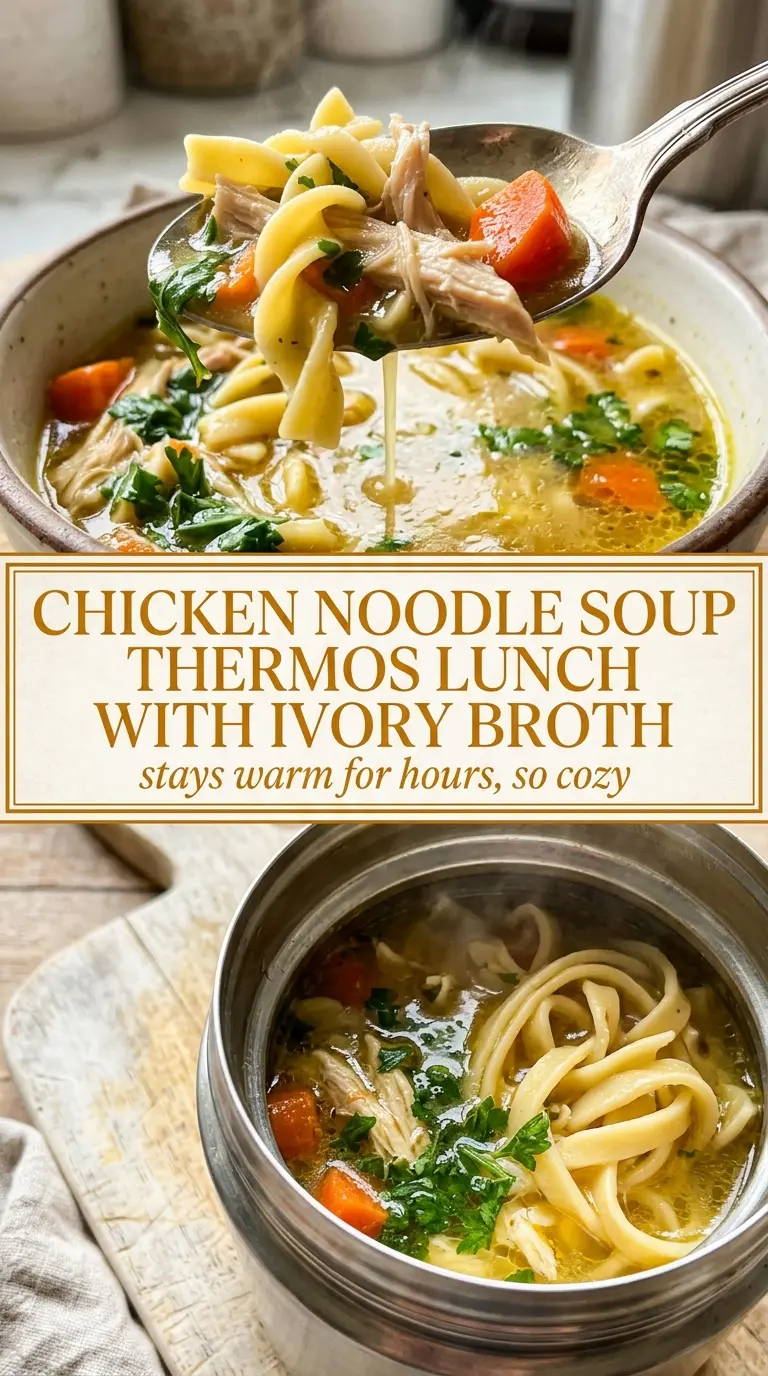
Tender shredded chicken, soft egg noodles, and sweet carrots make this chicken noodle soup feel like the kind of lunch that can carry an entire afternoon. The broth turns golden and herb-scented, the noodles soak up just enough flavor without going mushy, and every spoonful tastes like it was meant to be eaten piping hot from a thermos at a desk, on a job site, or in a school cafeteria line.
What makes this version work is the order. The vegetables get a quick start in butter so the onion goes sweet and the carrots lose that raw crunch, then the broth simmers with thyme and bay leaf long enough to taste rounded instead of thin. The noodles go in near the end, which keeps them tender instead of bloated, and the soup stays balanced enough to hold up after sitting in a thermos for a few hours.
Below, I’ll walk you through the one thermos step that matters most, plus a few smart swaps if you need to work with what’s already in the fridge. If you’ve ever packed soup for lunch and ended up with lukewarm broth and overcooked noodles, this version fixes both problems.
I packed this in a preheated thermos for my husband and the noodles stayed soft without turning to mush. The broth still tasted hot at lunchtime, and the carrots were just tender enough, not soggy.
Save this thermos-friendly chicken noodle soup for a hot lunch that actually stays hot.
The Secret to Soup That Still Tastes Good After the Thermos Sits
The biggest mistake with lunch soup is treating the thermos like a magic container that fixes everything. It doesn’t. If the broth is weak, the vegetables are undercooked, or the noodles are left to sit too long in the pot, the final lunch tastes flat and the texture gets tired fast. This soup works because each part is built for holding time.
Butter at the start gives the broth a little body, which matters more than people think when the soup has to stay appealing after a couple of hours. Chicken broth carries the flavor base, but the thyme and bay leaf are what keep it from tasting one-note. The other important detail is timing the noodles for the last stretch so they finish tender right when you’re ready to pack the thermos, not long before.
What Each Ingredient Is Actually Doing in This Dish
- Butter — This gives the vegetables a richer base than oil alone and helps the onion soften without tasting sharp. You can use olive oil in a pinch, but the broth will feel a little leaner.
- Chicken broth — Use a broth you’d actually sip. Since this recipe has a short ingredient list, a good broth carries most of the flavor. Low-sodium broth is the safest choice because you can season at the end.
- Cooked shredded chicken — Rotisserie chicken works beautifully here and saves time. Shred it fairly small so it warms through quickly and doesn’t clump in the thermos.
- Egg noodles — These are classic for a reason: they turn silky in broth and pack well if they’re cooked just until tender. If you use a sturdier pasta, the soup will still work, but the feel is less comforting and a little less traditional.
- Fresh parsley — Add it at the end for a clean, fresh finish. Dried parsley won’t give the same lift, so if you don’t have fresh, skip it rather than adding something dusty and dull.
How to Build the Soup So the Noodles Stay Tender
Softening the Vegetables First
Start by melting the butter and cooking the onion, carrots, and celery until they lose their raw edge and the onion turns translucent. You want the vegetables softened, not browned; browning shifts the soup toward a roasted flavor that doesn’t belong here. If the pan looks dry before the vegetables are ready, lower the heat rather than letting the butter scorch.
Making the Broth Taste Rounded
Stir in the garlic, thyme, and bay leaf just until fragrant, then add the broth and bring it to a gentle simmer. Garlic burns fast, so that short cooking time is enough. A hard boil isn’t helpful here because it can make the broth cloudy and overwork the vegetables before the noodles even go in.
Timing the Chicken and Noodles
Add the shredded chicken to warm through first, then add the egg noodles only about 10 minutes before serving. That timing keeps the noodles from drinking up too much broth and turning soft and swollen. If the soup will sit longer than that before serving, undercook the noodles by a minute or two and let the thermos finish the job.
Packing the Thermos Hot
Pour boiling water into the thermos for a few minutes, then empty it before filling it with the soup. That preheating step matters because a cold thermos steals heat from the soup fast. Ladle in the soup while it’s steaming hot, close the lid tightly, and don’t open it again until lunch.
What to Change When You Need a Different Version
Dairy-Free Version
Swap the butter for olive oil or avocado oil. You lose a little richness, but the broth still tastes clean and satisfying, especially once the chicken and herbs go in. If you want to add a touch more body, simmer the soup a few extra minutes before adding the noodles so the broth concentrates a bit.
Gluten-Free Version
Use gluten-free egg noodles or a small gluten-free pasta that holds its shape well. Cook it separately if the package suggests a long cook time, then add it to the soup at the end so it doesn’t break apart. Gluten-free noodles can go from tender to fragile fast, so packing them directly into a thermos works best when they’re just barely done.
Using Raw Chicken Instead of Cooked
Simmer boneless chicken breasts or thighs directly in the broth until cooked through, then shred them before adding the noodles. This gives the soup a deeper chicken flavor, but it adds time. Pull the chicken out once it reaches 165°F and don’t boil it hard or the meat will turn stringy.
Storage and Reheating
- Refrigerator: Store in an airtight container for up to 4 days. The noodles will keep soaking up broth, so the soup thickens a little by day two.
- Freezer: Freeze the soup without the noodles if you want the best texture. Noodles get soft after thawing, so add fresh ones when you reheat.
- Reheating: Warm gently on the stove over medium-low heat until steaming, or microwave in short bursts. If it looks too thick, add a splash of broth before heating so the noodles don’t seize up and turn gummy.
Questions I Get Asked About This Recipe

Chicken Noodle Soup Thermos Lunch
Ingredients
Equipment
Method
- Melt the butter in a large pot over medium heat and cook the onion, carrots, and celery until softened, about 5 minutes, stirring until glossy and fragrant.
- Stir in the garlic, dried thyme, and bay leaf and cook for about 1 minute until fragrant and slightly darker at the edges.
- Pour in the chicken broth and bring to a gentle simmer over medium-high heat until small bubbles break the surface.
- Add the shredded chicken and let it heat through in the broth for 5 minutes, stirring until hot throughout.
- Add the egg noodles and simmer for about 10 minutes until tender, stirring occasionally to prevent sticking.
- Stir in the chopped fresh parsley, season with salt and black pepper to taste, and keep the soup at a gentle simmer while you fill the thermos.
- Ladle the hot soup into a preheated thermos to keep warm, using a steady pour so the noodles stay submerged and steaming.