
Cinnamon roll focaccia bakes up with the best parts of two beloved treats: a pillowy, olive-oil-rich crumb and a gooey cinnamon-sugar top that sinks into every dimple. The edges turn deep golden and crisp while the center stays tender, so each square pulls apart like bread but eats like dessert.
What makes this version work is the balance between a high-hydration focaccia dough and a soft cinnamon-butter topping. The dough needs time to rise and relax, which gives you that airy structure without any kneading drama, and the olive oil in the pan keeps the bottom from sticking while adding flavor. The brown sugar and butter melt into the dimples as it bakes, so the topping doesn’t just sit on top — it settles into the bread and gives you a sticky, caramelized finish.
Below, I’m walking through the one part that matters most: how to press and dimple the dough so the cinnamon layer bakes into the bread instead of sliding off. I’ve also included a few smart swaps and storage notes, because this one tastes best warm, but it still holds up well for brunch the next day.
The dough rose beautifully and the cinnamon filling bubbled into all those little dimples instead of pooling on top. I glazed it while it was still warm and the whole pan disappeared before it even cooled.
This cinnamon roll focaccia is the one to pin when you want a brunch bake with crisp edges, a gooey center, and that glossy glaze dripping into every square.
The Trick Is Pressing the Dough, Not Stretching It
Cinnamon roll focaccia fails when the dough gets fought instead of coaxed. If you stretch it hard, it snaps back and bakes unevenly. If you press it gently into the pan after the first rise, it relaxes and fills the corners on its own.
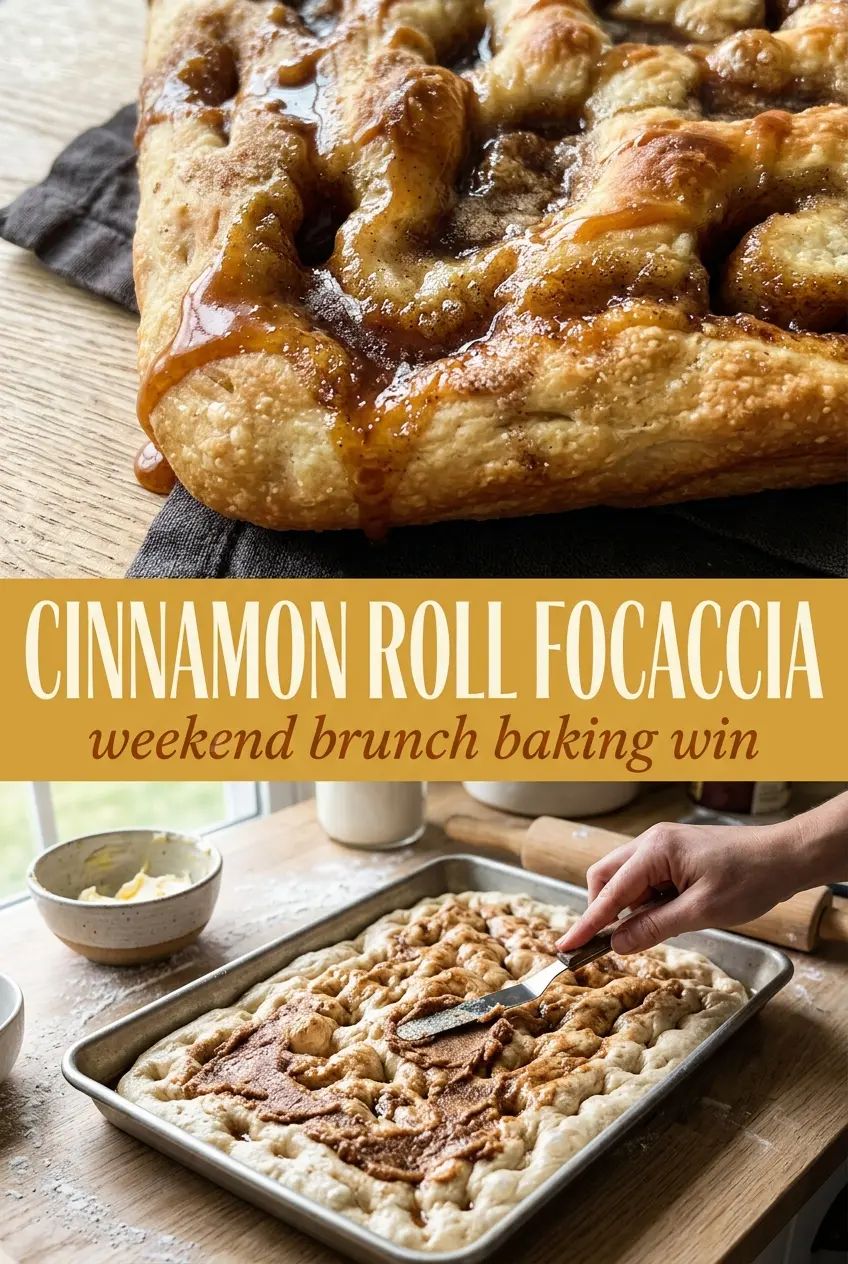
The other place people miss is the dimpled top. Those deep fingertip dents aren’t decoration. They create little pockets that hold the cinnamon-butter mixture, which means the filling stays where you want it and bakes into the bread instead of sliding to the edges.
- Let the dough rise until puffy. It should look airy and a little jiggly when you move the pan.
- Use oiled fingertips. Dry fingers can tear the dough and make it stick.
- Press all the way to the pan. Shallow dimples don’t hold enough filling.
What Each Ingredient Is Actually Doing in This Cinnamon Roll Focaccia

- Bread flour gives the focaccia its chewy, structured crumb. All-purpose flour works in a pinch, but the loaf won’t have the same spring and airy bite.
- Instant yeast keeps the rise simple and reliable. If you only have active dry yeast, dissolve it in the warm water first and add about 10 minutes to the first rise.
- Olive oil does more than keep the dough from sticking. It helps create that crisp, bronzed bottom and adds a subtle savory note that keeps the bread from tasting flat.
- Butter, brown sugar, and cinnamon are the filling that turns this from plain sweet bread into something closer to cinnamon rolls. Use softened butter so it spreads without tearing the dough; melted butter runs off the surface too easily.
- Powdered sugar and milk make the glaze light enough to drizzle. Add the milk slowly so you can stop at a thick, pourable consistency instead of ending up with a glaze that disappears into the bread.
From Shaggy Dough to Sticky, Golden Squares
Mixing the Dough
Stir the flour, yeast, salt, warm water, and olive oil until you get a shaggy mass with no dry pockets left. It should look rough and sticky, not smooth. That’s the right start for focaccia, and it means the dough has enough hydration to rise into an open, tender crumb.
First Rise and Pan Pressing
Cover the bowl and let the dough rise until it looks noticeably puffier, about an hour. Pour half the olive oil into the baking pan, then ease the dough into it and press it outward with oiled hands. If the dough keeps shrinking back, give it five more minutes to rest before pressing again instead of forcing it.
Dimpling and Filling the Surface
Press your fingertips deep into the dough, going almost to the bottom of the pan in some spots. That’s what creates the uneven top and the puddles for the cinnamon filling. Spread the brown sugar, butter, and cinnamon mixture over the surface, working it into the dents so it settles instead of sitting in a thick layer.
Second Rise and Baking
Let the topped dough rest for 30 minutes so it puffs around the filling. Bake at 425°F until the top is deeply golden and the edges look crisp, 20 to 25 minutes. If the top browns too fast before the center is set, tent it loosely with foil for the last few minutes.
Glazing While Warm
Whisk the powdered sugar and milk until smooth, then drizzle it over the focaccia while it’s still warm, not piping hot. If you glaze too early, the icing melts into the bread and you lose that glossy finish. Let it sit just long enough for the glaze to cling in thin ribbons and stay visible.
How to Adapt This for Different Diets and Different Moods
Dairy-Free Version
Swap the butter for a plant-based butter stick and use your preferred non-dairy milk in the glaze. The filling will still caramelize, though the flavor leans a little less rich and a little more warmly spiced.
Extra Gooey Cinnamon Layer
Add another 2 tablespoons of brown sugar and 1 tablespoon of butter to the topping. That gives you a stickier finish with more pooling in the dimples, but it also means a slightly softer top crust.
Make It Less Sweet
Cut the glaze in half and use a lighter hand with the brown sugar filling. You’ll get more of the bread-forward focaccia character and less of the dessert-like finish, which works well if you’re serving it with coffee or brunch eggs.
Storage and Reheating
- Refrigerator: Store in an airtight container for up to 3 days. The top softens a bit, but the flavor holds well.
- Freezer: Freeze unglazed squares tightly wrapped for up to 1 month. Thaw at room temperature, then glaze after warming so the icing doesn’t soak in.
- Reheating: Warm slices in a 300°F oven for 8 to 10 minutes or in the microwave for short bursts. The common mistake is overheating, which dries out the crumb and makes the glaze turn sticky instead of glossy.
Questions I Get Asked About This Recipe
Cinnamon Roll Focaccia
Ingredients
Equipment
Method
- Mix the bread flour, instant yeast, salt, warm water, and olive oil into a shaggy dough. Cover and let rise for 1 hour until puffy.
- Pour half the olive oil into a baking pan and press the dough out to fill it. Spread it to the edges in an even layer.
- Dimple the dough deeply with your fingertips all over the surface. Press down firmly so the wells are visible and evenly spaced.
- Mix the softened butter, brown sugar, and cinnamon, then spread it generously over the dimpled dough. Cover the surface so the filling lands in the pockets.
- Let the filled dough rise again for 30 minutes until slightly puffed. You should see some lift in the dimples.
- Bake at 425°F for 20-25 minutes until deeply golden. Look for a browned top and set, airy crumb through the dimples.
- Whisk the powdered sugar and milk into a glaze and drizzle over the warm focaccia. Glaze should flow into the ridges without completely soaking away.