
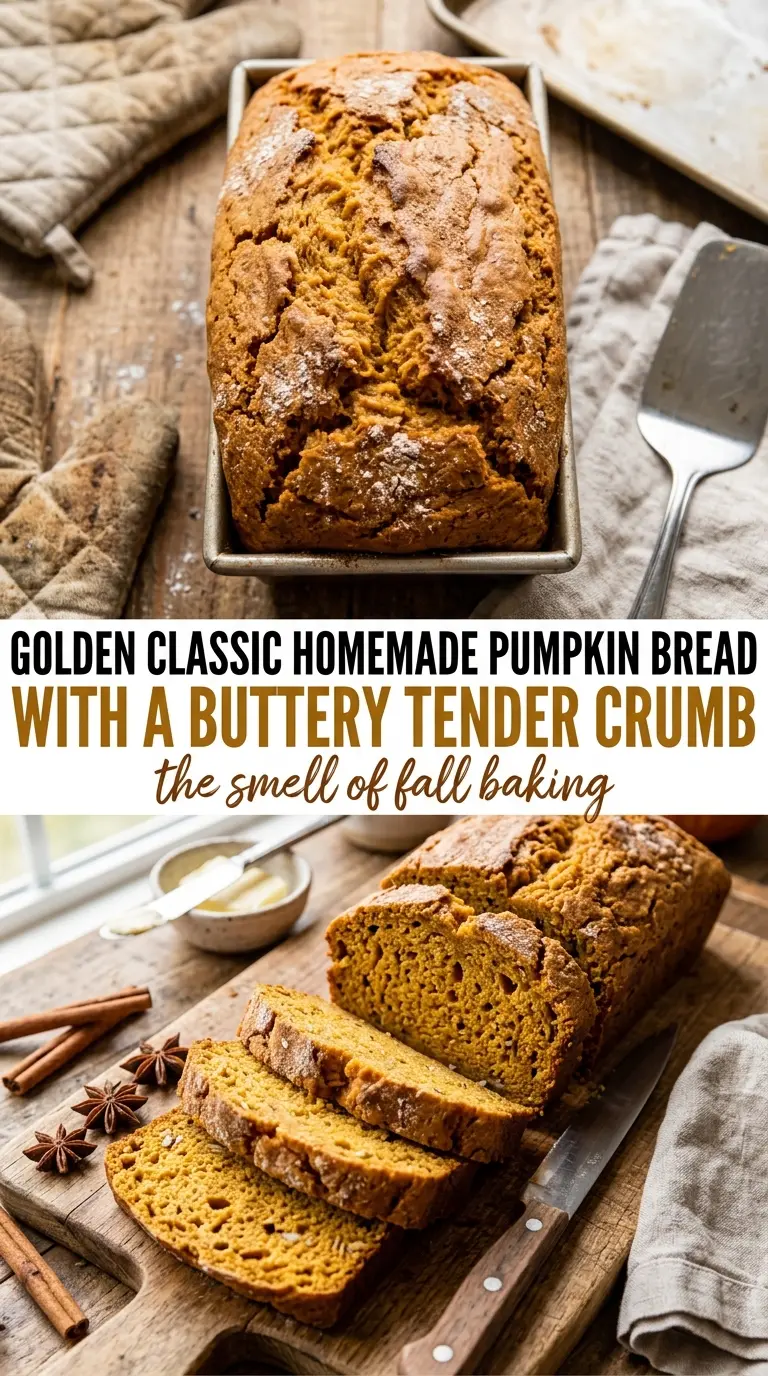
Classic homemade pumpkin bread bakes into a soft, tender loaf with a fine crumb and the kind of warm spice that makes the whole kitchen smell like you’ve been baking all afternoon. The top turns deep golden and just a little crackly, while the center stays moist without feeling heavy or oily. It’s the kind of loaf that disappears slice by slice, whether you serve it plain, toasted with butter, or tucked into a lunchbox.
What makes this version work is the balance: enough pumpkin puree to keep the crumb plush, but not so much that the loaf turns gummy. Vegetable oil keeps the texture soft for days, and the mix of granulated sugar and brown sugar gives you both sweetness and a little caramel depth. The batter also comes together fast, which matters because pumpkin bread punishes overmixing. Stir until the flour disappears and stop there.
Below, you’ll find the small details that keep the loaf from turning dense or sinking in the middle, plus a few ways to adapt it if you want a different spice level or need to work around ingredients you already have.
I followed the batter exactly and the loaf came out so tender with a perfect crack on top. It sliced cleanly after cooling, and the cinnamon-nutmeg flavor was even better the next day.
Save this pumpkin bread for the days when you want a soft, warmly spiced loaf with a crackly top and no mixer required.
Why Pumpkin Bread Turns Dense Before It Turns Tender
The biggest mistake with pumpkin bread is treating it like a quick stir-together batter that can take extra mixing without consequences. Once the flour goes in, the gluten starts developing fast. Keep stirring and the loaf bakes up tight and rubbery instead of soft and sliceable.
The other trap is adding too much moisture. Pumpkin puree already brings a lot of water to the batter, so this recipe keeps the wet ingredients simple and the ratios balanced. That’s why you get a loaf that holds together cleanly once cooled instead of sinking in the center or staying damp around the middle.
What Each Ingredient Is Actually Doing in This Loaf
- All-purpose flour — This gives the loaf its structure without making it bready. A lighter flour is best here because pumpkin puree already adds weight and moisture.
- Baking soda and baking powder — The two leaveners work together to give the loaf lift and a rounded top. If your bread bakes flat, stale leaveners are usually the reason.
- Pumpkin puree — Use plain pumpkin puree, not pumpkin pie filling. Pie filling is already sweetened and spiced, which throws off both the texture and flavor balance.
- Vegetable oil — Oil keeps the crumb soft for days in a way butter doesn’t quite match. Melted butter can work, but the loaf will bake up a little firmer and less moist.
- Eggs — They bind the batter and help the loaf rise evenly. Room-temperature eggs blend more smoothly into the puree, but cold eggs will still work.
- Brown sugar and granulated sugar — Granulated sugar gives clean sweetness, while brown sugar adds a little molasses depth that plays well with the spices. You can swap in all granulated sugar, but the loaf will taste a bit flatter.
- Cinnamon and nutmeg — These are the backbone of the spice flavor. Freshly opened spices make a noticeable difference here because the loaf doesn’t have a lot of competing flavors.
Building the Batter Without Overworking It
Mix the Dry Ingredients First
Whisk the flour, baking soda, baking powder, cinnamon, nutmeg, and salt together until the color looks even. That step matters because it spreads the leaveners and spice through the flour before the wet ingredients go in. If the baking soda clumps, you’ll get uneven rise and little bitter pockets in the finished loaf.
Whisk the Wet Ingredients Until Smooth
In a separate bowl, whisk the pumpkin puree, oil, eggs, and both sugars until the mixture looks glossy and thickened. The sugar should mostly dissolve into the pumpkin base, which helps the loaf bake with a fine crumb. If the mixture looks curdled, keep whisking a little longer; it should come together before the flour is added.
Stop Mixing as Soon as the Flour Disappears
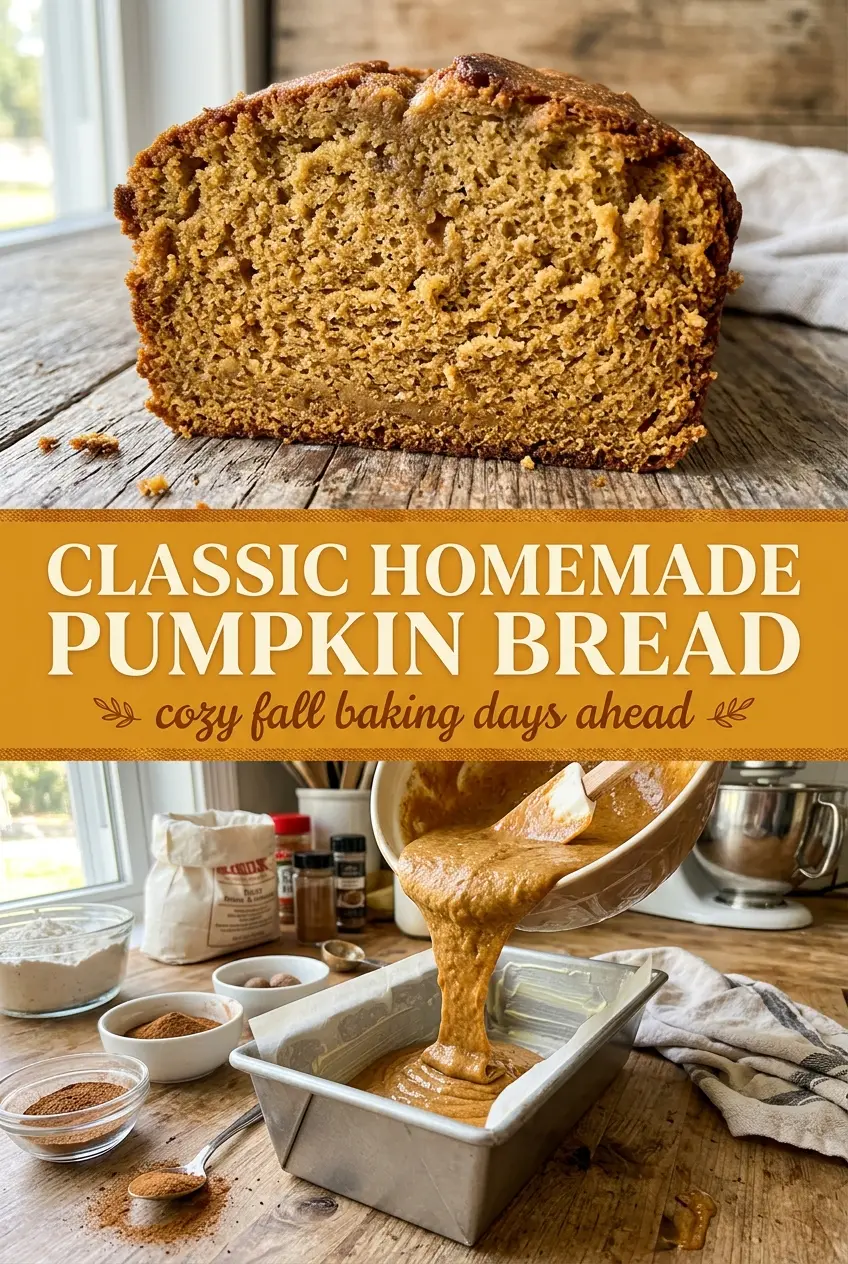
Fold the dry ingredients into the wet ingredients just until you no longer see streaks of flour. A few small lumps are fine. What ruins pumpkin bread is trying to beat the batter smooth, because that tightens the crumb and turns the loaf heavy instead of tender.
Bake Until the Center Springs Back
Pour the batter into the greased loaf pan and bake at 350°F until a toothpick comes out clean or with a few moist crumbs. The top should be deeply golden and split down the center, and the loaf should spring back when you press it lightly in the middle. If the center still looks shiny or jiggles, give it more time; pulling it too early leaves the middle underbaked and gummy.
How to Adapt This for Different Pantries and Preferences
Make it dairy-free without changing the texture
This recipe is already dairy-free as written because it uses oil instead of butter. That means you get the same soft, moist crumb without having to hunt for specialty swaps, which is one reason it holds up so well for a mixed crowd.
Swap the spices for a warmer, stronger finish
If you like a more pronounced spice flavor, add 1/4 teaspoon cloves or 1/4 teaspoon ginger. That gives the loaf more depth, but it also pushes the bread farther from the clean pumpkin-cinnamon balance, so go light unless you want a bolder spice note.
Turn it into muffins instead of a loaf
Divide the batter among lined muffin cups and start checking them around 18 to 22 minutes. Muffins bake faster, so you get more browned edges and a slightly lighter texture, but you lose the dense, sliceable loaf feel.
Storage and Reheating
- Refrigerator: Store tightly wrapped for up to 5 days. The crumb stays moist, though the spice flavor deepens by the second day.
- Freezer: Wrap the cooled loaf or individual slices well and freeze for up to 3 months. Slices thaw faster and keep you from defrosting the whole loaf at once.
- Reheating: Warm slices in a toaster oven or microwave just until heated through. If you overheat them, the crumb dries out and the sugar edges get tough.
The Questions That Come Up Most Often With Pumpkin Bread
Classic Homemade Pumpkin Bread
Ingredients
Equipment
Method
- Preheat the oven to 350°F and grease a loaf pan.
- Whisk together the all-purpose flour, baking soda, baking powder, cinnamon, nutmeg, and salt until evenly combined.
- Whisk together the pumpkin puree, vegetable oil, eggs, granulated sugar, and brown sugar until smooth.
- Fold the dry ingredients into the wet ingredients until just combined, with no visible dry flour.
- Pour the batter into the prepared loaf pan.
- Bake for 55-65 minutes at 350°F, until a toothpick inserted in the center comes out clean.
- Let the bread cool completely in the pan before slicing for cleaner cuts.