
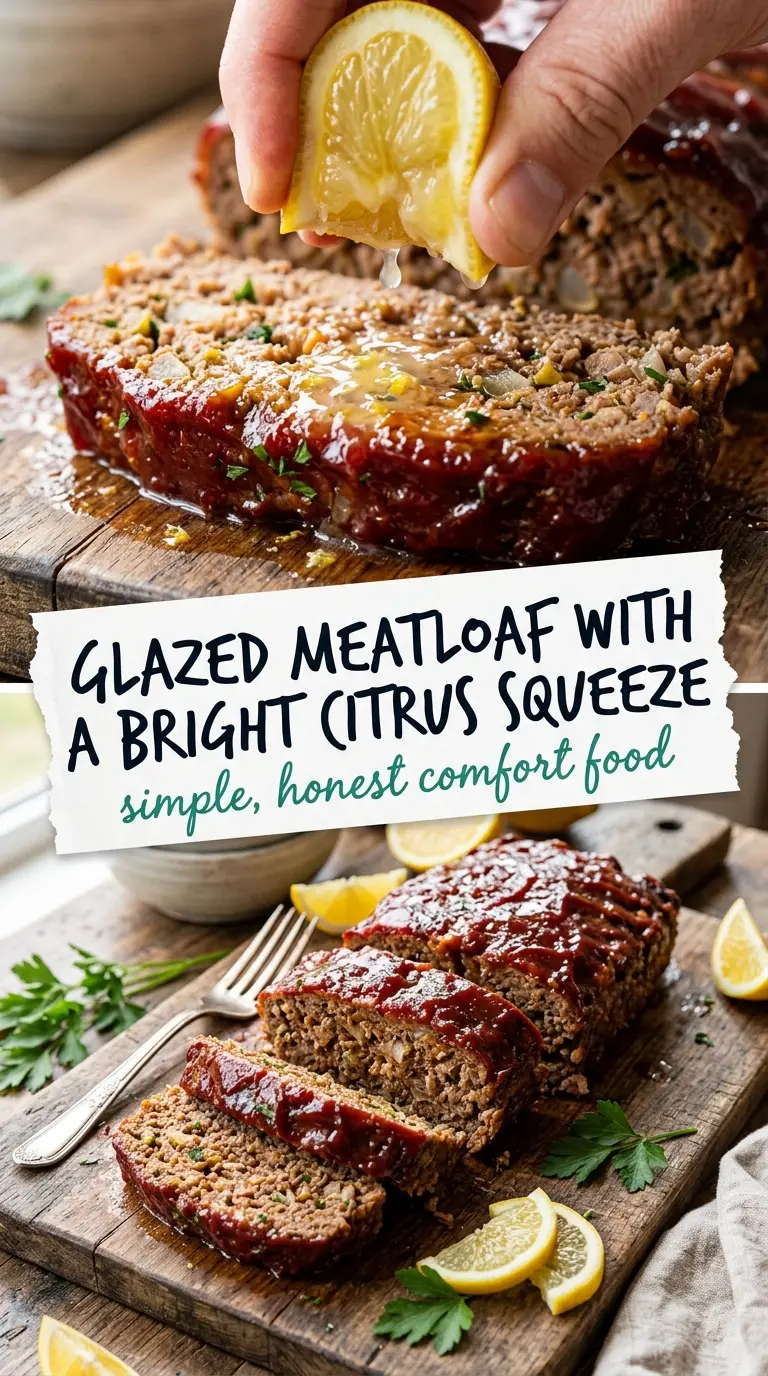
Classic glazed meatloaf earns its place in the rotation because it slices cleanly, stays moist in the center, and brings that sweet-tangy ketchup glaze all the way through each bite. The texture is what separates a good loaf from a dense one: tender beef, soft breadcrumbs, and just enough egg to hold everything together without turning it heavy. When it rests before slicing, the juices settle back in instead of running all over the cutting board.
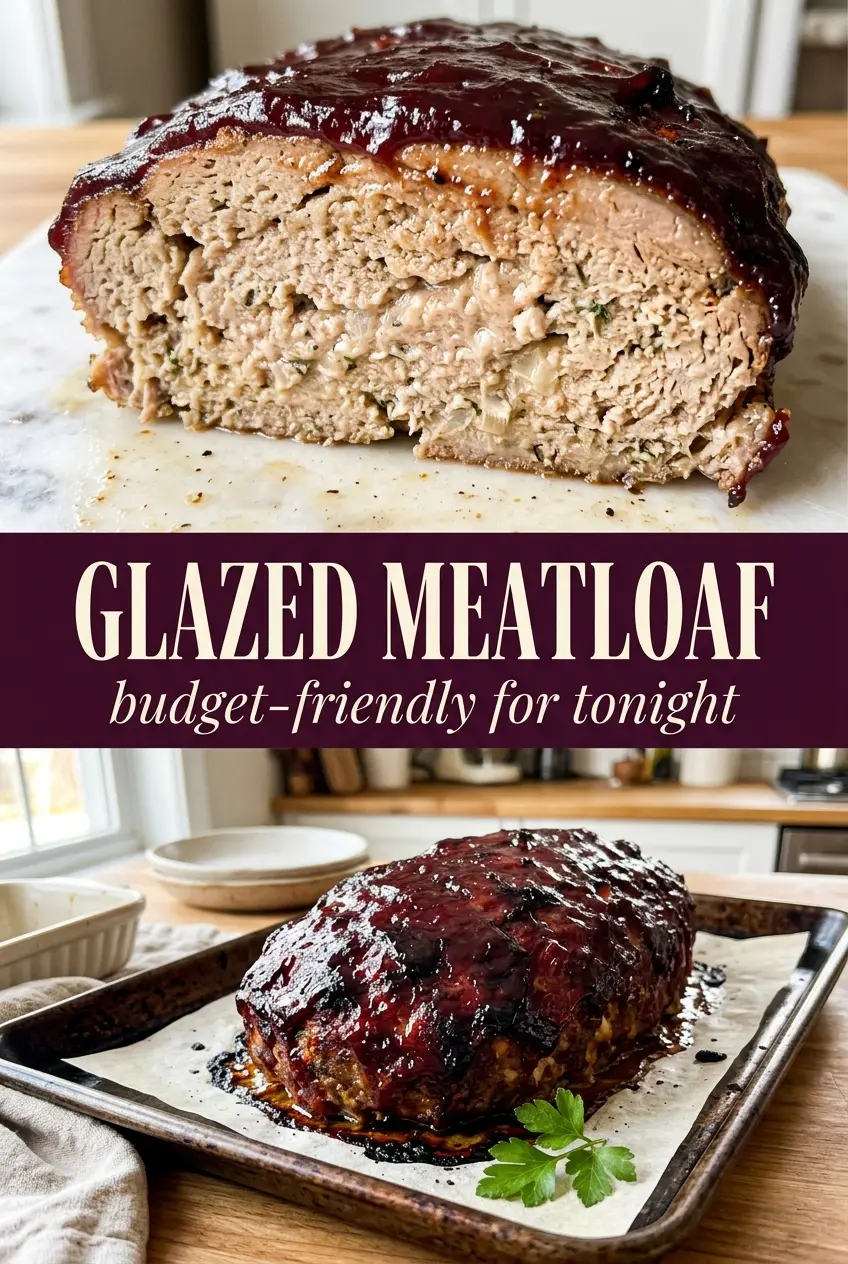
The bright edge here matters. Brown sugar and ketchup give you the familiar sticky glaze, but the vinegar and lemon zest keep it from tasting flat or overly sweet. That little bit of acid lifts the beef and makes the whole loaf taste more balanced, especially if you’re serving it with mashed potatoes or roasted vegetables. I also like baking it on a sheet instead of crowding it into a loaf pan, because the edges caramelize a little better and the glaze thickens without turning soupy.
The glaze set up beautifully and the lemon zest kept it from tasting too sweet. I baked it on a sheet like suggested and the edges got these caramelized bits my husband kept picking off before dinner.
Save this classic glazed meatloaf for a simple dinner with a tangy-sweet ketchup glaze and tender, sliceable texture.
The Step That Keeps Meatloaf Tender Instead of Dense
The most common mistake with meatloaf is overworking the mixture. Once the breadcrumbs, eggs, onion, and seasoning are distributed, stop. If you pack it like sausage, the loaf bakes up tight and bouncy instead of tender and sliceable. The other problem is too much moisture in the pan. Baking it on a sheet lets the loaf hold its shape while the glaze thickens on top instead of simmering around the sides.
The resting time matters more than people think. If you cut in too soon, the juices spill out and the slices collapse. Ten minutes gives the loaf enough time to firm up so you get neat slices with a moist center. That’s the difference between a dinner that looks thrown together and one that plates well.
What Each Ingredient Is Actually Doing in This Dish
- Ground beef — This is the backbone of the loaf, so don’t go too lean. An 80/20 blend gives you enough fat for flavor and tenderness without making the meatloaf greasy.
- Breadcrumbs — They soak up the juices and keep the loaf from turning tight. Plain breadcrumbs work fine, and if you use seasoned crumbs, cut back a little on extra salt so the seasoning doesn’t get away from you.
- Eggs — They bind everything together so the slices hold after baking. If you skip them, the loaf crumbles; if you use too many, the texture turns rubbery.
- Onion — Diced small, it softens as the loaf bakes and adds moisture plus a little sweetness. If you want a milder finish, grate it instead of dicing so it melts more into the meat.
- Ketchup, brown sugar, and vinegar — This is the glaze that gives the loaf its familiar sweet-tangy finish. The vinegar keeps the brown sugar from tasting heavy, and the ketchup sets into a sticky top layer in the oven.
- Lemon zest — It’s subtle, but it sharpens the glaze and keeps the sweetness in check. Fresh zest matters here; bottled lemon juice won’t give the same lift.
The Easiest Way to Keep the Glaze Glossy and the Center Moist
Mix the Meat Just Enough
Combine the beef, breadcrumbs, eggs, onion, salt, and pepper until everything is evenly distributed, then stop mixing. The meat should look cohesive, but it shouldn’t be kneaded into a paste. If you keep going, the proteins tighten up and the finished loaf gets compact.
Shape It on the Pan
Form the mixture into a loaf shape on a baking sheet lined with parchment or foil. A sheet pan gives the edges room to brown, and it also keeps the glaze from pooling underneath. Aim for a uniform shape so the middle cooks at the same pace as the ends.
Brush on the Glaze in Two Layers
Stir the ketchup, brown sugar, vinegar, and lemon zest until smooth, then brush half over the loaf before it goes into the oven. After 45 minutes, add the remaining glaze so it stays bright and sticky instead of drying out too early. If the glaze looks too thin, keep whisking until the sugar dissolves; grainy glaze usually means the sugar wasn’t fully blended.
Bake Until the Loaf Feels Set
After the second glaze goes on, bake until the top looks glossy and the center is cooked through, about 15 more minutes. The loaf should feel firm at the edges and just spring back when you touch the center. If you slice before resting, the juices run out fast, so give it the full 10 minutes before cutting.
How to Adapt This for Different Tables and Different Pantries
Dairy-Free Without Changing the Texture
This meatloaf is naturally dairy-free as written, so you don’t need to swap anything. That’s helpful because the breadcrumb-and-egg structure already gives you the tenderness people often try to fake with milk or cheese.
Gluten-Free With the Right Crumb Swap
Use gluten-free breadcrumbs or finely crushed gluten-free crackers in the same amount. You’re looking for the same dry absorbency, so the loaf still holds together without turning gummy.
A Leaner Loaf That Still Stays Juicy
If you use leaner ground beef, don’t skip the onion and don’t overbake it. The fat is carrying less of the moisture here, so the resting time becomes even more important and the loaf may need a few minutes less in the oven.
Storage and Reheating
- Refrigerator: Store slices in an airtight container for up to 4 days. The glaze tightens a bit in the fridge, but the flavor holds well.
- Freezer: It freezes well. Wrap individual slices tightly and freeze for up to 3 months, or freeze the whole loaf after cooling completely.
- Reheating: Reheat covered in a 300°F oven with a splash of water or a thin brush of ketchup on top to keep the surface from drying out. The biggest mistake is blasting it in the microwave until the edges turn tough while the center still tastes cold.
Answers to the Questions Worth Asking
Classic Glazed Meatloaf
Ingredients
Equipment
Method
- Preheat oven to 350°F and line a sheet pan for easy transfer.
- In a mixing bowl, combine ground beef, breadcrumbs, eggs, diced onion, salt, and pepper until evenly incorporated.
- Shape the mixture into a loaf on the prepared baking sheet, leaving the top relatively smooth for glazing.
- Whisk ⅓ cup ketchup with brown sugar, apple cider vinegar, and lemon zest until the glaze looks glossy and uniform.
- Brush half the glaze over the loaf so the top is fully covered with a thin, even layer.
- Bake for 45 minutes at 350°F, until the glaze has darkened slightly and the loaf looks set around the edges.
- Brush the remaining glaze over the loaf and bake 15 more minutes at 350°F, until the glaze is thick and caramelized in spots.
- Rest the meatloaf for 10 minutes before slicing so the juices redistribute and the loaf holds together.