
Lavender and lemon make a cake that tastes light without feeling plain. The crumb stays soft and tender, the lemon keeps every bite bright, and the lavender adds just enough floral note to make it stand out from the usual citrus sheet cake. The glaze melts into the warm top and gives the whole pan a shiny finish that slices cleanly and stays moist for days.
This version works because the batter starts with Greek yogurt and melted butter, which gives you a cake that’s rich but not heavy. The yogurt brings tang and moisture, and the melted butter mixes easily so you don’t need a mixer or a long creaming step. The key is keeping the lavender subtle and using real lemon zest and juice, since that combination carries the whole cake.
Below, you’ll find the exact point where the lavender should be crushed, why the warm glaze matters, and the one small step that helps the cake soak up even more lemon without turning soggy.
The glaze soaked right into the top and the cake stayed moist for three days. The lavender was subtle, not perfume-y, which is exactly what I wanted.
Pin this lavender and lemon sheet cake for a soft, citrusy dessert with a delicate floral finish.
The Reason This Cake Stays Tender Instead of Dry and Crumbly
Sheet cakes can go dry fast because they bake in a thin layer and overbake easily. The fix here is a batter that starts with enough fat and moisture to stay soft, plus a bake time that stops as soon as the center is set. If you wait for the top to look deeply browned, you’ve already gone too far.
The other mistake is overmixing once the flour goes in. That’s how you end up with a cake that slices cleanly but eats like a brick. Stir just until the flour disappears, then stop. The batter should look smooth and thick, not whipped and airy.
What Each Ingredient Is Doing in This Cake
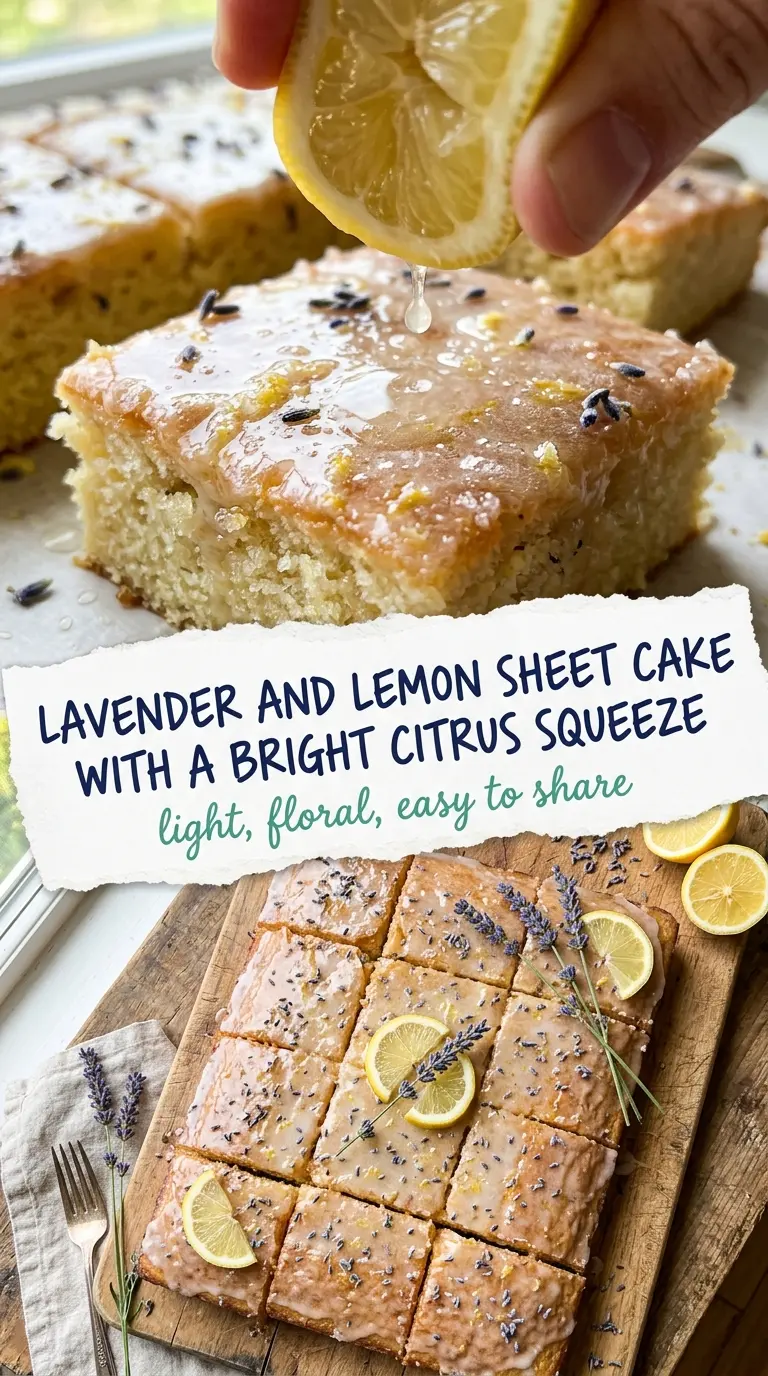
- Greek yogurt — This is what keeps the crumb soft and gives the lemon something tangy to play against. Full-fat yogurt is nicest here, but plain Greek yogurt of any fat level works. Sour cream can step in if that’s what you have, and it gives a similar texture with a slightly richer finish.
- Melted butter — Melted butter makes this cake easy to mix and gives it a clean, buttery flavor without needing a mixer. Use real butter, not a spread, because the cake depends on the fat for structure and tenderness. If you swap in neutral oil, the cake will stay moist, but you’ll lose some of the buttery flavor that makes the glaze taste brighter.
- Dried culinary lavender — This ingredient needs to be culinary-grade, not ornamental lavender from the garden. Crush it lightly so it distributes through the batter instead of staying as little hard bits. Too much lavender can turn the cake soapy fast, so measure carefully.
- Lemon zest and juice — The zest carries the fragrance, and the juice sharpens the flavor and helps the glaze soak in. Fresh lemons matter here because bottled juice tastes flat and one-note in a cake like this. If your lemons are small, use the zest generously and keep the juice to taste in the glaze so it doesn’t get thin.
- Powdered sugar — This makes the glaze smooth and quick to whisk. Sift it if it’s lumpy, since a gritty glaze sinks into the cake unevenly. Add the lemon juice slowly so you can control whether you get a thick drizzle or a thinner soak-in glaze.
How to Mix, Bake, and Glaze It Without Losing the Tender Crumb
Starting with the Wet Ingredients
Whisk the sugar, yogurt, eggs, melted butter, lemon zest, and lemon juice until the mixture looks smooth and a little glossy. You’re not building volume here; you’re dissolving the sugar and blending the fat with the acid so the batter bakes evenly. If the butter is too hot, it can scramble the eggs, so let it cool until it’s warm, not steaming.
Bringing the Batter Together
Fold in the flour, baking powder, and crushed lavender just until no dry streaks remain. The batter should look thick but spreadable, and a few small lumps are fine. Overmixing wakes up the gluten in the flour, which is the fastest way to lose that soft, cake-like crumb.
Baking to the Right Doneness
Spread the batter in a greased sheet pan and bake at 350°F until a toothpick comes out clean, usually 22 to 25 minutes. The top should spring back when you press it lightly, and the edges will pull just slightly from the pan. If the center still looks shiny, give it a few more minutes; if the edges are already dark, pull it now.
Glazing While the Cake Is Warm
Whisk the powdered sugar with a little lemon juice and drizzle it over the warm cake. Warm cake absorbs the glaze instead of letting it sit on top like icing, which is how you get that soft, soaked layer near the surface. If you want a deeper lemon hit, poke a few holes in the cake before glazing so it catches more of the syrup.
Three Ways to Adjust the Cake Without Losing the Balance
Make it dairy-free
Swap the Greek yogurt for a thick dairy-free yogurt with some body, like coconut or almond-based Greek-style yogurt, and use melted coconut oil or a neutral oil instead of butter. The cake will still bake up tender, though the flavor will lose a little of the buttery roundness. Keep the lemon glaze simple so the coconut note doesn’t fight it.
Make it gluten-free
Use a good 1:1 gluten-free flour blend that already includes xanthan gum. The texture will be a little more delicate, but it should still slice well once cooled. Don’t add extra flour to firm it up; that usually makes gluten-free cakes dry and dense.
Make it a little more lemon-forward
Add a little extra zest to the batter and thin the glaze with extra lemon juice instead of water. That pushes the citrus higher without changing the structure of the cake. The lavender should stay in the background, not compete for attention.
Storage and Reheating
- Refrigerator: Store covered for up to 5 days. The crumb stays moist, and the lemon flavor softens a little as it sits.
- Freezer: It freezes well. Wrap individual pieces tightly and freeze for up to 2 months, then thaw at room temperature while still wrapped so the glaze doesn’t weep.
- Reheating: Eat it at room temperature or warm a slice for 10 to 15 seconds in the microwave. Too much heat can make the glaze sticky and push the cake toward dry edges before the center softens.
Questions I Get Asked About This Recipe
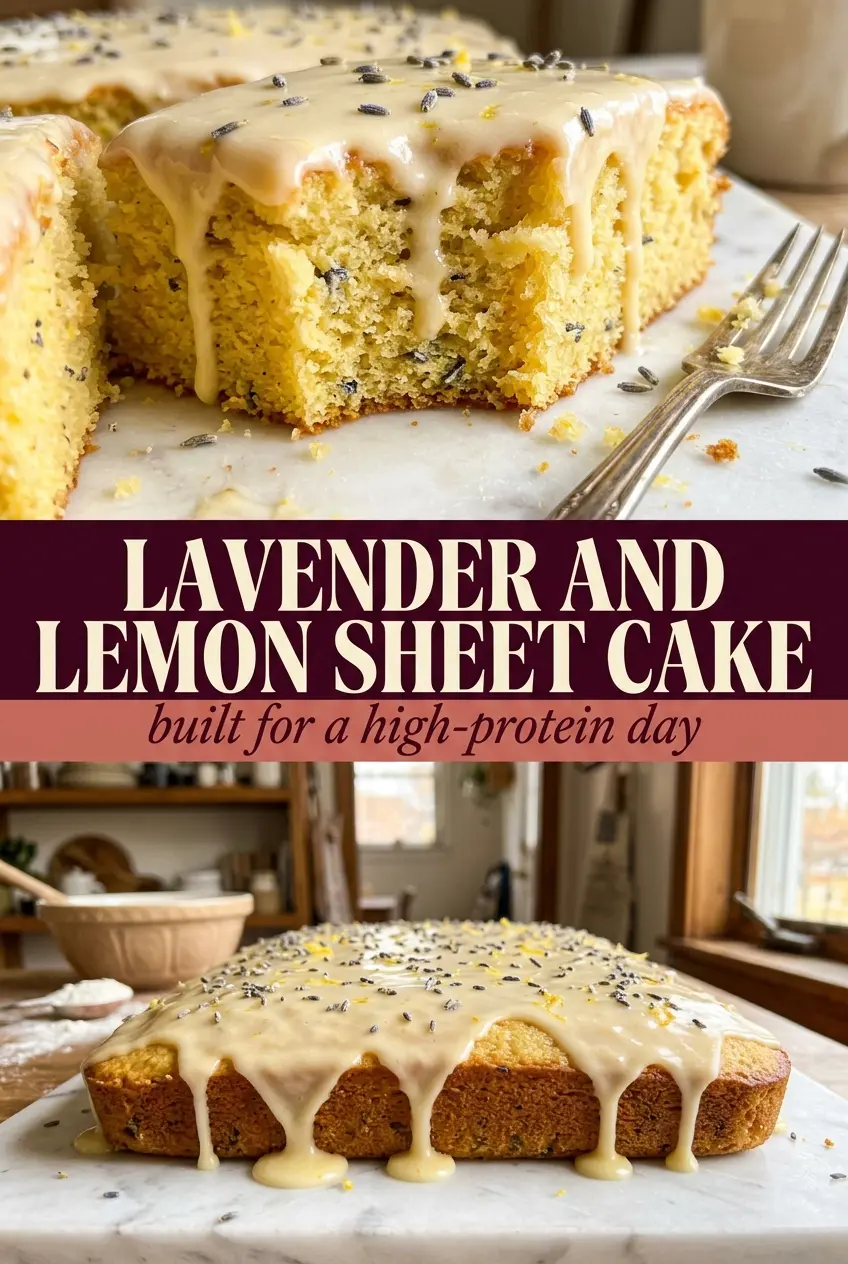
Lavender And Lemon Sheet Cake
Ingredients
Equipment
Method
- Preheat the oven to 350°F and grease a sheet pan with a thin, even coating so the cake releases easily.
- Whisk sugar, Greek yogurt, eggs, melted butter, lemon zest, and juice together until smooth and glossy.
- Fold in flour, baking powder, and crushed lavender just until no dry streaks remain; stop early to keep the cake tender.
- Pour the batter into the sheet pan and spread evenly into the corners for uniform baking.
- Bake for 22-25 minutes at 350°F until a toothpick inserted in the center comes out clean or with only a few moist crumbs.
- Whisk powdered sugar with a little lemon juice, then drizzle over the warm cake right away so it soaks in and stays soft.