
Tender bread cubes, a buttery herb base, and a crisp top make this stuffing the dish people go back for before the turkey is even carved. The best version has contrast in every bite: soft in the middle where the broth soaks in, golden and a little crunchy where the oven catches the top. That texture is what keeps it from turning into a soggy pan of bread.
The trick is drying the bread first, not skipping that step because the cubes look stale enough already. Dry bread absorbs the buttery onion and celery mixture without collapsing, which gives you structure instead of mush. I also like to mix in the eggs with the broth so the stuffing sets just enough to slice while still staying moist in the center.
Below, I’ve included the timing that keeps the top crisp, the ingredients that matter most, and the make-ahead move that makes this an easy side instead of a last-minute scramble.
The bread stayed soft in the middle but the top still got crisp, and the sage flavor came through without tasting heavy. I assembled it the night before and it baked up perfectly the next day.
Save this classic Thanksgiving stuffing for the crisp buttery top and make-ahead ease when the holiday table gets busy.
The Reason Stuffing Turns Mushy Before It Turns Golden
Stuffing usually fails for one of two reasons: the bread is too fresh, or the pan is packed with too much liquid too fast. Fresh bread drinks broth unevenly and collapses before the middle has a chance to set. Dried bread gives you control, which is why that first 30 minutes in the oven matters more than people think.
The other thing that changes the outcome is how the herbs and vegetables are cooked. Onions and celery need time in butter to soften and sweeten before they go near the bread. If they go in raw, they stay sharp and watery, and the stuffing tastes flat even when it’s seasoned well.
- Dry bread cubes — These are the structure of the dish. Use sturdy sandwich bread, country bread, or sourdough; softer breads work if you dry them well, but very airy breads can disappear into the custard.
- Butter — This carries the sage and thyme and coats the vegetables so their flavor spreads through the whole pan. You can cut the amount slightly, but this is not the place for oil if you want that classic holiday taste.
- Sage and thyme — Fresh gives the best aroma here, but dried works in a pinch at about one-third the amount. Sage is the signature flavor, so don’t bury it under extra broth.
- Chicken broth — Use a broth you’d actually drink. If yours is salty, cut back on added seasoning, because the bread will concentrate everything as it bakes.
Building the Stuffing So the Center Stays Tender and the Top Stays Crisp
Drying the Bread First
Spread the bread cubes in a single layer and bake them at 250°F until they feel dry on the outside and a little firm in the center. You’re not toasting them to color; you’re driving off moisture so they can absorb broth without turning to paste. If the cubes still feel soft, keep them in longer, because underdried bread is the most common reason stuffing bakes up heavy.
Cooking the Onion, Celery, and Herbs
Cook the onion and celery in butter until the onion turns translucent and the celery loses its raw snap. Add the garlic near the end so it doesn’t scorch, then stir in the sage and thyme long enough to smell them bloom in the pan. If the vegetables still look wet and shiny when they go into the bread, they’ll steam the stuffing instead of seasoning it.
Bringing It Together Without Crushing the Bread
Gently toss the bread with the vegetable mixture, then pour in the broth and eggs. Stir just until every cube is moistened and coated. If you overmix, the edges break down and you lose the mix of soft and crisp that makes stuffing worth serving.
Baking Covered, Then Uncovered
Start covered so the center steams and sets, then uncover for the last 15 minutes so the top can dry out and turn golden. The stuffing is done when it feels set in the middle and the top has a deep buttery crust. If you bake it uncovered from the start, the top dries before the inside is ready.
How to Adapt This Stuffing for Different Tables
Make-Ahead Stuffing for a Packed Holiday Schedule
Assemble the stuffing a day ahead, cover it tightly, and refrigerate it unbaked. Let it sit on the counter while the oven preheats, then add a few extra minutes in the oven if it’s going in cold. This keeps the texture more even than baking it all the way, cooling it, and reheating it later.
Dairy-Free Version
Swap the butter for a good plant-based butter that melts and browns a little like the real thing. Olive oil works too, but the stuffing will taste lighter and less classic. You’ll still get a crisp top, just with a different kind of richness.
Vegetarian Version
Use vegetable broth instead of chicken broth and keep the rest the same. Choose a broth with some body so the stuffing doesn’t taste thin. This version still bakes up with the same soft center and browned top.
Freezer-Friendly Leftovers
Portion leftovers into airtight containers and freeze them after they cool completely. The texture softens a bit after thawing, but it still reheats well if you warm it covered with a splash of broth. The crust won’t stay as crisp as day one, so plan on refreshing it in the oven rather than the microwave.
Storage and Reheating
- Refrigerator: Store covered for up to 4 days. The bread softens a little, but the flavor gets deeper overnight.
- Freezer: Freeze in airtight portions for up to 2 months. Thaw in the refrigerator before reheating for the best texture.
- Reheating: Cover with foil and warm at 350°F until hot, then uncover for a few minutes to bring back the top crust. If it seems dry, add a spoonful or two of broth before heating so it steams instead of drying out further.
Answers to the Questions Worth Asking
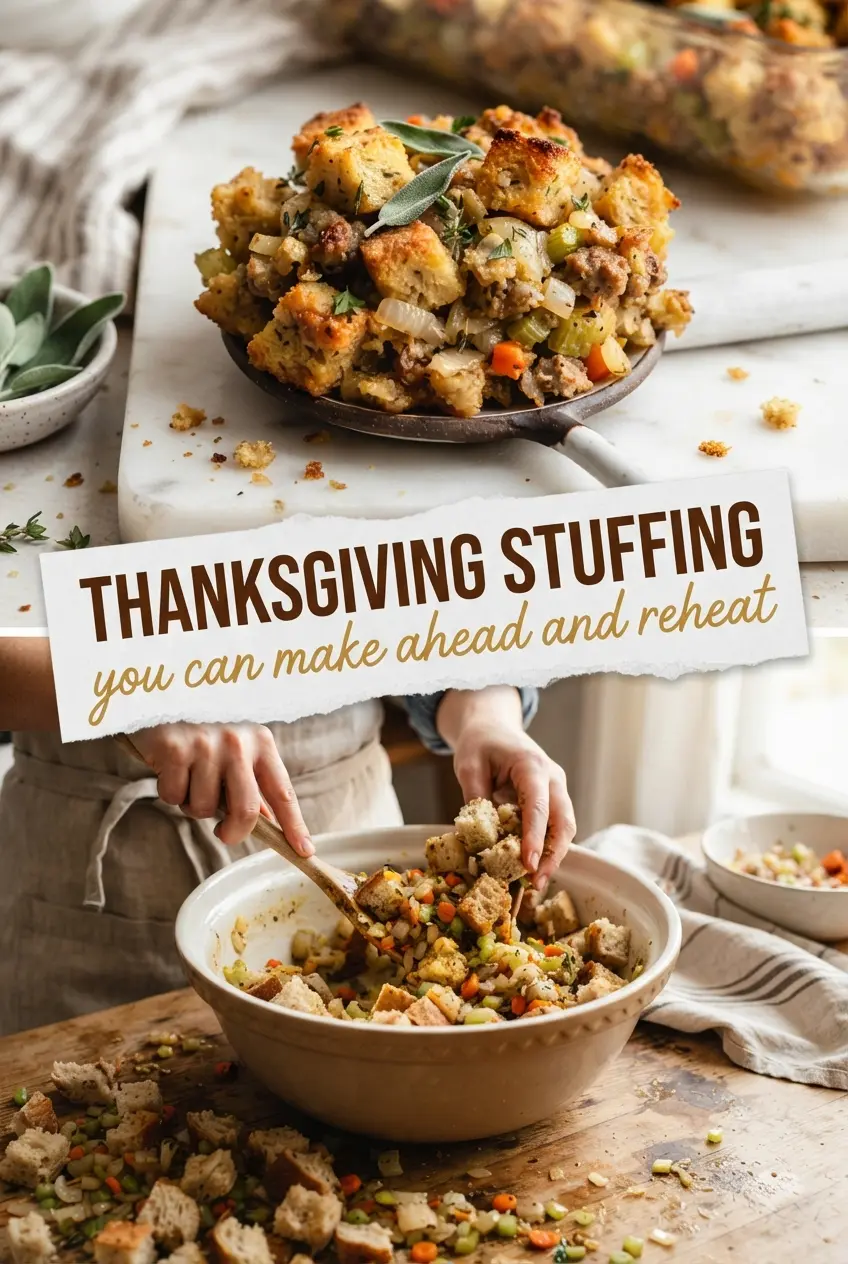
Classic Thanksgiving Stuffing
Ingredients
Equipment
Method
- Preheat the oven to 250°F. Spread the bread cubes on a sheet pan and dry for 30 minutes, until they feel drier and lighter.
- Melt the butter in a baking-friendly skillet or pot over medium heat. Sauté the onion, celery, and garlic until fragrant and softened, then stir in the chopped sage and thyme.
- Add the dried bread cubes to the skillet and toss until evenly coated with the buttery herb mixture. Pour in the chicken broth and stir to moisten the cubes.
- Whisk the eggs in a small bowl, then mix them through the stuffing. Stir until the eggs are incorporated and the mixture looks evenly bound.
- Transfer the stuffing to a baking dish and cover with foil. Bake at 350°F for 30 minutes, until the center is hot and set.
- Remove the foil and bake at 350°F for 15 minutes more. Look for a crisp, golden top and edges before removing from the oven.