
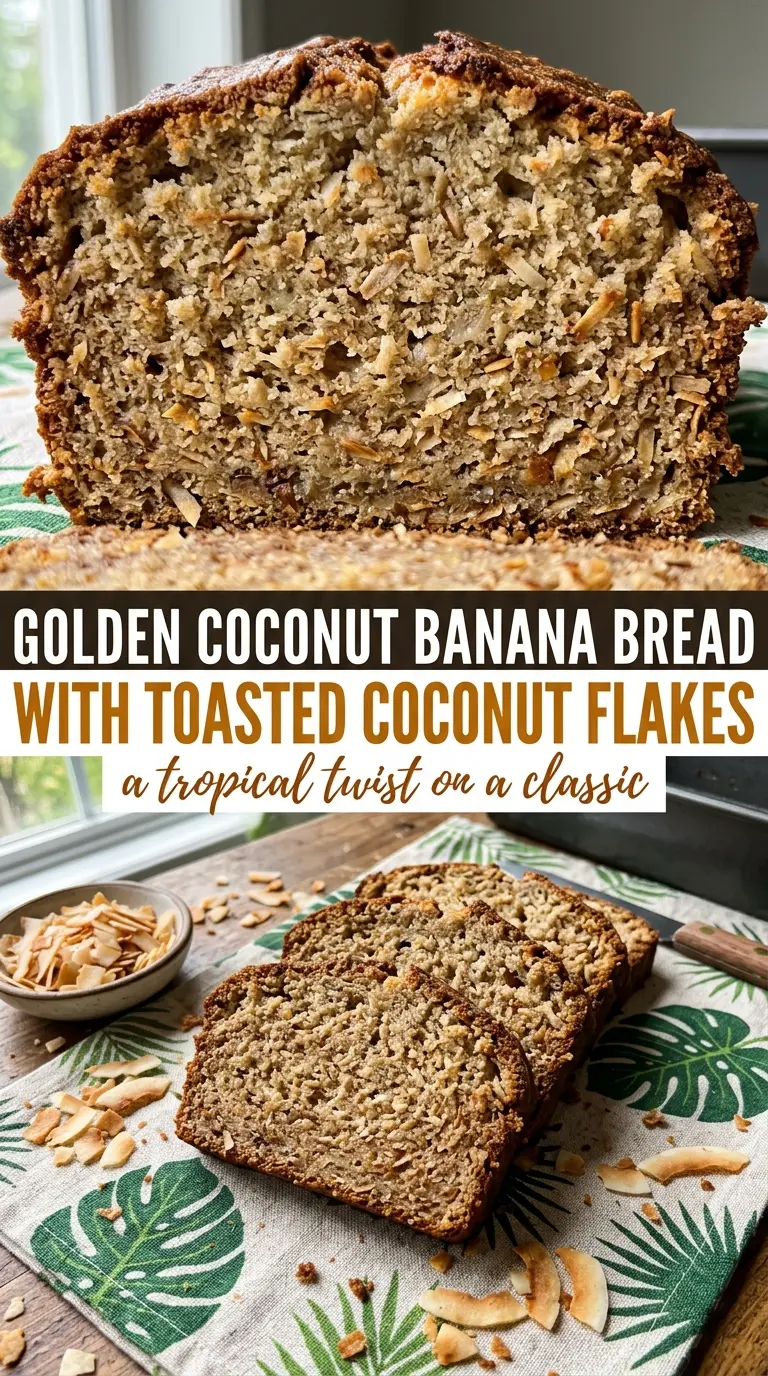
Toasted coconut changes banana bread in the best way. The loaf stays tender and familiar, but each slice picks up a nutty, almost caramelized edge from the coconut flakes on top and the bits folded through the batter. You get the soft, moist crumb you want from ripe bananas, plus a little crunch that keeps every bite interesting.
The trick here is balance. Coconut oil brings a light tropical note that fits the bananas without drowning them out, and toasting the coconut before it goes in makes a huge difference. Untoasted coconut can taste flat and chewy; toasted coconut turns golden, fragrant, and a little crisp, which is exactly what this loaf needs. The batter also stays simple on purpose. Once the flour goes in, you stop as soon as it comes together so the bread bakes up tender instead of tight.
The coconut on top toasted up perfectly and gave the loaf a crisp little crust. Mine was done right at 58 minutes and the center stayed moist without being gummy.
Save this coconut banana bread for the loaf with toasted coconut in every slice and that crisp, golden topping.
The Coconut Toasting Step That Keeps This Bread From Tasting Flat
Toasted coconut is what gives this loaf its personality. If you skip that step, the coconut folds in fine, but it stays soft and one-note. Toasting wakes up the oils in the coconut flakes and gives the finished bread a deeper, nuttier flavor that stands up to the bananas instead of disappearing into them.
The other place people run into trouble is with the batter itself. Banana bread looks forgiving, but overmixing after the flour goes in turns the crumb dense and a little gummy. Stir until you no longer see dry flour, then stop. A few streaks are better than a tough loaf.
What Each Ingredient Is Actually Doing in This Dish
- Ripe bananas — Use bananas with plenty of brown spots and a soft center. They mash smoothly and bring the sweetness and moisture this loaf depends on. If yours are still a little firm, bake them in their skins at 300°F until the peels darken and the fruit softens.
- Coconut oil — Melted coconut oil keeps the crumb tender and gives the bread a light coconut note. If you want a more neutral flavor, melted butter works and still bakes well. Just let it cool a bit before mixing so it doesn’t scramble the egg.
- Toasted shredded coconut — This is the ingredient that changes the whole loaf. It adds crunch on top and little nutty pockets through the middle. Toast it in a dry skillet or on a sheet pan until golden at the edges, then let it cool before folding it in.
- All-purpose flour — Regular all-purpose flour gives the bread a soft, even crumb. Bread flour would make it chewier, which isn’t what you want here. Spoon and level it if you can; packing the cup adds too much flour and dries out the loaf.
Building the Batter Without Overworking It
Mashing the bananas into the base
Mash the bananas first, then stir in the melted coconut oil so the mixture looks glossy and loose. That oil coats the banana pulp and helps the sugar dissolve evenly later. If the bananas are cold from the fridge, warm them just enough to mash easily; cold chunks leave the batter uneven.
Adding the sweeteners and egg
Mix in the sugar, egg, and vanilla until the mixture looks smooth and slightly thickened. The egg should disappear completely before you add the dry ingredients. If you see streaks of egg white after mixing, keep stirring a few more seconds so the loaf bakes up with a uniform crumb.
Bringing in the flour and coconut
Sprinkle the baking soda and salt over the wet mixture, then fold in the flour just until no dry pockets remain. Once the flour goes in, the batter only needs a few turns of the spoon. Fold in most of the toasted coconut at the end so it stays in distinct pieces instead of dissolving into the batter.
Baking until the center sets
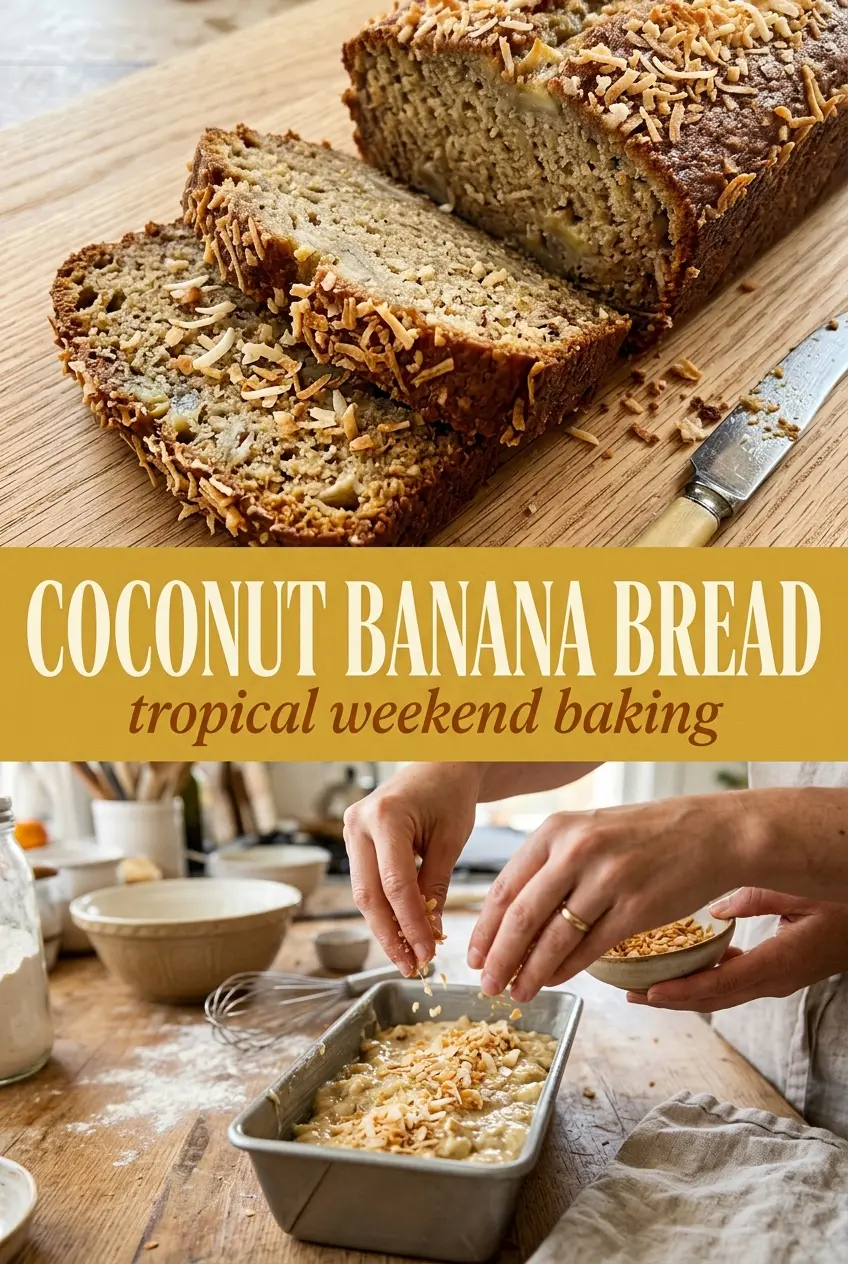
Pour the batter into a greased loaf pan and scatter the remaining coconut over the top. Bake at 350°F until the top is deep golden and a toothpick comes out clean or with a few moist crumbs, usually 55 to 60 minutes. If the top browns too fast before the center is done, lay a loose piece of foil over it for the last 10 to 15 minutes.
Three Ways to Adjust This Loaf Without Losing the Coconut-Banana Balance
Make it dairy-free without changing the texture
This loaf already uses coconut oil, so it fits dairy-free baking naturally. Keep the coconut oil in place and don’t swap in solid fats that need creaming. The crumb stays tender and the coconut flavor comes through cleanly.
Use butter if you want a richer, more classic banana bread
Melted butter works in place of the coconut oil if you want the coconut to read more as a topping than as a background flavor. The loaf will taste a little more traditional and slightly richer, though you’ll lose that subtle tropical note. Use the same amount and cool the butter before mixing it in.
Make muffins instead of a loaf
Divide the batter into a lined muffin tin and bake at the same temperature, checking around 18 to 22 minutes. Muffins give you more of the toasted coconut topping in every bite and bake faster, which is handy when you don’t want to wait for a whole loaf. Pull them when the tops spring back lightly and a tester comes out clean.
Storage and Reheating
- Refrigerator: Store tightly wrapped for up to 5 days. The crumb firms up a bit in the fridge, but the flavor stays good.
- Freezer: This bread freezes well. Wrap the cooled loaf or individual slices tightly in plastic, then foil, and freeze for up to 3 months.
- Reheating: Warm slices in a toaster oven or low oven until just heated through. The common mistake is blasting it in the microwave too long, which makes the banana bread rubbery instead of soft.
Questions I Get Asked About This Coconut Banana Bread
Coconut Banana Bread
Ingredients
Equipment
Method
- Preheat the oven to 350°F, then grease a loaf pan. Spread the shredded coconut on a sheet pan and toast until lightly golden, stirring once, about 3 to 5 minutes, until you see golden edges and a fragrant aroma.
- Mash the ripe bananas in a bowl and stir in the melted coconut oil until smooth. Mix in the sugar, egg, and vanilla, stirring until the mixture looks glossy and fully combined.
- Sprinkle the baking soda and salt over the mixture, then stir until evenly dispersed. Add the all-purpose flour and fold just until no dry streaks remain, then fold in most of the toasted coconut so the batter looks thick and speckled.
- Pour the batter into the prepared loaf pan and sprinkle the remaining toasted coconut over the top. Bake at 350°F for 55 to 60 minutes, until a toothpick inserted in the center comes out clean and the top looks deeply golden.
- Cool the loaf in the pan for 10 minutes, until it firms slightly and the loaf releases more easily. Turn out onto a wire rack and let cool further before slicing, so the crumb sets and the coconut topping stays crunchy.