
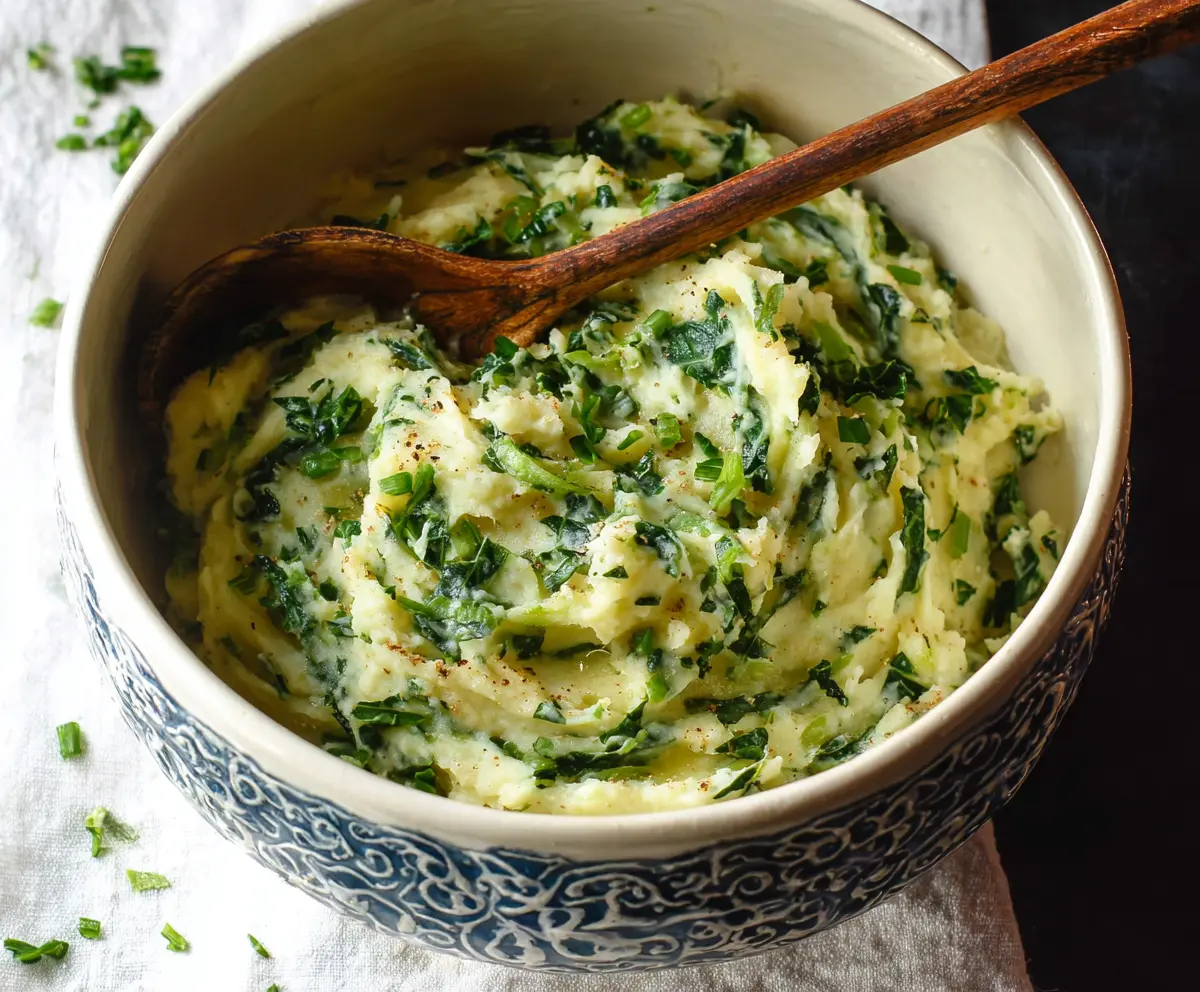
Colcannon Mashed Potatoes with Kale is a hearty and cozy twist on classic mashed potatoes. This dish combines creamy, buttery potatoes with tender kale, giving it a lovely pop of green and a nice bit of texture. It’s simple, comforting, and perfect for chilly days when you want something warm and filling.
I’ve always loved how colcannon brings a little extra goodness to mashed potatoes with the greens mixed right in. The kale adds a mild earthiness that pairs so well with the smooth potatoes and a touch of butter. I like to use plenty of butter and a splash of milk to make these potatoes as soft and creamy as possible. It’s like a cozy hug in a bowl!
The best part about colcannon is how flexible it is. I like serving it alongside roasted chicken or a nice steak, but it’s also great with just a fried egg on top for a simple meal. It’s one of those dishes that everyone around the table seems to love, no matter the season, and it brings a fun Irish-inspired touch to any dinner.
Key Ingredients & Substitutions
Potatoes: Yukon Golds offer a creamy texture and buttery flavor, while Russets make fluffier mash. Either works well depending on your texture preference.
Kale: Fresh kale adds a nice earthy taste. If you find it too tough, try baby kale or substitute with spinach for a milder flavor and softer texture.
Butter and Milk: Butter gives richness; use unsalted so you control saltiness. Milk or cream makes it creamy—heavy cream makes it richer, but whole milk works for lighter mash. Non-dairy milks like oat or almond are fine in a pinch.
Green Onions: These add a fresh, mild onion flavor that lifts the dish. If you don’t have scallions, chives or mild raw onions work well too.
Red Pepper Flakes (optional): Just a pinch adds subtle heat. You can skip this or swap with black pepper or smoked paprika for a different kick.
How Can You Get Creamy Yet Chunky Mashed Potatoes?
The goal here is to have potatoes smooth but still with some texture.
- Drain the potatoes well so they aren’t watery.
- Start mashing with a masher or fork right away to break them down.
- Add warm milk or cream and butter in small amounts. This helps you control creaminess without making them runny.
- Stop mashing when you see mostly smooth with some small chunks left—this keeps it interesting and rustic.
Avoid overworking the potatoes, or they can turn gluey. Using a sturdy masher instead of a food processor helps with better texture.
Equipment You’ll Need
- Large pot – I use this to boil potatoes because it’s big enough to hold plenty of water and potatoes easily.
- Colander – makes draining the potatoes simple and fast.
- Potato masher or fork – helps mash the potatoes smoothly or with some texture, depending on your mood.
- Skillet – perfect for cooking the kale quickly and lightly; I like one with a good non-stick surface.
- Measuring cups & spoons – keep the butter, milk, and seasonings just right for your taste.
Flavor Variations & Add-Ins
- Swap kale for spinach or Swiss chard for a milder, softer green that cooks even faster.
- Add cooked bacon bits or ham for extra smoky flavor and protein.
- Mix in some grated cheese, like cheddar or Parmesan, to make it extra cheesy and rich.
- Sprinkle fresh herbs like parsley or thyme on top for a bright, fresh finish.
Colcannon Mashed Potatoes with Kale
Ingredients You’ll Need:
- 2 pounds Yukon Gold or Russet potatoes, peeled and cubed
- 4 cups chopped kale, stems removed
- 4 tablespoons unsalted butter
- 1/2 cup whole milk or heavy cream (warmed)
- 1/2 cup chopped green onions (scallions)
- Salt, to taste
- Black pepper, to taste
- Optional: pinch of red pepper flakes for a slight heat
How Much Time Will You Need?
This recipe takes about 30 minutes from start to finish, including boiling potatoes and sautéing kale. Most of the time is boiling the potatoes until tender, with a few minutes prepping and mixing the ingredients for the final creamy mash.
Step-by-Step Instructions:
1. Boil the Potatoes:
Place the peeled and cubed potatoes in a large pot and cover them with cold salted water. Bring the water to a boil over medium-high heat. Cook until the potatoes are tender when pierced with a fork, about 15-20 minutes.
2. Cook the Kale:
While the potatoes cook, melt 2 tablespoons of butter in a large skillet over medium heat. Add the chopped kale and cook, stirring occasionally, until wilted and tender—about 4 to 5 minutes. Season lightly with salt and black pepper. Remove the skillet from heat and set aside.
3. Mash the Potatoes:
Drain the potatoes well and return them to the pot. Begin mashing using a potato masher or fork. Gradually add the warm milk (or cream) and remaining 2 tablespoons of butter, mashing until the potatoes are creamy but still have a little texture, if you like.
4. Mix Everything Together:
Stir in the cooked kale and chopped green onions until well combined. Season generously with salt and black pepper to your taste. If you want a bit of extra warmth, sprinkle a pinch of red pepper flakes and mix well.
5. Serve:
Transfer the colcannon to a serving bowl and enjoy hot as a comforting, flavorful side dish.
Can I Use Frozen Kale Instead of Fresh?
Yes, you can use frozen kale—just thaw it completely and squeeze out any excess water before cooking. This helps prevent the mashed potatoes from becoming too watery.
Can I Make Colcannon Ahead of Time?
Absolutely! Prepare the mashed potatoes and kale, then store in an airtight container in the fridge for up to 2 days. Reheat gently on the stove or in the microwave, adding a splash of milk if needed to restore creaminess.
What’s the Best Potato for This Dish?
Yukon Golds give a creamy, buttery texture, while Russets create a fluffier mash. Choose based on whether you prefer a smoother or lighter consistency.
How Should I Store Leftovers?
Keep leftovers in an airtight container in the refrigerator for up to 3 days. To reheat, warm slowly on the stove with a little milk or butter to prevent drying out, stirring occasionally for even heat.