
Nutty wild rice, sweet roasted carrots, and a silky cream broth make this soup feel substantial enough to count as dinner, not just a starter. The wild rice keeps a little chew, the carrots turn deep and caramelized in the oven, and the broth lands somewhere between rustic and comforting without turning heavy. It’s the kind of pot you want simmering on the stove when you need something steady and warming.
The small details matter here. Roasting the carrots separately keeps them from going dull and mushy in the soup, and adding the flour through the half-and-half first helps the broth thicken without clumping. Wild rice takes longer than white rice and it needs that extra simmer time to split open and soften, so don’t rush it or the texture will feel tough in the center.
Below, I’ve included the timing cues that keep the soup from turning flat or pasty, plus a few swaps that still hold onto the same cozy feel. If you’ve ever had wild rice soup that tasted thin or grainy, this version fixes both problems.
The carrots stayed sweet instead of disappearing into the broth, and the soup thickened up perfectly after five minutes with the cream. My husband went back for a second bowl before I even sat down.
Save this Cozy Autumn Wild Rice Soup for the nights when you want roasted carrots, nutty rice, and a creamy broth in one comforting bowl.
The Trick to Keeping Wild Rice Tender Instead of Tough
Wild rice is the thing that makes this soup worth making, but it’s also the ingredient most likely to disappoint if you treat it like standard rice. It needs time to split open and soften, and that split is the sign you’re after. If the grains are still tight and hard in the center, the soup hasn’t gone far enough yet.
The other common mistake is adding the cream too early and boiling the whole pot hard. Once dairy goes in, the soup only needs a gentle simmer. Hard boiling can give you a grainy texture or a broken broth, especially once the flour starts working.
- Wild rice blend — A blend is a little more forgiving than straight wild rice and cooks into a nicer mix of textures. If you use a different grain blend, check the package timing and don’t stop cooking until the grains have opened up.
- Roasted carrots — Roasting pulls out their sweetness and gives the soup a deeper flavor than boiling them in the pot from the start. The oven does the heavy lifting here, so don’t skip this step unless you’re willing to lose that caramelized edge.
- Half-and-half — This gives the broth body without making it as heavy as cream. Whole milk works in a pinch, but the soup will be thinner and a little less velvety.
- Flour — Whisking it into the half-and-half before it goes into the soup keeps it from clumping. If you dump flour straight into hot broth, you’ll chase little lumps around the pot.
Building the Soup So the Broth Stays Smooth
Roasting the Carrots First
Toss the diced carrots with olive oil and roast them at 425°F until the edges darken and the centers are tender. You want some browning on the pan and a little shrinkage on the carrots; pale carrots will taste flat in the finished soup. If the pieces are cut unevenly, the smaller ones will dry out before the larger ones are cooked through, so keep the dice close in size.
Softening the Onion, Celery, and Garlic
Sauté the onion and celery until they turn translucent and lose their raw bite, then add the garlic and thyme for the last minute. Garlic burns fast, and once it does, the whole pot tastes bitter. You’re looking for a fragrant base that smells savory and a little sweet before the broth goes in.
Letting the Rice Do Its Work
Stir in the rice, broth, and bay leaf, then simmer steadily until the rice splits and the grains feel tender with a little chew. Keep the heat low enough that the surface only moves in lazy bubbles. If the pot boils hard, the broth can reduce too quickly before the rice is done, which leaves you with a soup that tastes concentrated but still undercooked.
Finishing With Cream and Bringing It Together
Whisk the flour into the half-and-half until it looks smooth, then stir that mixture into the soup and simmer a few minutes more. The broth should thicken slightly and turn glossy, not paste-like. Fold in the roasted carrots at the end so they keep their shape and color instead of falling apart into the base.
How to Adapt This for Different Pans, Diets, and Leftovers
Dairy-Free Version With Coconut Milk
Swap the half-and-half for full-fat coconut milk. The soup will lose the classic dairy finish and pick up a faint coconut note, but the body stays creamy and the broth still feels rich. Use the same flour slurry only if your coconut milk is unsweetened and well mixed, or skip it and let the soup reduce a little longer.
Gluten-Free Swaps That Still Thicken Well
Use a gluten-free all-purpose flour blend in place of the flour, or whisk in cornstarch mixed with a little cold broth. Cornstarch thickens faster than flour, so add it slowly and stop once the soup lightly coats a spoon. Don’t boil it hard after the starch goes in or the texture can turn loose again.
Extra Hearty With Chicken or Mushrooms
Shredded cooked chicken or sautéed mushrooms both work well here. Chicken makes the soup feel more like a full dinner, while mushrooms add a deeper savory note that fits the wild rice beautifully. Stir either one in near the end so it warms through without losing its texture.
Storage and Reheating
- Refrigerator: 4 days. The rice will keep absorbing broth, so the soup gets thicker by the next day.
- Freezer: It freezes, but the dairy can separate a little on thawing. If you plan to freeze it, undercook the rice slightly and stir in the half-and-half after reheating.
- Reheating: Warm it gently over low heat and add a splash of broth to loosen it. Don’t let it boil hard, or the dairy can go grainy and the rice can turn pasty.
Answers to the Questions Worth Asking
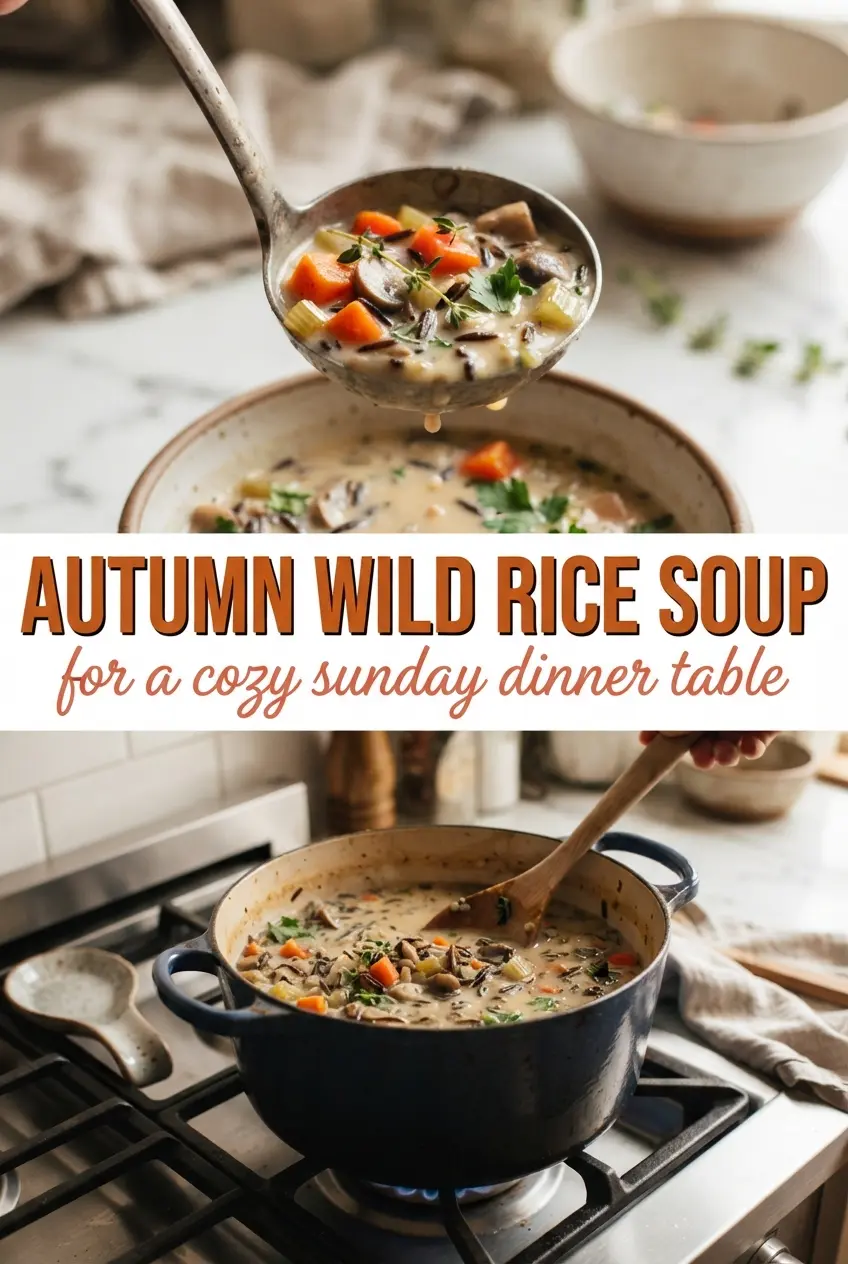
Cozy Autumn Wild Rice Soup
Ingredients
Equipment
Method
- Heat the oven to 425°F and spread the diced carrots on a sheet pan. Roast for 20 minutes until caramelized, stirring once halfway so the edges turn golden.
- Heat olive oil in a Dutch oven over medium heat and sauté the onion and celery for 5 minutes until softened. Stir in the garlic and dried thyme and cook for 30 seconds until fragrant.
- Add the wild rice blend, vegetable broth, and bay leaf to the Dutch oven and bring to a simmer. Simmer for 40 minutes until the rice splits and thickens the broth.
- Whisk the flour into the half-and-half until smooth, then pour it into the soup while stirring. Keep the soup at a simmer to prevent lumps.
- Simmer for 5 more minutes, then stir in the roasted carrots and season with salt and pepper to taste. Serve hot, with the carrots visible and the broth thick enough to coat a spoon.