
Moist pumpkin bread earns its place on repeat because it slices cleanly, stays tender for days, and brings that soft, spiced crumb people reach for before it even cools. The loaf comes out with a deep orange color, a gentle rise, and just enough sweetness to work for breakfast, snack time, or a late-night slice with coffee.
The texture comes from a simple balance: pumpkin puree for body and moisture, oil for a plush crumb, and just enough flour to hold everything together without turning dense. Mixing the dry and wet ingredients separately keeps the baking soda evenly distributed, and stopping as soon as the batter comes together keeps the loaf from getting tough. That’s the difference between a bread that bakes up tender and one that feels heavy in the middle.
Below, I’ve added the one detail that helps this loaf stay soft on day two, plus the substitutions that still keep the crumb in good shape if you need to work with what’s in the pantry.
The loaf came out with that tender, moist crumb you want in pumpkin bread, and it sliced beautifully the next day without crumbling. I wrapped it overnight like you suggested and the spice flavor settled in perfectly.
Save this moist pumpkin bread for the day-two slice that gets even softer and more spiced after wrapping overnight.
The Trick to Keeping Pumpkin Bread Tender Instead of Dense
Pumpkin bread gets dense when the batter is overmixed or when too much flour sneaks in. The pumpkin puree already brings a lot of moisture, so the goal is not to whip air into the batter. It’s to combine the ingredients just until the streaks of flour disappear, then stop.
The other mistake is baking it too long. A loaf pan holds onto heat, and pumpkin bread can look done on top before the center is actually set. Pull it when a tester comes out with a few moist crumbs, not wet batter, so the crumb stays soft instead of turning dry around the edges.
What Each Ingredient Is Doing in This Loaf
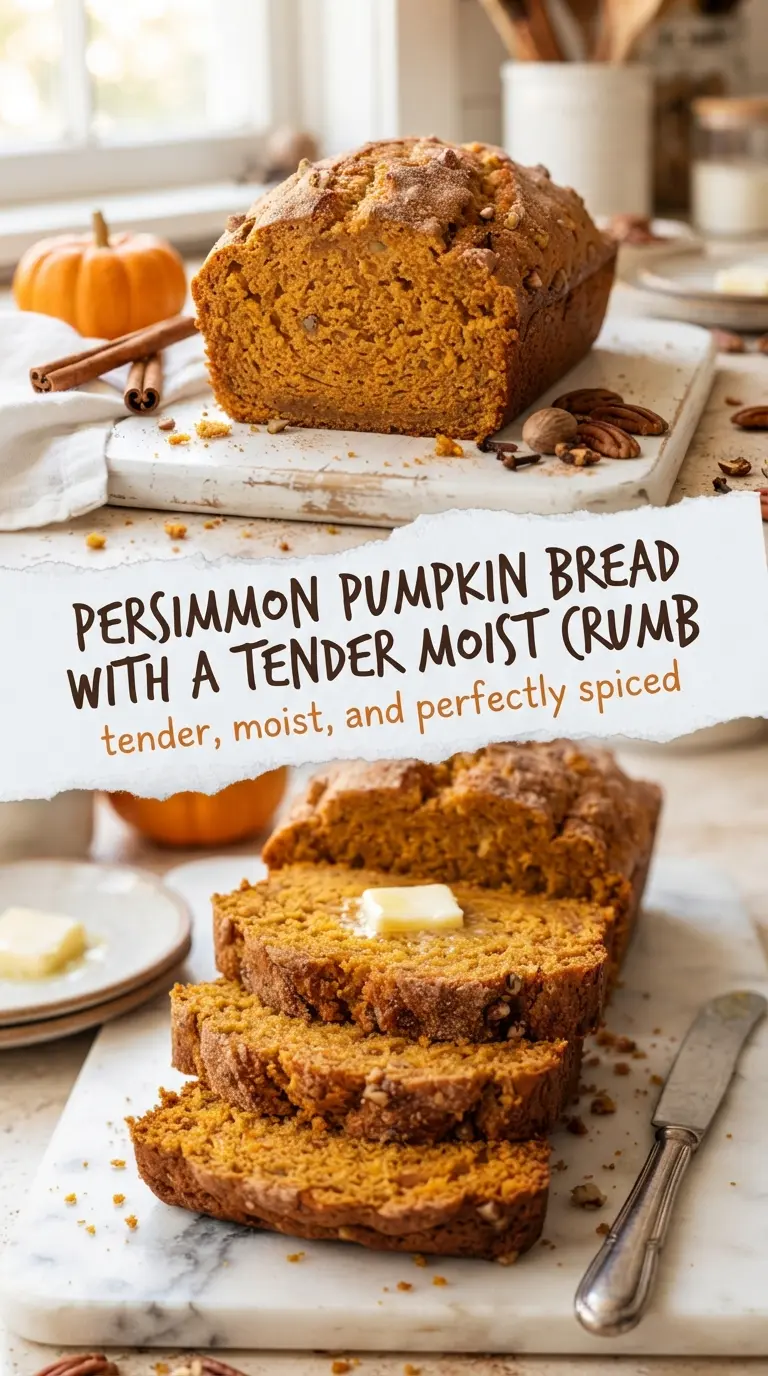
- All-purpose flour — This gives the loaf its structure without making it heavy. Spoon and level it instead of packing it into the cup, or the bread will bake up tight.
- Pumpkin puree — Use plain pumpkin puree, not pumpkin pie filling. Pie filling already contains sugar and spices, which throws off both the flavor and the texture.
- Vegetable oil — Oil keeps pumpkin bread softer than butter does, especially after a day on the counter. Melted butter works in a pinch, but the crumb won’t stay quite as plush.
- Eggs — They bind the batter and help the loaf rise cleanly. Room-temperature eggs mix in more evenly, but cold eggs will still work.
- Pumpkin pie spice — This is where the warm spice flavor comes from, and it’s worth using a fresh blend. If you don’t have it, use cinnamon with a little nutmeg and ginger, but the flavor will be less rounded.
Mixing the Batter Without Losing the Soft Crumb
Whisk the dry ingredients first
Start with the flour, baking soda, salt, and spice in one bowl. Whisking them together spreads the baking soda evenly so you don’t get bitter pockets or uneven lift. If the flour looks clumpy, break it up now, because clumps don’t disappear once the wet ingredients go in.
Build the wet mixture until it looks smooth
In the second bowl, whisk the pumpkin puree, sugar, oil, eggs, water, and vanilla until the mixture looks glossy and evenly orange. The sugar should be mostly dissolved and the eggs fully blended in. If you still see streaks of egg white, keep whisking a little longer before adding the dry ingredients.
Stop as soon as the flour disappears
Fold the dry ingredients into the wet mixture with a spatula and stop when you no longer see dry flour. A few small streaks are better than overmixing, because extra stirring develops gluten and makes the loaf chewy. Pour the batter into the pan right away so the baking soda starts working in the oven, not on the counter.
Bake until the center springs back
Bake at 350°F for about 55 minutes, then test the center with a toothpick. It should come out with moist crumbs, not wet batter. If the top is browning too quickly, lay a piece of foil loosely over the loaf for the last 10 to 15 minutes so the middle can finish without overbaking the crust.
Three Smart Ways to Adapt This Pumpkin Bread
Make it dairy-free without changing the texture
This loaf is already dairy-free as written, which is one reason it stays so soft. If you want to serve it with a topping, use a dairy-free butter or leave it plain; the bread itself doesn’t need any adjustment.
Turn it into pumpkin muffins
Divide the batter among lined muffin cups and start checking at around 18 to 22 minutes. Muffins bake faster, so you’ll get a slightly lighter crumb and more browned edges, which is useful if you want grab-and-go portions.
Swap in a different oil
Canola, avocado, or light olive oil all work here. Choose a neutral oil if you want the pumpkin and spice to stay front and center; stronger olive oils can leave a savory note that doesn’t belong in this loaf.
Storage and Reheating
- Refrigerator: Store tightly wrapped for up to 5 days. The crumb firms up a bit in the fridge, but the flavor deepens.
- Freezer: Freezes well. Wrap the cooled loaf or individual slices in plastic, then foil, and freeze for up to 3 months.
- Reheating: Thaw at room temperature, then warm slices in the microwave for 10 to 15 seconds or in a toaster oven until just heated. Don’t blast it too long or the bread turns dry at the edges.
Answers to the Questions Worth Asking
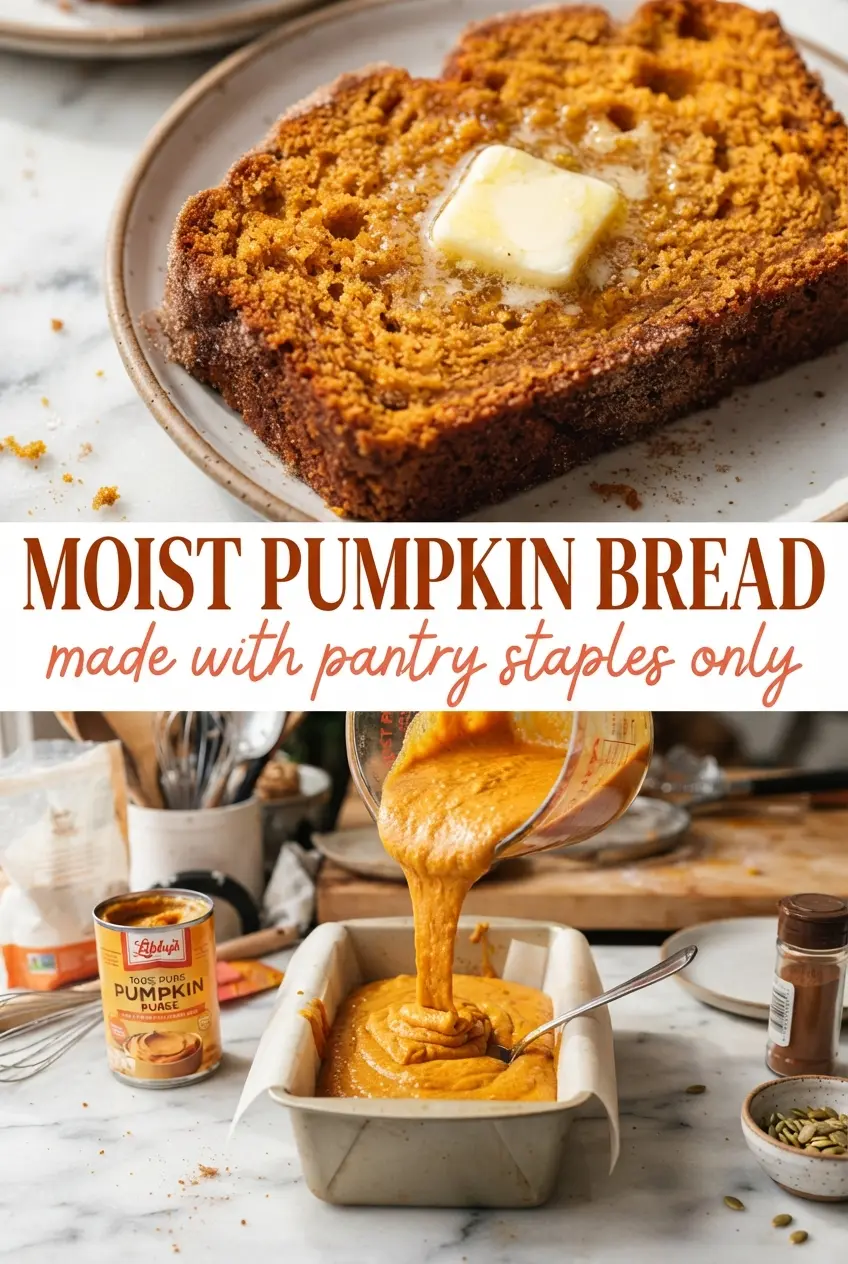
Moist Pumpkin Bread
Ingredients
Equipment
Method
- Preheat the oven to 350°F, then grease a 9x5-inch loaf pan and set aside so it’s ready when the batter is mixed.
- Whisk the all-purpose flour, baking soda, salt, and pumpkin pie spice until evenly combined with no visible streaks.
- Whisk the pumpkin puree, sugar, vegetable oil, eggs, water, and vanilla extract until smooth and glossy.
- Combine the wet mixture into the dry mixture and mix just until no dry flour remains, then pour into the greased loaf pan.
- Bake at 350°F for 55 minutes, until the center is set and a toothpick comes out mostly clean.
- Cool the loaf in the pan briefly, then transfer to a rack to cool fully before slicing for clean, thick slices.