
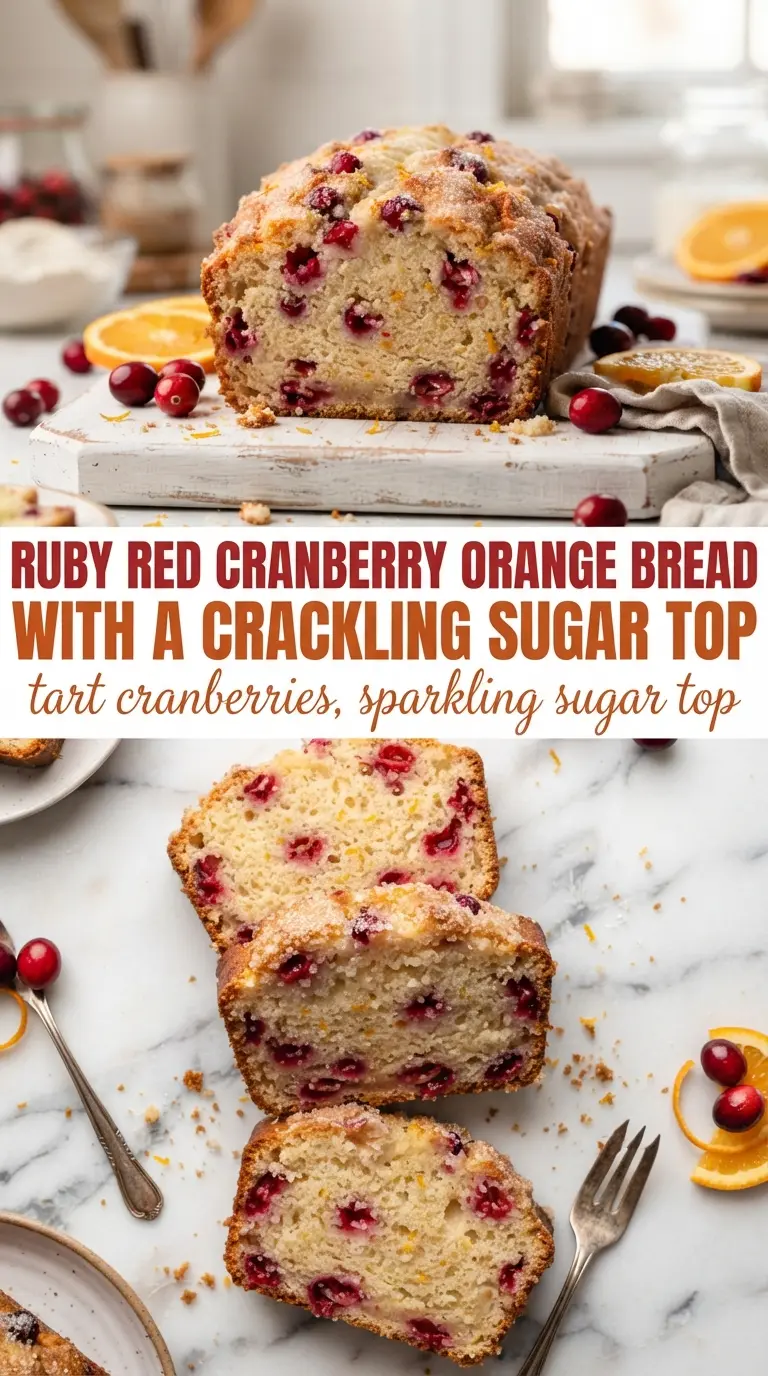
Cranberry orange bread bakes into a tender, fragrant loaf with a crackling sugar top and pockets of tart berries that stay bright even after the oven does its work. The crumb is soft but not flimsy, and the orange runs through every slice without turning the whole loaf heavy or overly sweet. It’s the kind of bread that disappears while it’s still warm, whether you serve it for breakfast, set it out with coffee, or slice it for an afternoon snack.
What makes this version work is the balance. Orange zest carries the flavor better than juice alone, while buttermilk keeps the loaf plush and gives the baking soda something to react with. The cranberries stay lively instead of turning jammy because the batter is mixed just until it comes together, then left alone. That keeps the crumb tender and avoids the dense, gummy texture that can happen when quick breads get overworked.
If you’ve ever had cranberry bread turn out dry or bland, the details below are worth your time. A small coating on the berries, the right order for mixing, and the sugar on top all change the final loaf more than people expect.
The cranberries stayed suspended instead of sinking, and the orange flavor came through in every slice. I also loved the sugar top — it baked up crisp, not sticky, which gave the loaf a nice little crunch.
Cranberry orange bread has that crisp sugar top and tart berry bite that makes every slice worth saving.
The Difference Between Bright Flavor and Flat Quick Bread
With quick breads, the biggest mistake is treating the batter like cake batter and beating it smooth. That pushes the loaf toward toughness and knocks out the tender crumb you want. This bread stays light because the flour gets just enough mixing to hydrate, then the cranberries go in at the end so they don’t crush or bleed through the batter.
The other place people lose this recipe is in the flavor balance. Orange juice gives moisture and a little tang, but the zest is what makes the loaf smell and taste like orange instead of just sweet fruit bread. The coarse sugar on top matters too. It gives the crust a thin, crisp shell that contrasts with the soft interior, and it keeps the loaf from feeling one-note.
What Each Ingredient Is Actually Doing in This Loaf
- All-purpose flour — This gives the loaf its structure without making it chewy. Bread flour is too strong here and can turn the crumb tight.
- Orange zest — This is the main flavor carrier. The oils in the zest do the work that juice alone can’t, so don’t skip it or substitute with extra juice.
- Buttermilk — It softens the crumb and helps the baking soda lift the loaf. If you don’t have it, use milk mixed with a little lemon juice or vinegar, then let it sit for a few minutes before adding it.
- Butter, melted — Melted butter keeps the loaf tender and gives it a clean, rich finish. A neutral oil works in a pinch, but you’ll lose some of the flavor.
- Fresh cranberries — Fresh berries hold their shape and give you those bright tart bursts. If you use frozen, don’t thaw them first or they’ll bleed too much color into the batter.
- Coarse sugar — This is for texture, not sweetness. Regular granulated sugar won’t give you the same crisp top.
The 20 Minutes That Actually Matter
Mix the Dry Ingredients First
Whisk the flour, baking powder, baking soda, salt, sugar, and orange zest together until the zest is evenly distributed. You want the zest rubbed through the sugar and flour so it doesn’t clump in one spot. That little bit of rubbing helps release the oils and spreads the citrus through the whole loaf.
Build the Wet Mixture Without Overdoing It
Whisk the orange juice, buttermilk, melted butter, and egg until the mixture looks smooth and cohesive. The butter may look slightly streaky at first, and that’s fine as long as it comes together. If the butter is too hot, it can start to cook the egg or separate when it hits the cold buttermilk, so let it cool a minute before mixing.
Bring the Batter Together Gently
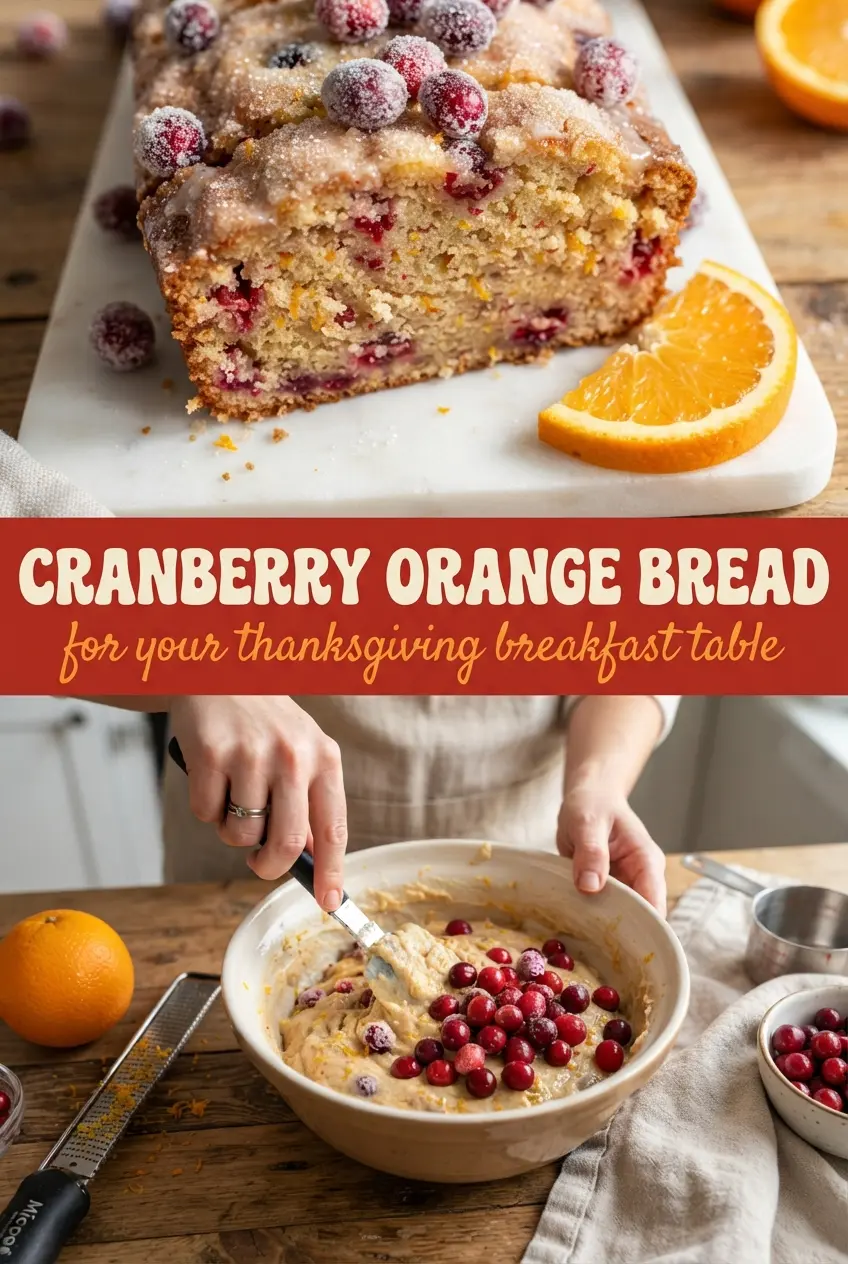
Pour the wet ingredients into the dry and stir only until the flour disappears. A few streaks are better than a beaten batter. Overmixing is what turns quick bread dense and rubbery. Fold in the cranberries at the end, and if you’ve tossed them with a little flour, they’ll stay suspended instead of sinking to the bottom.
Bake Until the Center Springs Back
Scrape the batter into a greased 9×5-inch loaf pan, scatter the coarse sugar over the top, and bake at 350°F for about 60 minutes. The top should be deeply golden, with a crackly crust, and a tester inserted into the center should come out with a few moist crumbs, not wet batter. If the top browns before the center is done, tent it loosely with foil for the last stretch.
Three Ways to Make This Loaf Fit What You Need
Gluten-Free Cranberry Orange Bread
Use a 1:1 gluten-free baking blend that already contains xanthan gum. The loaf will be a little more delicate, but the orange and cranberry flavor stay intact. Let it cool completely before slicing so it doesn’t crumble.
Dairy-Free Version
Swap the buttermilk for a plant milk plus 1 tablespoon lemon juice or vinegar, and use melted coconut oil or a neutral oil instead of butter. The crumb will still be tender, though the flavor loses a little richness from the butter.
Frozen Cranberries
Frozen cranberries work well if you stir them in straight from the freezer and add them quickly so they don’t thaw into the batter. You may need an extra few minutes in the oven because the cold berries lower the batter temperature.
Storage and Reheating
- Refrigerator: Store wrapped or in an airtight container for up to 4 days. The crumb stays moist, but the sugar top softens a little.
- Freezer: Freeze slices or the whole loaf tightly wrapped for up to 2 months. Thaw at room temperature while still wrapped so condensation doesn’t make the crust soggy.
- Reheating: Warm slices in a toaster oven or a low oven for the best texture. The common mistake is microwaving too long, which makes the crumb rubbery and the cranberries harsh.
Answers to the Questions Worth Asking
Cranberry Orange Bread
Ingredients
Equipment
Method
- Preheat the oven to 350°F and grease a 9x5-inch loaf pan, keeping the loaf from sticking for clean slices.
- Whisk the all-purpose flour, baking powder, baking soda, salt, sugar, and orange zest until evenly combined and no streaks of zest remain.
- Whisk the orange juice, buttermilk, melted butter, and egg until smooth and glossy.
- Pour the wet mixture into the dry and combine until just mixed, then fold in the fresh cranberries to distribute them without overworking the batter.
- Top the batter with coarse sugar and bake for 60 minutes at 350°F, until the loaf is golden and a toothpick comes out mostly clean.