
Roasted butternut squash, crisp apple, chewy cranberries, and peppery arugula make this pasta salad feel bright instead of heavy. The rotini catches the maple-Dijon dressing in every curve, so each bite gets a little sweetness, a little tang, and a good contrast of textures. It’s the kind of bowl that disappears fast at a potluck and still tastes like lunch the next day.
The trick is building it in layers. The squash needs to be fully roasted so it holds its shape, the pasta needs a cold rinse so it doesn’t keep cooking, and the arugula goes in at the very end so it stays lively instead of limp. The dressing is simple, but the balance matters: enough maple syrup to round out the vinegar, enough Dijon to keep it sharp.
Below you’ll find the small timing details that keep the salad from turning soggy, plus a few easy swaps if you want to work with what’s already in your kitchen.
I loved how the dressing coated every piece without making it heavy, and the arugula stayed crisp because I added it right before serving. The pecans gave it the perfect crunch.
Save this fall harvest pasta salad for potlucks, lunch prep, and any time you want something colorful with roasted squash and a maple-Dijon finish.
The Part That Keeps This Salad Fresh Instead of Mushy
Most pasta salads go soft for one of two reasons: the pasta is overcooked, or the greens get tossed in too early. Rotini works well here because the ridges hold onto the dressing, but it still needs to be cooked just to al dente. Once it’s drained, a cold rinse stops the carryover cooking and keeps the salad from turning pasty.
The other thing that matters is the order of assembly. The squash, apple, cranberries, and pecans can all sit in the dressing for a while without falling apart. Arugula cannot. It should go in right before serving so the leaves stay crisp and the salad keeps its lift.
What Each Ingredient Is Doing in This Dish
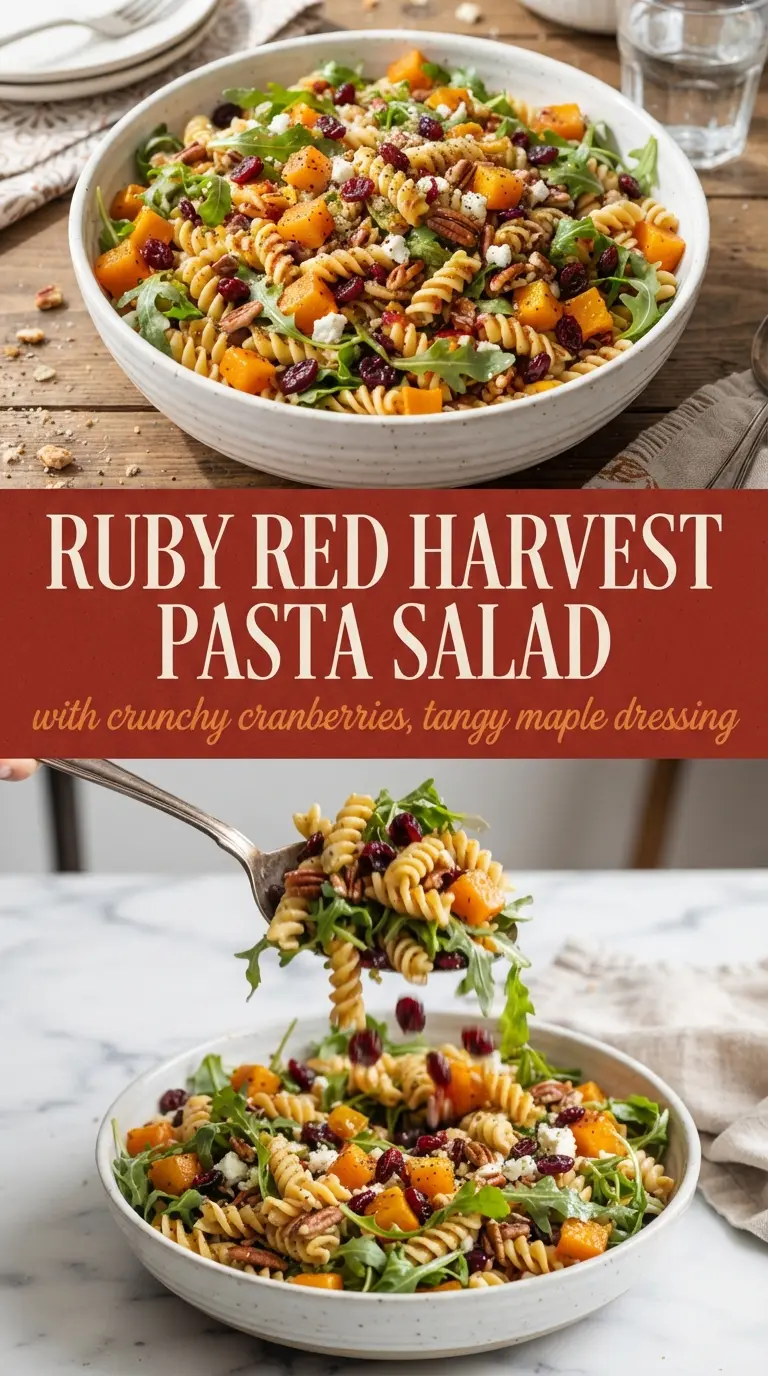
- Rotini — The corkscrew shape holds the dressing better than long pasta would. If you swap it, choose another short pasta with ridges or curves so the maple-Dijon coating doesn’t slide off.
- Butternut squash — Roast it until the edges are caramelized and the cubes still hold their shape. If the squash is soft all the way through, it will break down when you toss the salad.
- Apple — A crisp, tart-sweet apple keeps the salad from tasting one-note. Firm varieties like Honeycrisp, Pink Lady, or Gala stay snappy instead of turning mealy.
- Dried cranberries and pecans — The cranberries give chew and a little sharp sweetness, while the pecans add the crunch this salad needs. If you toast the pecans first, they taste deeper and hold their crunch longer.
- Arugula — This is the ingredient that keeps the salad from feeling heavy. If you don’t have arugula, baby spinach works, but it won’t give the same peppery bite.
- Olive oil, apple cider vinegar, maple syrup, and Dijon mustard — These build the dressing’s balance. The mustard helps the dressing emulsify, so whisk it until the mixture looks thickened and slightly creamy before you toss it in.
Building the Salad So Every Bite Stays Bright
Cook the Pasta Just to the Edge
Boil the rotini until it’s al dente, not soft. You want the center to still have a little firmness because the pasta will absorb some dressing as it sits. After draining, rinse it under cold water until it’s no longer steaming; that stops the cooking and keeps the texture clean instead of gummy.
Whisk a Dressing That Actually Clings
Start with the vinegar, maple syrup, Dijon, salt, and pepper, then whisk in the olive oil until the dressing looks glossy and lightly thickened. If it separates, keep whisking for another few seconds before adding it to the salad. The mustard is doing more than adding flavor here — it helps the oil and vinegar stay together long enough to coat the pasta.
Toss the Hearty Ingredients First
Combine the pasta, squash, apple, cranberries, and pecans before the greens go in. This gives the dressing a chance to settle into the pasta and warm ingredients without bruising the arugula. If your squash is still warm, let it cool first so it doesn’t wilt the leaves on contact.
Fold in the Greens at the End
Add the arugula just before serving and toss gently, using the least amount of movement that still coats everything. The leaves should look glossy and slightly dressed, not collapsed. If you mix them too early, they’ll lose their bite and the salad will taste flat by the time it reaches the table.
How to Adapt This for Different Tables and Different Pantries
Make It Dairy-Free Without Changing the Texture
This recipe is already dairy-free, which is part of why it travels well and holds up for a crowd. You don’t need any creamy add-ins to make it feel complete because the maple-Dijon dressing and roasted squash do the heavy lifting.
Swap the Nuts for Seeds if You Need a Nut-Free Version
Use toasted pumpkin seeds in place of the pecans. You’ll lose a little of that buttery richness, but you’ll keep the crunch and get a cleaner, more savory finish.
Change the Pasta When You Need Gluten-Free
Use your favorite gluten-free short pasta, but cook it just until tender and rinse it well. Gluten-free pasta can go soft fast, so undercooking by a minute and cooling it promptly helps it keep shape after the dressing goes on.
Turn It Into a Heartier Main Dish
Add shredded rotisserie chicken or chickpeas if you want more protein. Chicken makes it lunch-worthy with very little effort, while chickpeas keep it vegetarian and add a little extra bite without changing the dressing.
Storage and Reheating
- Refrigerator: Store for up to 3 days. The pasta will soften a little as it sits, and the arugula is best on day one, so add extra greens fresh if you know you’ll have leftovers.
- Freezer: Don’t freeze this salad. The apples, greens, and dressing lose their texture after thawing, and the pasta turns soft in a way that can’t be fixed.
- Reheating: This salad is meant to be served cold or cool. If it’s been refrigerated, let it sit out for 15 to 20 minutes, then refresh with a small spoonful of olive oil or a splash of vinegar if the dressing has tightened up.
Answers to the Questions Worth Asking
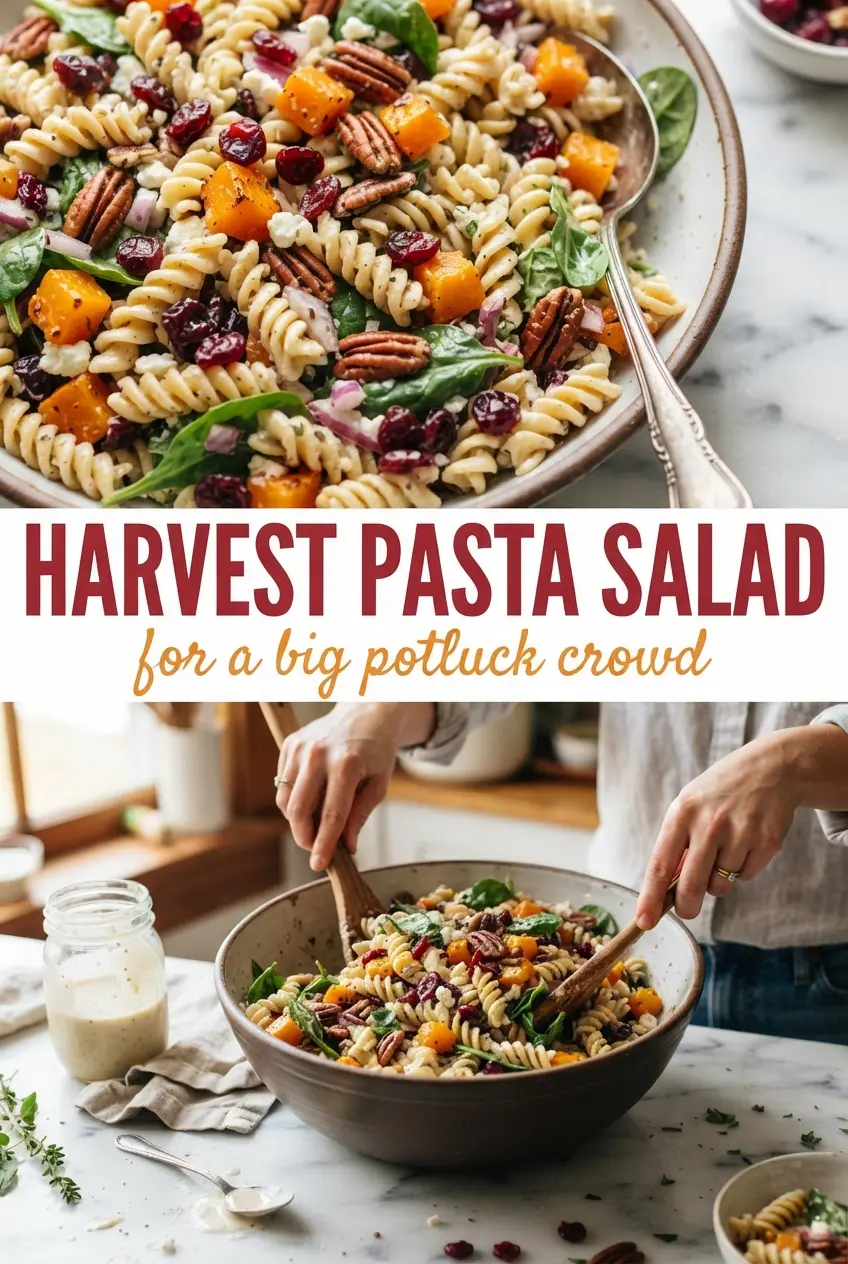
Fall Harvest Pasta Salad
Ingredients
Equipment
Method
- Bring a large pot of salted water to a boil, add the rotini, and cook until tender, 8-10 minutes. Drain, then rinse with cold water until cool and stop the cooking.
- In a bowl, whisk together olive oil, apple cider vinegar, maple syrup, Dijon mustard, salt, and black pepper until smooth and slightly thickened. Taste and adjust with more salt and black pepper if needed.
- In a large serving bowl, toss the cooled rotini with butternut squash, apple, dried cranberries, and pecans until evenly distributed. Keep tossing until every piece looks coated.
- Pour the dressing over the pasta mixture and toss again until glossy and well combined. Let it sit 5 minutes so the flavors cling to the pasta.
- Fold in the arugula just before serving so it stays crisp. Toss lightly and serve immediately.