
Tangy Greek yogurt gives this pasta salad a clean, creamy coating that clings to every curve of the noodles without turning heavy or greasy. The result is the kind of side dish that disappears fast at cookouts and potlucks because it tastes bright from the first bite and still holds its texture after an hour on the table.
What makes this version work is the balance: olive oil softens the yogurt so it spreads smoothly, lemon juice lifts the whole bowl, and garlic powder adds enough savory depth without muddying the fresh vegetables. The pasta needs to cool before the vegetables go in, or the cucumber and tomatoes start to slump and water down the dressing. Full-fat Greek yogurt also matters here. It gives you a thicker, silkier finish that won’t look thin or split as the salad sits.
Below, I walk through the small decisions that keep this salad crisp, creamy, and worth making ahead, plus a few practical swaps if you need to work with what’s already in the fridge.
I loved how the dressing stayed creamy without getting heavy, and the cucumber still had a nice crunch even the next day. I added a little extra dill and the lemon-yogurt balance was perfect.
Creamy Greek Yogurt Pasta Salad with crisp cucumbers and bright dill is the chilled side dish that still tastes fresh the next day.
The Dressing Doesn’t Need Mayo to Taste Creamy
The biggest mistake in yogurt-based pasta salad is treating Greek yogurt like a direct stand-in for mayonnaise and expecting the same result without adjusting anything else. Yogurt is sharper, thicker, and more likely to taste one-note if it doesn’t get help. Olive oil smooths out that edge, lemon wakes up the herbs, and garlic powder gives the dressing enough backbone to stand up to the pasta.
Another thing that changes the final texture: warm pasta will loosen the dressing too much. Let it cool until it’s just barely warm or fully cool before mixing, especially if you want the cucumbers to stay snappy and the tomatoes to hold their shape. If the salad seems tight after chilling, a small drizzle of olive oil or a spoonful of yogurt brings it back.
What Each Ingredient Is Actually Doing in This Dish
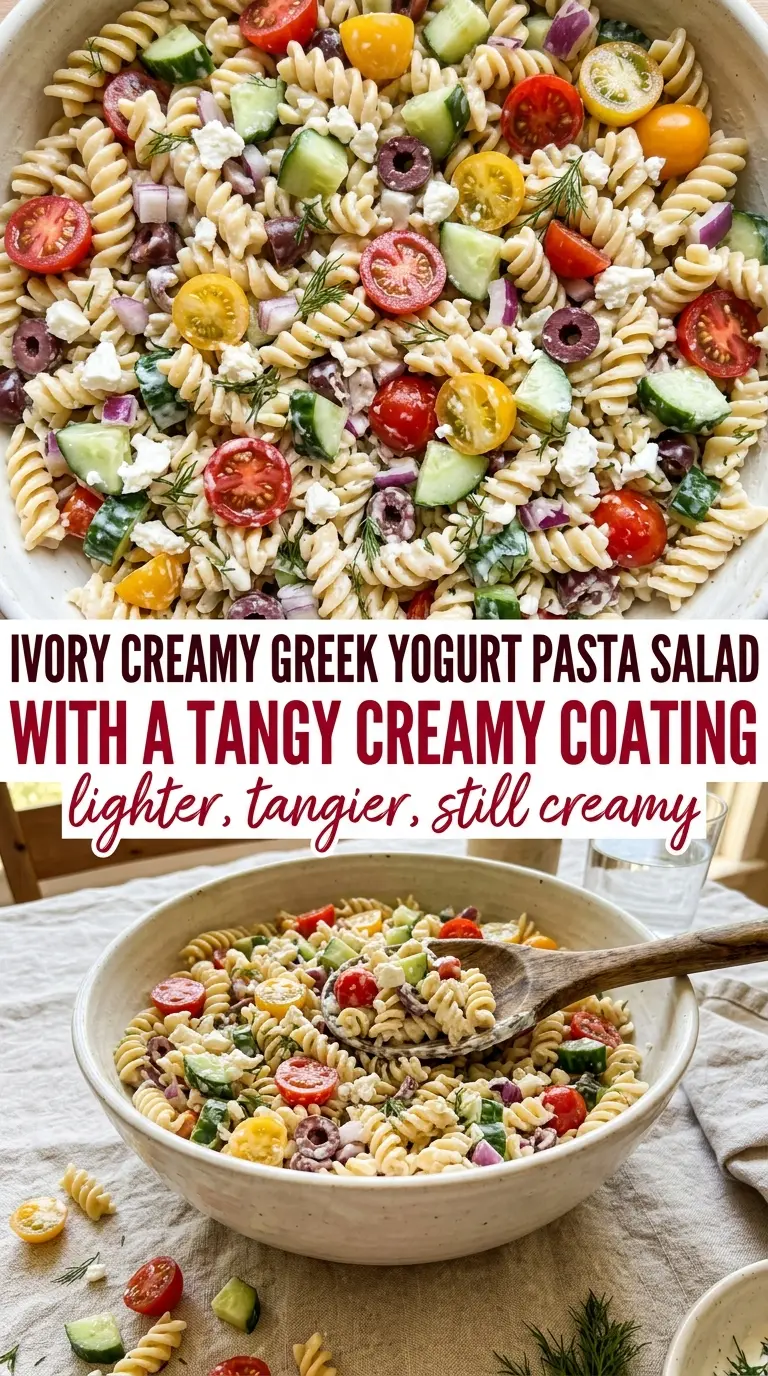
- Greek yogurt — Use full-fat if you can. It coats better, tastes rounder, and stays creamy after chilling. Low-fat works, but it reads a little tangier and less plush.
- Short pasta — Rotini and farfalle both trap the dressing in the folds and edges. Long pasta turns slippery here and doesn’t hold the vegetables as well.
- Olive oil — This isn’t just for flavor. It loosens the yogurt enough to make the dressing spread evenly instead of clumping on the pasta.
- Lemon juice — Fresh lemon makes the salad taste clean instead of flat. Bottled juice can work in a pinch, but it lacks the same brightness.
- Cucumber, tomatoes, and red onion — These give the salad crunch, sweetness, and bite. Dice them small so every forkful gets a little of each. If your red onion is aggressive, soak it in cold water for 10 minutes and drain well.
- Fresh dill — Dill is what makes the yogurt dressing taste intentional instead of improvised. Dried dill works in a pinch, but use less; it needs time to bloom and won’t taste as fresh.
The 20 Minutes That Matter Most
Cooking the Pasta Properly
Salt the water until it tastes seasoned, then cook the pasta until just al dente. Pasta that goes too soft will keep soaking up dressing and turn the salad pasty after chilling. Drain it well and cool it off before adding the yogurt mixture, or the dressing will thin out and slide off instead of clinging.
Building the Creamy Base
Whisk the Greek yogurt, olive oil, lemon juice, and garlic powder in a large bowl until the mixture looks smooth and loose enough to coat a spoon. If it looks thick and streaky, it won’t distribute evenly over the pasta. The dressing should taste a little bold on its own because the noodles and vegetables will pull the seasoning back once everything is combined.
Adding the Vegetables at the Right Time
Fold in the tomatoes, cucumber, red onion, and dill after the pasta has cooled. If the pasta is still hot, the cucumber softens fast and the tomatoes start to leak juice into the bowl. Toss gently so the vegetables stay intact and the pasta keeps its shape instead of breaking apart.
Letting It Chill Before Serving
Chill the salad for at least an hour before serving. That rest gives the yogurt time to settle into the pasta and lets the lemon, dill, and garlic taste more integrated. If it looks a little thick after refrigeration, stir in a splash of olive oil or a spoonful of yogurt to loosen it back up.
Three Ways to Make This Pasta Salad Fit the Dinner You Have
Make it dairy-free with a thick plant-based yogurt
Use an unsweetened, plain dairy-free yogurt with a similar thickness to Greek yogurt. Coconut-based versions can work, but they may add a faint sweetness, so taste and adjust the lemon and salt more aggressively. The key is thickness; thin yogurt turns the salad watery.
Add protein without changing the dressing
Toss in chopped cooked chicken, canned chickpeas, or diced salami if you want the salad to eat like a main dish. Chickpeas keep it vegetarian and hold up well in the yogurt dressing. Chicken gives you a milder, more filling result, while salami adds salt and a little chew.
Swap the herbs based on what you’ve got
Dill gives this salad its clearest flavor, but parsley, chives, or a little basil can step in if that’s what you have. Parsley keeps it crisp and clean, chives lean oniony, and basil makes it taste softer and more Mediterranean. Use one herb or a mix, but don’t overload the bowl or the dressing gets muddy.
Storage and Reheating
- Refrigerator: Store covered for up to 3 days. The pasta will absorb some dressing, so the salad gets a little tighter by day two.
- Freezer: Don’t freeze this one. The yogurt separates and the vegetables lose their crunch once thawed.
- Reheating: This salad is meant to be served cold. If it has been in the fridge awhile, let it sit out for 10 to 15 minutes, then stir and add a small spoonful of yogurt or a drizzle of olive oil to freshen the texture.
Questions I Get Asked About This Recipe
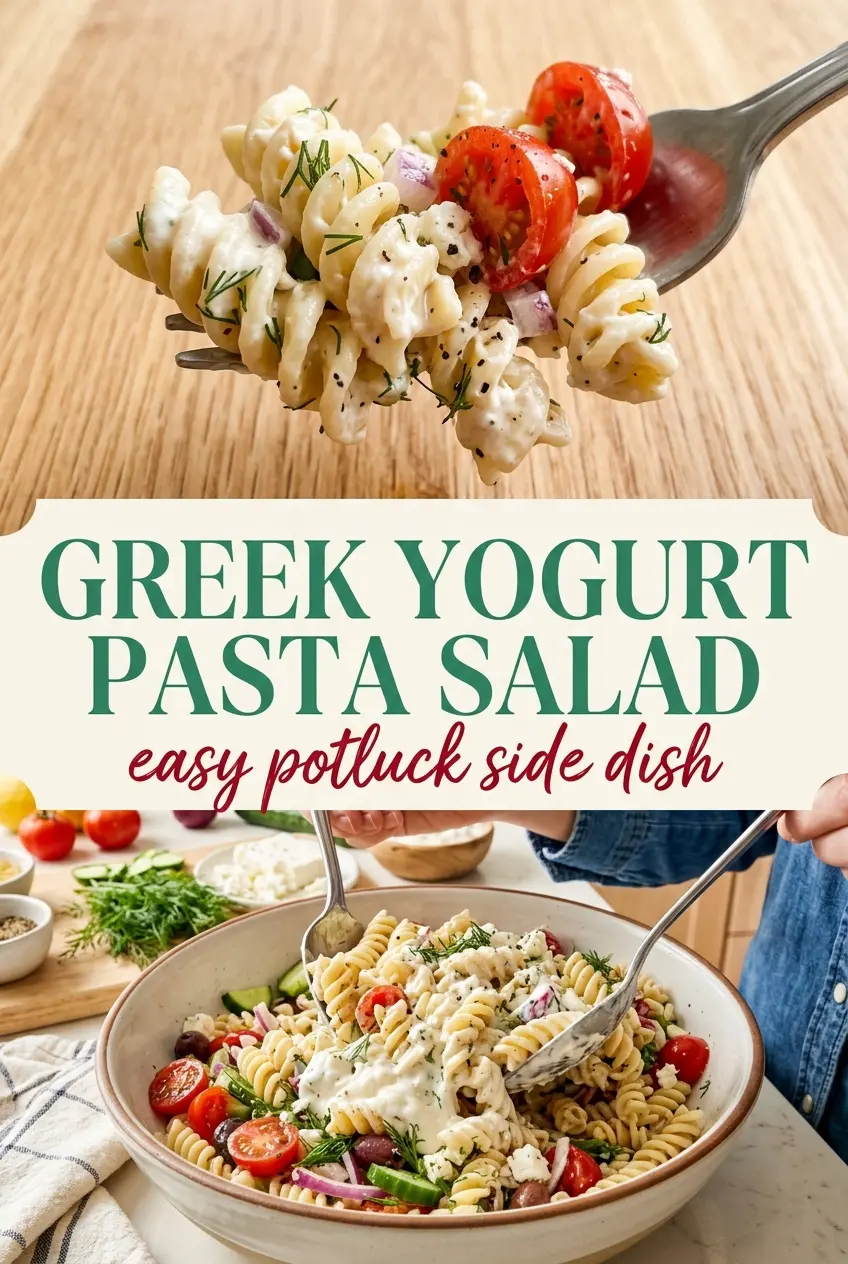
Creamy Greek Yogurt Pasta Salad
Ingredients
Equipment
Method
- Bring a pot of salted water to a boil and cook the short pasta (rotini or farfalle) according to package directions, until tender. Drain and cool the pasta so it’s not hot when mixed.
- Spread the drained pasta onto a sheet pan in an even layer to cool faster, if needed. Let it cool fully before assembling so the vegetables stay crisp.
- Whisk plain Greek yogurt, olive oil, lemon juice, and garlic powder together in a large bowl until smooth. The mixture should look creamy and evenly combined.
- Add the cooked short pasta (rotini or farfalle) to the bowl and toss to coat evenly with the yogurt mixture. Toss thoroughly so every piece is lightly covered.
- Fold in the cherry tomatoes, cucumber, and red onion. Mix gently so the vegetables keep their shape.
- Stir in the fresh dill, distributing it through the salad. Taste as you go for herb balance.
- Season with salt and pepper to taste. Adjust until the flavor pops without overpowering the yogurt tang.
- Chill the creamy Greek yogurt pasta salad for at least 1 hour before serving for the best flavor. Serve cold for the best texture and tang.