
Creamy butter beans, spinach, and sun-dried tomatoes make a skillet dinner that lands somewhere between cozy and polished. The beans stay tender and intact, the sauce turns silky with parmesan and mozzarella, and the sun-dried tomatoes bring just enough tang to keep the cream from feeling heavy. It’s the kind of dish that looks like you put in more work than you did, which is exactly why it keeps coming back to the table.
What makes this version work is the way the flavors are built in layers. Garlic goes into the oil first, then the sun-dried tomatoes and Italian seasoning have a chance to bloom before the cream is added. That little bit of attention matters. It keeps the sauce from tasting flat and gives the beans a more developed, savory base instead of just warming everything through together.
The spinach goes in near the end so it stays bright instead of turning dull and overcooked, and the cheese is stirred in off the hottest part of the burner so it melts into the sauce instead of clumping. Below, you’ll find the spots where this dish can go sideways, the easiest swaps that still keep the texture right, and the one reheating trick that keeps the sauce creamy the next day.
The sauce got thick and glossy without curdling, and the sun-dried tomatoes gave it just enough tang to keep it from tasting heavy. I served it with crusty bread and my husband kept going back for “just one more scoop.”
Creamy Tuscan butter beans with spinach and sun-dried tomato are perfect for a quick one-pan dinner when you want something rich, savory, and meatless.
The Reason This Creamy Bean Skillet Stays Smooth Instead of Going Grainy
The sauce in a dish like this can turn clumpy fast if the cheese goes in too early or the heat stays too high. Parmesan and mozzarella both melt best when the pan is hot enough to steam lightly, not boil. If the cream is bubbling hard, the cheese can seize and the sauce loses that smooth, spoon-coating finish.
The other thing that matters is the beans themselves. Butter beans are large and creamy, but they still need a gentle simmer so they pick up flavor without breaking down into mush. A short simmer after the cream goes in gives the sauce time to thicken around the beans instead of sitting thin and separate.
What Each Ingredient Is Actually Doing in This Dish

- Butter beans — Canned butter beans are the right choice here because they’re already soft and creamy. Drain and rinse them so the sauce stays clean-tasting, not starchy or tinny.
- Sun-dried tomatoes — These do the heavy lifting for acidity and depth. If yours are packed in oil, drain them well; if they’re dry-packed, chop them a little finer and let them warm longer in the oil so they soften.
- Heavy cream — This is what gives the skillet its body. Half-and-half will work in a pinch, but the sauce will be looser and more likely to split if it boils.
- Parmesan and mozzarella — Parmesan brings salt and sharpness, while mozzarella gives the sauce that stretchy, lush texture. Freshly grated parmesan melts better than the pre-shredded kind, which can turn the sauce a little sandy.
- Spinach — Fresh spinach is best because it wilts fast and keeps its color. Frozen spinach can work, but it needs to be thawed and squeezed very dry or it will water the sauce down.
Building the Sauce Before the Cheese Goes In
Wake Up the Garlic and Tomatoes
Start with the olive oil over medium heat and cook the garlic just until it smells sweet and sharp, not browned. Add the sun-dried tomatoes and Italian seasoning right after that so the oil picks up their flavor before anything creamy gets involved. If the garlic burns, the whole dish tastes bitter, so keep the pan moving and don’t rush this first minute.
Let the Cream Simmer, Not Boil
Stir in the butter beans and heavy cream, then bring the pan to a gentle simmer. You want small bubbles around the edges, not a full rolling boil. That slower heat gives the cream time to thicken around the beans and keeps the sauce from breaking before the cheese even enters the pan.
Wilt the Spinach at the End
Add the spinach once the sauce has started to thicken. It’ll look like a lot at first, then collapse in a minute or two. Stir just until the leaves are bright green and softened; if you keep cooking it after that, the spinach loses color and the sauce starts to take on a muddy look.
Finish With Cheese Off the Heat
Turn the heat down before adding the parmesan and mozzarella. Stir until the cheese melts into the sauce and the skillet turns glossy and cohesive. If it looks too thick, loosen it with a splash of pasta water or a spoonful of plain water, but add it a little at a time so you don’t wash out the flavor.
How to Adapt This for a Different Pantry, Diet, or Serving Style
Dairy-Free Version With Creamy Texture
Swap the heavy cream for full-fat coconut milk and use a dairy-free parmesan-style cheese or skip the cheese entirely and finish with a spoonful of nutritional yeast. You won’t get the exact same rich, salty finish, but the sauce will still be velvety and the sun-dried tomatoes carry enough flavor to keep it satisfying.
Extra-Bold Version With Crumbled Sausage or Bacon
Brown sliced sausage or chopped bacon first, then cook the garlic in the rendered fat instead of olive oil. That adds smoke and salt, and it turns the skillet into a heartier main dish. Just drain off excess fat if there’s a lot left in the pan, or the sauce can feel greasy instead of silky.
Higher-Protein Vegetarian Bowl
Keep the beans as written, then serve the skillet over quinoa, polenta, or whole-grain toast. Those bases soak up the cream sauce without fighting it, and they make the meal feel more complete without changing the core flavor. If you want even more protein, add a second can of beans and simmer a few extra minutes so the sauce can catch up.
Storage and Reheating
- Refrigerator: Store in an airtight container for up to 4 days. The sauce thickens as it chills, so it may look a little stiff at first.
- Freezer: It freezes, but the cream sauce can turn grainy after thawing. If you do freeze it, expect a softer texture and reheat it gently.
- Reheating: Warm it slowly in a skillet over low heat with a splash of water, broth, or cream. High heat is the fastest way to split the sauce, especially once the cheese is already in it.
The Questions People Usually Ask Before They Make This
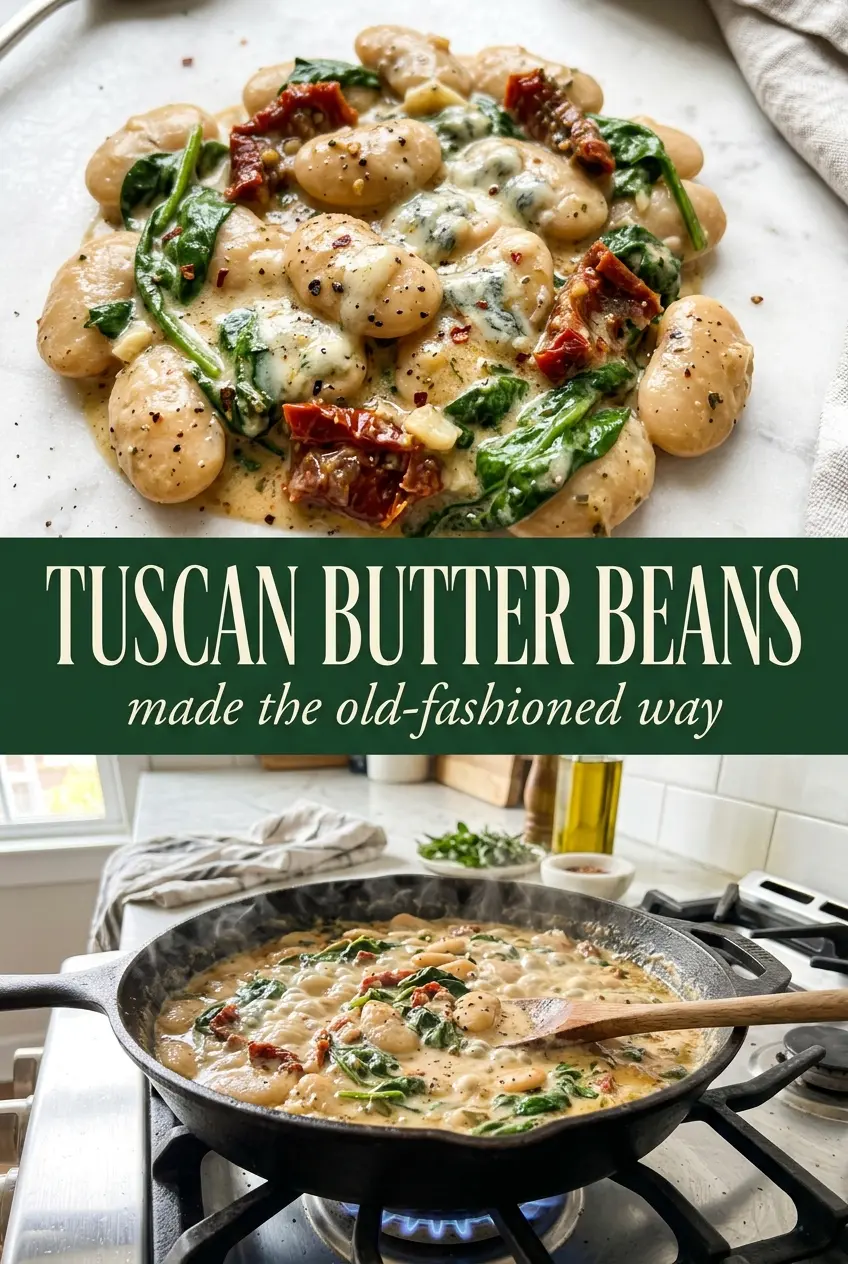
Tuscan Butter Beans With Spinion And Sun-Dried Tomato
Ingredients
Equipment
Method
- Heat olive oil in a large skillet over medium heat, then sauté minced garlic until fragrant, about 30 to 60 seconds, with visible bubbles around the edges.
- Add chopped sun-dried tomatoes and Italian seasoning, then cook for 2 minutes, stirring until the tomatoes look slightly softened and fragrant.
- Stir in drained and rinsed butter beans and heavy cream, then simmer for 5 minutes, keeping the surface gently bubbling.
- Add fresh spinach and stir until wilted, 1 to 2 minutes, until the spinach turns bright green and collapses.
- Fold in grated parmesan and shredded mozzarella cheese, stirring until melted and creamy, about 2 to 3 minutes with a smooth, glossy sauce.
- Simmer for 5 more minutes until the sauce thickens slightly before serving, 5 to 7 minutes, until it coats the back of a spoon.