
Honey apricot mini cake loaf bakes up with a tender crumb, a soft golden crust, and little pockets of fruit that stay pleasantly chewy instead of disappearing into the batter. The honey keeps the loaf moist and gives it a rounded sweetness that fits the apricots instead of covering them up. Because these are baked as mini loaves, you get more of that caramelized edge and less of the dense center that larger quick breads sometimes end up with.
The batter comes together fast, but the order matters. Melted butter goes in with the honey, eggs, milk, and vanilla first so everything blends smoothly before the flour is added. Once the dry ingredients go in, the job is to stop mixing early; overworking the batter is what turns a tender loaf into something tough and gummy. Tossing the diced apricots with a little flour is worth the extra minute, too, because it helps keep them suspended through the bake instead of settling on the bottom.
Below, you’ll find the small details that make this loaf bake evenly in mini pans, plus a few easy swaps if you want to adjust the fruit or make it a little more pantry-friendly.
The mini loaves came out so tender, and the apricots stayed evenly distributed instead of sinking. I also loved that the honey gave it sweetness without making it taste heavy.
Save this honey apricot mini cake loaf for the days when you want a tender fruit-studded bake with a honeyed crumb and no fussy steps.
The Reason the Apricots Stay Put Instead of Sinking
The most common problem with fruit loaf is that all the good stuff ends up at the bottom. That happens when the batter is too thin, the fruit is too wet, or the fruit is added without any coating. This loaf avoids that by using a thicker quick-bread style batter and by tossing the diced apricots with a little flour before they go in. That thin coating gives the fruit enough grip to stay suspended while the cake sets in the oven.
Mini loaf pans help here too. They bake faster and set before the fruit has time to slide downward. If you use one larger pan instead, the center stays loose longer and the apricots have more time to settle. The result is still good, but the texture is better in smaller pans because the loaf gets to the finish line evenly.
What Each Ingredient Is Actually Doing in This Loaf
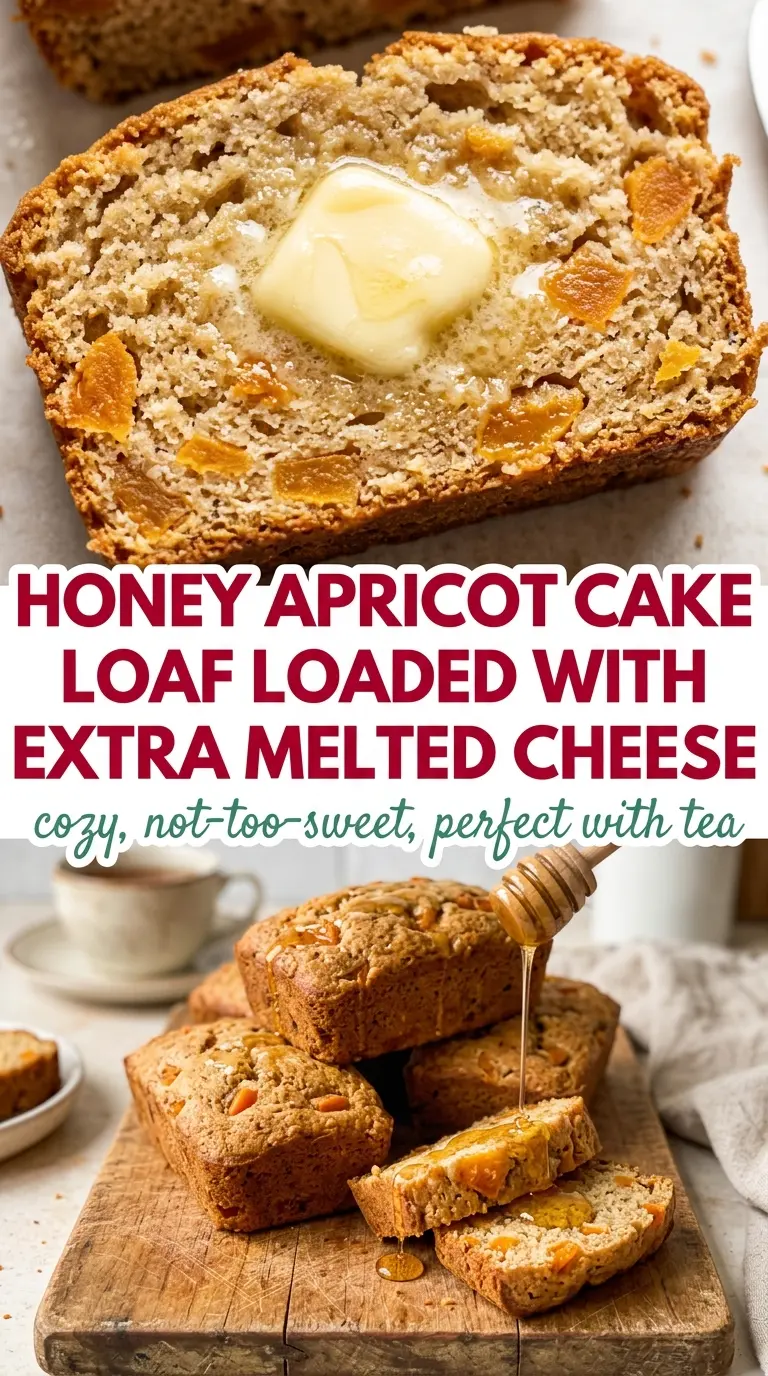
- Honey — This is the main sweetener, and it brings moisture with it. You can swap in maple syrup in a pinch, but the loaf will lose some of that warm floral depth honey gives the crumb.
- Butter — Melted butter keeps the texture soft and gives the loaf a richer finish than oil would. If you use oil instead, the loaf stays moist but tastes flatter and less bakery-like.
- Eggs — They hold the batter together and help the mini loaves rise evenly. Don’t skip them unless you’re ready for a denser, more fragile loaf.
- Milk — This loosens the batter just enough to keep it spoonable without making it runny. Whole milk is best here, but 2% works fine.
- Dried apricots — Diced dried apricots are the backbone of the flavor and texture. Fresh apricots bring too much water for this batter, so if you want to use them, pat them dry and reduce the milk slightly.
- Flour — All-purpose flour gives the loaf enough structure to hold the fruit. If you use a 1:1 gluten-free blend, expect a slightly more delicate crumb, but the loaf still bakes well.
- Baking powder — This is what gives the loaf lift and keeps it from baking up heavy. Old baking powder is one of the fastest ways to end up with a flat loaf, so check the date if yours has been in the pantry a while.
- Vanilla — It rounds out the honey and apricot so the loaf tastes finished, not one-note. It’s a small amount, but you’d miss it.
Building the Batter Without Beating the Air Out of It
Mix the wet ingredients first
Whisk the honey, melted butter, eggs, milk, and vanilla until the mixture looks smooth and glossy. This is where you build the base, and if the butter is still hot enough to scramble the eggs, stop and let it cool for a minute before continuing. The mixture should look unified, not streaked or curdled.
Add the flour just until the streaks disappear
Fold in the flour and baking powder with a light hand. The batter should look thick and a little rough, and that’s exactly what you want. If you keep stirring until it’s perfectly smooth, the loaf will bake up tighter and less tender.
Work the apricots in at the end
Add the flour-tossed apricots once the batter is nearly finished. A few quick folds are enough to distribute them. If you overmix after the fruit goes in, the batter can get heavy and the apricots can break apart, which leaves streaks instead of neat pieces through the crumb.
Watch for the clean-toothpick finish
Mini loaves usually take 25 to 30 minutes at 350°F, but start checking early because the edges can go from golden to dry fast. The tops should spring back lightly when touched, and a toothpick in the center should come out clean or with a few moist crumbs, not wet batter. Pull them as soon as they’re set so the honey stays soft instead of turning sticky and overbaked.
Three Easy Ways to Change the Loaf Without Losing the Texture
Make it gluten-free with a 1:1 baking blend
A good cup-for-cup gluten-free flour blend works here because the batter doesn’t depend on yeast or complicated structure. The crumb will be a little more delicate, but the apricots and honey still bake up beautifully. Don’t use almond flour alone; it won’t hold the loaf together the same way.
Swap the dried apricots for dried peaches or cherries
Peaches give you a softer, more mellow fruit flavor, while cherries bring a sharper bite. Keep the pieces about the same size so they distribute evenly through the batter. If the fruit is especially sticky, dust it with a little flour before folding it in.
Turn it into one larger loaf instead of minis
You can bake the batter in a standard loaf pan, but expect a longer bake and a softer center. The edges won’t caramelize quite as much, so the texture leans more toward classic quick bread than tea cake. Start checking around 45 minutes and cover loosely with foil if the top darkens before the middle is done.
Storage and Reheating
- Refrigerator: Store in an airtight container for up to 4 days. The crumb firms up a little in the fridge, but it stays moist.
- Freezer: These freeze well. Wrap each cooled mini loaf tightly in plastic, then place in a freezer bag for up to 2 months.
- Reheating: Warm a slice in the microwave for 10 to 15 seconds or in a low oven for a few minutes. Don’t blast it on high heat or the honey can make the edges tough before the center warms through.
Answers to the Questions Worth Asking
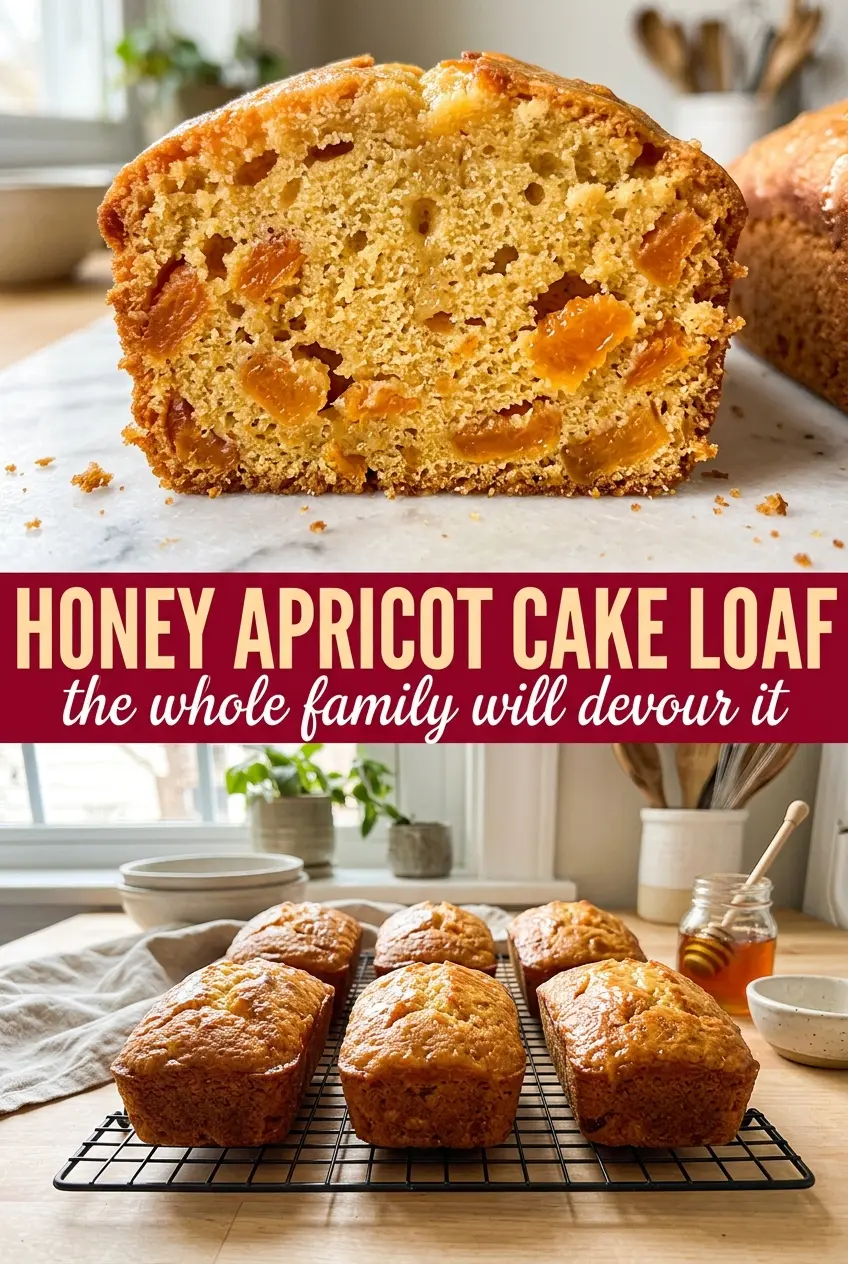
Honey Apricot Mini Cake Loaf
Ingredients
Equipment
Method
- Preheat oven to 350°F and grease mini loaf pans, then place pans on a sheet pan for easy handling.
- If your apricots are very sticky, toss the diced dried apricots with a small pinch of flour so they stay suspended in the batter.
- Whisk honey, melted butter, eggs, milk, and vanilla extract together until smooth and glossy.
- Fold in flour and baking powder just until no dry streaks remain, stopping as soon as the batter comes together.
- Fold in the diced dried apricots so they distribute evenly, keeping the batter thick and chunky.
- Divide batter among mini loaf pans so each is evenly filled, filling to about three-quarters for good rise.
- Bake 25-30 minutes at 350°F until a toothpick comes out clean, with tops turning lightly golden and springy to the touch.