
Creamy Tuscan chickpea soup lands in that sweet spot between hearty and light. The broth stays bright with tomatoes, the chickpeas turn soft and substantial, and the kale gives every spoonful a little bite without taking over the bowl. The best part is how the cream rounds everything out at the end so the soup tastes full and comforting without needing a long list of ingredients.
What makes this version work is the way the base is built. Onion, garlic, and rosemary get a head start in olive oil, then the chickpeas and tomatoes simmer long enough to soften and blend their flavors. Mashing a portion of the chickpeas is the move that gives the broth body without turning it into a puree, and the cream goes in at the end so it stays silky instead of dulling the tomato flavor.
If you’ve made chickpea soup before and ended up with a thin broth, this method fixes that. Below, I’ll show you exactly how much to mash, when to add the kale so it keeps its color, and how to swap the dairy without losing that creamy finish.
The broth thickened up beautifully after I mashed some of the chickpeas, and the kale stayed tender but not mushy. My husband went back for a second bowl before I even sat down.
Creamy Tuscan chickpea soup with a silky tomato broth, tender kale, and mash-in-the-pot texture is the kind of dinner worth pinning for busy nights.
The Reason This Soup Thickens Without Turning Heavy
The mistake with chickpea soup is treating it like a bean soup that needs to stay brothy from start to finish. Chickpeas give you a creamy texture on their own if you give them a little help, and that help comes from mashing some of them right in the pot. That releases starch into the broth and makes the soup look rich and feel substantial without adding flour or cream early, which can muddy the flavor.
Another key detail is timing. The tomatoes and broth need enough simmer time to mellow together before the kale goes in. If you add the greens too soon, they lose their color and turn limp. If you add the cream before the broth has taken on body, the soup can taste flat instead of layered. The sequence matters here.
What Each Ingredient Is Actually Doing in This Bowl

- Olive oil — This carries the onion, garlic, and rosemary from the start and gives the soup a rounder base than butter would. Use a decent olive oil if you can, since the flavor stays present in a short ingredient list.
- Yellow onion — The onion needs the full five minutes so it softens and turns sweet. If it’s still sharp, the broth will taste unfinished no matter what else you add.
- Garlic and dried rosemary — Garlic brings the Tuscan edge, but rosemary is what gives this soup its woodsy backbone. Crush the rosemary a little between your fingers before it goes in so it wakes up in the hot oil.
- Chickpeas — These do two jobs: they add body and they become the creamy part of the soup once some of them are mashed. Canned chickpeas work perfectly here, but drain them well so the broth doesn’t pick up that canned taste.
- Diced tomatoes — The tomatoes keep the soup bright and give the cream something to balance. Fire-roasted tomatoes work if you want a deeper, slightly smokier finish.
- Vegetable broth — This is the liquid that carries everything. A broth with decent salt and flavor matters more than an expensive one, because bland broth makes the whole pot taste thin.
- Kale — Kale stands up to simmering better than spinach, which is why it belongs here. Chop it small enough that it softens quickly, but not so small that it disappears.
- Heavy cream and Parmesan — The cream smooths the tomato edge, and the Parmesan adds salty depth. If you use a substitute for the cream, expect a lighter body; the soup will still work, but it won’t have the same velvety finish.
The 20 Minutes That Actually Matter
Softening the Onion First
Heat the olive oil in a pot and cook the onion until it turns translucent and a little glossy at the edges. You want soft, not browned. If the onion starts to color fast, the heat is too high and the garlic will burn before the base has any sweetness. Lower the heat and let the onion do its job.
Building Flavor Before the Liquid Goes In
Add the garlic and rosemary and stir just until fragrant. That short step blooms the herbs in the oil and keeps the garlic from tasting raw. The moment you smell it, move on to the chickpeas, tomatoes, and broth. Garlic goes bitter if you linger too long in this stage.
Simmering and Mashing for Body
Let the soup simmer until the chickpeas soften and the broth tastes integrated, about 15 minutes. Then mash a third of the chickpeas against the side of the pot with a spoon or potato masher. You’re looking for a thicker, slightly cloudy broth with some whole chickpeas still intact. If you mash everything, the soup loses the contrast that makes each bite interesting.
Finishing with Kale, Cream, and Parmesan
Stir in the kale and cook just until it turns deep green and tender. Add the cream and Parmesan off the fiercest heat so the soup stays smooth instead of tightening up or separating. Taste at the end and season carefully. Parmesan adds salt fast, and the right amount will make the tomato flavor pop instead of burying it.
Three Ways to Adjust This Soup Without Breaking It
Dairy-Free Version with a Creamy Finish
Swap the heavy cream for unsweetened cashew cream or full-fat coconut milk and skip the Parmesan, then add a little extra salt and a squeeze of lemon at the end. Cashew cream keeps the body closest to the original, while coconut milk adds a mild sweetness that softens the tomatoes.
Make It Heartier with Potatoes or Pasta
Add diced Yukon gold potatoes with the broth, or stir in small pasta during the simmer if you want a more filling meal. Potatoes thicken the broth naturally as they break down, while pasta soaks up liquid fast and turns the soup into more of a one-bowl dinner.
Gluten-Free and Naturally Vegetarian
As written, the soup is already vegetarian, and it stays gluten-free as long as your broth is certified gluten-free. If you serve it with bread, pick one that fits your needs separately; the soup itself doesn’t need any flour or thickeners.
Use Spinach Instead of Kale
Spinach works if that’s what you have, but add it at the very end and just wait until it wilts. It gives you a softer texture and a milder flavor, which makes the soup feel lighter and a little less rustic than the kale version.
Storage and Reheating
- Refrigerator: Keeps well for 4 days. The broth thickens a little as it sits because the chickpeas continue to soften.
- Freezer: It freezes well, but the cream can separate slightly when thawed. For the best texture, freeze before adding the cream and Parmesan, then stir those in when reheating.
- Reheating: Warm it gently over medium-low heat and add a splash of broth or water if it has tightened up. Boiling is the mistake here — it can make the cream grainy and push the kale past tender.
Answers to the Questions Worth Asking
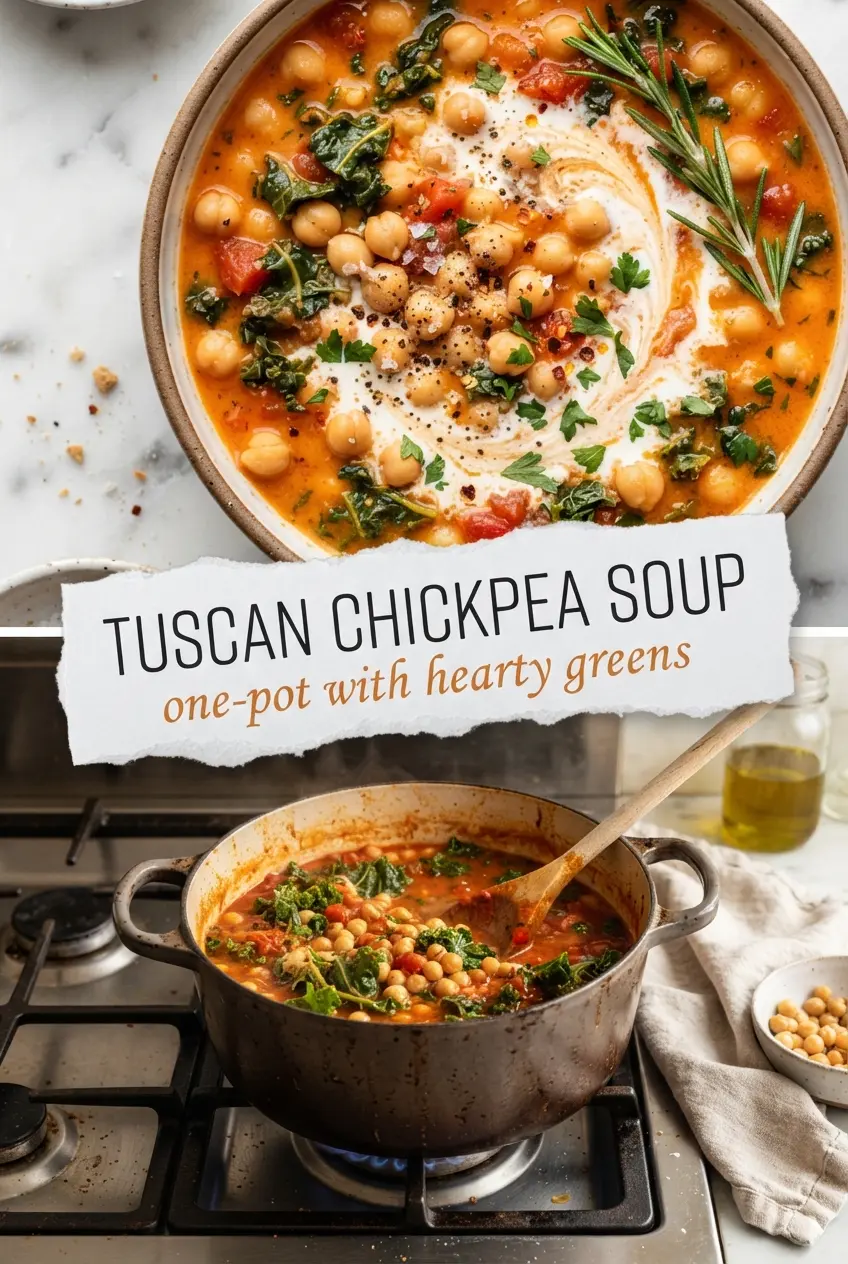
Creamy Tuscan Chickpea Soup
Ingredients
Equipment
Method
- Heat the olive oil in a Dutch oven over medium heat for 1 minute, then sauté the diced yellow onion for 5 minutes until softened and slightly translucent, stirring occasionally. Add the minced garlic and dried rosemary and cook for 1 minute until fragrant.
- Add the drained chickpeas, diced tomatoes, and vegetable broth to the pot, then simmer for 15 minutes over medium heat, stirring once or twice to prevent sticking. Keep the surface gently bubbling.
- Mash about a third of the chickpeas directly against the pot with a spoon or potato masher to thicken the broth. Continue simmering for 2 minutes to let the texture settle.
- Stir in the chopped kale and cook for 5 minutes until tender and bright green. Taste and adjust seasoning readiness before adding the dairy.
- Reduce heat to low, then stir in the heavy cream and grated Parmesan until melted and smooth. Season with salt and black pepper to taste, then cook for 2 minutes on low without boiling.