
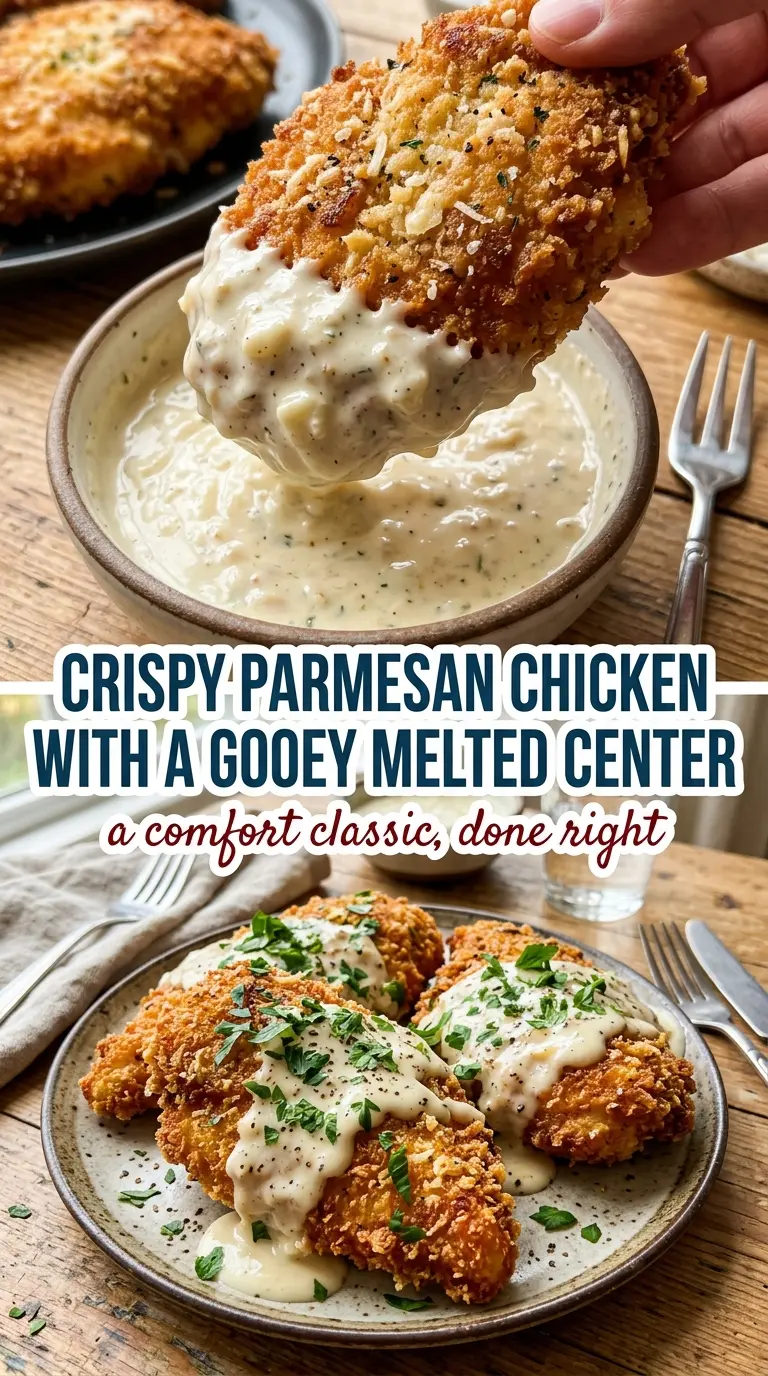
Crispy Parmesan Chicken earns a permanent spot in the dinner rotation because it gives you that shattering, golden crust without drying out the chicken underneath. The parmesan melts into the panko as it fries, so the coating tastes savory all the way through instead of just crunchy on the outside. Spoon that creamy garlic sauce over the top or serve it on the side, and you get a plate that feels complete without needing a lot else.
The part that makes this version work is the order and the balance. Flour first gives the egg something to grip, and the egg helps the parmesan-panko mix cling in a thick, even layer. Pounding the chicken to an even thickness matters just as much as the breading, because thin edges won’t overcook before the center is done. The sauce stays simple on purpose: garlic bloomed in butter, then heavy cream simmered long enough to thicken without turning grainy.
Below, I’m walking through the parts that matter most: how to keep the crust crisp, how to tell the chicken is cooked through, and how to adjust the sauce if you want it a little looser or a little richer.
The crust stayed crisp even after I spooned the garlic sauce over it, and the chicken cooked through in about the time you listed. My husband kept dipping every bite into the extra sauce.
Save this crispy parmesan chicken with creamy garlic sauce for the nights when you want a crunchy cutlet and a pan sauce that tastes like you spent all evening on it.
The Reason the Crust Stays Crisp Instead of Going Soggy
The biggest mistake with breaded chicken is treating the sauce and the crust like they can share the same timing. They can’t. If you pour cream sauce over the chicken too early or let the cutlets sit under a lid, steam softens the coating fast. The fix is simple: fry the chicken until it’s deeply golden, then let it rest on a rack or paper towel while you build the sauce separately.
Parmesan in the breadcrumb mix helps here, too. It browns faster than plain crumbs and gives the crust a little extra structure, but it also means the heat needs to stay at medium, not high. Too hot and the outside burns before the chicken cooks through. Too low and the breading absorbs oil instead of crisping.
What Each Ingredient Is Actually Doing in This Dish
- Chicken breasts — Pounding them thin is what keeps the cook time short and even. Thick spots stay underdone while the edges overcook, so don’t skip that part. If you want to use chicken thighs, slice them open and flatten them, but the cook time will be a little less predictable.
- Panko breadcrumbs — Panko gives you the light, craggy crust that regular fine breadcrumbs can’t match. If you only have standard breadcrumbs, the coating will be denser and less shattery, though it still works.
- Parmesan — This is the ingredient that turns the crust from plain breaded chicken into something more savory and nutty. Use finely grated parmesan so it mixes evenly with the panko; big shreds don’t cling as well and can fall off in the pan.
- Flour and eggs — The flour dries the chicken surface just enough for the egg to grab, and the egg is what locks the breadcrumb mixture on. If you skip either one, the crust gets patchy and sheds in the oil.
- Heavy cream — This is what makes the sauce rich and plush without much effort. Half-and-half will work in a pinch, but the sauce will be thinner and won’t coat the chicken as smoothly.
- Garlic and butter — Butter carries the garlic flavor and gives the sauce its base. Cook the garlic only until fragrant; once it starts to brown, the sauce turns bitter fast.
Getting the Chicken Golden Before the Sauce Even Starts
Set Up the Breading Line
Lay out the flour, beaten eggs, and panko-parmesan mixture in separate shallow dishes before you touch the chicken. Dry hands for flour, one hand for egg if you can keep it organized, and press the crumbs on firmly so they actually stick. If the coating looks patchy before it hits the pan, it will look patchy after frying too.
Pan-Fry Until the Coating Shatters
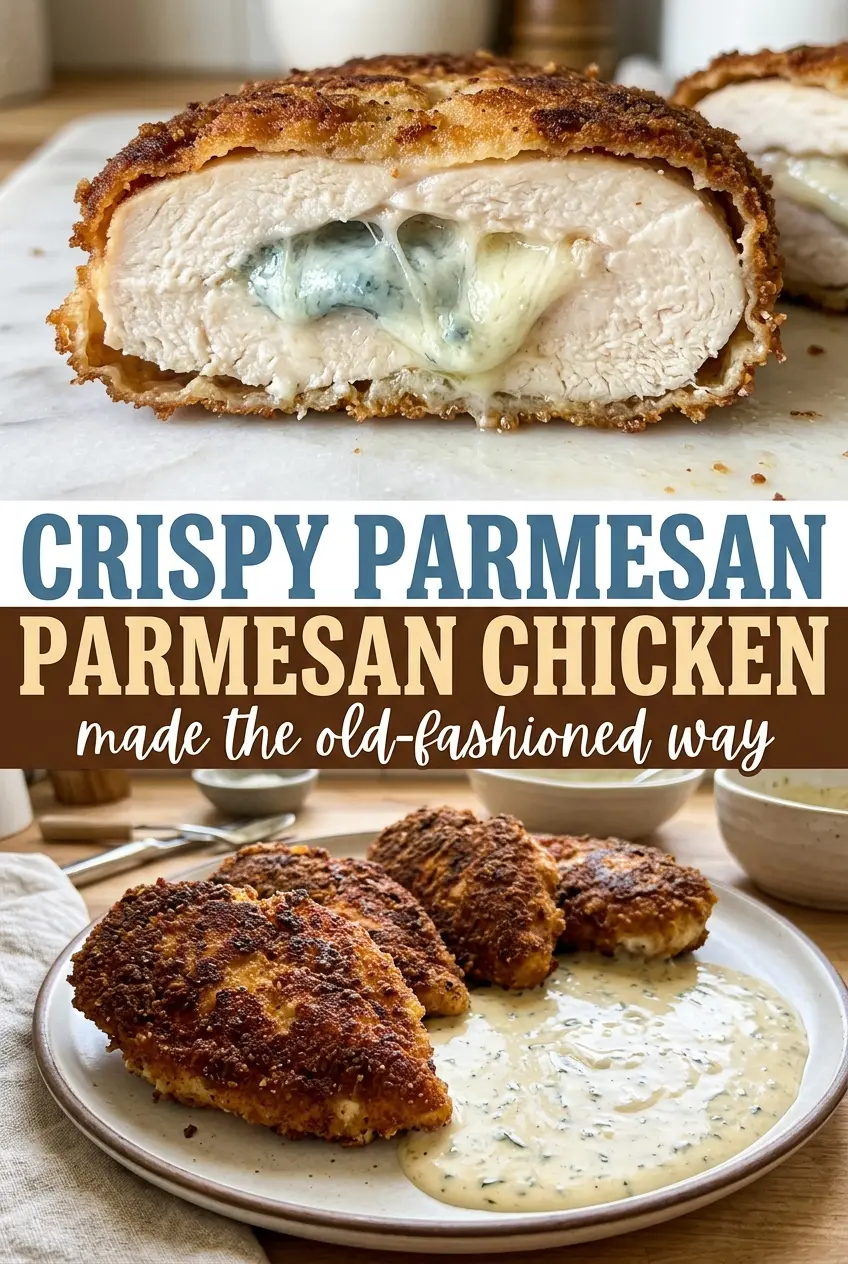
Heat the oil over medium until it shimmers, then lay the chicken in without crowding the pan. You want an even, active sizzle, not violent bubbling. After 4 to 5 minutes per side, the crust should be deep golden and crisp, and the chicken should feel firm at the thickest part. If the breading is getting too dark too quickly, lower the heat; that’s the sign the oil is too hot.
Build the Garlic Cream Separately
Melt the butter in a small saucepan and cook the garlic just until it smells sweet and sharp at the same time, about a minute. Pour in the cream and let it simmer gently until it thickens enough to coat a spoon. If you boil it hard, the sauce can take on a broken, greasy look instead of staying smooth.
Finish the Plate Without Losing the Crunch
Season the sauce with salt and pepper, then spoon it around the chicken or over just part of each piece right before serving. That keeps the crust from soaking through while still giving you plenty of sauce in every bite. Finish with parsley for a fresh edge that cuts through the richness.
How to Adapt This for Gluten-Free, Lighter, or Extra-Saucy Nights
Gluten-Free Coating That Still Crisps
Swap the flour for a gluten-free all-purpose blend and use gluten-free panko. The texture stays crisp if you keep the chicken dry and press the coating on well, though the crust may brown a touch faster than standard breadcrumbs.
Lighter Sauce With Less Richness
Use half-and-half instead of heavy cream for a thinner sauce with less body. It still tastes good, but you’ll need a few extra minutes of gentle simmering to get it to coat the spoon. Don’t crank up the heat to speed it up or the sauce can separate.
Extra Sauce for Serving Over Pasta or Potatoes
Double the cream and garlic, then simmer the sauce a little longer so it thickens enough to spoon over a side. This version turns the dish into a fuller meal, but keep the sauce on the side if you want the chicken crust to stay crisp longer.
Storage and Reheating
- Refrigerator: Store the chicken and sauce separately for up to 3 days. The crust softens a little in the fridge, but the flavor stays good.
- Freezer: The breaded chicken freezes better than the sauce. Freeze the cooked cutlets on a tray, then wrap tightly; the cream sauce is best made fresh because it can split after thawing.
- Reheating: Warm the chicken in a 375°F oven or air fryer until hot and re-crisped. Reheat the sauce slowly on low heat, stirring often. Microwaving the chicken traps steam and ruins the crust fastest.
Questions I Get Asked About This Recipe
Crispy Parmesan Chicken With Creamy Garlic Sauce
Ingredients
Equipment
Method
- Dredge the chicken in flour, then dip into the beaten eggs, then coat with a mixture of panko breadcrumbs and grated parmesan so the surface is fully covered with crumbs.
- Press the crumb mixture lightly onto the chicken to help it adhere, then shake off any loose crumbs for more even browning.
- Heat a cast iron skillet over medium heat and pan-fry the chicken for 4-5 minutes per side until golden and crispy, cooking through as the crust sets.
- Transfer the chicken to a plate and let it rest briefly while you make the sauce so the juices settle and the coating stays crisp.
- In a separate saucepan, melt the butter and sauté the minced garlic until fragrant, about 1-2 minutes, keeping the heat at a gentle sizzle.
- Pour in the heavy cream and simmer for 5 minutes until thickened, stirring so the sauce turns glossy and coats the back of a spoon.
- Season the sauce with salt and pepper to taste, then keep warm on low heat until ready to serve.
- Serve the chicken with the creamy garlic sauce spooned over or alongside for dipping, and garnish with fresh parsley for color.