
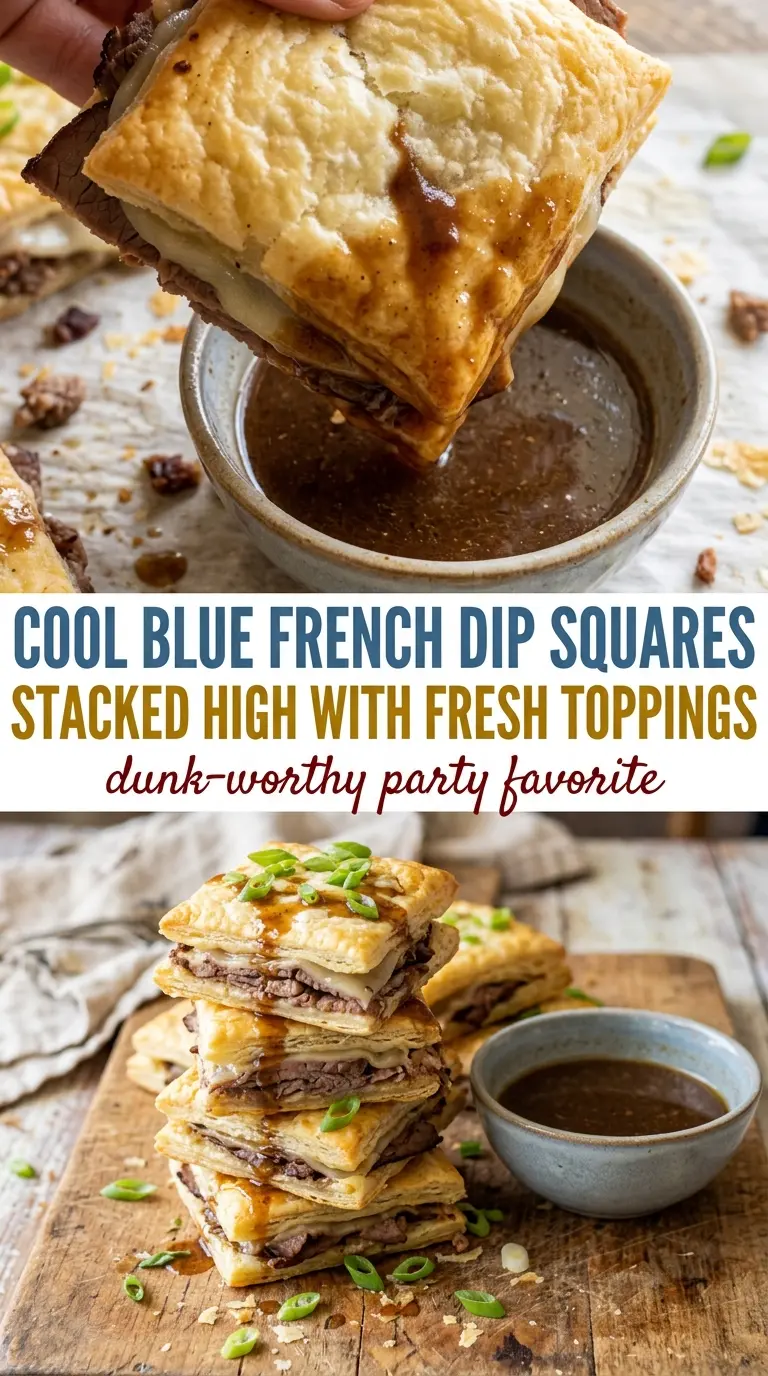
Buttery dinner rolls, layered with roast beef and melted provolone, bake into the kind of pull-apart pan dinner that disappears fast. The tops turn glossy and golden from the seasoned butter, the cheese melts down into the beef, and the whole pan begs for a good dunk in warm au jus. It has all the comfort of a French dip sandwich, just built in a shape that makes serving easier and feeding a crowd a lot less fussy.
What makes these work is the way everything bakes together as one tight stack. Slicing the rolls as a sheet keeps the bottoms intact, so the filling stays in place and the sandwiches don’t tumble apart when you cut them. The Worcestershire butter on top isn’t just for color; it gives the rolls that savory, steakhouse-style finish that makes the whole pan taste deeper than the ingredient list suggests.
Below, you’ll find the small details that keep the cheese from leaking out too soon, plus the one timing note that matters most if you’re serving these for game day or a casual dinner.
The rolls held together perfectly and the provolone melted into the roast beef without turning greasy. I warmed the broth right before serving and the dipping sauce made the whole pan taste like a real deli sandwich.
These French Dip Squares bake up golden, cheesy, and perfect for dunking into warm au jus.
The Move That Keeps the Rolls from Falling Apart
The biggest mistake with sandwich bakes like this is assembling them one roll at a time. That leaves gaps, makes the layers uneven, and usually means the top bun slides around while the cheese melts. Keeping the rolls attached as one sheet until after baking gives you clean cuts, better structure, and a pan that serves like a proper pull-apart sandwich instead of a pile of fillings.
The other key detail is the buttery topping. It should brush on evenly, not pool in the corners, because too much butter in one spot can leave the tops greasy instead of crisp and bronzed. The Worcestershire adds that savory edge you expect from French dip flavor, and the dried onion flakes soften just enough in the oven to give the crust a little extra bite.
What Each Ingredient Is Actually Doing in This Dish
- Dinner rolls — Soft, slightly sweet rolls give you the right base for this kind of bake. Hawaiian-style rolls work well if you want a sweeter contrast, but any connected pull-apart dinner roll sheet will do the job. The important part is slicing the whole slab horizontally so the structure stays intact.
- Deli roast beef — Thin slices heat through quickly and stay tender. Thicker shaved beef can work, but avoid anything chunky or heavily sauced, because it makes the filling fall apart and overpowers the sandwich. If your deli beef is very wet, pat it lightly with paper towels so the rolls don’t turn soggy.
- Provolone — This is the cheese that gives you the right melt without getting stringy in a weird way. Swiss is the closest swap if that’s what you have, and mozzarella works in a pinch, but both taste a little milder. Provolone brings enough body to hold the beef together when you slice the pan.
- Butter, Worcestershire, garlic powder, and dried onion flakes — This mix turns the tops into the savory, baked sandwich crust that makes the recipe worth repeating. The butter carries the seasoning, while the Worcestershire adds depth that plain melted butter can’t give you. Onion flakes are worth keeping because they toast on top and add little pockets of flavor.
- Beef broth — Warm broth is the simplest au jus and it needs very little help. Use a good boxed broth or homemade if you have it; a thin, weak broth will taste flat beside the rich sandwiches. Heat it just before serving so it stays hot enough to cut through the cheese and butter.
Building the Pan So the Filling Stays Put
Set Up the Roll Sheet
Lay the bottom half of the rolls in the baking dish as one connected slab. If the rolls were sliced neatly, they should sit flush without gaps. That tight fit matters because loose spacing lets the filling sink and makes the finished squares awkward to cut.
Layer the Beef and Cheese
Spread the roast beef in an even layer, then cover it with provolone so every bite gets both. Keep the meat flat instead of mounding it in the center, or the middle will spill out before the rolls finish heating. The cheese should overlap enough to melt into the beef without leaving dry corners.
Brush on the Savory Butter
Whisk the melted butter with Worcestershire, garlic powder, and onion flakes, then brush it over the tops in a thin, even layer. If you dump it all in one spot, the rolls will soak instead of brown. The top should look glossy and lightly coated, not saturated.
Bake Until the Tops Turn Gold
Bake until the tops are deeply golden and the cheese is fully melted, about 20 to 25 minutes. If the top is browning too quickly, cover it loosely with foil for the last few minutes. Let the pan rest briefly before slicing so the cheese settles instead of running out the moment you cut it.
Three Ways to Change the Pan Without Losing the Point
Use Swiss Instead of Provolone
Swiss gives you a more classic deli-shop flavor and melts smoothly. It tastes a little sharper than provolone, so the sandwich reads more like a traditional French dip. If you want a stronger cheese pull, combine the two.
Make It Gluten-Free
Use gluten-free dinner rolls and check that your Worcestershire sauce is certified gluten-free. The filling itself already works in your favor, so the texture change comes mostly from the bread. Bake just until heated through, because gluten-free rolls can dry out faster than standard ones.
Swap in Leftover Pot Roast
Shredded or sliced pot roast gives you a deeper beef flavor and a softer texture. Use less broth on the side if the meat is already juicy, since the pan will taste richer and less deli-like. This version is especially good if you want the flavor of French dip without opening a package of roast beef.
Storage and Reheating
- Refrigerator: Keep leftovers covered for up to 3 days. The rolls soften as they sit, but the flavor stays good.
- Freezer: These freeze best before baking. Assemble the pan, wrap it tightly, and freeze for up to 1 month; thaw in the fridge before baking. Baked leftovers can be frozen, but the bread texture turns softer after reheating.
- Reheating: Warm individual squares in a 325°F oven until the cheese loosens and the center is hot. The common mistake is using the microwave too long, which makes the rolls rubbery and tough. Keep the broth separate and heat it fresh for dipping.
Questions I Get Asked About This Recipe

French Dip Squares
Ingredients
Equipment
Method
- Preheat the oven to 350°F, then place the bottom halves of the rolls in a baking dish in an even layer.
- Add a layer of thinly sliced roast beef and top with provolone cheese slices evenly over the rolls.
- Place the remaining roll halves over the filling, stacking to cover the cheese.
- Whisk the melted butter with Worcestershire sauce, garlic powder, and dried onion flakes, then brush the mixture over the tops.
- Bake for 20-25 minutes at 350°F until the tops are golden and the cheese is fully melted.
- Warm the beef broth until hot, then serve alongside the squares for dipping as au jus.