
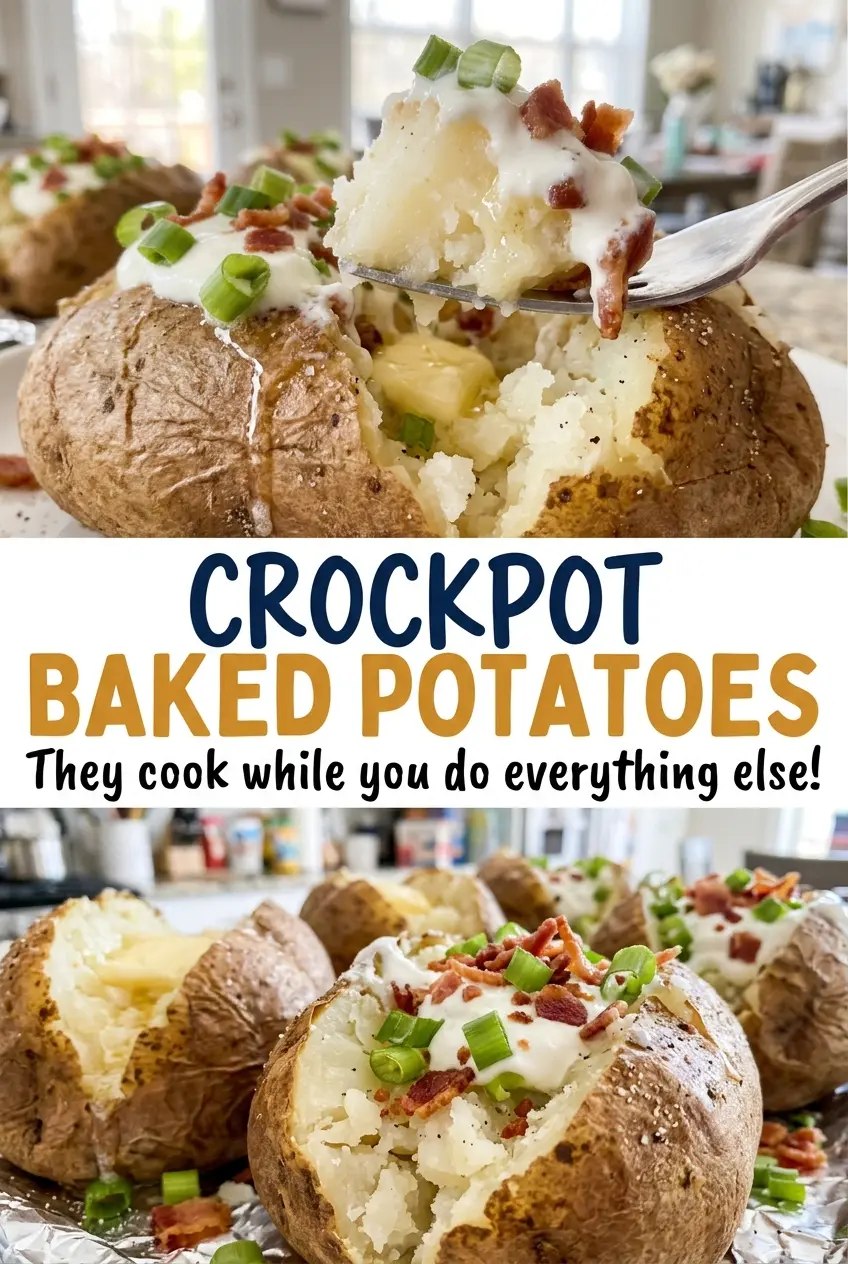
When I lift the slow cooker lid, the foil packets are soft and warm, not browned like potatoes from the oven. That’s exactly what I want from crockpot baked potatoes: tender russets that cook while I get on with the day, without heating up the kitchen or keeping an eye on a baking sheet. Each potato gets its own foil wrap, and the slow cooker holds a whole batch at once.
I use medium russets so the potatoes cook at a similar pace and finish with a fluffy center. The doneness check matters more than the clock: a fork should slide easily into the center of every potato, not just the first one you test. When they’re ready, the skin is soft and the inside is hot and tender, ready to split open at the table.
Kitchen Note
Pierce each potato several times before wrapping it. A few fork marks across the skin are all you need; don’t make one deep hole and expect it to do the job for the whole potato.
Save these crockpot baked potatoes for an easy batch of fluffy russets, cooked right in their foil packets.
Why Slow Cooker Potatoes Have Soft Skins, Not Oven-Crisp Ones
These potatoes cook inside individual foil packets in a covered slow cooker. That enclosed environment keeps the potatoes moist as they soften, but it won’t dry and crisp the skins the way an uncovered oven can. Expect a tender skin and a fluffy middle, rather than a crackly outside. The foil is part of the texture you’re choosing with this method.
That softer skin also means the potatoes are forgiving to handle once they’re cooked, but it’s worth setting expectations before you start. If crisp skin is the main thing you want, this slow cooker method isn’t a shortcut to it. What it does well is give you evenly tender potatoes with little active attention. The fork test tells you when the centers have reached that soft, fluffy stage; the skin’s appearance won’t turn golden or crisp as a signal.
Why Russets, Olive Oil, and Kosher Salt Belong in This Batch
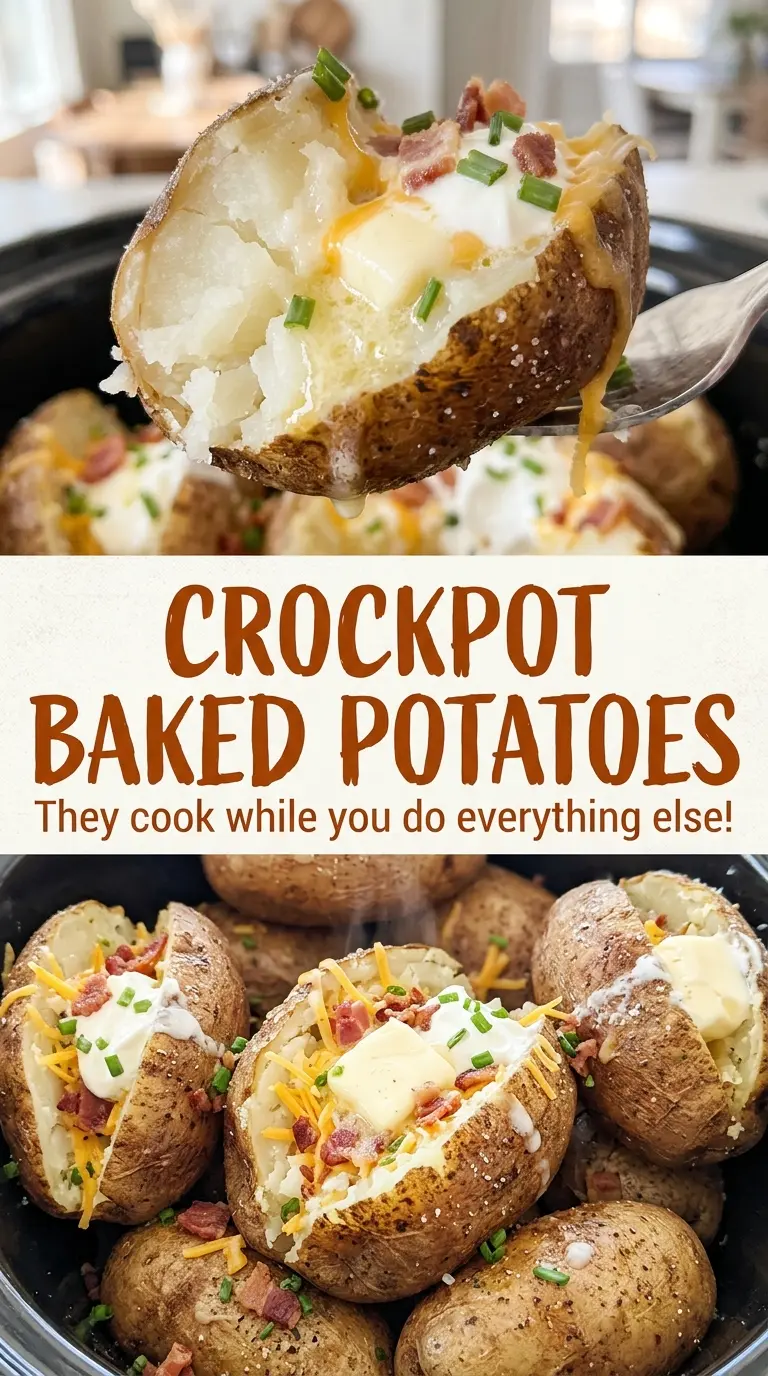
- Russet potatoes — Their starchy texture is what gives the center that familiar fluffy feel. Choose medium potatoes that are close in size so they cook at a similar pace. Scrub them well and dry the skins before adding the oil; water left on the outside makes the oil harder to spread evenly.
- Olive oil — A thin coating helps the salt cling to the skin and gives the outside a little richness. Rub it over the whole potato rather than leaving dry patches, so the seasoning isn’t concentrated in one spot.
- Kosher salt — Sprinkled over the oiled skin, it seasons the outside without complicating the simple potato flavor. Distribute it evenly as you work so one end isn’t much saltier than the other.
- Aluminum foil — Wrapping each potato tightly helps keep the cooking environment contained around it. Tear enough foil to seal each one fully, without leaving open seams.
From Pierced Russets to Fork-Tender Centers
Get the potatoes ready
Scrub the russets and dry them thoroughly, then pierce each one several times with a fork. Spread the punctures around the potato instead of clustering them in one place. Work carefully so the fork goes through the skin without breaking the potato apart. The potatoes should be dry before you move on to the oil.
Coat the skins evenly
Rub olive oil over every potato, covering the ends as well as the sides. Sprinkle the kosher salt evenly over the oiled skins. If you notice a bare area, smooth the oil across it before the salt goes on; dry spots won’t hold the seasoning as well. Handle each potato over your work surface so loose salt doesn’t get wasted.
Wrap and arrange in the cooker
Wrap each potato tightly in aluminum foil and set them in a single layer in a 6-quart slow cooker. Keep the packets side by side rather than stacking them, so each potato sits in the cooker as intended. Don’t add water. Cover the slow cooker before starting the cooking time.
Cook until every center is tender
Cook on LOW for 7 to 8 hours or on HIGH for 4 to 5 hours. Near the end of the range, carefully open a packet and slide a fork into the center of a potato. It should pass through easily, without a firm or crunchy spot in the middle. Check each potato; if one still feels firm, it isn’t ready just because another one is.
Dietary Notes and Practical Adaptations for This Potato Recipe
A vegan batch without ingredient swaps
The potatoes, olive oil, and salt are plant-based, so this recipe is already vegan as listed. No replacement ingredient is needed, and keeping the ingredient list unchanged preserves the tested texture and timing.
A naturally gluten-free option
The listed ingredients contain no wheat or other gluten-containing grain, so the potatoes themselves are gluten-free as written. This is a useful straightforward option when you need a potato side without changing the recipe or its cooking method.
Storage and Reheating
- Refrigerator: Remove the foil and refrigerate cooked potatoes within 2 hours; keep them for 3 to 4 days. The skins soften further in storage.
- Freezer: They can be frozen, though the potato’s texture may turn drier or grainier after thawing. Remove the foil, cool the potatoes, and store them in an airtight freezer container.
- Reheating: Reheat in the oven or microwave until the center reaches 165°F. Don’t reheat them still wrapped in foil in the microwave.
Questions That Come Up With Crockpot Baked Potatoes
Crockpot Baked Potatoes
Ingredients
Equipment
Method
- Pierce each potato several times with a fork.
- Rub the potatoes all over with olive oil and sprinkle evenly with kosher salt.
- Wrap each potato tightly in aluminum foil.
- Arrange them in a single layer in a 6-quart slow cooker; do not add water.
- Cover and cook on LOW for 7 to 8 hours or on HIGH for 4 to 5 hours, until a fork slides easily into the center of each potato.