
As the butter melts in the bowl, it leaves just enough warmth to make the bananas easy to mash right into it. I like that the whole batter comes together in the same bowl, with a fork doing the first bit of work and a spoon taking over once the flour goes in. There’s no mixer to pull out and no second bowl waiting in the sink.
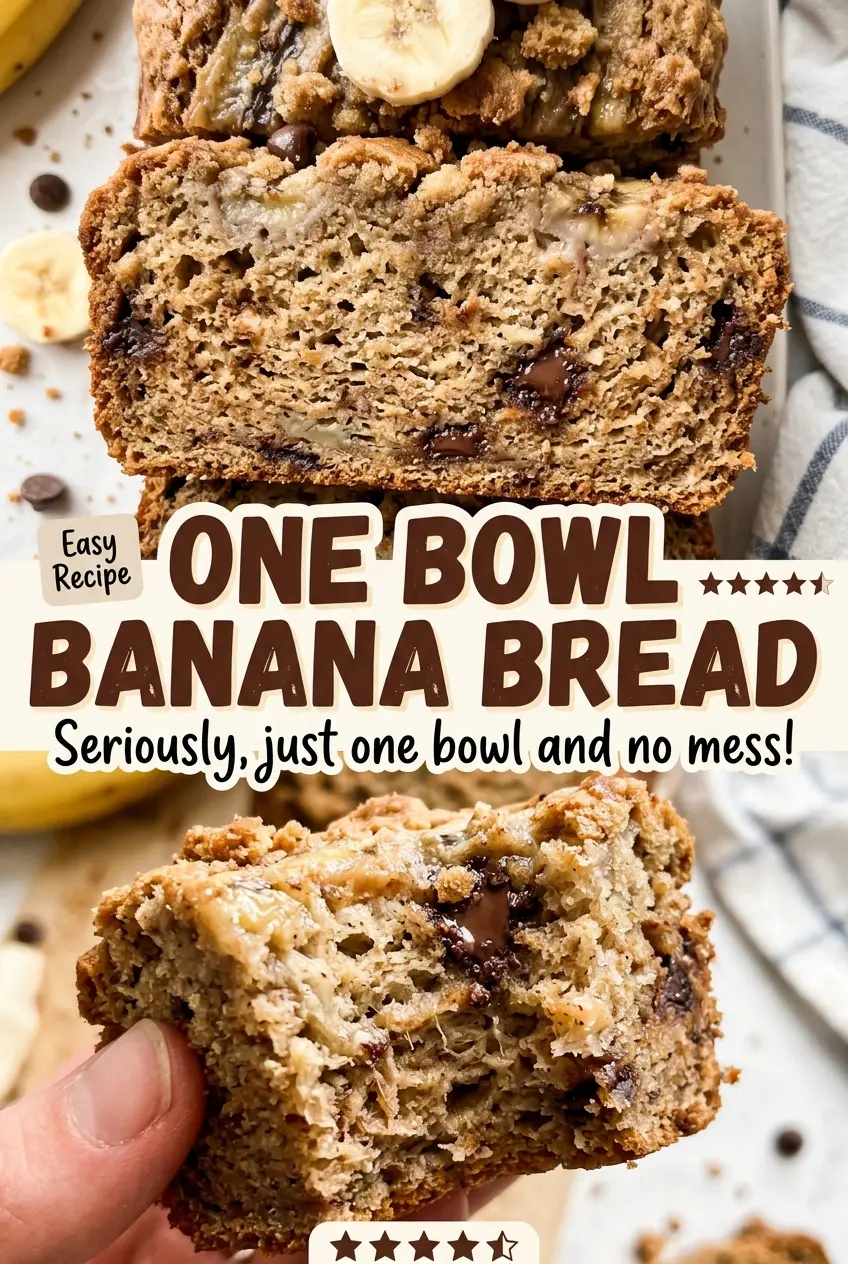
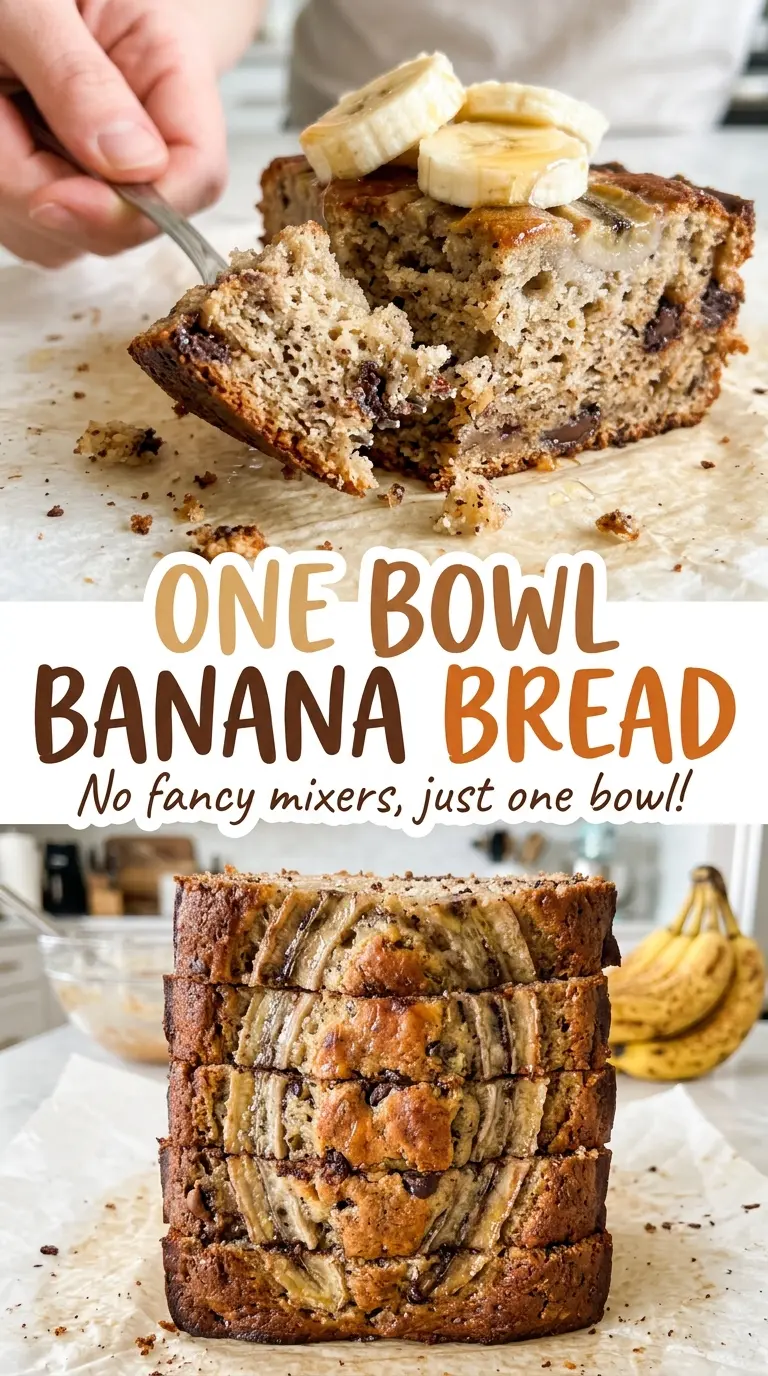
This One Bowl Banana Bread is a straightforward way to use very ripe bananas when you want a soft, sliceable loaf without a fussy method. The order matters: mash the fruit first, stir in the wet ingredients, then fold the flour in gently. Once it’s baked through and cooled, each slice holds together with a tender crumb and a clear banana flavor.
Kitchen Note
Stop microwaving as soon as the butter has melted; bubbling butter is hotter than this batter needs. If a few small pieces remain, stir them until they melt rather than giving the bowl a long extra burst.
Save One Bowl Banana Bread for the next time your bananas get deeply speckled and soft; the batter comes together in one bowl, and the loaf slices neatly once cooled.
Why Pale Bananas Leave Banana Bread Bland
The bananas do more than provide the name and flavor here. As they ripen, their flesh softens and their starches turn sweeter, so very ripe fruit mashes easily and gives the loaf a fuller banana taste. Bananas that are just yellow and firm can be harder to break down with a fork, and the finished bread tends to taste less sweet and less distinctly of banana.
Look for peels marked with plenty of brown or black spots and fruit that feels soft when you press it gently. The bananas shouldn’t be spoiled or leaking, but they should be past the point where you’d want to eat them plain. That deep ripeness is especially useful in a simple loaf like this, where there are no spices or add-ins to cover up a mild banana flavor. If your fruit is still firm and mostly yellow, give it more time to ripen rather than expecting sugar in the batter to make up the difference.
What the Bananas, Butter, and Flour Each Bring to This Loaf
- Very ripe bananas — They bring the signature flavor, sweetness, and moisture, so there isn’t a clean substitute that gives quite the same result. Use fruit that mashes readily with a fork; firm bananas leave a less smooth batter and a milder-tasting loaf.
- Unsalted butter — Butter gives the crumb a gentle richness, and unsalted butter keeps the salt level predictable. A neutral vegetable oil works in its place in the same amount for a moist loaf, but you’ll lose the buttery flavor.
- Granulated sugar — It sweetens the bananas and helps keep the loaf tender. Light brown sugar can replace it in the same amount; expect a deeper, slightly caramel-like sweetness and a moister crumb.
- Large egg — The egg helps hold the loaf together as it bakes. A flax egg can stand in if you need an egg-free version, though the crumb will be a little more compact.
- Baking soda — This is the leavener that helps the loaf rise, so use baking soda rather than assuming baking powder is a direct swap. If your baking soda has been open for a long time, replace it before baking.
- All-purpose flour — It gives the bread enough structure to slice cleanly. A cup-for-cup gluten-free flour blend made for baking is the most practical swap; the texture may be a touch more delicate than the all-purpose version.
How to Mix and Bake the Loaf Without Toughening It
Melt the butter and prepare the pan
Heat the oven to 350°F and coat a 9×5-inch loaf pan with nonstick cooking spray. Melt the butter in a large microwave-safe mixing bowl for about 30 to 45 seconds. Check it as it heats, since microwave power varies, and stop once it’s melted. Using that same bowl keeps the method simple from the first step.
Mash the bananas into the wet ingredients
Add the peeled bananas to the bowl and mash them with a fork. A few small soft lumps are fine; the fruit doesn’t need to become perfectly smooth. Stir in the sugar, egg, and vanilla until the mixture looks evenly combined. Scrape the sides of the bowl as you stir so no egg or sugar is left in a patch at the edge.
Fold in the flour gently
Stir in the baking soda and salt first, then add the flour. Fold it through only until no dry streaks remain, stopping as soon as the last pockets of flour disappear. If you keep stirring until the batter looks completely smooth, the loaf can turn out tougher than you want. The finished batter will be thick and spoonable.
Bake until the center tests with moist crumbs
Scrape the batter into the prepared pan and bake for 55 to 65 minutes. Insert a toothpick in the center; it should come out with a few moist crumbs rather than wet batter. If wet batter clings to it, the middle needs more time. Cool the bread in the pan for 10 minutes, then turn it onto a wire rack and let it cool before slicing.
Three Simple Ways to Adapt One Bowl Banana Bread
For a dairy-free loaf, use neutral oil
Replace the butter with the same amount of neutral vegetable oil. The loaf stays moist and works without dairy, but it won’t have the same buttery aroma. Since oil doesn’t need melting, add it to the bowl before mashing in the bananas.
Trade granulated sugar for light brown sugar
Use light brown sugar in the same amount for a warmer, more caramel-like sweetness. The loaf will be a little moister and less cleanly sweet than the granulated-sugar version, while keeping the same one-bowl method.
Make it gluten-free with a cup-for-cup blend
Replace the all-purpose flour with the same amount of a gluten-free flour blend labeled for cup-for-cup baking. The loaf may have a more delicate crumb, so let it cool fully before cutting clean slices.
Storage and Reheating
- Refrigerator: Wrap the cooled loaf or individual slices and refrigerate for up to 5 days. The crumb firms up when chilled.
- Freezer: Freeze the cooled loaf whole or in slices, wrapped tightly to keep air out, for up to 3 months. Thaw wrapped at room temperature.
- Reheating: Warm an individual slice in the microwave for about 10 to 15 seconds. Avoid heating it for too long, which can dry the edges before the middle feels warm.
Questions That Come Up When Baking This Banana Bread
One Bowl Banana Bread
Ingredients
Equipment
Method
- Heat the oven to 350°F.
- Coat a 9x5-inch loaf pan with nonstick cooking spray.
- Melt the butter in a large microwave-safe mixing bowl, about 30 to 45 seconds.
- Add the bananas to the bowl and mash with a fork.
- Stir in the sugar, egg, and vanilla until combined.
- Stir in the baking soda and salt.
- Fold in the flour just until no dry streaks remain.
- Scrape the batter into the prepared pan.
- Bake for 55 to 65 minutes, until a toothpick inserted in the center comes out with a few moist crumbs.
- Cool the bread in the pan for 10 minutes.
- Turn it out onto a wire rack to cool before slicing.