
Banana bread earns its keep when the loaf comes out tender, deeply banana-forward, and still soft on day two. The best ones don’t need a mixer or a fussy list of add-ins; they just need ripe bananas, the right amount of fat, and enough restraint to stop stirring once the flour goes in. That’s what gives you a loaf that slices cleanly but still feels plush instead of dry or gummy.
The trick here is balancing moisture without making the crumb heavy. Melted butter brings richness, mashed bananas handle most of the softness, and baking soda gives the batter lift while also helping the bananas’ natural acidity brown the top. The batter should look a little lumpy from the bananas and just combined from the flour. That’s a good sign, not a problem.
Below, I’ll walk through the small details that matter most, including how ripe the bananas should be, how to keep the loaf from sinking in the middle, and a few smart ways to change it up without losing that classic banana bread texture.
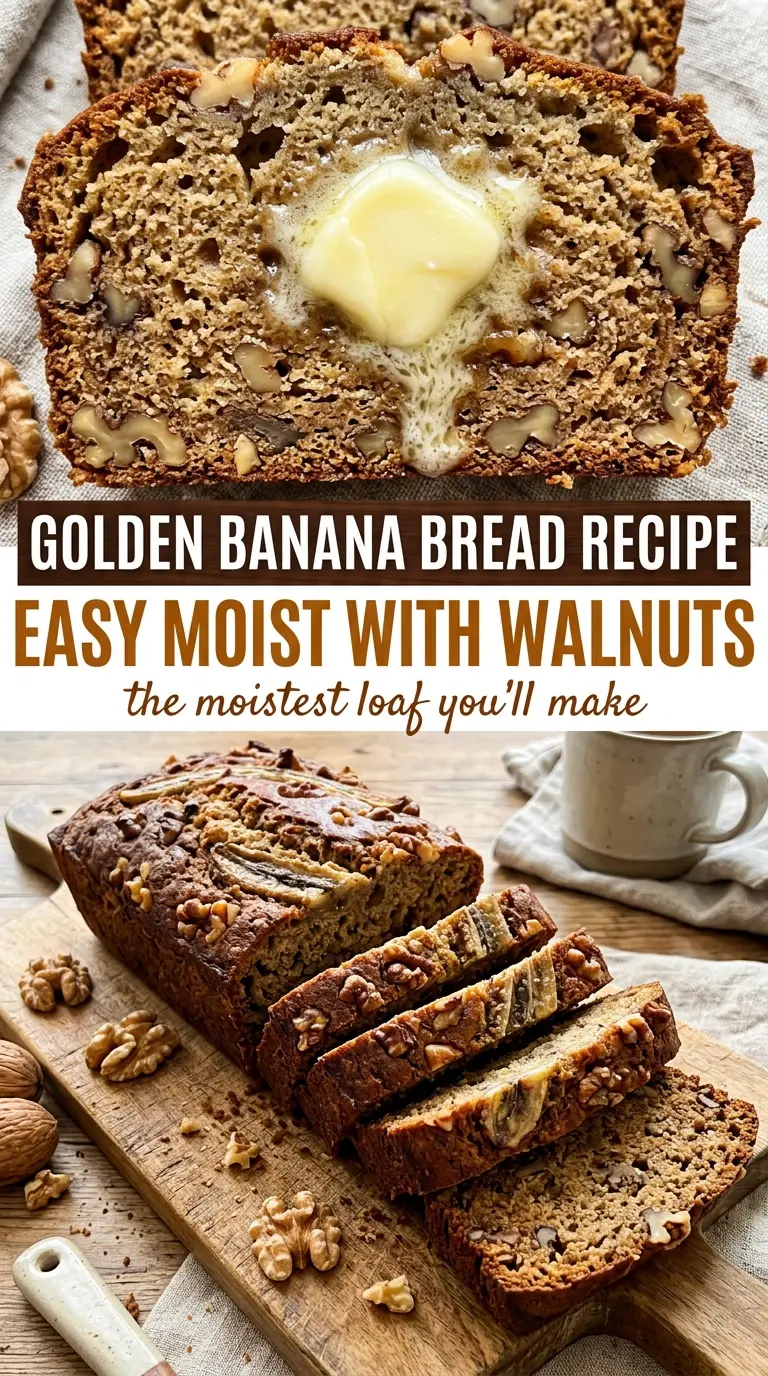
The loaf came out so moist and sliced beautifully the next day. I used extra spotty bananas and the top got that deep golden crack right down the middle, just like the good bakery ones.
Save this easy moist banana bread for the days when your bananas go spotty and you want a soft loaf with a golden crackly top.
The Bananas Need to Be Ripe Enough to Carry the Loaf
Banana bread goes wrong when the bananas are under-ripe and the batter has to rely on extra sugar or extra mixing to taste like anything. The fruit should be heavily speckled, soft enough to mash easily, and aromatic. That’s where the sweetness and moisture come from, and it’s also why the crumb stays tender without needing a long ingredient list.
The other common mistake is overloading the batter with flour after the bananas go in. Once you add the flour, stop when the dry streaks disappear. Stirring past that point develops too much gluten and gives you a tougher loaf with a tunnel running through the center instead of a soft, even slice.
What Each Ingredient Is Doing in This Loaf
- Bananas — These do the heavy lifting for flavor, moisture, and softness. Very ripe bananas matter here; if they’re still yellow, the loaf will taste flatter and need more sugar to compensate.
- Melted butter — Butter gives the bread a richer, more bakery-style crumb than oil alone. Melted butter also blends fast with the bananas, which keeps this a true one-bowl batter.
- Granulated sugar — Sugar isn’t just sweetness here. It helps the top caramelize and keeps the interior moist for a few days, which is why this loaf still tastes good after it cools.
- Egg — The egg helps the loaf hold together so it slices cleanly. One is enough; adding more makes the texture more cake-like and less like classic banana bread.
- Baking soda — Baking soda reacts with the bananas and helps the loaf rise without tasting dense. If yours is old, the bread can bake up flat, so use fresh baking soda.
- All-purpose flour — Plain all-purpose flour gives the loaf structure without making it heavy. A 1:1 gluten-free blend can work, but the crumb will be a little more delicate and less springy.
Building the Batter Without Beating the Softness Out of It
Mash, Then Add the Fat
Mash the bananas in a large bowl until they’re mostly smooth with a few small soft bits left. Stir in the melted butter while the bananas are still warm from mashing; that helps everything combine without needing a mixer. If the butter starts to firm up into little flakes, the bananas were too cold — give the mixture a minute to come together before moving on.
Mix the Wet Ingredients Until Just Combined
Add the sugar, egg, and vanilla and stir until the batter looks glossy and even. You’re not whipping air into this loaf, so stop as soon as the egg disappears. Overworking at this stage can make the finished bread tighter than it should be.
Fold in the Dry Ingredients Last
Sprinkle the baking soda and salt over the batter, then add the flour and fold gently. The batter should still look a little rustic when it goes into the pan. If it turns perfectly smooth in the bowl, it’s already been stirred too much.
Bake Until the Center Springs Back
Scrape the batter into a greased 9×5-inch loaf pan and bake at 350°F for 55 to 60 minutes. The top should be deep golden and cracked, and a toothpick in the center should come out with a few moist crumbs, not wet batter. If the top browns too fast before the middle is done, tent it loosely with foil for the last 10 to 15 minutes.
Three Ways to Change It Without Losing the Texture
Dairy-Free Banana Bread
Swap the butter for an equal amount of neutral oil or melted dairy-free butter. Oil gives the softest crumb and stays moist a little longer, while dairy-free butter keeps more of that classic buttery flavor. The loaf will still bake up tender as long as you don’t add extra liquid.
Gluten-Free Version
Use a cup-for-cup gluten-free flour blend in place of the all-purpose flour. The loaf will be a touch more fragile when warm, so let it cool fully before slicing. A rice-based blend tends to give the cleanest texture here.
Add Nuts or Chocolate Chips
Fold in up to 3/4 cup chopped walnuts, pecans, or chocolate chips at the very end. Nuts add crunch and make the bread feel less soft in each bite, while chocolate pushes the loaf toward dessert territory. Coat the add-ins with a spoonful of flour first if they tend to sink.
Storage and Reheating
- Refrigerator: Store covered for up to 5 days. The crumb firms up a little in the fridge, but the flavor stays good.
- Freezer: Wrap individual slices tightly and freeze for up to 3 months. Banana bread freezes well, and sliced portions thaw faster than a whole loaf.
- Reheating: Warm slices in the microwave for 10 to 15 seconds or in a low oven until just heated through. Don’t overheat it or the loaf will turn dry at the edges before the center warms.
Answers to the Questions Worth Asking

Banana Bread Recipe Easy Moist
Ingredients
Equipment
Method
- Preheat the oven to 350°F and grease a 9x5-inch loaf pan. Place the pan on a sheet pan for easier handling.
- Mash the ripe bananas in a large bowl, then stir in the melted butter until evenly combined.
- Mix in the granulated sugar, large egg, and vanilla extract until the batter looks smooth.
- Sprinkle the baking soda and salt over the mixture and stir until evenly distributed.
- Fold in the all-purpose flour until just combined, stopping as soon as no dry streaks remain.
- Pour the batter into the greased loaf pan and bake for 55-60 minutes at 350°F. The loaf is done when a toothpick inserted in the center comes out clean or with a few moist crumbs.
- Cool in the pan for 10 minutes before turning out onto a rack. Let it cool slightly so the crumb sets for clean slices.