
Ruby elderberries turn jammy and bright under a biscuit topping that bakes up buttery, craggy, and deeply golden at the edges. The filling thickens just enough to hold its shape on the spoon, while the fruit keeps that sharp, almost wine-like pop that makes cobbler worth baking in the first place.
What sets this one apart is the balance: enough sugar to soften elderberries, but not so much that they taste flat. Cornstarch handles the juices without turning them gluey, and a little lemon juice keeps the filling lively while the topping stays plain and sturdy in the best way. Cold butter matters here because it leaves little pockets that melt into a biscuit crust instead of a dense lid.
Below, you’ll find the one cue I watch for when cobblers go from underbaked to perfect, plus a couple of smart swaps if you’re working with frozen berries or need a dairy-free topping.
The filling bubbled up right at the edges and the biscuit topping stayed crisp on top instead of getting soggy. I used frozen elderberries and it still thickened beautifully after that 15-minute rest.
Keep this elderberry cobbler handy for the nights when you want jammy fruit and a golden biscuit top in one pan.
The Trick to Keeping Elderberry Cobbler Juicy, Not Soupy
Elderberries give off a lot of juice as they bake, and that’s where most cobblers go wrong. If you skip the starch or underbake the filling, you end up with berry broth under a pale topping. Cornstarch needs heat to activate, so the filling has to bubble at the edges before you pull the pan. That bubbling is your cue that the juices have thickened enough to set as the cobbler cools.
The other mistake is overloading the top with dough. Dropping the biscuit mixture in uneven spoonfuls leaves space for steam to move through the fruit, which keeps the topping tender instead of gummy. A full sheet of dough traps moisture and turns the whole thing heavy.
- Cornstarch — This is what turns the berry juices from thin and runny into a spoonable filling. Flour can work in a pinch, but it takes longer to thicken and can taste a little cloudy here.
- Lemon juice — Elderberries are bold, but they still need acid to keep the filling from tasting dull. Fresh lemon juice is best because it brightens the fruit without adding extra sweetness.
- Cold butter — The cold cubes create the flaky, biscuit-like texture in the topping. If the butter softens before it goes in, the topping bakes up more like cake.
- Milk — Just enough milk brings the dough together without making it wet. Whole milk gives the richest result, but any milk you keep on hand will work.
What Each Part of This Cobbler Is Doing
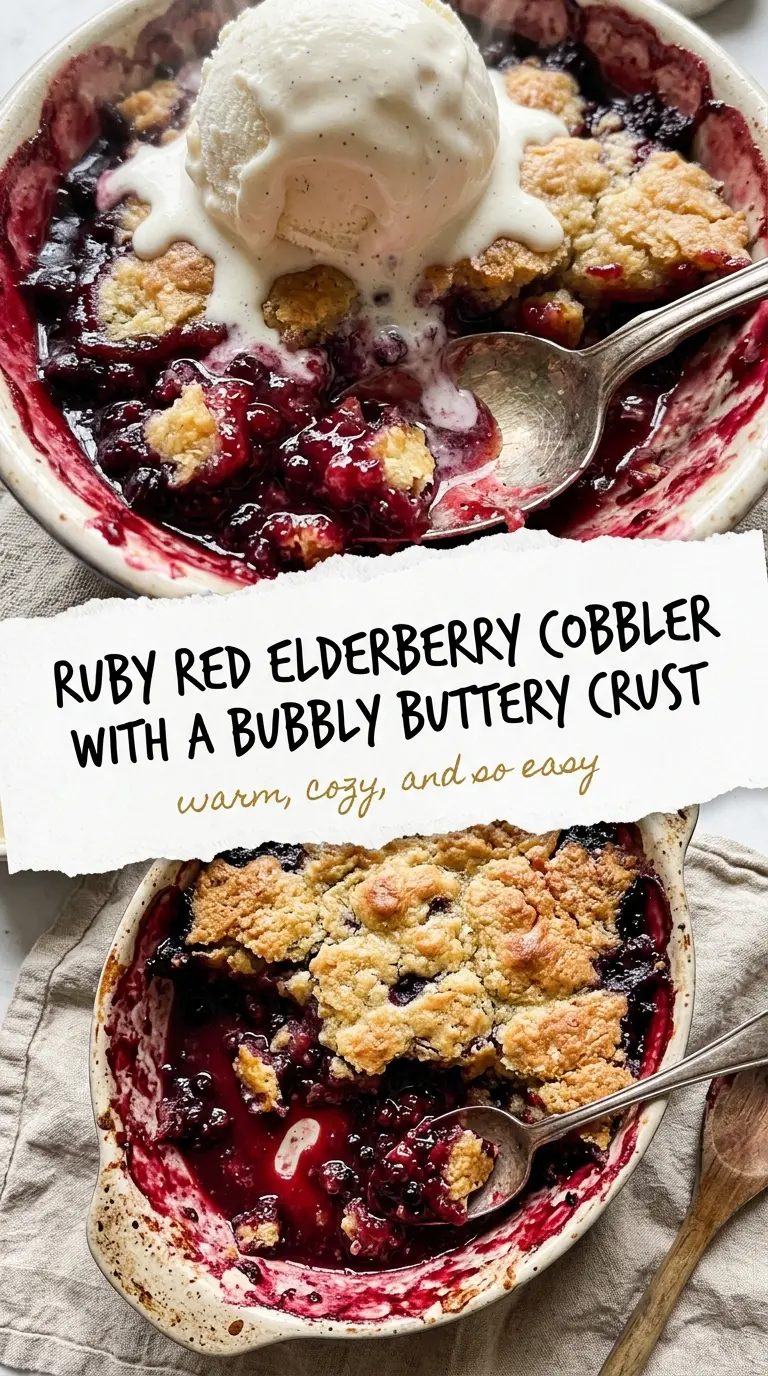
The berries need sugar and lemon before they ever hit the oven. Sugar pulls out their juice, and the lemon sharpens the flavor so the filling tastes bright instead of flat. Let that mixture sit only long enough to coat the fruit; if it sits too long, you’ll have more liquid than the dish needs.
The topping is a biscuit, not a batter. That means the flour, baking powder, and butter should stay separate and crumbly until the milk goes in. Once the dough looks shaggy, stop mixing. Overworking it will make the topping tight, and that’s how cobblers lose their tender center.
- Fresh or frozen elderberries — Frozen berries work well here and don’t need to be thawed first. If you use fresh berries, sort through them carefully and remove any stems or bits of debris.
- Granulated sugar — This recipe uses sugar in both the filling and the topping, but the fruit needs most of it. If your berries are especially tart, add a tablespoon or two more to the filling rather than sweetening the topping.
- All-purpose flour — Standard flour gives the topping its structure. I wouldn’t swap in self-rising flour unless you also reduce the baking powder, because the topping can rise too quickly and taste salty.
- Baking powder — This is what gives the biscuit top lift. Old baking powder loses strength fast, and a flat topping usually means it’s past its prime.
Building the Filling and Topping in the Right Order
Coating the Berries First
Toss the elderberries with sugar, cornstarch, and lemon juice until every berry looks lightly glossed. Then spread them in an even layer in the baking dish so the center and edges bake at the same pace. If you pile the fruit up too high, the middle can stay loose while the top overcooks.
Cutting the Butter into the Flour
Work the cold butter into the flour mixture until you have crumbs about the size of small peas. You want visible butter pieces, not a smooth paste. Those bits melt in the oven and create the tender pockets that keep the topping from turning dry.
Knowing When the Cobbler Is Done
Bake until the top is deeply golden and the filling is bubbling at the edges, not just steaming in the center. That bubbling tells you the starch has thickened the juices. If the top browns before the filling bubbles, lay a loose piece of foil over it and keep baking until the fruit is active around the rim.
How to Adjust This Elderberry Cobbler Without Losing the Texture
Use frozen elderberries without thawing
Frozen berries go straight into the bowl, no thawing needed. Thawing gives off extra liquid, which can make the filling thinner and extend the bake time. The cobbler still comes out juicy, and the starch handles the extra moisture during baking.
Make it dairy-free
Swap the butter for a plant-based baking stick and use an unsweetened non-dairy milk like almond or oat. The topping will still bake up tender, though the flavor won’t have quite the same richness as real butter. Use a block-style substitute, not a spread, so the dough holds its shape.
Add more lemon for a brighter finish
If your berries lean sweet, add an extra teaspoon of lemon juice to the filling. It won’t make the cobbler taste lemony; it just keeps the fruit tasting clean and sharp. Too much acid, though, can push the filling toward tart rather than balanced.
Storage and Reheating
- Refrigerator: Store covered for up to 3 days. The topping softens a bit as it sits, but the filling stays good.
- Freezer: Freeze after baking and cooling completely, tightly wrapped. The texture is best fresh, but it does freeze well for up to 2 months.
- Reheating: Warm in a 325°F oven until the filling is hot and the top perks back up. The microwave works for a bowlful, but it softens the biscuit topping fast.
Answers to the Questions Worth Asking
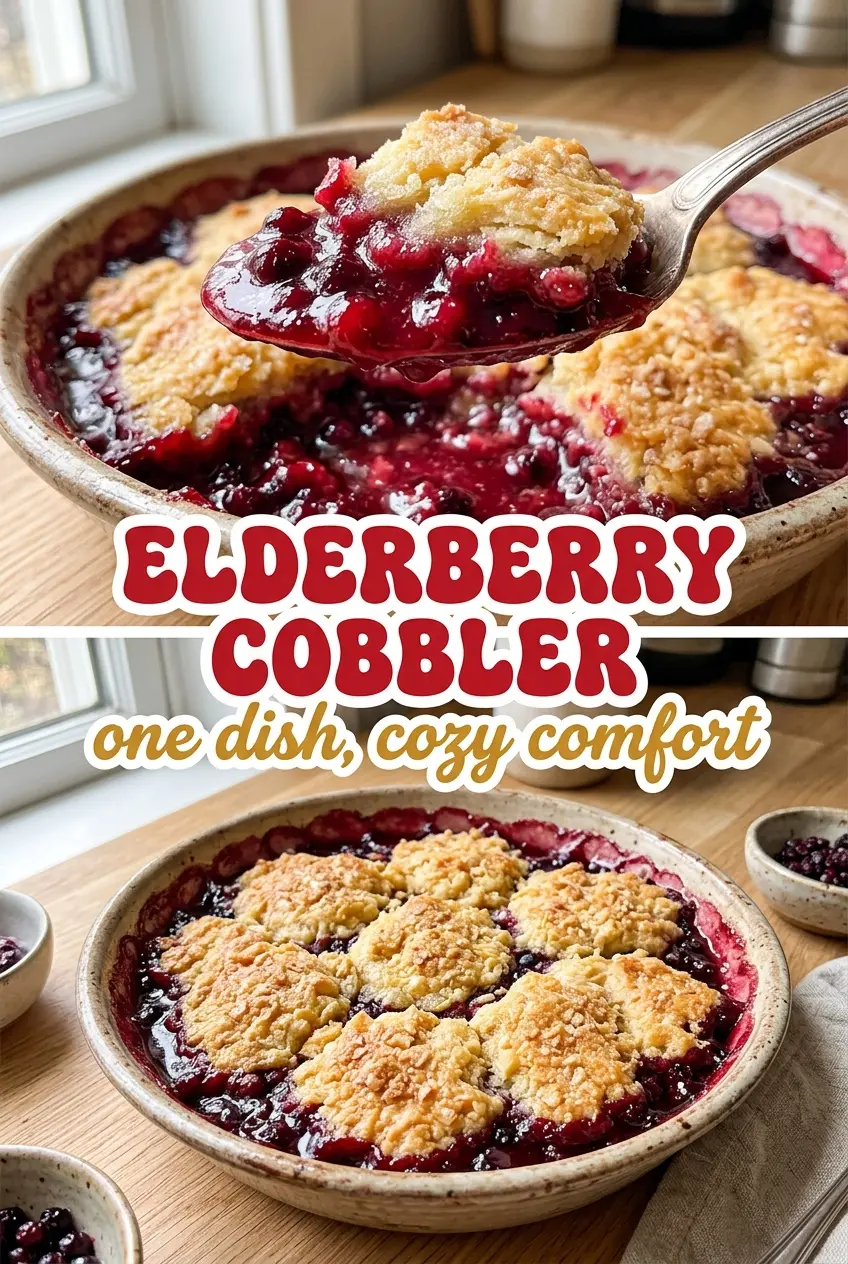
Elderberry Cobbler
Ingredients
Equipment
Method
- Preheat the oven to 375°F so it’s hot when the cobbler goes in.
- Toss the elderberries with 1/2 cup sugar, cornstarch, and lemon juice, then spread them into a baking dish.
- Whisk the flour, remaining sugar, baking powder, and salt in a bowl until evenly combined.
- Cut in the cold butter until the mixture resembles coarse crumbs.
- Stir in the milk just until a shaggy dough forms.
- Drop spoonfuls of the dough over the berry mixture, covering as evenly as you can.
- Bake for 35-40 minutes at 375°F, until the topping is golden and the filling bubbles at the edges.
- Cool for 15 minutes before serving so the filling thickens slightly.