
Elderberry shrub has a sharp, fruity bite that wakes up plain sparkling water and turns it into something worth pouring into a pretty glass. The first sip is tangy and deep, then the vinegar comes forward just enough to keep the sweetness from feeling flat. It tastes bold on day one, but after a couple of days in the fridge it smooths out and the berry flavor settles into something richer and more rounded.
The trick is letting the elderberries simmer long enough to give up their color and flavor before you strain them. After that, the vinegar and sugar go back into the warm liquid and dissolve cleanly without needing a hard boil. That gentle heat matters. Push it too far and the vinegar loses some of its bright edge, which is the whole point of a shrub in the first place.
Below you’ll find the exact texture cues I use when straining, the best way to balance the tartness, and a few useful ways to serve it beyond soda water.
I loved how the elderberry syrup turned such a deep color after simmering, and the vinegar gave it this bright tang that didn’t taste harsh at all. I mixed it with soda water over ice and it was perfect after sitting in the fridge for two days.
Save this elderberry shrub for tangy sparkling drinks, mocktails, and easy cocktail mixers.
The Part That Makes Elderberry Shrub Taste Bright Instead of Flat
A shrub can taste muddy if the fruit never gets a chance to fully infuse or if the sugar goes in before the liquid is strained. Simmering the elderberries first pulls out that deep purple color and the berry flavor you actually want in the final bottle. Straining before adding the vinegar keeps the solids from soaking up the acid and muting the finish.
The other mistake is boiling it hard after the vinegar goes in. Vinegar doesn’t need a rolling simmer to dissolve sugar, and aggressive heat can flatten its sharpness. Keep the heat low, stir until the grains disappear, and stop as soon as the mixture looks clear and unified.
What Each Ingredient Is Actually Doing in This Elderberry Shrub
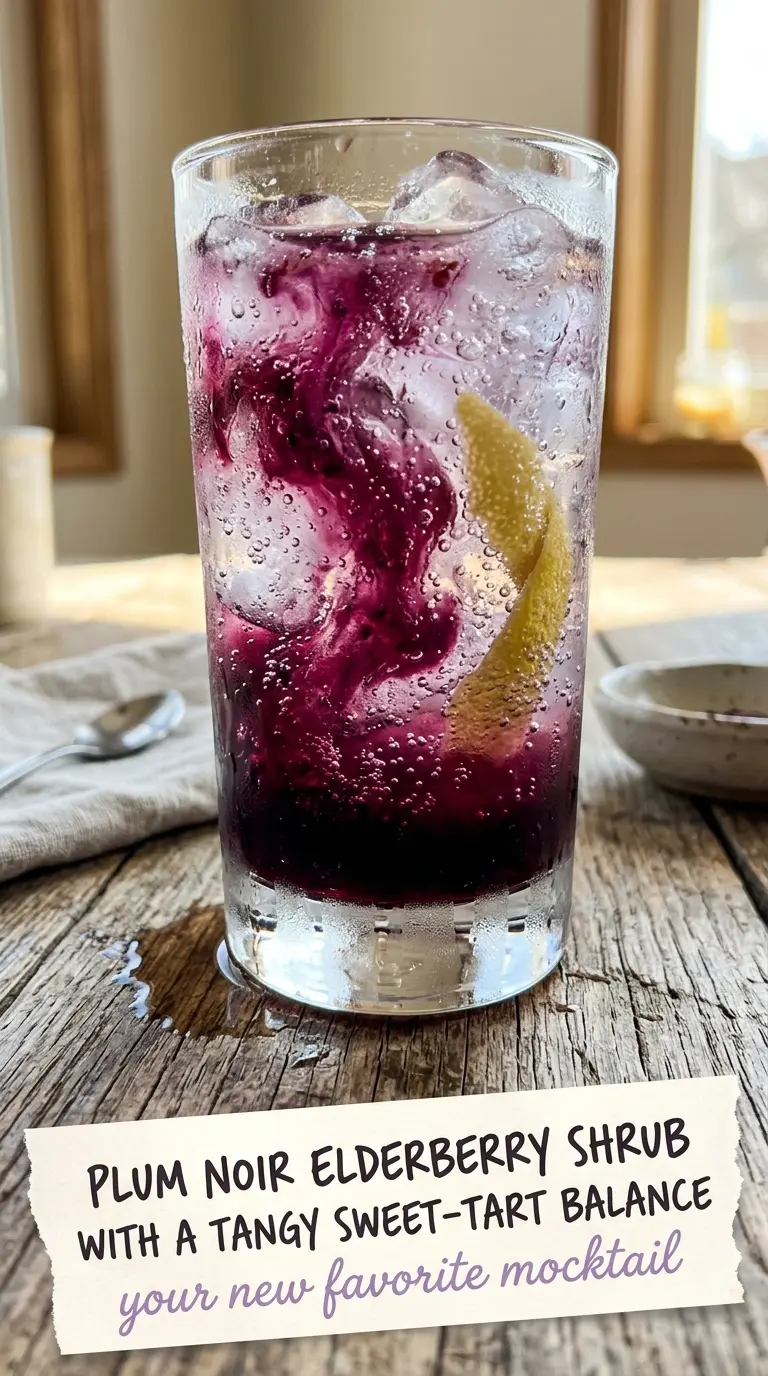
- Dried elderberries — Dried berries give this shrub a concentrated, darker flavor than fresh ones usually can. They also simmer down neatly, which makes straining easy. If you only have fresh elderberries, use them only if you know they’re properly prepared and fully cooked, since raw elderberries shouldn’t be used.
- Apple cider vinegar — This brings the tang that makes shrub feel alive in the glass. Apple cider vinegar is a good middle ground because it’s punchy but still fruity. Plain white vinegar works in a pinch, but the result tastes sharper and less rounded.
- Sugar — The sugar doesn’t just sweeten the shrub; it rounds out the vinegar and helps the berry flavor linger. Granulated sugar dissolves cleanly and keeps the syrup clear. Honey can be used, but it changes the flavor and makes the shrub taste heavier.
- Water — Water is here to extract flavor from the berries without scorching them. Use the full cup so the berries have enough liquid to simmer evenly. Too little water can make the mixture reduce too fast before the fruit has fully released its color.
How to Build the Shrub So the Flavor Stays Sharp
Simmering the Berries
Combine the elderberries and water in a saucepan and bring them to a gentle simmer, not a hard boil. You want small bubbles around the edge and steam rising steadily. After about 20 minutes, the liquid should look dark and the berries will look wrinkled and spent. If the heat is too high, the liquid can reduce before the fruit has fully given up its flavor.
Straining Without Losing the Good Part
Pour the mixture through a fine-mesh strainer and press gently on the solids to pull out every drop of liquid. That pressing matters because the liquid carries most of the flavor and color. Stop once the berries collapse into dry pulp. If you squeeze too aggressively through a cloth or mash them into the mesh, you can force bitterness into the shrub.
Dissolving the Sugar and Adding the Vinegar
Return the strained liquid to the pan, whisk in the sugar and vinegar, and warm everything over low heat until the sugar disappears. The mixture should look glossy and even, with no grainy sound when you stir it. Don’t let it boil at this stage. Low heat keeps the vinegar bright and prevents the finished shrub from tasting cooked down.
Cooling for a Cleaner Finish
Let the shrub cool completely before bottling it. That keeps condensation from watering down the flavor in the bottle and helps the syrup keep better in the fridge. The taste will be punchiest on day one, then it settles and smooths out after a few days. That resting time is where the sharpness turns into something more balanced.
How to Adapt Elderberry Shrub for Different Glasses and Tastes
Dairy-Free, Gluten-Free, and Naturally Vegan
This recipe already fits all three without changes, which is one reason shrubs are so useful. The ingredients are fruit, vinegar, sugar, and water, so there’s no dairy or gluten to work around. That also means the flavor stays clean and bright instead of being weighed down by extras.
Make It Sweeter or More Tart
If you want a softer, fruitier drink mixer, increase the sugar by a couple of tablespoons next time. If you like a sharper shrub, reduce the sugar slightly and keep the vinegar as written. The balance changes the whole personality of the drink, so taste the cooled shrub mixed with soda water before deciding.
Swap the Vinegar
Apple cider vinegar gives the mellowest result, but white wine vinegar makes a lighter, crisper shrub. Red wine vinegar adds deeper acidity and can push the color even darker. I wouldn’t use balsamic here because its sweetness and thickness overpower the berry.
Storage and Reheating
- Refrigerator: Keeps up to 2 months in a sealed glass bottle. The flavor gets smoother after the first few days.
- Freezer: You can freeze it in small containers or ice cube trays, though the fridge is easier and the texture is already stable.
- Reheating: Shrub is usually served cold, so reheating isn’t needed. If you warm it for a cocktail or dessert use, do it gently on low heat and never boil it, or the vinegar edge will flatten.
Questions I Get Asked About This Recipe
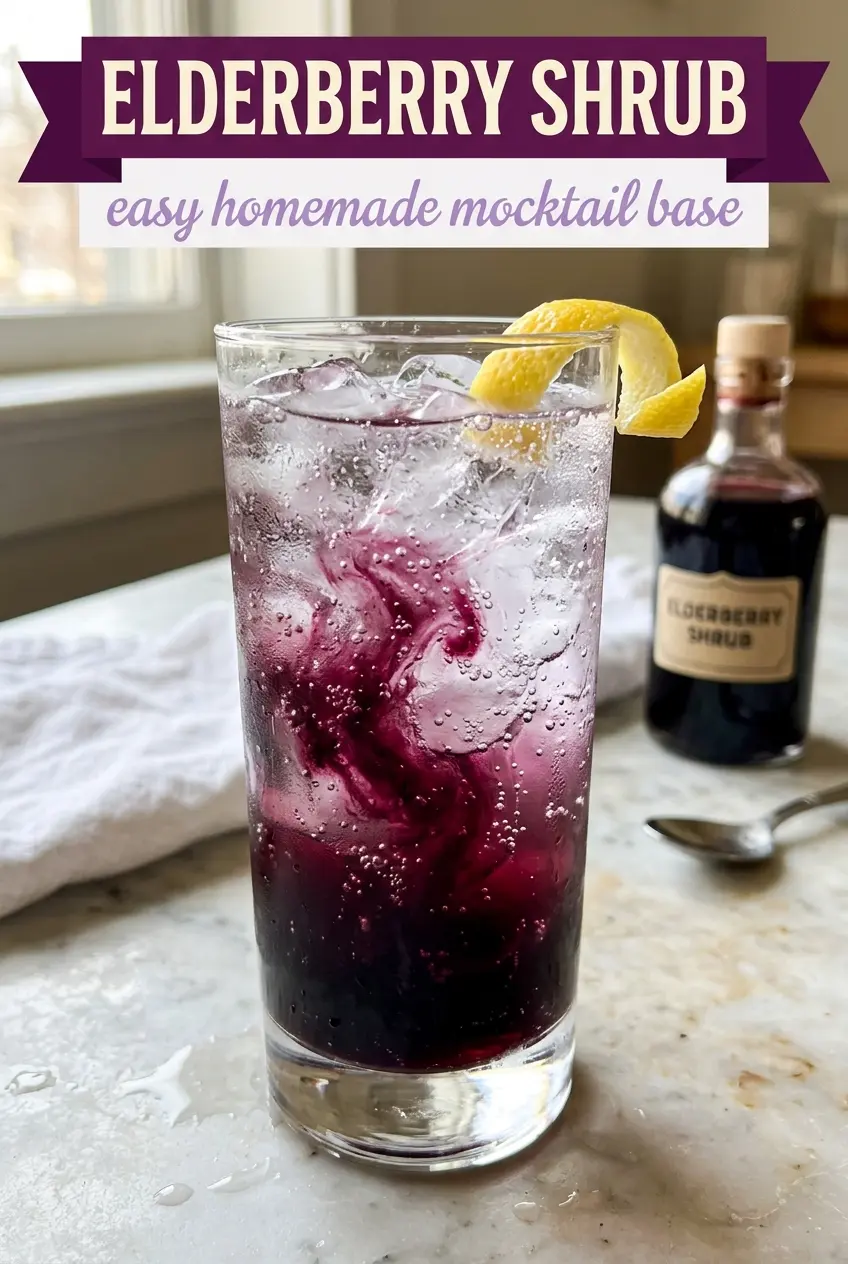
Elderberry Shrub
Ingredients
Equipment
Method
- Combine dried elderberries and water in a saucepan, then simmer at 200°F/93°C for 20 minutes with gentle bubbles.
- Maintain the simmer for the full 20 minutes so the liquid turns deep purple and the fruit softens.
- Pour the elderberry mixture through a fine-mesh strainer into a bowl and press to extract as much liquid as possible.
- Discard the solids after straining and transfer the strained liquid back to the saucepan.
- Whisk the sugar and apple cider vinegar into the strained elderberry liquid until evenly combined.
- Simmer again over low heat at 180°F/82°C for about 5 minutes, stirring occasionally, until the sugar fully dissolves.
- Let the shrub cool completely to room temperature, about 30 minutes.
- Pour into a sealed glass bottle and refrigerate until chilled.
- To serve, mix 1 to 2 tablespoons of shrub with soda water over ice until the drink is to your preferred strength.
- Taste and adjust with more shrub or more soda water as needed before drinking.