
Fire roasted tomato and peach salsa lands with that sweet-smoky punch that makes chips disappear fast. The char gives the tomatoes and peaches a deeper, almost jammy edge, while the jalapeños and onion keep it grounded so it doesn’t drift into fruit salad territory. It tastes bright, a little messy, and a lot more layered than the five-minute blender salsas that never quite get there.
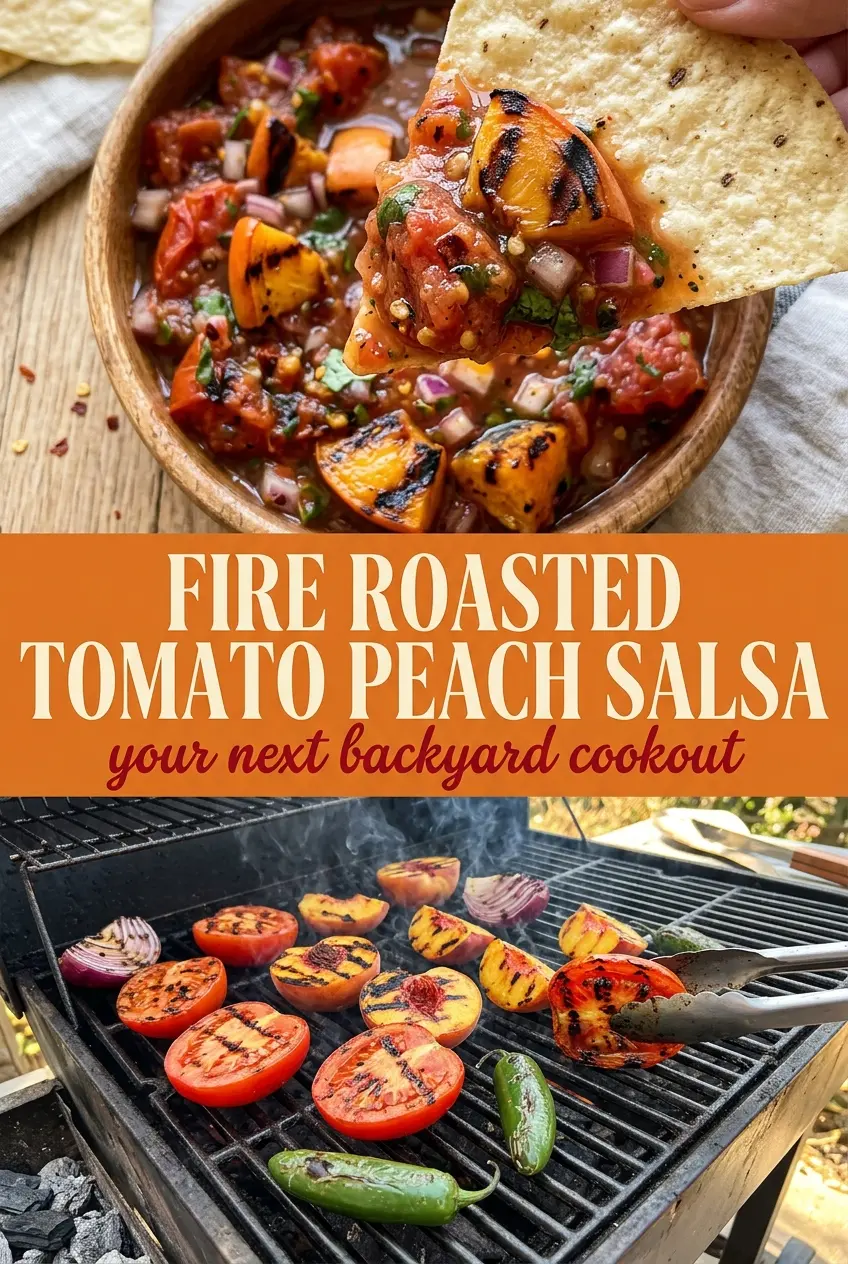
The part that matters is the char. You want blistered skins, blackened spots, and softened fruit that still holds enough shape to give the salsa texture. Grilling or broiling the ingredients separately gives you control over that balance, and it keeps the garlic from turning harsh before everything else is ready. A quick chop after cooling, plus lime and cilantro at the end, keeps the flavors clean instead of muddy.
Below you’ll find the small details that make this salsa worth repeating, including how to dial the heat up or down and how to get the sweet-savory balance right for your own table.
The peaches got this deep caramelized edge on the grill and the salsa held its texture instead of turning watery. I used it on tacos and we finished the bowl before dinner was even on the table.
Love the smoky-sweet balance in this fire roasted tomato and peach salsa? Save it to Pinterest for cookouts, taco nights, and chips-and-salsa moments that need a little extra char.
The Char That Turns Fruit Salsa Into Something Deeper
The mistake most people make with fruit-forward salsa is treating the produce like a salad. That leaves the peaches sweet, the tomatoes flat, and the onion sharp in a way that never quite blends. Heat changes all of that. Once the skins blister and the flesh softens, the sugars concentrate and the edges pick up bitterness in the best possible way, which is what keeps this salsa from tasting one-note.
The other thing worth watching is moisture. If the tomatoes or peaches are pulled too early, they’ll dump juice and the salsa turns thin. You want soft centers, blackened spots, and enough structure left that a spoonful still looks like salsa instead of sauce. Let the vegetables cool just enough to handle, then chop or pulse them before stirring in the lime and cilantro.
What Each Ingredient Is Actually Doing in This Salsa
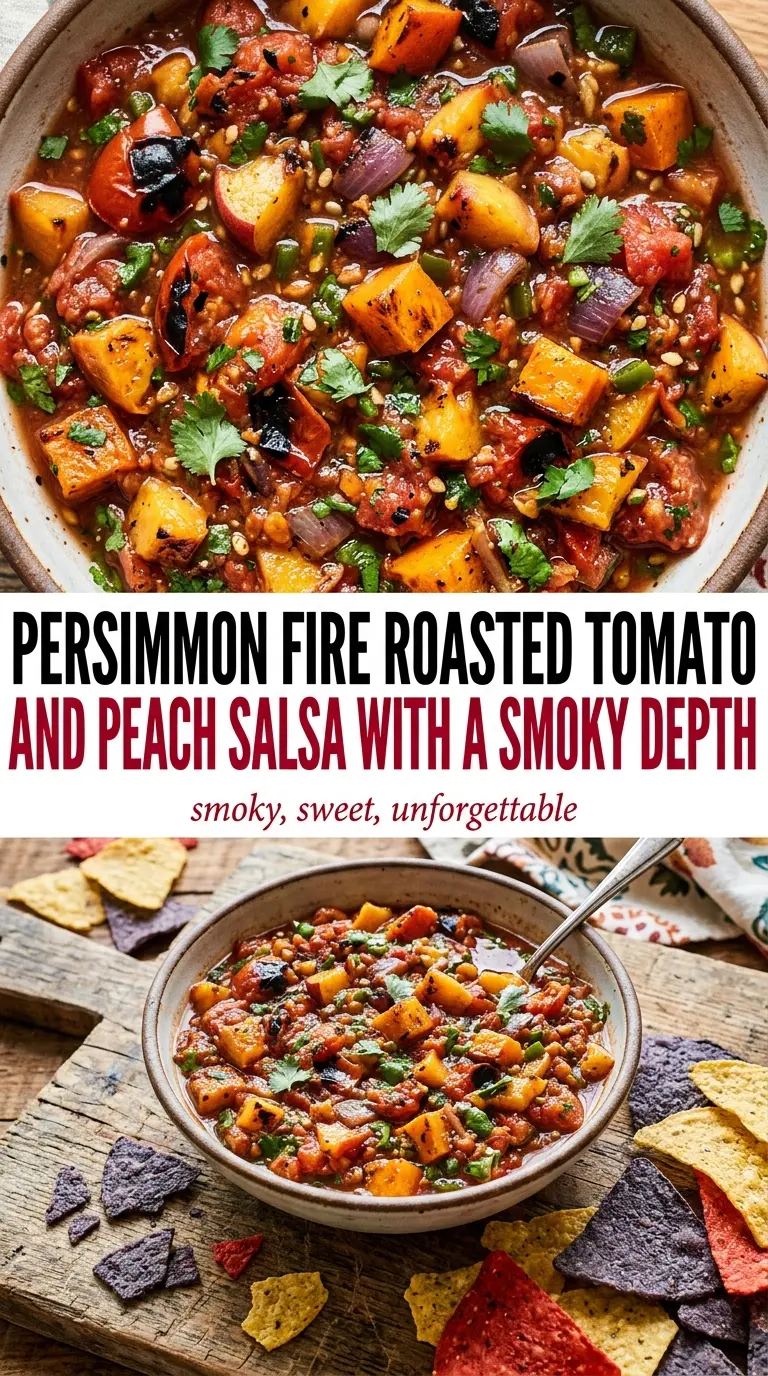
- Tomatoes — They bring the savory backbone. Roma tomatoes work well because they have less water, but any ripe tomato will do as long as you char it hard enough to deepen the flavor.
- Peaches — These are the sweet counterpoint, and they need to be ripe without being mushy. If peaches aren’t in season, nectarines behave almost the same way and keep the salsa’s texture a little firmer.
- Onion — Grilling softens the bite and adds sweetness. Red onion can be used here too, but yellow onion mellows more cleanly over direct heat.
- Jalapeños — They bring heat without taking over. Leave some seeds in if you want a sharper finish; remove them after charring if you want the salsa to lean smoky instead of hot.
- Garlic — Unpeeled cloves roast gently and turn sweet instead of aggressive. Peel them after grilling, when the skins slip off easily and the cloves mash into the salsa without any raw bite.
- Lime juice and cilantro — These go in at the end because they need to stay bright. If you add them before charring, they disappear into the background.
How to Build the Char Without Burning the Good Parts
Getting the Fire Hot Enough
Start with a grill or broiler on high so the vegetables can blister quickly before they dry out. The goal is color on the outside and softness underneath, not slow cooking. If the heat is too low, the peaches and tomatoes will slump and leak before they ever pick up those dark spots.
Charring Each Ingredient at Its Own Pace
Tomatoes and peaches usually soften first, while onion and jalapeños need a little longer to catch good color. Turn them as soon as one side blackens and the flesh gives way when pressed. Garlic in its skin should smell sweet and toasted, not acrid; if it goes too far, the bitterness will carry straight through the salsa.
Cooling, Chopping, and Finishing
Let everything cool just enough that you can handle it without losing the juices into the cutting board. Peel the garlic, trim off any truly burned bits, then chop by hand for a chunkier salsa or pulse a few times for a smoother one. Stir in the cilantro and lime at the end so the salsa tastes fresh instead of cooked, then season with salt until the sweetness and smoke stop fighting each other.
How to Adjust the Heat, Sweetness, and Texture
Milder Salsa for Sensitive Eaters
Remove the jalapeño seeds after roasting and use just one pepper if you want smoke without much burn. The char still gives the salsa depth, so you won’t lose personality by backing off the heat.
More Savory, Less Sweet
Use slightly less peach and add a bit more tomato or onion. That keeps the salsa brighter and less jam-like, which works well if you’re serving it with rich grilled meats.
Chunky vs. Spoonable Texture
Chop everything by hand for a rustic salsa with visible pieces, or pulse just a few times in a food processor for a softer scoop. Stop early if you like texture; once the fruit breaks down too far, the salsa becomes watery and loses its contrast.
Storage and Reheating
- Refrigerator: Store in an airtight container for up to 4 days. The salsa will loosen a little as it sits, but the flavor deepens by the next day.
- Freezer: Freezing isn’t ideal here. The peaches and tomatoes lose their clean texture after thawing, so this is best made fresh.
- Reheating: Don’t reheat it. Serve it cold or at room temperature, and stir before serving if the juices have settled at the bottom.
Questions I Get Asked About This Recipe
Fire Roasted Tomato And Peach Salsa
Ingredients
Equipment
Method
- Preheat a grill or broiler to high heat.
- Grill or broil the tomatoes, peaches, onion, jalapenos, and garlic until charred on all sides, 8 to 12 minutes total, turning as needed for even blistering.
- Let the roasted vegetables cool slightly, about 5 minutes, so they’re easier to handle.
- Peel the garlic and remove the jalapeno seeds if less heat is desired.
- Roughly chop the peaches and dice the remaining vegetables, or pulse everything together in a food processor for a chunkier salsa texture.
- Stir in the fresh cilantro and lime juice, mixing until evenly combined.
- Season with salt to taste and serve immediately for the brightest flavor.