
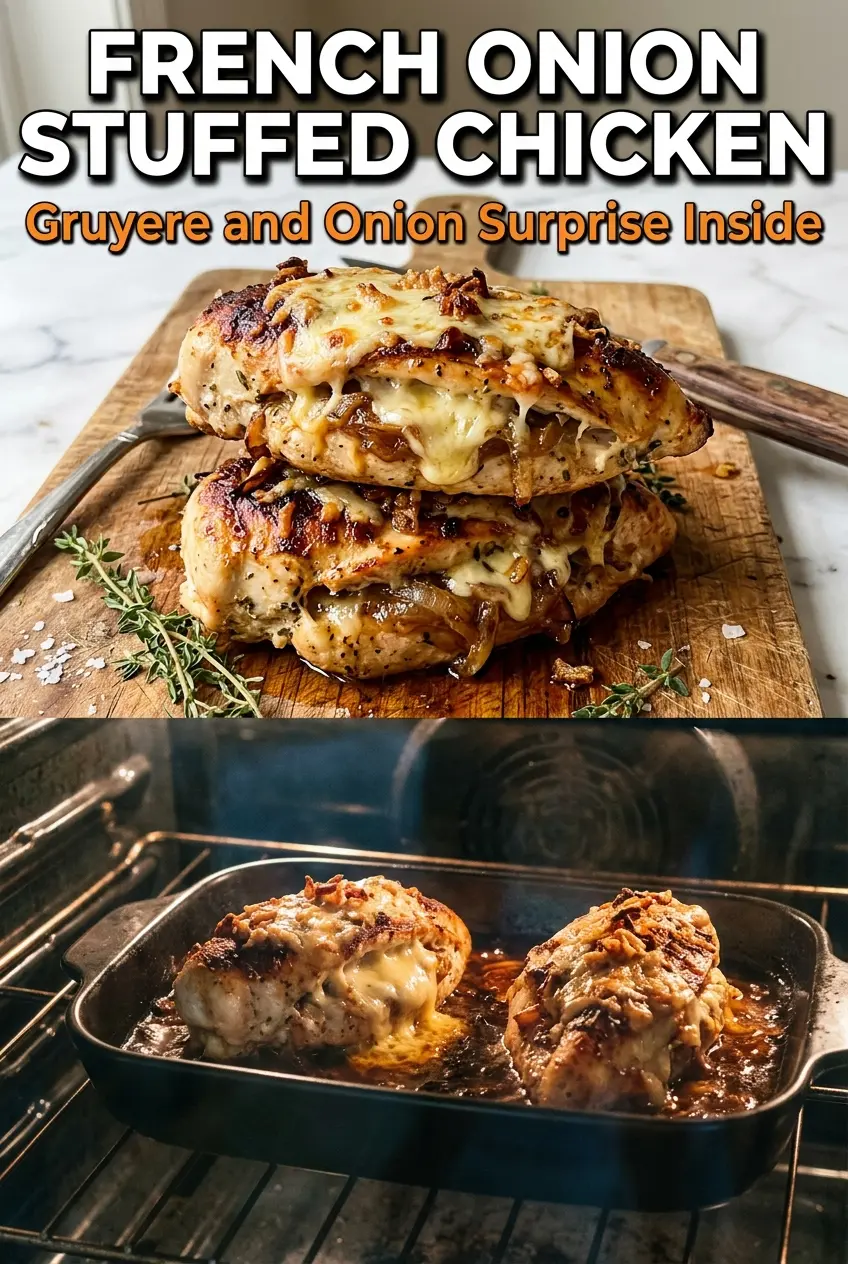
Juicy chicken breasts wrapped around a molten center of deeply caramelized onions and gruyere turn this into one of those dinners people remember after the plate is cleared. The filling tastes like French onion soup concentrated into a pocket of tender chicken, and when you cut into it, the cheese stretches instead of spilling out. That’s the payoff here: rich onions, nutty gruyere, and chicken that stays moist because the filling does the heavy lifting inside the breast.
The part that makes this work is patience with the onions. Forty minutes sounds long until you taste what slow heat does: the onions lose their sharp bite, turn jammy, and bring real sweetness to the filling. I also mix the onions with cream cheese before stuffing, which helps the center stay creamy instead of breaking into oily cheese and loose onions as it bakes. A quick sear before the oven gives the chicken a better surface color, but the bake finishes it gently so the meat stays juicy.
Below, I’m walking through the exact pocket-cutting and stuffing method that keeps the filling where it belongs, plus a few variations if you want to swap the cheese or make this ahead. There’s also a storage note for reheating without drying out the chicken.
The onions turned jammy and sweet, and the gruyere stayed melted right inside the chicken instead of running all over the pan. I followed the 40-minute onion step and it was worth every minute.
French Onion Stuffed Chicken with jammy onions, melted gruyere, and that golden sear belongs in your Pinterest dinner rotation.
The Trick to Keeping the Filling Inside the Chicken Instead of Losing It in the Pan
The biggest failure with stuffed chicken is overfilling and then expecting the oven to save it. It won’t. If the pocket is stretched too thin or the filling is packed in with no restraint, the cheese melts out before the chicken has time to set. A modest fill is better than an overflowing one, and the toothpicks or twine are there to hold the shape while the chicken firms up in the heat.
Another mistake is rushing the onions and calling them done when they’re just softened. You want deep brown, almost spreadable onions, because that concentration is what gives the filling its French onion character. If the onions still taste sharp, the whole dish tastes flat. The slow caramelization is not a side note here — it’s the center of the flavor.
The sear matters for color, not for cooking through. It gives the outside a little structure before the bake, which helps keep the pocket closed, but the real finish happens in the oven where the chicken can cook evenly without the filling bursting out.
What the Onions, Cheese, and Cream Cheese Each Do in This Filling

The onions are the backbone. They need time, butter, and a little olive oil so they go from sharp to sweet without scorching. If you swap in pre-cooked onions from a jar, you lose that deep caramel note, and the filling tastes one-dimensional. If you’re short on time, you can cook them to a deep golden brown in less than 40 minutes only if the pan is wide and the heat stays steady.
Gruyere is the cheese that makes this taste like French onion soup instead of generic stuffed chicken. It melts smoothly and brings a nutty edge that cheddar can’t mimic. Fontina works as the best backup if gruyere is hard to find, though it will be a little milder. Cream cheese doesn’t taste loud, but it keeps the filling cohesive so the onions and cheese sit together inside the chicken instead of separating into a greasy puddle.
Fresh thyme adds a clean herbal note that cuts through the richness. Dried thyme works in a pinch, but use less because it comes on stronger once baked. Worcestershire looks small on the ingredient list, yet it adds that savory depth that makes the onions taste more complete.
Building the Sear, Filling the Pocket, and Finishing in the Oven
Caramelizing the onions until they turn sweet and sticky
Cook the onions slowly in butter and olive oil until they collapse, soften, and pick up a deep amber color. Stir in the Worcestershire near the end so it reduces into the onions instead of burning in the pan. If the onions start browning too fast, lower the heat; dark spots are fine, but scorched onions bring bitterness. By the end, they should look glossy and jammy, not wet and pale.
Mixing the filling so it stays creamy instead of greasy
Let the onions cool before stirring in the gruyere, cream cheese, and thyme. If you add the cheese while the onions are blazing hot, the mixture loosens too much and gets oily. You want a thick filling that holds together when spooned. This is the moment that decides whether the stuffing stays inside the chicken or leaks out as soon as it hits the oven.
Cutting and stuffing the chicken without tearing the breast
Slice a pocket into the thick side of each chicken breast, stopping before you cut all the way through. Pack in the filling generously, but leave enough room to close the opening cleanly. Use toothpicks or twine to secure it if the cut opened wider than you wanted. If the chicken tears, don’t chase a perfect seal — just fold it back over itself and keep the opening centered on top.
Searing first, then baking until the center reaches the finish line
Sear each stuffed breast for about 3 minutes per side in a hot skillet until the outside looks golden and dry at the surface. Then move it to the oven at 375°F so the heat can finish cooking the center without blasting the filling out of the pocket. Pull the chicken when the juices run clear and the breast feels firm but still springy. Let it rest before cutting so the melted filling settles instead of pouring onto the cutting board.
Three Ways to Adapt French Onion Stuffed Chicken Without Losing the Point
Dairy-Free Version That Still Tastes Rich
Use a good dairy-free butter for the onions and swap in a meltable plant-based cheese plus a dairy-free cream cheese. The texture won’t be exactly the same, but the onions still carry the dish, and that slow caramelization keeps the filling satisfying.
Low-Carb and Keto-Friendly Serving Style
The recipe already leans low in carbs, so the main adjustment is what you serve with it. Pair it with roasted broccoli, cauliflower mash, or a crisp salad instead of a starch-heavy side. The chicken stays the same, and the rich filling does the work of making the plate feel complete.
Swap the Gruyere if You Can’t Find It
Fontina gives you the best melt if gruyere isn’t on hand. Provolone also works, though it’s softer and less nutty, so the filling tastes a little less like classic French onion soup. Skip hard, dry cheeses here; they don’t melt into that creamy center the same way.
Storage and Reheating
- Refrigerator: Store leftovers in an airtight container for up to 3 days. The chicken stays tender if you reheat it gently, but the filling will firm up as it chills.
- Freezer: It freezes better after baking than before stuffing. Wrap individual portions tightly and freeze for up to 2 months; the onions may soften a bit more after thawing, but the flavor holds.
- Reheating: Warm covered in a 325°F oven until heated through. The common mistake is blasting it in the microwave, which dries out the chicken before the center is hot. Add a spoonful of pan juices or a splash of broth if you have it.
Answers to the Questions Worth Asking
How to Make French Onion Stuffed Chicken
Ingredients
Equipment
Method
- Heat butter and olive oil in a Dutch oven over medium heat, then add onions and stir to coat. Cook until deeply caramelized for 40 minutes, stirring as needed to prevent scorching, until the onions are dark golden-brown.
- Stir in sugar and cook 1 minute more, then add Worcestershire sauce and stir to combine. Cook for 1 additional minute so the onions absorb the flavor, then turn off the heat.
- Transfer onions to a bowl and cool until warm rather than hot. This helps prevent the cream cheese from melting too runny.
- Mix cooled onions with shredded gruyere, softened cream cheese, and fresh thyme. Stir until the mixture is thick and cohesive for easy stuffing.
- Cut a pocket into each chicken breast, keeping the sides intact as you slice. Season the inside and outside with salt and pepper.
- Stuff each pocket generously with the onion-cheese mixture, then secure with toothpicks. Press lightly so the filling sits inside without spilling out.
- Heat a clear spot in the pan (or return to heat in the Dutch oven) and sear chicken for 3 minutes per side. Cook until golden brown with visible browning on both faces.
- Bake on a sheet pan at 375F for 20-25 minutes, until chicken is cooked through. Rest for 5 minutes after baking so the juices redistribute, then remove toothpicks and serve.