
Fried green tomatoes earn their place by hitting three textures at once: a tart, firm center; a seasoned cornmeal crust that crunches; and that hot-from-the-pan bite that disappears fast if you wait too long. The best versions don’t taste greasy or heavy. They taste bright, salty, and crisp enough that you hear the first bite before you taste it.
What makes this version work is the drain time before breading and the cast iron pan held at a steady 350°F. Green tomatoes carry a lot of moisture, and if you skip the salt-and-drain step, the coating turns soft instead of shattering. The flour gives the egg something to grip, the buttermilk loosens the egg just enough for an even coat, and the cornmeal brings the grit and crunch you want in a fried green tomato worth making again.
Below, you’ll find the one dip that turns these from a good appetizer into the thing people hover over at the table, plus a few practical swaps and storage notes so you can make them without guesswork.
The cornmeal crust stayed crisp even after a few minutes on the rack, and that honey hot sauce was the part everyone kept dipping into. I used a thermometer for the oil and they browned evenly instead of going soggy.
Crisp fried green tomatoes with honey hot sauce are the kind of appetizer that disappears before dinner starts.
The Reason Fried Green Tomatoes Go Soft Instead of Crisp
The biggest mistake with fried green tomatoes is treating the slices like they’re already dry enough to fry. They’re not. Green tomatoes still hold a lot of water, and that moisture pushes right through the coating once they hit the oil. Salting them first pulls out enough liquid to help the crust cling and brown instead of slipping off or steaming in place.
The second problem is heat. If the oil is too cool, the cornmeal absorbs it and the slices turn heavy. If it’s too hot, the breading darkens before the tomato warms through. A steady 350°F gives you that deep golden crust and leaves the tomato inside warm, tangy, and intact.
- Salt and drain time — This isn’t busywork. It’s what keeps the slices from weeping into the coating and softening the crust.
- Pressing the breading on firmly — The cornmeal mixture needs contact to stay put. A gentle press helps the coating seal around the tomato.
- Rack drainage — Paper towels trap steam under the tomatoes. A wire rack keeps the bottom crisp while the excess oil drips away.
What the Cornmeal, Buttermilk, and Honey Hot Sauce Are Really Doing
- Green tomatoes — You want them firm and under-ripe, with a clean tart bite. Ripe tomatoes collapse and leak too much juice, which changes the whole dish.
- Buttermilk — Just two tablespoons, but it softens the egg wash and helps the flour layer grab evenly. If you don’t have it, a splash of milk with a few drops of vinegar works fine.
- Cornmeal — This is where the signature texture lives. Fine or medium grind both work; coarse meal gives a rougher crunch, while fine meal makes a tighter crust.
- Smoked paprika and garlic powder — They add background flavor without making the coating taste like seasoned breading. Keep them in the mix; plain cornmeal tastes flat next to the tomato.
- Honey hot sauce — The sweet-heat dip balances the tomato’s tartness and the salty crust. Frank’s RedHot and clover honey are the classic pairing because the vinegar in the sauce keeps the dip bright instead of cloying.
Build the Crust Before the Tomato Starts Sweating
Salting and Drying the Slices
Lay the tomato slices on a towel in a single layer and salt them lightly. After 15 minutes, you’ll see beads of moisture on the surface and a small puddle underneath, which is exactly what you want. Pat them dry before breading or the flour will turn gummy instead of forming the base for the coating. If the slices still look wet, give them another minute on the towel rather than forcing the next step.
The Dredge Line
Set up the flour, the egg mixed with buttermilk, and the cornmeal-spice mixture in separate shallow bowls. Move each slice through the stations in that order so the flour catches the surface moisture, the egg gives the meal something to cling to, and the cornmeal locks into place. Press the coating onto both sides with your fingers. If you skip the press, the crust falls off in the pan.
Frying in a Steady Pan
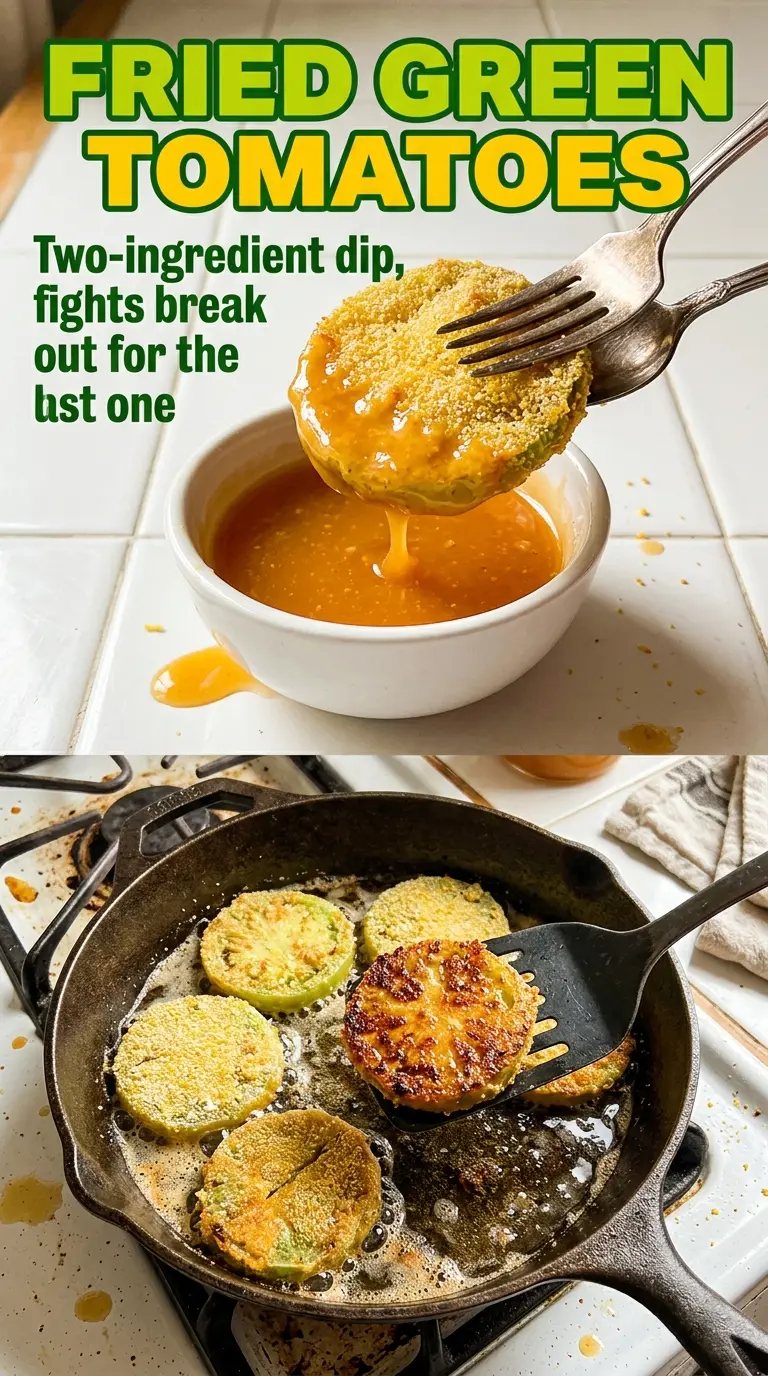
Heat the oil in cast iron until it reads 350°F. At that point, the tomatoes should sizzle the second they hit the pan, but not violently spit. Fry in batches so the temperature doesn’t drop. Two to three minutes per side is enough for a deep golden crust; if the coating is getting dark in under a minute, the heat is too high and the center won’t have time to warm through.
The Quick Dip That Changes Everything
Stir the honey and hot sauce together until smooth. The dip should taste sweet first, then finish with heat and a little vinegar bite. Serve it immediately with the tomatoes while the crust is still crisp and the slices are hot enough to steam when you cut into them. That contrast is the whole reason the combination works.
Three Useful Ways to Change the Recipe Without Ruining It
Gluten-Free Version
Swap the all-purpose flour for a gluten-free blend that’s meant for 1:1 baking, then keep the cornmeal exactly the same. The coating will still crisp up, though it may be a touch more delicate, so let the slices rest for a minute after frying before moving them. The texture stays close to the original because the crunch comes mostly from the cornmeal, not the flour.
Dairy-Free Adjustment
Skip the buttermilk and use plain plant milk with a small splash of vinegar or lemon juice. You’re not trying to make it tangy; you’re thinning the egg just enough so the flour and cornmeal coat evenly. The flavor stays clean, and the crust still shatters when it hits the table.
Lighter Oven Finish
You can bake these on a greased rack in a hot oven, but they won’t taste quite the same as the pan-fried version. The top side browns well, while the bottom stays less rugged and less crunchy. It’s a decent backup when you want less oil, but the skillet still gives the best crust.
Storage and Reheating
- Refrigerator: Store leftovers for up to 2 days. The crust softens as it sits, so expect less crunch.
- Freezer: These don’t freeze well after frying. The tomatoes turn watery and the coating gets soggy when thawed.
- Reheating: Reheat on a wire rack in a 400°F oven or air fryer until the crust crisps again. Don’t microwave them unless you want limp breading and a soft center.
Answers to the Questions Worth Asking

Fried Green Tomatoes Recipe
Ingredients
Equipment
Method
- Slice green tomatoes to 1/4-inch thickness, then sprinkle with salt. Drain for 15 min on a towel and pat dry so the crust adheres.
- Set up a dredging station in this order: flour, then egg mixed with buttermilk, then cornmeal with garlic powder and smoked paprika. Season with salt and pepper in the final cornmeal mixture for even flavor.
- Dredge each tomato slice in flour, then egg-and-butttermilk, then the cornmeal-spice mixture. Press firmly so the coating sticks and forms a thick, crunchy crust.
- Heat vegetable oil in a cast iron skillet to 350°F. Fry the tomatoes for 2-3 min per side until deep golden, then drain on a rack to keep them crisp.
- Stir honey and hot sauce together until fully combined. Serve the fried green tomatoes hot immediately with the honey hot sauce for dipping.