
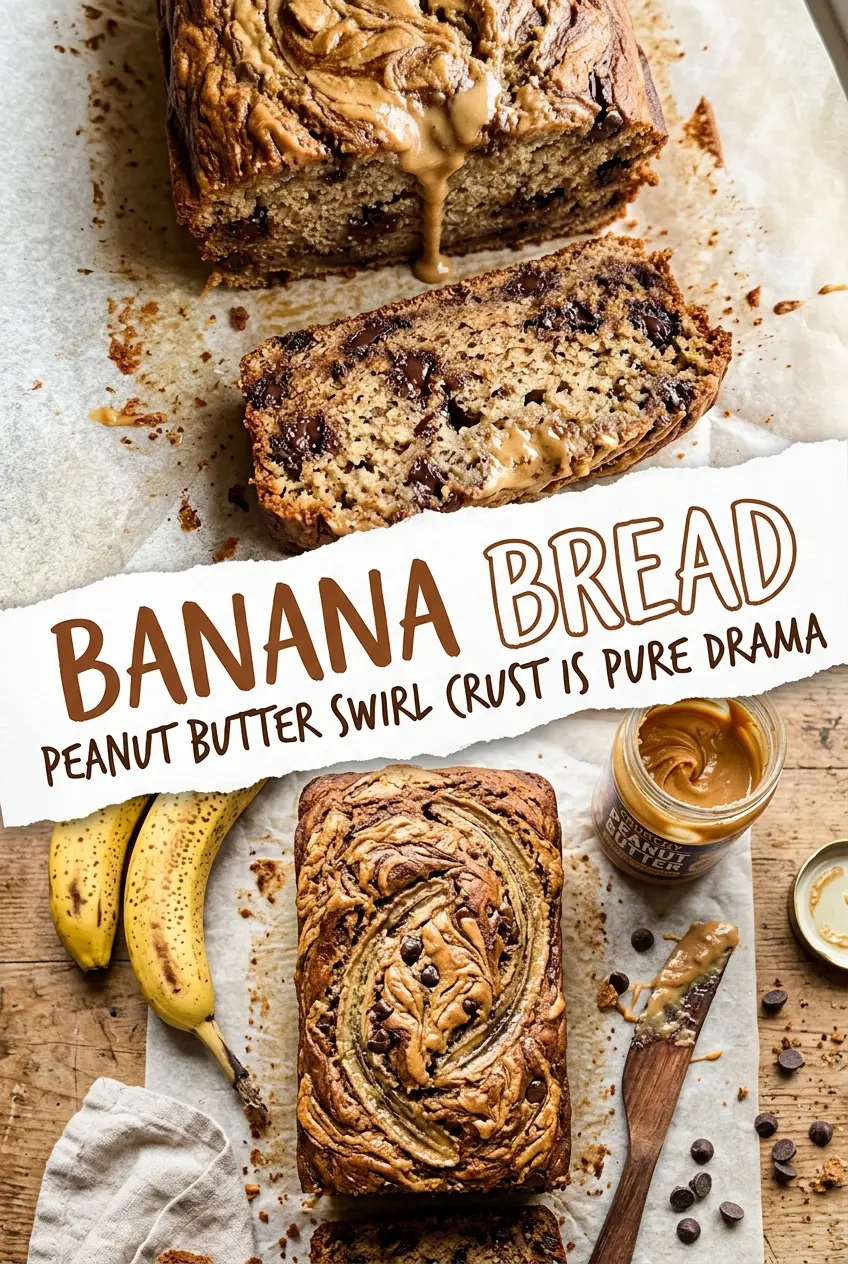
Banana bread earns its place in the rotation when it comes out with a tender, moist crumb and a crackled top that slices cleanly instead of collapsing into a gummy middle. This version goes a little further than the usual loaf: peanut butter is swirled over the top so it bakes into a marbled crust, while chocolate chips melt through the banana batter and keep every slice from feeling one-note.
The bananas need to be very ripe, with plenty of brown spots, because that’s where the deep banana flavor comes from and the natural sweetness lives. Melted butter keeps the batter simple and gives the loaf a soft, almost plush texture, while a single egg holds everything together without making it heavy. The swirl on top does more than decorate; it bakes into a thin, crackly layer that adds contrast to the soft crumb underneath.
If you’ve had banana bread turn dense in the center or dry around the edges, the trouble usually starts with overmixing or overbaking. The notes below walk through both, plus the easiest way to get that peanut butter marbling to look intentional instead of messy.
The peanut butter swirl baked into a crackly top and the inside stayed so moist. I tested a slice warm and the chocolate chips were melted just enough to make it taste like a bakery loaf.
Love the crackled peanut butter top and soft banana crumb? Save this banana bread for the days when you want a loaf that looks bakery-made with almost no effort.
The Trick to Keeping Banana Bread Moist Without Making It Dense
The line between moist banana bread and heavy banana brick is thinner than people think. Overripe bananas bring moisture, but they also add a lot of sweetness and body, so the batter doesn’t need much help. Once the flour goes in, stop stirring as soon as the streaks disappear. If you keep going, the loaf tightens up and bakes into something closer to a quick bread helmet than a tender slice.
The other place this recipe can go sideways is the oven. Banana bread keeps cooking after it comes out, so if the center feels done the second you pull it, it was probably in too long. Look for a deep golden top, a set center that springs back lightly, and a tester that comes out with a few moist crumbs instead of wet batter.
What Each Ingredient Is Doing in This Banana Bread
- Very ripe bananas — These are the backbone of the loaf. The darker and softer they are, the more flavor and sweetness you get, and that softness helps create the moist crumb everyone wants. If your bananas are only yellow, the bread will taste flatter and need more sugar to compensate.
- Melted butter — This gives the loaf richness without needing a mixer. It also keeps the crumb tender instead of airy, which is exactly what banana bread should be. You can swap in neutral oil if you need to, but the flavor will be less round.
- Sugar — This isn’t just for sweetness. It helps the crust brown and gives the loaf a softer bite. Brown sugar works too if you want a deeper, more caramel-like flavor, though the crust will be a little less crisp.
- All-purpose flour — Standard all-purpose flour gives the loaf enough structure to hold the chocolate chips and peanut butter swirl without becoming tough. Measure it lightly or spoon and level it; packed flour is one of the fastest ways to dry this out.
- Peanut butter — The swirl on top needs a creamy, spoonable peanut butter, not a stiff natural jar with a thick oil layer that hasn’t been stirred. If it’s too thick, warm it for a few seconds so it ribbons instead of tearing through the batter.
- Chocolate chips — These add little pockets of melted chocolate that keep each slice from tasting one-dimensional. Dark, semi-sweet, or milk chips all work, but the richer the chip, the better it balances the banana sweetness.
Building the Batter and Swirling the Top
Mashing the Bananas Into a Loose Base
Start by mashing the bananas until they’re mostly smooth with a few small lumps left. Those bits melt into the loaf as it bakes and keep the texture from turning paste-like. Stir them with the melted butter first so the fat coats the fruit and the batter comes together evenly before the sugar goes in.
Bringing the Dry Ingredients In Last
Add the baking soda and salt, then fold in the flour only until no dry pockets remain. The batter should look thick and slightly rough, not glossy and whipped. If it looks overmixed, it’s because the flour was stirred too long; the loaf will still bake, but the crumb won’t stay as soft.
Finishing With Chocolate and Peanut Butter
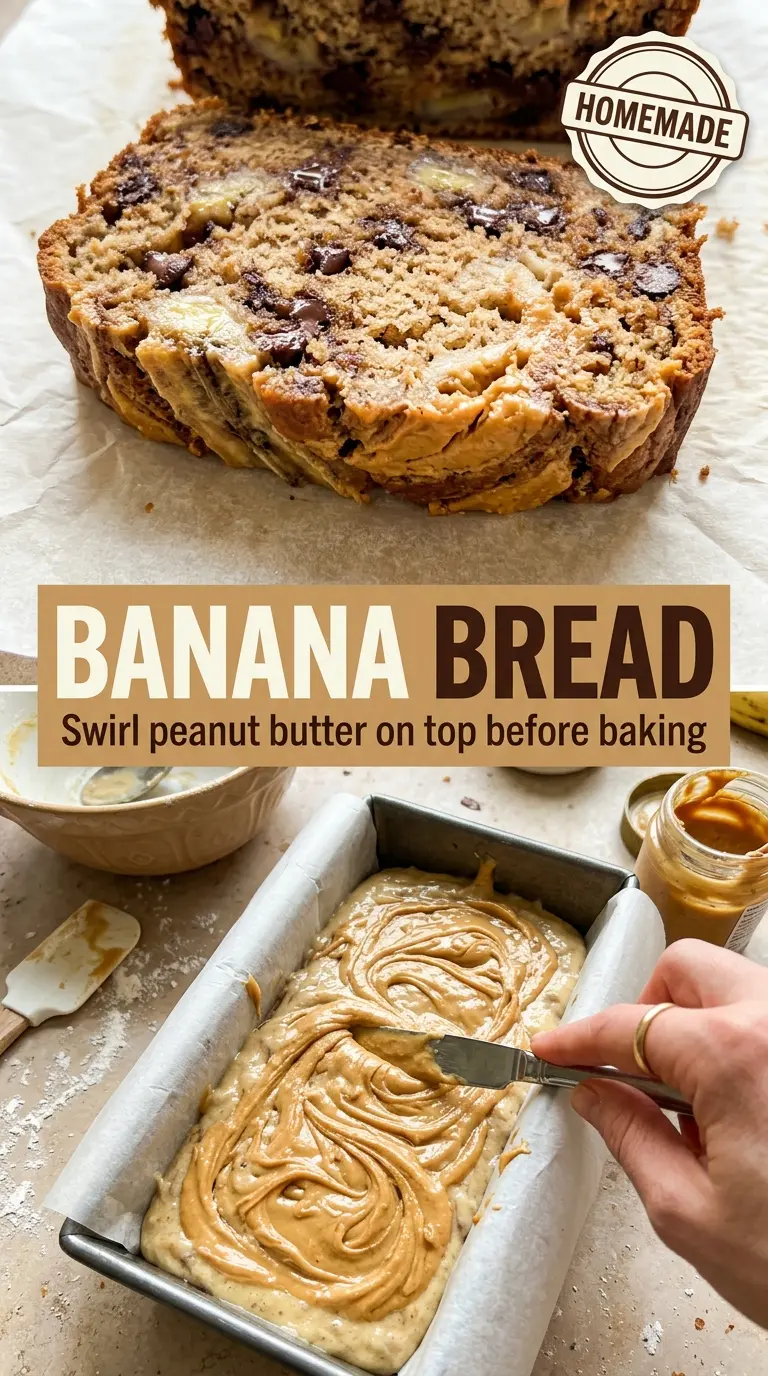
Fold the chocolate chips in at the end so they stay dispersed instead of sinking. Pour the batter into the pan, then drop spoonfuls of peanut butter over the top and drag a knife through in a few broad passes. Don’t chase a perfect pattern. A few bold swirls bake into the best marbled crust, while too much swirling blends everything into the batter and loses the visual contrast.
Baking Until the Center Sets
Bake until the top is deeply golden and the center no longer wobbles when you tap the pan lightly. If the peanut butter starts to darken before the middle is done, tent the loaf loosely with foil. Let it rest for 10 minutes in the pan before moving it out; that short pause lets the crumb settle so the slices hold together instead of crumbling apart.
How to Adapt This Banana Bread for Different Kitchens and Diets
Make It Dairy-Free
Use melted coconut oil or a neutral oil in place of butter. The loaf will still be moist, though the flavor turns a little cleaner and less buttery. If you choose coconut oil, let the bananas cool slightly before mixing so the oil doesn’t seize into clumps.
Make It Gluten-Free
A 1:1 gluten-free flour blend can work here, especially one that already contains xanthan gum. The crumb will be a little more delicate and the loaf may need an extra few minutes in the oven, but the banana and peanut butter flavors carry it well.
Skip the Chocolate Chips
Leave them out if you want a cleaner banana-peanut butter loaf. The texture becomes a little more classic and less dessert-like, and the peanut butter swirl stands out more on its own. Add chopped peanuts if you want crunch instead of extra sweetness.
Storage and Reheating
- Refrigerator: Store covered for up to 5 days. The crumb firms up in the fridge, but the flavor holds well.
- Freezer: Banana bread freezes beautifully. Wrap slices or the whole loaf tightly, then freeze for up to 3 months.
- Reheating: Warm slices in a toaster oven or microwave just until heated through. If you overheat it, the chocolate chips get greasy and the bread turns dry at the edges.
Answers to the Questions Worth Asking
Banana Bread with Peanut Butter Swirl
Ingredients
Equipment
Method
- Preheat the oven to 350°F and grease a 9x5 loaf pan.
- Set a sheet pan in the oven to stabilize heat while the loaf bakes.
- Mash the very ripe bananas, then mix with the melted butter until smooth.
- Stir in the sugar, beaten large egg, and vanilla until the mixture looks glossy.
- Add the baking soda and pinch of salt, then stir until evenly distributed.
- Fold in the all-purpose flour just until combined, keeping the batter slightly lumpy.
- Fold in the chocolate chips, then pour the batter into the greased loaf pan.
- Drop spoonfuls of peanut butter over the top and swirl with a knife to create ribbons.
- Bake at 350°F for 55 to 65 minutes, until the top is golden and a toothpick comes out with a few moist crumbs.
- Cool for 10 minutes before slicing to help the crumb set and slice cleanly.