
Gochujang spicy chicken ramen hits that sweet spot between fast and deeply satisfying: springy noodles, shredded chicken, and a broth that tastes like it simmered far longer than 15 minutes. The gochujang gives it heat and fermented depth, while onion, garlic, and ginger build the kind of base that keeps each spoonful interesting instead of one-note. A soft-boiled egg on top turns the bowl from quick dinner into something you’d happily come back to the next night.
The trick is treating the broth like the main event, not a shortcut. Let the onion cook until it loses its raw bite, then give the garlic and ginger a brief turn in the oil before adding the liquid so their flavor blooms instead of fading into the background. I also keep the ramen noodles separate until the end, which keeps them bouncy instead of swollen and tired in the bowl.
Below you’ll find the small details that make this ramen work on a weeknight: how to balance the gochujang so the broth stays bold without becoming harsh, which swaps still give you a good bowl, and how to keep leftovers from turning mushy.
The broth came together fast, but it tasted like it had been simmering all afternoon. I loved that the noodles stayed springy because I cooked them separately, and the gochujang gave it a deep heat instead of just a sharp spicy kick.
Save this gochujang ramen for the nights when you want a bold broth, springy noodles, and dinner on the table in 15 minutes.
The Reason the Broth Tastes Bigger Than the Clock
Fast ramen gets dull when the broth tastes like hot broth with seasoning in it. This one avoids that by building flavor in layers: first the onion softens and sweetens, then the garlic and ginger wake up in the oil, and only then does the broth come in to carry everything. That short sauté is what gives the final bowl depth instead of just heat.
Gochujang behaves differently from a straight chili paste. It brings spice, but it also brings a little sweetness and fermented savoriness, which is why the broth tastes rounded instead of aggressive. The soy sauce pulls everything together and gives the broth enough salt to stand up to the noodles and chicken.
The other thing that matters here is not overcooking the ramen. Even a minute too long turns springy noodles soft and cloudy. Pull them as soon as they’re just tender, then get them into the bowls right away so the hot broth finishes the job.
What Each Ingredient Is Actually Doing in This Bowl
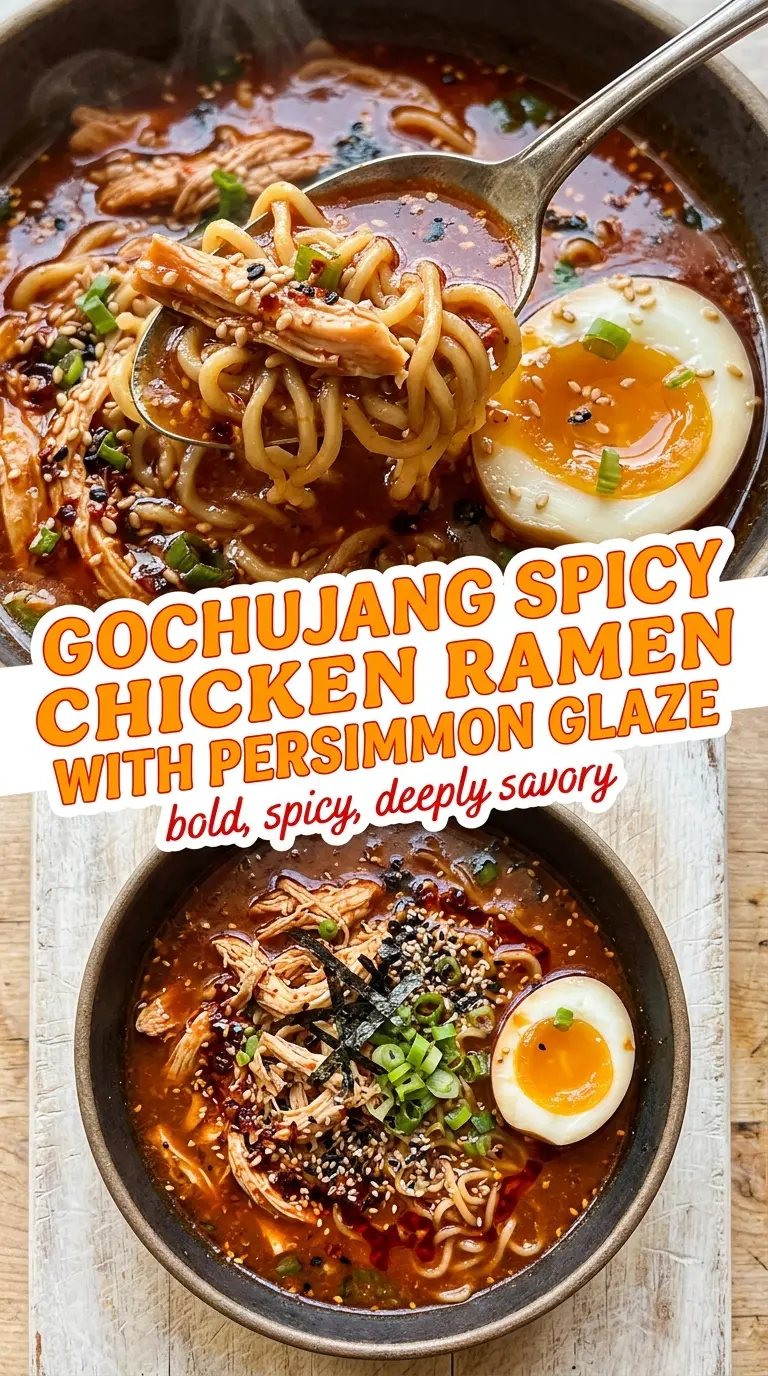
- Gochujang — This is the backbone of the broth. It’s the ingredient that gives you heat, body, and that deep red color, and there isn’t a substitute that fully replaces its fermented sweetness. If you’re in a pinch, use chili garlic paste plus a little miso, but the flavor will shift.
- Yellow onion — Onion gives the broth its first layer of sweetness. Slice it thin so it softens quickly in the time you have; chunky pieces won’t mellow fast enough in a 15-minute soup.
- Garlic and ginger — These should hit the oil before the broth so they taste fragrant, not raw. Fresh ginger matters more than dried here, because it keeps the broth bright and sharp under the richness of the chicken.
- Rotisserie chicken — This is the shortcut that makes the bowl work on a weeknight. Shredded chicken warms gently in the broth and picks up flavor fast; breast or thigh both work, but don’t add big cold chunks straight from the fridge or they’ll cool the soup down too much.
- Ramen noodles — Use the noodles from instant ramen, but discard the seasoning packet. Cooking them separately keeps the broth clear and the noodles bouncy, which matters a lot in a bowl like this.
- Soft-boiled eggs — The jammy yolk softens the heat of the broth and gives each bite a little richness. If yours are cooked through, the ramen still works, but the runny center is what makes the bowl feel complete.
The 15 Minutes That Actually Matter
Soften the Onion Before Anything Else
Heat the oil in a large pot over high heat, then add the onion, garlic, and ginger. Cook them until the onion turns translucent and loses its sharp edge, about 5 minutes. If the pan looks dry or the garlic starts to brown too fast, lower the heat; burned garlic turns the whole broth bitter.
Build the Broth With the Gochujang
Stir in the chicken broth, gochujang, and soy sauce, then bring everything to a simmer. The gochujang should dissolve into the liquid instead of sitting in clumps, so stir until the broth is smooth and evenly red. Taste at this stage if you want, because this is where the salt and spice should feel balanced before the noodles go in.
Warm the Chicken Without Overcooking It
Add the shredded chicken and let it heat through for a few minutes. You’re not cooking raw chicken here, so the goal is just to give it time to absorb the broth and stop tasting separate from the soup. If the chicken is already dry from the fridge, this simmering step helps bring it back to life.
Cook the Noodles Separately, Then Serve Fast
Boil the ramen noodles in a separate pot until just softened, usually 2 to 3 minutes. Drain them well and divide them between bowls right away. Ladle the hot broth and chicken over the top, then finish with a soft-boiled egg half, green onions, and sesame seeds before the noodles have time to sit and absorb too much liquid.
How to Adapt This Bowl Without Losing What Makes It Good
Make It Vegetarian
Swap the chicken broth for a rich vegetable broth and replace the chicken with sautéed mushrooms or tofu. You’ll lose some of the roundness that shredded chicken brings, but mushrooms add a meaty texture and help the broth feel substantial.
Make It Gluten-Free
Use gluten-free ramen or rice noodles and check that your gochujang and soy sauce are certified gluten-free. Regular ramen noodles and standard soy sauce are the two places gluten usually sneaks in.
Turn Down the Heat Without Flattening the Flavor
Start with 2 tablespoons of gochujang instead of 3, then add more only after tasting the broth. That keeps the flavor balanced for people who want the savory depth without the full burn.
Use Fresh Noodles if You Have Them
Fresh ramen noodles cook even faster than instant noodles, so watch them closely and pull them the second they turn tender. They give the bowl a softer, chewier bite, but they also go from perfect to overdone fast.
Storage and Reheating
- Refrigerator: Store the broth and chicken separately from the noodles for up to 4 days. The noodles soften as they sit, so keeping them apart preserves the best texture.
- Freezer: Freeze only the broth and chicken for up to 2 months. Ramen noodles don’t freeze well here because they turn mushy when thawed.
- Reheating: Reheat the broth gently on the stove until steaming, then add fresh or separately stored noodles at the end. If you microwave everything together, the noodles go limp and the chicken can turn stringy.
Answers to the Questions Worth Asking
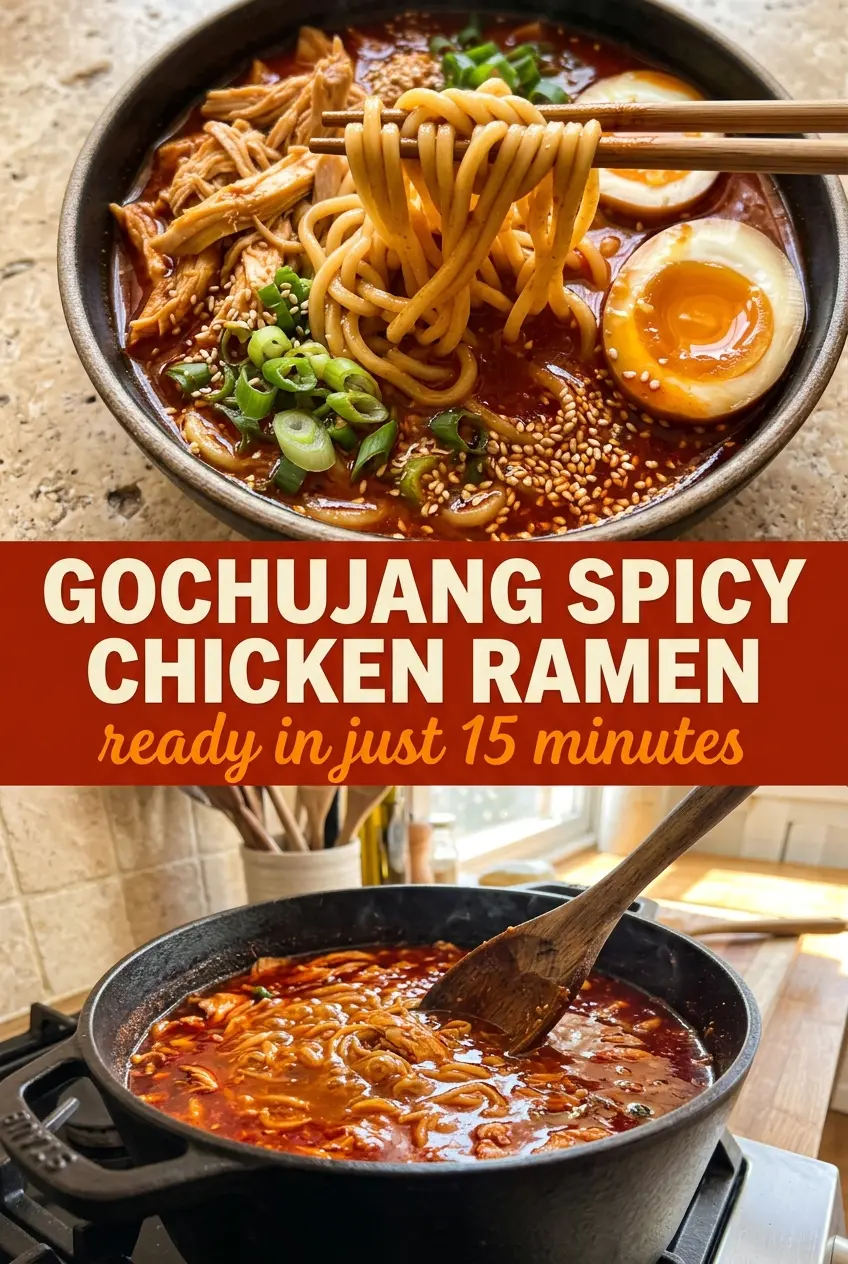
Gochujang Spicy Chicken Ramen
Ingredients
Equipment
Method
- Heat the vegetable oil in a large pot over high heat, then cook the yellow onion, garlic, and fresh ginger for about 5 minutes until softened, stirring for even cooking (visual cue: onion looks glossy and slightly translucent).
- Stir in the chicken broth, gochujang, and soy sauce, then bring to a simmer over high heat (visual cue: small bubbles break the surface and the broth turns deep red).
- Add the shredded rotisserie chicken and let it warm through in the broth for a few minutes (visual cue: chicken is hot throughout with no cold spots).
- Boil the ramen noodles separately in hot water until just softened, about 2 to 3 minutes (visual cue: noodles bend easily but aren’t mushy).
- Divide the noodles between bowls and ladle the hot broth and chicken over the top (visual cue: noodles are fully submerged and coated in the red broth).
- Top each bowl with soft-boiled egg halves, green onions, and sesame seeds before serving (visual cue: jammy yolk sits at the center and sesame seeds cling to the surface).