
Charred green tomatoes give this salsa verde a sharp, bright edge that raw tomatillos can’t quite match. The broiler wakes everything up: the tomatoes soften, the jalapeños pick up a little smoke, and the garlic turns sweet enough to round out the tang. What you get is a fresh, punchy salsa with enough body to cling to chips, tacos, and spoonfuls of eggs without tasting watery or flat.
The trick is keeping an eye on the pan while it broils. Green tomatoes need heat to lose that harsh bite, but they can go from softened to collapsed faster than you’d expect. A short roast also keeps the salsa from turning muddy. If you want a brighter, chunkier texture, pulse it briefly. If you want it pourable for enchiladas or grilled chicken, let the blender run a little longer.
Below, I’ve included the small details that make this one worth repeating, plus the best way to adjust the heat and the texture without losing that clean green flavor.
I loved how the broiled tomatoes gave the salsa a deeper flavor without making it heavy. I left it a little chunky and it was perfect on chips and scrambled eggs the next morning.
Broiled green tomato salsa verde for tacos, chips, and eggs
The Broiler Is Doing More Than Just Softening the Tomatoes
Raw green tomatoes can taste aggressively sharp, almost grassy, and that edge can take over a salsa if you skip the heat. Broiling changes that. The high heat loosens the flesh, chars the skins, and pulls a little sweetness out of the onion and garlic, which is what keeps the salsa from tasting one-note.
The other payoff is texture. Because the vegetables are roasted before blending, the salsa has more body and doesn’t separate into a thin green liquid. If the pan looks like it’s getting too dark in spots, that’s fine; a few blackened edges add depth. What you don’t want is a full burn, which makes the salsa bitter.
What Each Ingredient Is Actually Doing in This Dish
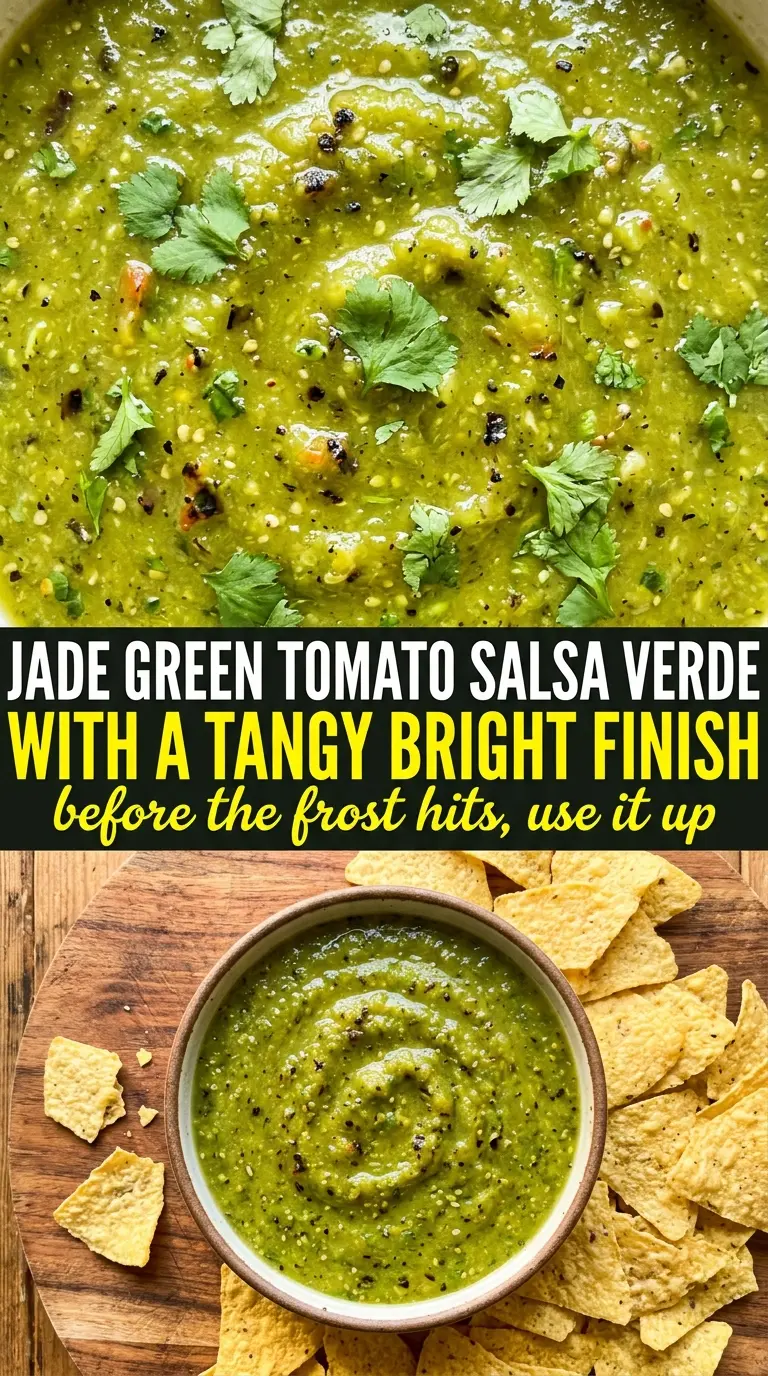
- Green tomatoes — These are the backbone of the recipe. They bring acidity and firmness that hold up well under the broiler. If your green tomatoes are especially large, quarter them evenly so they soften at the same rate.
- Jalapeños — One pepper gives a gentle kick; two push it into a brighter, hotter salsa. Leaving in some seeds raises the heat, while removing them softens it without changing the flavor much.
- Onion and garlic — These mellow as they roast, which matters because raw onion can easily overpower a salsa made from green tomatoes. If you’re out of fresh garlic, roasted garlic works beautifully here, though the flavor turns a little sweeter and softer.
- Cilantro and lime juice — Add these after blending so they stay fresh and vivid. Lime brightens the whole salsa at the end, and cilantro keeps it from tasting cooked. Dried cilantro won’t do the same job.
From Broiler to Blender: The Part That Gives You the Right Texture
Charring the Vegetables
Spread the tomatoes, jalapeños, onion, and garlic in a single layer so the heat can hit everything evenly. You’re looking for softened tomatoes with blistered spots and dark edges on the jalapeños and onion, not a fully blackened tray. Flip them halfway through so both sides pick up some color. If the garlic starts to scorch early, pull it off the tray first; burnt garlic turns bitter fast.
Blending to the Texture You Actually Want
Move the broiled vegetables to a blender or food processor while they’re still warm, then add the cilantro and lime juice. Pulse for a chunky salsa, or let it run longer if you want it smoother and pourable. If the blender struggles, add a spoonful of the cooking juices from the pan, not water, so you don’t dilute the flavor. Taste before adding salt because broiled vegetables can need less seasoning than raw ones.
Cooling and Final Seasoning
Let the salsa cool before serving so the lime stays bright and the heat settles into a cleaner finish. Warm salsa can taste sharper than it really is, which makes it tempting to over-salt. Once it cools, the flavor usually lands where it should: tangy, smoky, and clean. If it still feels too sharp, a pinch more salt will round it out better than more lime.
Three Useful Ways to Adjust This Salsa Verde
Mild Enough for Chips and Breakfast
Use one jalapeño and remove the seeds before broiling. You’ll still get the pepper flavor and a little warmth, but the salsa stays friendly enough for people who don’t like a lingering burn.
Thicker, Spoonable Salsa for Tacos
Pulse the salsa instead of blending it smooth, and hold back a tablespoon or two of lime juice until the end. That keeps the texture more substantial and helps it sit on top of tacos instead of sliding off.
Dairy-Free and Naturally Gluten-Free
This salsa already fits both, so there’s nothing to change. That’s part of why it works so well as a fast condiment for taco night or as a bright sauce for grilled chicken, fish, or eggs.
Storage and Reheating
- Refrigerator: Store in a sealed container for up to 1 week. The flavor gets a little deeper after a day, and the texture may loosen slightly as it sits.
- Freezer: It freezes well for up to 2 months. Leave a little space at the top of the container, since the salsa will expand as it freezes. Thaw in the refrigerator and stir well before serving.
- Reheating: Most people serve this cold or at room temperature, but if you want it warm, heat it gently on the stove over low. Don’t boil it, or the fresh lime flavor fades and the texture gets thinner.
Questions I Get Asked About This Recipe
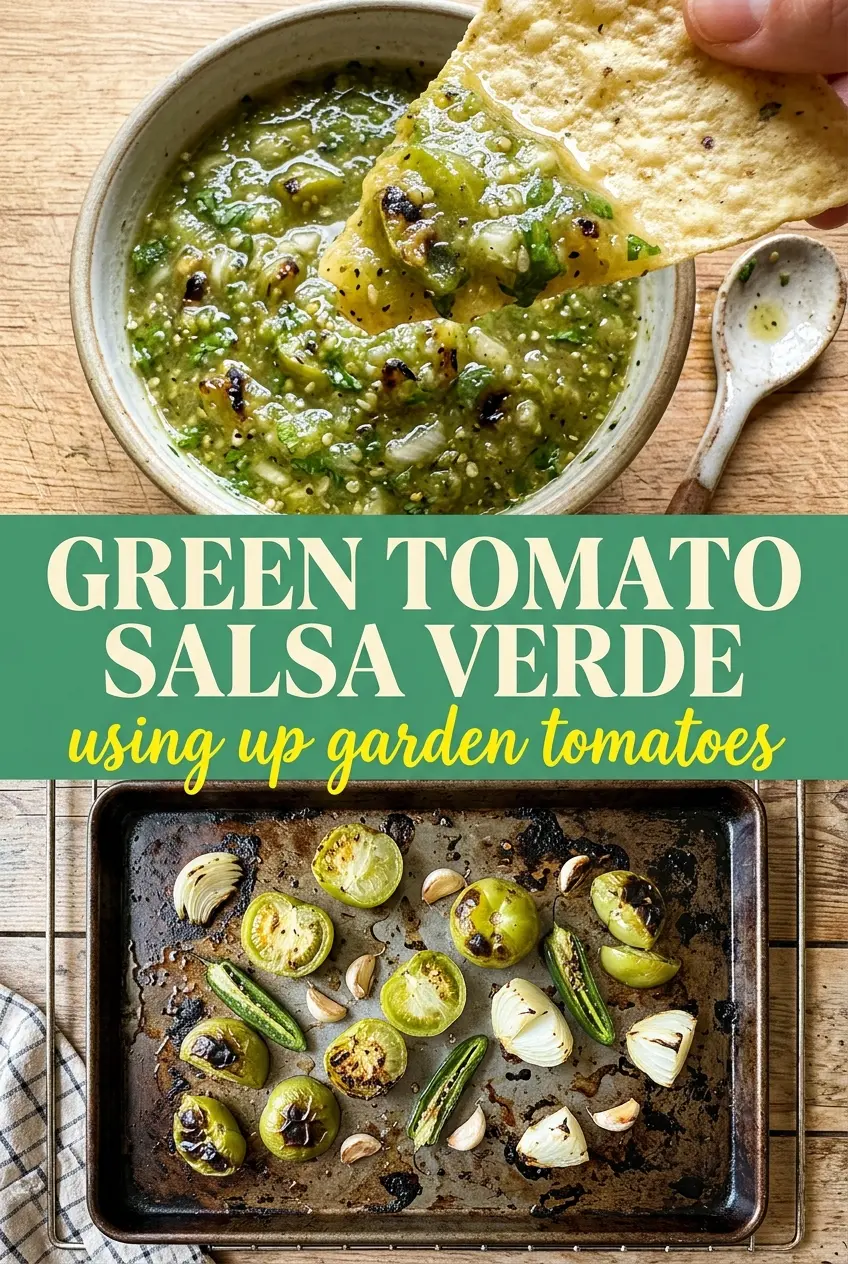
Green Tomato Salsa Verde
Ingredients
Equipment
Method
- Preheat the broiler to high and set an oven rack so the sheet pan will be about 6 inches from the heat source.
- Arrange green tomatoes, jalapenos, onion, and garlic on a sheet pan in a single layer for even charring.
- Broil for 8-10 minutes, until charred and softened, flipping halfway so both sides blister.
- Transfer the broiled vegetables to a blender or food processor and pulse until the mixture starts to break down.
- Add cilantro and lime juice, then continue pulsing to reach your desired chunky or smooth salsa texture.
- Season with salt to taste and pulse briefly to combine.
- Let the salsa cool before serving so the flavors mellow and thicken slightly.