
Sticky teriyaki-glazed chicken, caramelized pineapple, and blistered peppers all on one pan is the kind of dinner that disappears fast. The chicken stays juicy, the pineapple turns jammy at the edges, and the sweet-savory sauce clings to everything instead of pooling underneath. It tastes like you spent a lot more time on it than you did.
The trick is keeping the pieces cut to a similar size and giving the chicken enough space to roast instead of steam. Fresh pineapple matters here because it softens and browns in a way canned fruit usually doesn’t, and a hot oven is what gives the sauce those sticky little browned spots. I tested this with the sauce added in two stages, and that’s what keeps the final glaze glossy instead of burning before the chicken finishes.
Below, you’ll find the small prep details that make the biggest difference, plus a few smart ways to change the pan up without losing that sweet-savory balance.
The pineapple caramelized beautifully and the teriyaki glaze thickened right on the pan. I loved that the chicken stayed juicy while the peppers got those browned edges instead of turning mushy.
Love the caramelized pineapple and sticky teriyaki finish in this Hawaiian Chicken Sheet Pan? Save it to Pinterest for the nights when you want one-pan dinner with big flavor and barely any cleanup.
The Secret to Sheet Pan Chicken That Browns Instead of Steams
The biggest mistake with a sheet pan dinner like this is crowding everything into one tight layer. When the chicken, pineapple, peppers, and onion sit on top of each other, the pan traps moisture and you get soft vegetables and pale chicken instead of those roasted edges everybody wants. Spread it out. Give the heat room to move.
Another thing that matters here is when the sauce goes on. Teriyaki has sugar, which means it can go from glossy to scorched fast in a hot oven. I like using half before roasting so it can soak into the food and caramelize, then brushing on the rest at the end for a fresh, shiny finish.
What Each Ingredient Is Actually Doing in This Dish
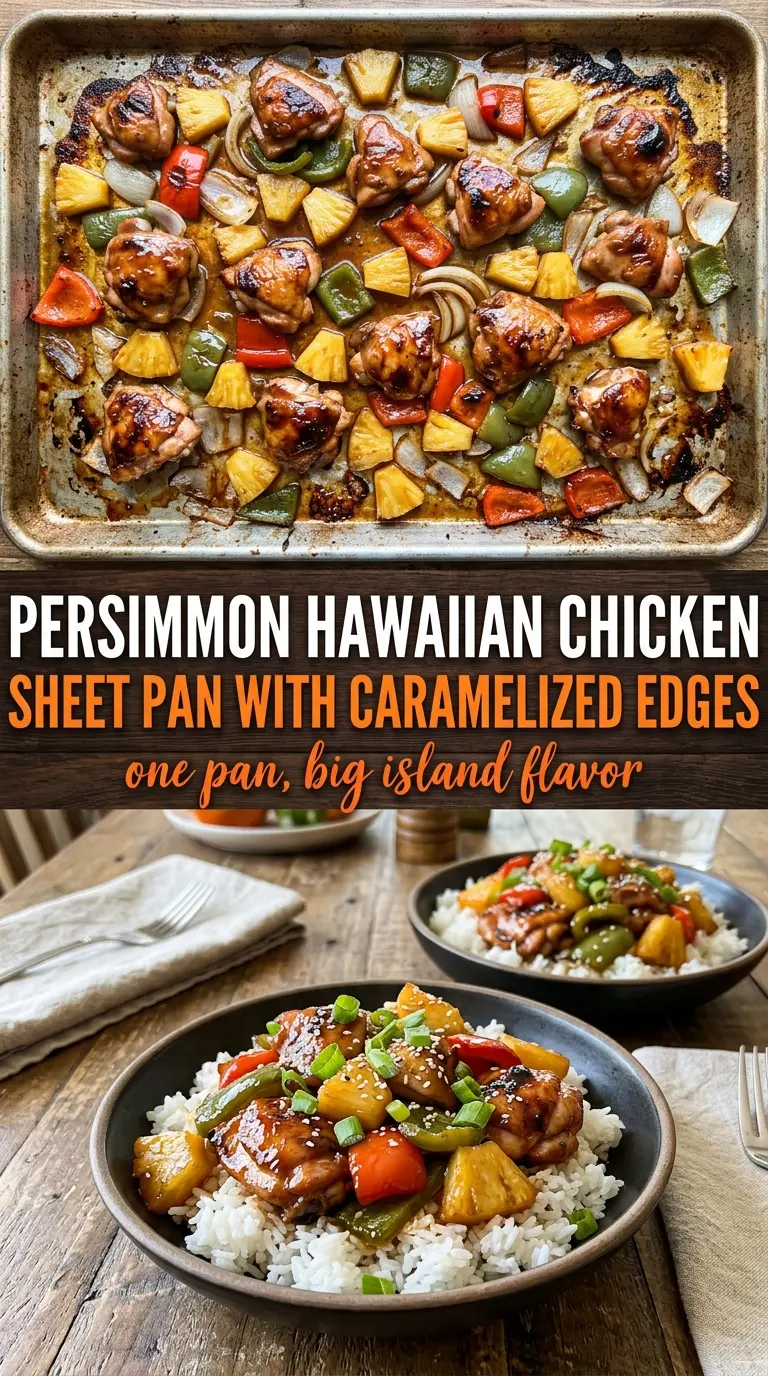
- Boneless chicken thighs — Thighs stay tender under high heat and hold up better than breasts in a sheet pan recipe like this. If you swap in chicken breasts, cut them into large even pieces and pull them early so they don’t dry out.
- Fresh pineapple chunks — Fresh pineapple browns and concentrates as it roasts, which gives you those sticky edges and a brighter flavor. Canned pineapple works in a pinch, but drain it well and expect less caramelization.
- Bell peppers and red onion — These vegetables soften, sweeten, and pick up the sauce without disappearing. Cut them into similar-sized pieces so the onion doesn’t burn before the peppers are tender.
- Teriyaki sauce — This is the backbone of the dish, so use one you like the taste of straight from the bottle. A thicker sauce clings better, but a thinner one still works because it reduces in the oven.
- Olive oil — This helps the edges brown and keeps the vegetables from drying out. You only need enough to lightly coat everything; too much oil can make the pan greasy instead of roasted.
- Garlic powder — It gives the chicken a savory base without adding extra moisture. Fresh garlic can burn at this heat, so powder is the safer choice here.
Building the Pan So the Chicken Finishes at the Same Time as the Vegetables
Start with a dry surface
Pat the chicken thighs dry before they go on the pan. Moisture on the surface is what blocks browning, and this recipe depends on the chicken picking up color in the oven. A quick dry-off with paper towels gives you better caramelization and helps the sauce stick later.
Coat, don’t drown
Toss the pineapple, peppers, and onion with the olive oil and half the teriyaki sauce before roasting. You want a light coating, not a puddle, because too much liquid on the pan steams the vegetables. The food should look glossy and lightly dressed, not wet.
Roast until the edges tighten
At 425°F, the chicken should be cooked through in about 25 to 30 minutes, depending on thickness. Look for browned edges on the pineapple, softened peppers with charred spots, and chicken that feels firm when pressed. If the pan looks pale at the end, move it to a higher oven rack for the last few minutes.
Finish with the second glaze
Brush the remaining teriyaki sauce over the hot pan as soon as it comes out of the oven. That last layer gives the dish its sticky finish without exposing the sugar to long high heat. The sauce should look shiny and cling to the chicken instead of running off the pan.
How to Adapt This for Different Pans, Diets, and Leftovers
Make it gluten-free
Use a gluten-free teriyaki sauce, since the rest of the recipe is naturally free of gluten. Check the label for thickness and sweetness, because some gluten-free versions are thinner and may need an extra minute or two in the oven to cling the same way.
Swap in chicken breasts
Chicken breasts work if that’s what you have, but they dry out faster than thighs. Cut them into larger chunks, spread them out well, and start checking for doneness a few minutes early so they stay juicy.
Use canned pineapple in a pinch
Canned pineapple will still give you the sweet-tart flavor, but drain it very well and pat it dry before it hits the pan. It won’t caramelize as deeply as fresh pineapple, so expect a softer texture and a little less browning.
Storage and Reheating
- Refrigerator: Store leftovers in an airtight container for up to 4 days. The pineapple will soften a little more, but the flavor stays strong.
- Freezer: Freezes well for up to 2 months, though the peppers will lose some of their crisp-tender texture. Freeze in a shallow container so it cools quickly, then thaw overnight in the refrigerator.
- Reheating: Reheat in a 350°F oven until warmed through, or use a skillet over medium heat for the best texture. The common mistake is microwaving it too long, which turns the chicken rubbery and the sauce thin.
Answers to the Questions Worth Asking
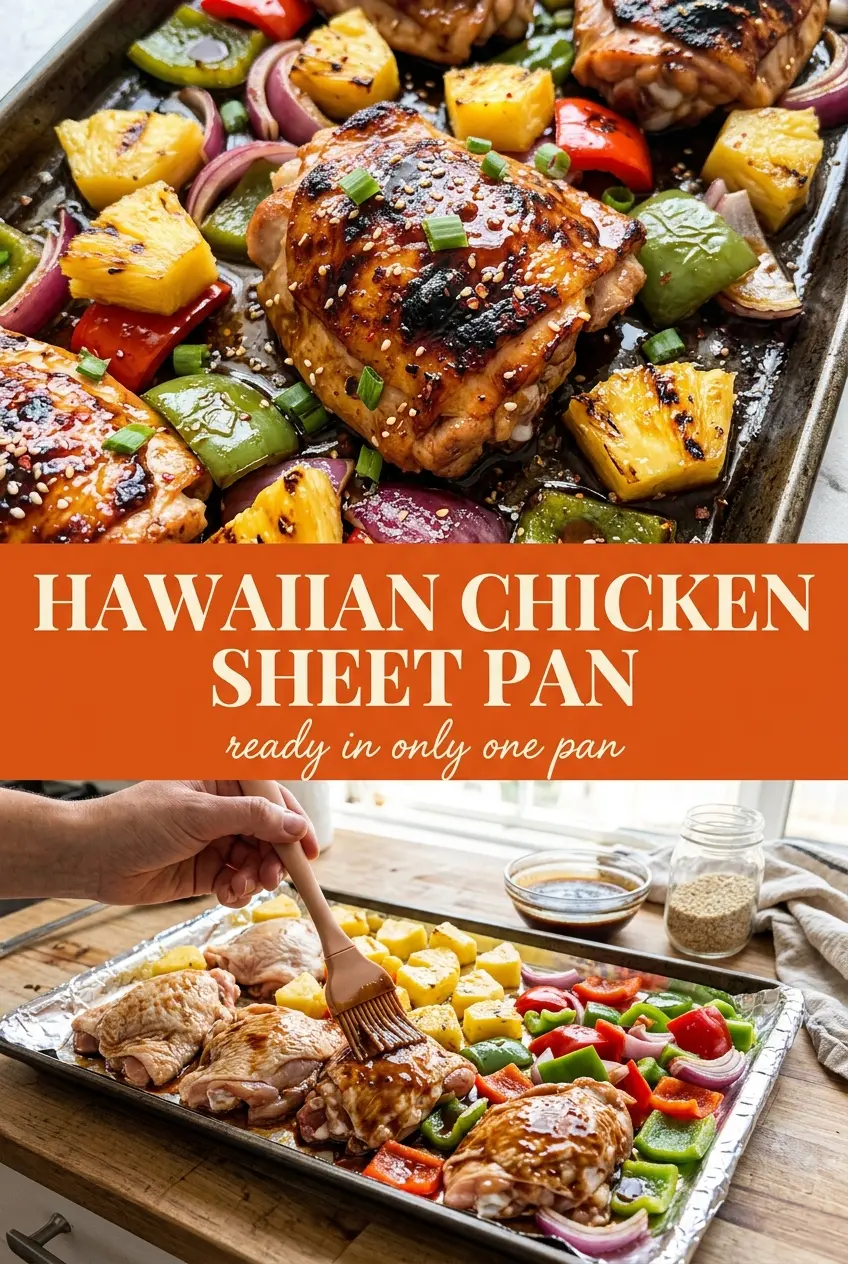
Hawaiian Chicken Sheet Pan
Ingredients
Equipment
Method
- Preheat the oven to 425°F and line a sheet pan with foil for easy cleanup.
- Arrange the chicken thighs, pineapple, bell peppers, and onion on the pan in an even layer so they roast together.
- Drizzle with olive oil and half the teriyaki sauce, then toss the vegetables and pineapple to coat.
- Sprinkle with garlic powder over everything so the flavor cooks into the glaze.
- Roast for 25-30 minutes at 425°F, until the chicken is cooked through and the edges are caramelized.
- Brush with the remaining teriyaki sauce and garnish with sliced green onions before serving for a fresh, shiny finish.