
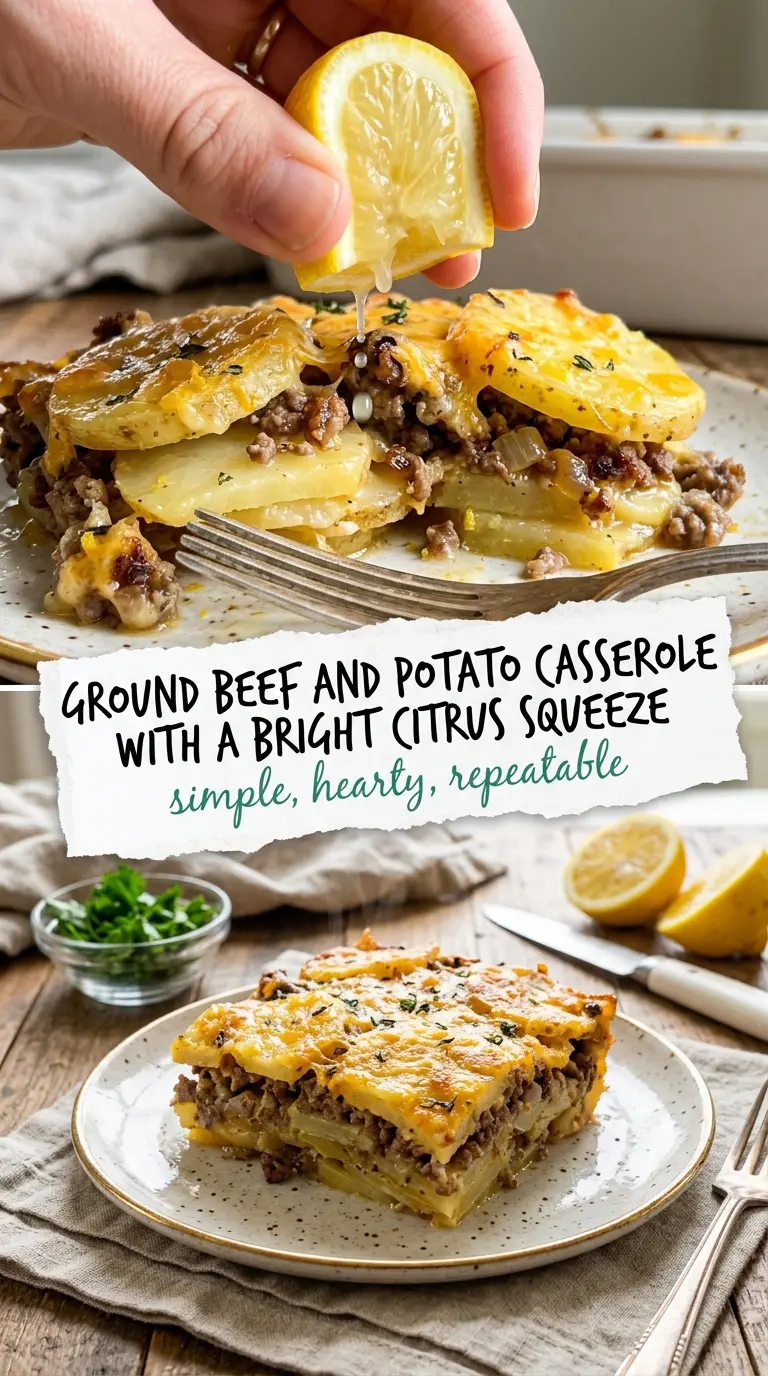
Thin-sliced potatoes, seasoned ground beef, and a blanket of melted cheese turn into the kind of casserole that gets scraped clean before the pan has time to cool. The potatoes soften underneath the beef as they bake, soaking up the broth instead of drying out, and the top finishes with just enough browning to give each bite some contrast. That squeeze of lemon at the end sounds small, but it keeps the whole dish from tasting flat or heavy.
The trick here is thickness and timing. Cut the potatoes evenly and thin enough that they can soften in the same window the beef needs to heat through. The broth goes in before baking so it can work its way down through the layers, which is what keeps the casserole tender instead of patchy. Then the cheese goes on near the end, after the potatoes are already cooked, so it melts into a proper top instead of disappearing into the filling.
The potatoes came out tender all the way through and the cheese browned on top without getting greasy. That squeeze of lemon at the end made the whole casserole taste brighter, and my husband went back for seconds.
Save this ground beef and potato casserole for the nights when you want a hearty baked dinner with almost no moving parts.
The Reason This Casserole Needs Thin Potatoes, Not Just More Time
The biggest mistake in a potato casserole is assuming the oven can fix uneven slicing. It can’t. Thick potatoes may still be firm while the beef is already done, and by the time the potatoes soften, the top has often dried out. Thin, even slices are what make the whole dish cook at the same pace.
This recipe also works because the broth gets poured over the layers before baking. That liquid doesn’t just add flavor; it creates steam under the foil so the potatoes tenderize without scorching the edges. If your casserole ever comes out with hard potato spots, it’s usually because the slices were too thick or the pan was uncovered too early.
What Each Ingredient Is Actually Doing in This Dish
- Ground beef — This gives the casserole its backbone and most of its savory flavor. An 80/20 blend works well because it stays juicy enough to season the potatoes, but drain off excess grease if the pan looks slick. Lean beef works too, though you may want a touch more salt.
- Potatoes — Use a starchy or all-purpose potato and slice it thin and even. Russets break down a little more, which helps the layers feel tender, while Yukon Golds hold their shape a bit better. A mandoline or very sharp knife makes a real difference here.
- Beef broth — This is the ingredient that keeps the casserole from eating dry. Stock can work in a pinch, but broth gives a more rounded flavor since there are so few ingredients. Pour it evenly so every section gets some moisture.
- Shredded cheese — Use a cheese that melts cleanly, like cheddar or a cheddar blend. Pre-shredded is fine, though block-grated cheese melts a little smoother. Add it only near the end so it browns instead of disappearing into the layers.
- Lemon juice — It sounds unusual, but this is what wakes everything up at the end. A small squeeze cuts through the richness and keeps the casserole from tasting heavy. Don’t skip it unless you plan to serve with something sharp on the side.
Building the Layers So the Potatoes Finish at the Same Time
Cooking the Beef First
Brown the ground beef in a skillet until there are no pink spots left and the edges have picked up a little color. That browning matters because it gives the casserole deeper flavor than pale, steamed beef ever will. Season it while it cooks so the meat itself is seasoned, not just the outside of the dish. If the pan is crowded, the beef steams instead of browns, so give it room if you can.
Laying Down the Potatoes
Spread half the potatoes in an even layer in the baking dish, then add the beef, then finish with the remaining potatoes. Keep the slices overlapping lightly but not stacked in clumps, because thick piles trap dry spots and slow down the center. Think of the layers as a stack of shingles, not a mound. If the potatoes are cut unevenly, the thin pieces will collapse before the thick ones soften, and the casserole won’t feel uniform.
Using the Broth and Foil the Right Way
Pour the broth evenly over the top so it can work down through the whole dish. Cover tightly with foil and bake until the potatoes are tender when pierced with a knife. The foil traps steam, which is what finishes the potatoes without burning the top. If you uncover too early, the surface dries out before the layers underneath are ready.
Finishing with Cheese and Lemon
Once the potatoes are tender, remove the foil, add the cheese, and bake until it melts and starts to color at the edges. You’re looking for a top that looks glossy and settled, not oily. Let the casserole rest for a few minutes, then finish with lemon juice right before serving so the brightness stays fresh instead of fading in the oven.
How to Adapt This for Different Kitchens and Different Eaters
Make It Gluten-Free Without Changing the Texture
This casserole is naturally gluten-free as long as your broth is certified gluten-free. The texture doesn’t change at all, which is one of the nicest things about a simple potato bake like this. If you’re using a packaged seasoning blend instead of plain garlic powder, check the label for hidden flour or wheat starch.
Swap in Ground Turkey or Chicken
Ground turkey or chicken works if you want a lighter casserole, but the flavor will be milder. Add a little extra salt and consider a second pinch of garlic powder so the layers don’t taste flat. You may also need to drain less fat, since lean poultry won’t leave the pan as rich as beef does.
Use a Different Cheese for a Sharper Finish
Cheddar gives the most familiar result, but Monterey Jack melts a little softer and mozzarella gives you a milder top. A sharper cheese makes the whole casserole taste more savory, while a mild one lets the beef and potatoes stay in front. Avoid very hard cheeses alone, since they won’t melt into the same smooth blanket.
Storage and Reheating
- Refrigerator: Store leftovers covered for up to 4 days. The potatoes will firm up a bit as they chill, but the flavor holds up well.
- Freezer: It freezes reasonably well, though the potatoes can soften slightly after thawing. Wrap portions tightly and freeze for up to 2 months for the best texture.
- Reheating: Reheat covered in a 325°F oven until hot in the center, or warm smaller portions in the microwave with a splash of broth. The main mistake is blasting it on high heat, which dries the beef and turns the potatoes mealy before the middle is hot.
Questions I Get Asked About This Recipe
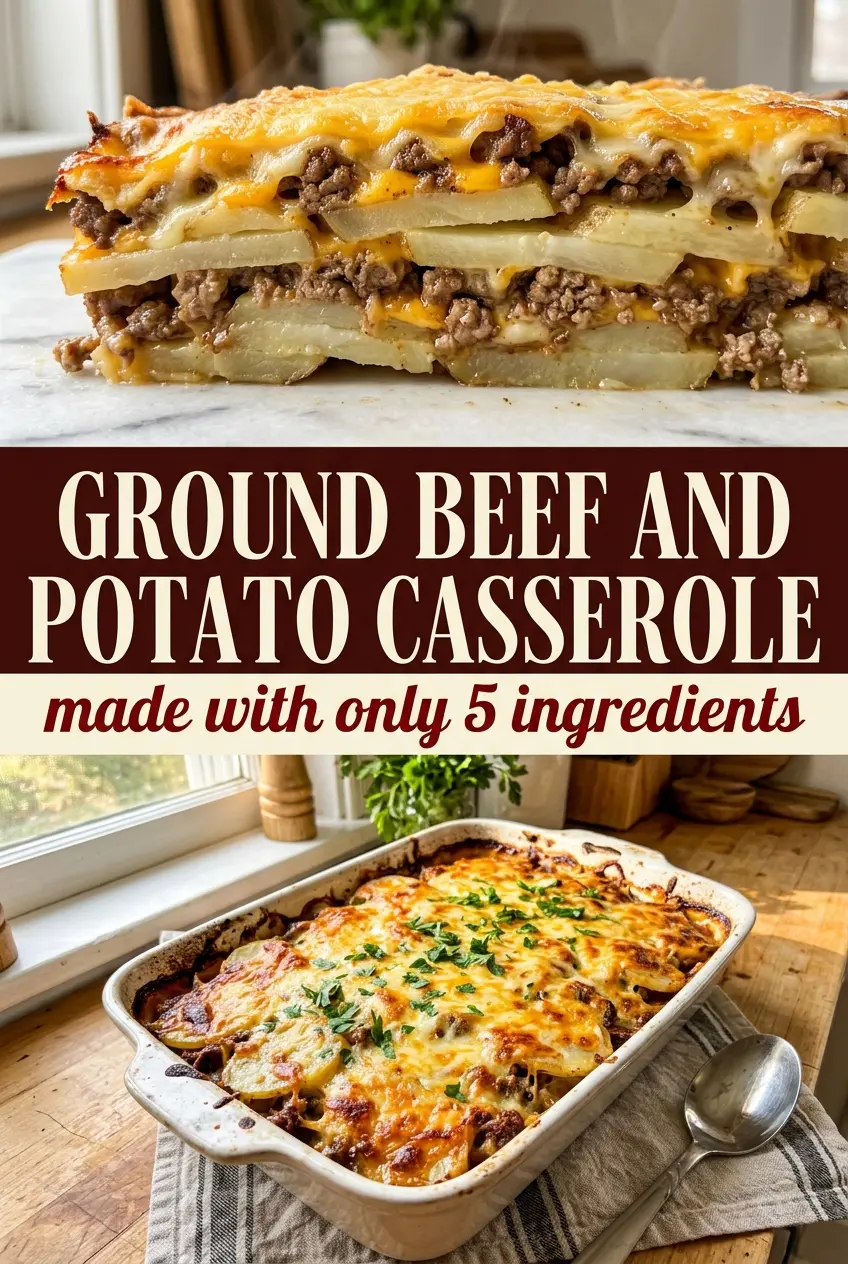
Ground Beef And Potato Casserole
Ingredients
Equipment
Method
- Preheat oven to 375°F, so it reaches temperature before the casserole goes in. Set a baking dish on a sheet pan for easy handling.
- Brown the ground beef in a skillet, seasoning with garlic powder, salt, and pepper as it cooks. Cook until no pink remains and the beef looks crumbly.
- Layer half the sliced potatoes in the baking dish, covering the bottom in an even thickness. Overlap slightly so there are no big gaps.
- Spoon the seasoned beef over the potatoes, then spread it into an even layer. Keep an edge-to-edge coverage so each bite has beef and potato.
- Add the remaining sliced potatoes on top, forming a second even layer. Press lightly so the layers sit snugly.
- Pour the beef broth evenly over the top so it seeps between potato slices. Stop when the liquid is distributed across the surface.
- Cover with foil and bake for 45 minutes at 375°F, until the potatoes are noticeably tender. Look for bubbling at the edges under the foil.
- Uncover the casserole, sprinkle the shredded cheese over the top, and bake for 15 more minutes at 375°F. Bake until the cheese is melted and the top is lightly browned.
- Finish by squeezing fresh lemon juice over the casserole before serving. Add it right before eating so the citrus stays bright.