
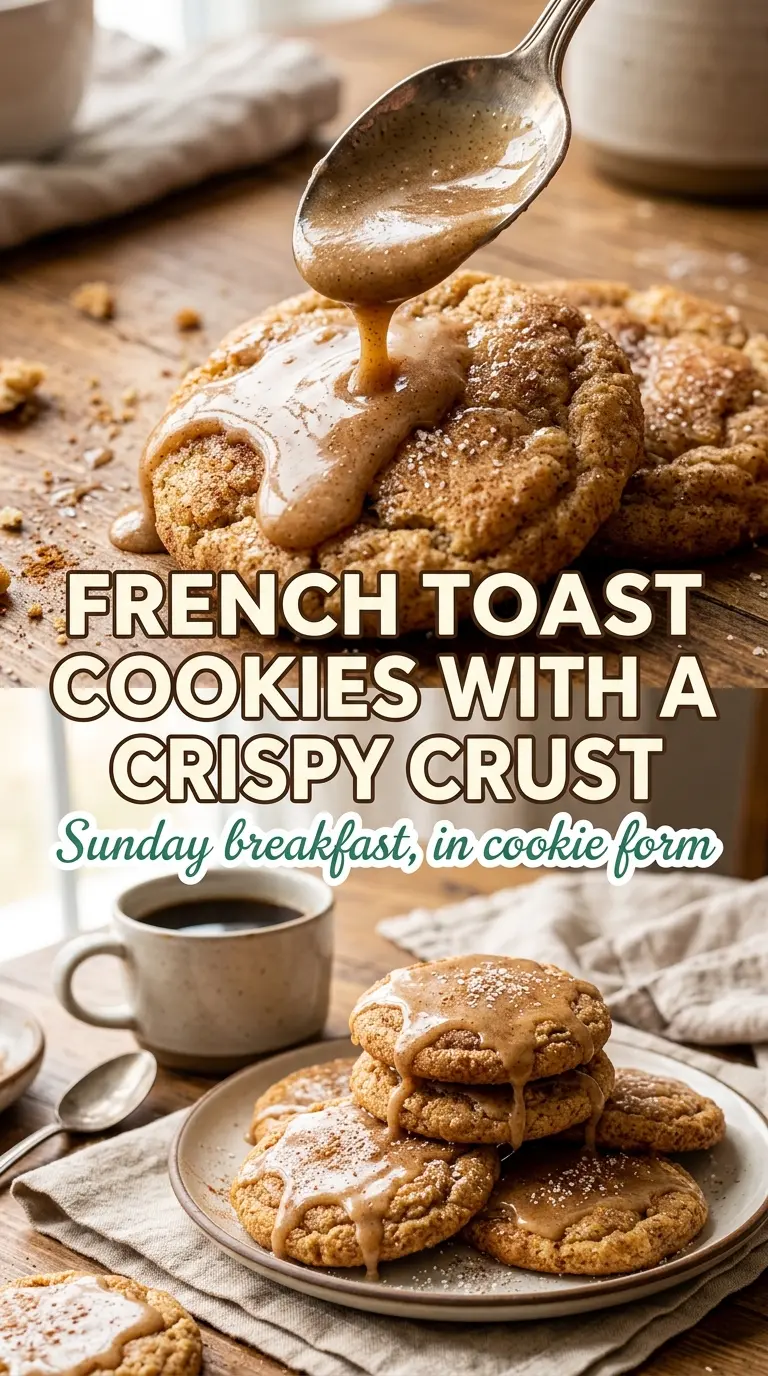
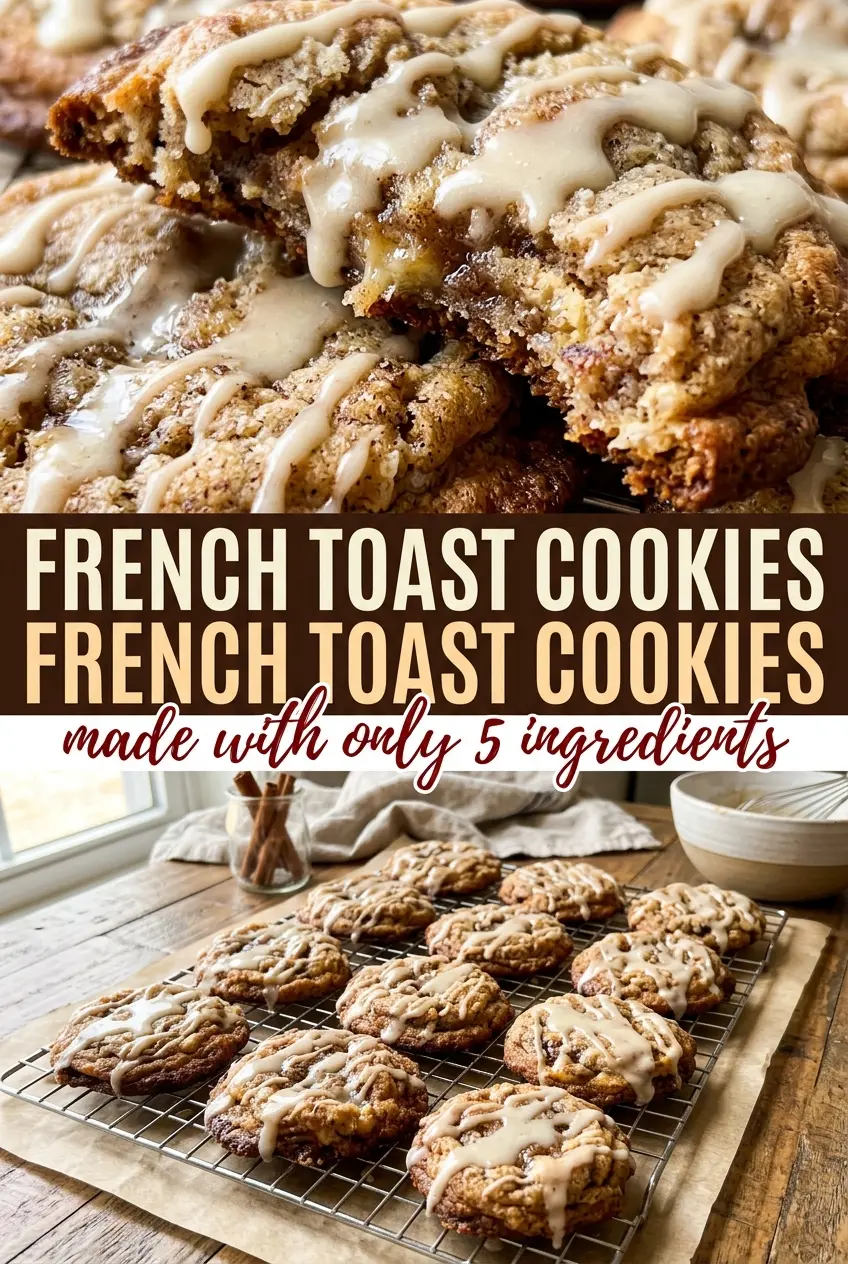
Chewy French toast cookies hit that sweet spot between a soft bakery-style cookie and the warm, cinnamon-sugar comfort of a stack of breakfast toast. The centers stay tender and bendy, the edges turn lightly crisp, and the maple drizzle sets into a thin sweet finish that tastes like the last, best bite of brunch. They disappear fast because they don’t read like a gimmick — they taste familiar, cozy, and just a little different from the usual cookie tray.
What makes this version work is the balance of brown sugar, butter, and cinnamon. Brown sugar keeps the crumb moist and chewy, while the butter gives the cookies their soft richness and that crisp edge around the outside. The maple glaze goes on after the cookies cool, which matters more than it sounds like it does; if the cookies are warm, the drizzle melts straight in and you lose that clean finish.
You’ll find the exact baking window below, plus the one cooling tip that keeps the glaze from disappearing into the cookie tops. If you want a cookie that tastes like French toast without turning into a heavy, cakey mess, this is the version worth keeping.
The maple glaze set up beautifully after the cookies cooled, and the centers stayed soft for two days. My kids said they tasted like cinnamon toast in cookie form.
These chewy French toast cookies with maple glaze are the kind you’ll want to bake when you need warm cinnamon flavor without making a whole breakfast spread.
The Difference Between Chewy Centers and Dry, Puffy Cookies
The biggest mistake with a cookie like this is treating it like a cake batter. If you overmix after the flour goes in, the cookies pick up too much air and bake up puffy instead of chewy. You want the dough just combined, with no dry streaks, then straight onto the baking sheet.
Baking time matters more than color alone here. Pull them when the edges are golden and the centers still look slightly soft; they’ll finish setting on the pan as they cool. If you wait until the tops look fully dry in the oven, they’ll cross over into a drier, firmer texture than this recipe is meant to give you.
What Each Ingredient Is Actually Doing in These Cookies
- Butter — This gives the cookies their rich, soft center and helps the edges brown. Use softened butter, not melted, or the dough spreads too quickly and loses that thick, chewy middle.
- Brown sugar — This is the ingredient that makes the texture stay moist and gives the cookies that warm caramel note. White sugar won’t give you the same chew or the same flavor depth.
- Egg — The egg holds the dough together and gives just enough structure so the cookies bake up tender instead of crumbling. One egg is enough here; adding more would push the texture toward cakey.
- Cinnamon — This is what makes the cookie taste like French toast instead of a basic sugar cookie with glaze. Fresh cinnamon matters more than most pantry spices, since old cinnamon tastes flat fast.
- Maple syrup — The glaze depends on real maple flavor, even in a small amount. Pancake syrup will make the topping sweeter and thinner, but it won’t give the same clean, woodsy finish.
- Powdered sugar — This creates the drizzle that sets on top instead of soaking in. If it looks too thick, add the maple syrup a few drops at a time rather than thinning it all at once.
Mixing, Scooping, and Glazing Without Ruining the Texture
Cream the Butter and Brown Sugar Until It Looks Fluffy
Beat the butter and brown sugar until the mixture lightens in color and looks a little airy around the edges. That step traps enough air to keep the cookies soft without making them cakey. If the butter is too cold, the mixture stays grainy; if it’s melted, the dough spreads and the cookies bake thin.
Add the Egg and Vanilla Before the Dry Ingredients
Mix in the egg and vanilla until the dough looks smooth and glossy. This is the point where you want the batter to come together cleanly, because once the flour goes in, overmixing starts working against the chew. Scrape the bowl so no streaks of butter hide at the bottom.
Fold in the Flour Just Until the Dough Clumps
Add the flour, cinnamon, and baking soda and stir only until you stop seeing dry pockets. The dough should look soft and slightly sticky, not whipped. If you keep mixing after it comes together, the cookies can bake up tougher than you want.
Bake Until the Edges Set and the Centers Still Look Soft
Scoop the dough onto the baking sheet and leave enough room for spreading. Bake just until the edges turn golden and the centers look pale and a little underdone. That carryover heat is what finishes the middle without drying it out, and it’s the difference between chewy cookies and dry ones.
Glaze Only After the Cookies Cool
Whisk the powdered sugar with maple syrup into a thick drizzle, then wait until the cookies are completely cool before you add it. Warm cookies melt the glaze into the surface, which makes the tops look dull and sticky instead of polished. Once cooled, the drizzle sits on top with a slight set and gives you that classic French toast finish.
How to Adapt These Cookies Without Losing the Best Part
Dairy-Free Cookies That Still Stay Chewy
Swap the butter for a plant-based butter stick, not a tub spread. Tub versions hold more water and can make the dough thin and greasy. The cookies will still bake up soft, and the maple glaze keeps the same cozy finish.
A Slightly Stronger Maple Flavor
Add an extra teaspoon of maple syrup to the glaze and keep the sugar on the thick side so it still drizzles cleanly. This gives you a more pronounced maple finish without making the topping runny.
A Gluten-Free Version
Use a 1:1 gluten-free baking flour that includes xanthan gum. The cookies will be a touch more delicate, but the chew still comes through if you don’t overbake them. Let them cool on the pan for a few minutes before moving them so they don’t break.
Storage and Reheating
- Refrigerator: Store in an airtight container for up to 4 days. The glaze stays set, but the edges soften a little after day one.
- Freezer: Freeze the unglazed cookies for up to 2 months. Add the maple drizzle after thawing so it stays fresh and doesn’t crack.
- Reheating: Warm a cookie for 8 to 10 seconds in the microwave if you want the center soft again. Don’t overheat it or the glaze can melt and the texture turns dry fast.
Answers to the Questions Worth Asking
Chewy French Toast Cookies
Ingredients
Equipment
Method
- Preheat oven to 350°F and set a sheet pan inside or nearby so it heats up for faster baking after scooping.
- Cream butter and brown sugar together until fluffy, using a smooth, pale mixture as your visual cue.
- Beat in egg and vanilla until fully incorporated and the batter looks glossy and cohesive.
- Fold in flour, cinnamon, and baking soda until just combined, stopping when no dry streaks remain for a tender chew.
- Scoop dough onto the sheet pan and bake for 9-11 minutes until edges are golden and centers still look slightly soft.
- Whisk powdered sugar with maple syrup until smooth, thick enough to drizzle.
- Cool cookies completely, then drizzle glaze over the top so the drizzle sets instead of soaking in.