
The beef needs a few minutes in the skillet before it’s ready for sauce. At first, it releases moisture and looks pale; give it time to brown, and those small pieces pick up a deeper, savory flavor. That’s what makes these Korean rice bowls taste satisfying instead of like ground beef simply warmed in a sweet sauce.
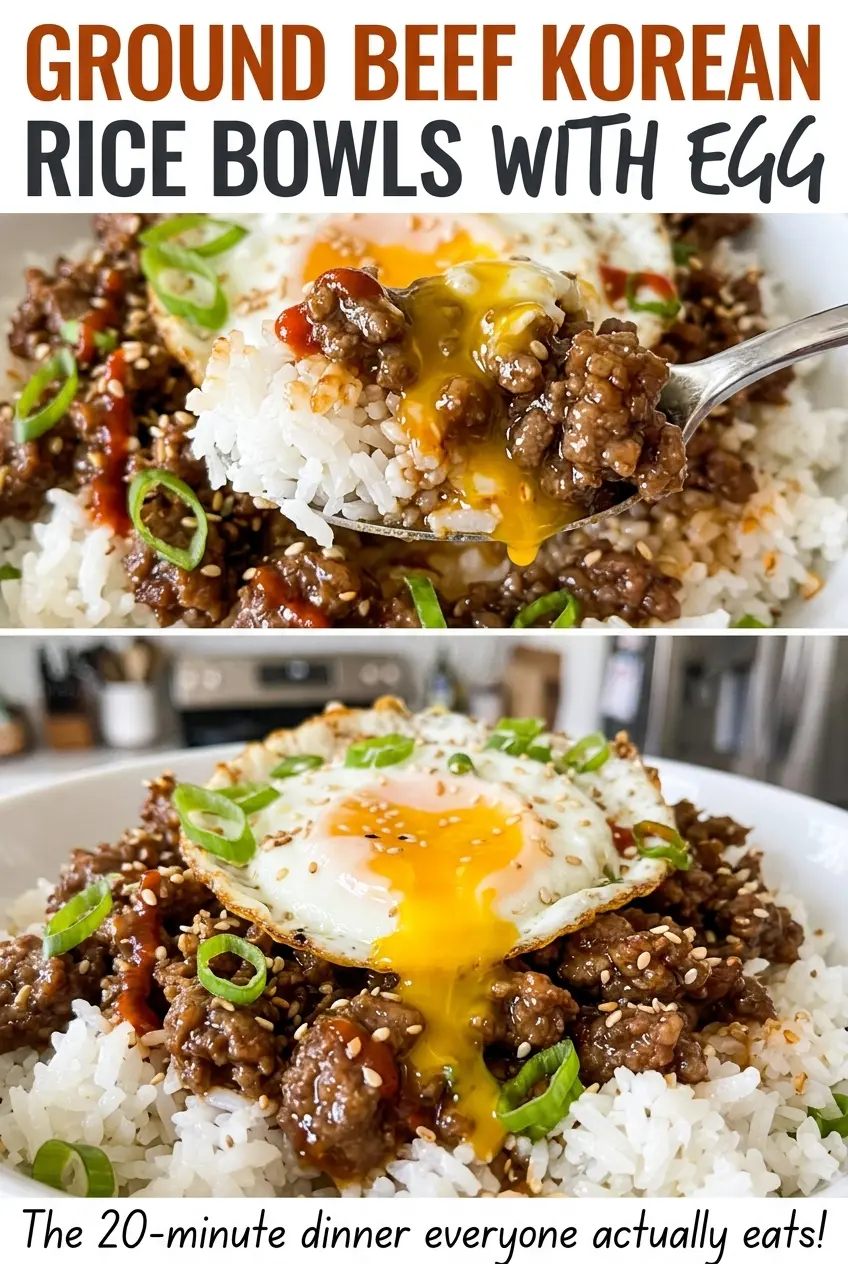
The sauce brings salty soy, brown sugar, gochujang, and rice vinegar into balance, with garlic, ginger, and toasted sesame oil filling in the edges. I like that it coats the beef without burying it. Piled onto fluffy long-grain rice and topped with a fully set egg, scallions, and sesame seeds, each bowl has a little heat and plenty of savory-sweet flavor.
Kitchen Note
Let the rice stand covered off the heat for the full 10 minutes. That quiet rest lets the steam finish its work, so the grains are tender without turning wet or clumpy when you portion the bowls.
Save these Korean beef rice bowls with egg for a weeknight meal with savory-sweet beef, fluffy rice, and a little gochujang warmth.
Why This Beef Needs a Balanced Sauce, Not a Sweet Soy Glaze
Ground beef has a rich, savory taste, so a sauce built only around soy and sugar can quickly come across as salty-sweet and one-note. Here, gochujang brings fermented chile depth, while rice vinegar adds a clean, tangy edge that keeps the sweetness in check. The sesame oil gives the sauce a toasted aroma, and the garlic and ginger make the overall flavor feel brighter.
That balance matters because the sauce gets added after the beef is browned, not used to cook the meat from the start. The browned beef brings its own hearty flavor, and the brief time in the sauce is enough to coat it without turning the mixture soupy. Keep the proportions of salty, sweet, spicy, and tangy in mind when you taste a bite: the goal is a rounded sauce that lets the beef still taste like beef, not a sticky glaze that takes over the bowl.
How Gochujang, Low-Sodium Soy, and Sesame Shape the Bowl
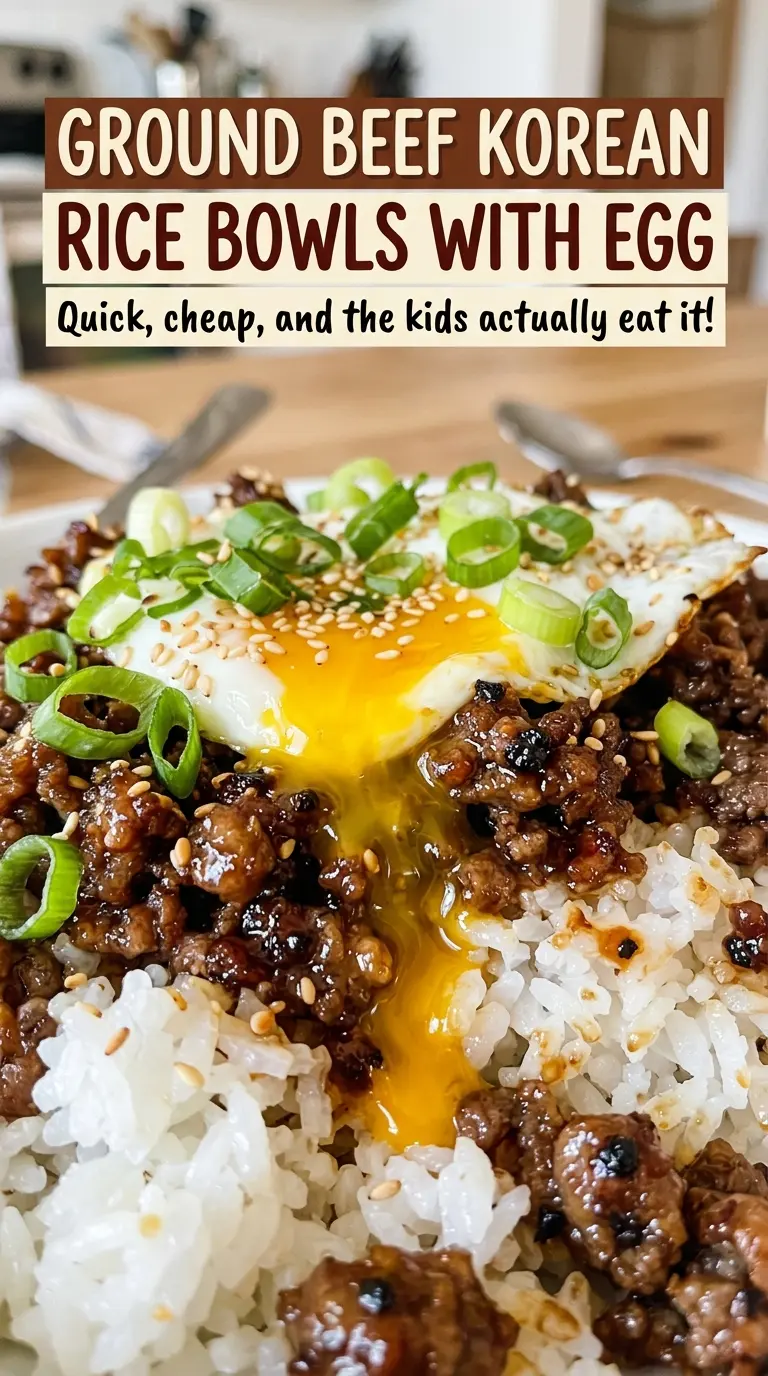
- Long-grain white rice — Its separate, fluffy grains give the saucy beef somewhere to land without making the bowl heavy. Rinsing off loose surface starch helps keep the cooked rice from clumping; the fine-mesh strainer is useful because the grains are small.
- Low-sodium soy sauce — It supplies the sauce’s salty, savory base while leaving room for the brown sugar and gochujang. Regular soy sauce will taste saltier in the finished beef; for a gluten-free version, use gluten-free tamari instead and choose a gluten-free gochujang.
- Gochujang — This fermented chile paste brings both heat and savory depth, rather than just sharp chile burn. Its heat and saltiness vary by brand, so taste the finished beef with rice before deciding whether you want a hotter version next time.
- Toasted sesame oil — The toasted aroma is a defining part of the sauce, so plain sesame oil won’t give the same result. Keep the bottle sealed and away from heat and light to preserve that nutty scent.
- Ground beef — The 85% lean beef has enough fat for a tender, flavorful filling while still browning well in the skillet. Breaking it into small pieces gives the sauce more surfaces to cling to.
- Fresh garlic and ginger — Minced garlic and freshly grated ginger bring a sharper, livelier aroma than dried versions. Grate the ginger finely so it blends into the sauce rather than leaving chewy bits.
- Eggs, scallions, and sesame seeds — The set egg makes each bowl more substantial, while the sliced scallions and sesame seeds add a fresh finish. Slice the scallions shortly before serving so their edges stay crisp.
Cooking the Rice, Beef, and Eggs Without Losing Their Texture
Rinse and steam the long-grain rice
Rinse the rice in a fine-mesh strainer under cold water until the water runs mostly clear, then combine it with the water in a 2-quart saucepan. Bring it to a boil over medium-high heat, cover, and lower the heat to low. Simmer for 15–18 minutes, until the water is absorbed; if water remains, give it a little more time on low rather than stirring the rice. Take the pan off the heat and leave it covered for 10 minutes.
Whisk the sauce before the skillet heats up
Whisk the low-sodium soy sauce, brown sugar, gochujang, toasted sesame oil, rice vinegar, garlic, and ginger together in a small bowl. Break up any dense clumps of brown sugar or gochujang so the sauce is even. Having it ready beside the stove makes it easier to add as soon as the beef is browned. The mixture should look smooth, though flecks of garlic and ginger will remain visible.
Brown the beef before coating it
Cook the ground beef in a 12-inch skillet over medium-high heat for 7–9 minutes, breaking it into small pieces as it cooks. Look for browned bits throughout rather than large, soft clumps. The beef needs to reach 160°F before the sauce goes in. If it still looks pink or hasn’t reached that temperature, continue cooking before moving on.
Let the sauce coat, not pool
Stir the prepared sauce into the browned beef and cook for 1–2 minutes, stirring until the meat is evenly coated. Keep the mixture moving so the sauce reaches the small crumbles instead of collecting at the bottom. The beef should look glossy and well covered, not submerged in a puddle. Take the skillet off the heat once the coating is even.
Cook the eggs gently and assemble
Heat the neutral oil in a 10-inch nonstick skillet over medium-low heat. Crack in the eggs, cover the skillet, and cook for 4–6 minutes, until both the whites and yolks are fully set. Divide the rice and beef among four bowls, then top each with an egg. Finish with the sliced scallions and sesame seeds.
Small Changes That Shift the Heat and Dietary Fit
Make the sauce gluten-free
Replace the soy sauce with gluten-free tamari and use gluten-free gochujang. The bowl keeps its salty-savory and chile notes, though tamari can taste a little rounder than soy sauce; check the other packaged ingredients for gluten as well.
Dial the chile down
Use less gochujang in the sauce for a gentler, less spicy bowl. You’ll still have the fermented savoriness, but the heat will be softer and the soy, sugar, and vinegar will come forward more.
Turn up the gochujang
Stir a little extra gochujang into the sauce for a hotter, more chile-forward beef topping. The sauce will taste bolder and less sweet by comparison, so keep the rice and egg in each serving to balance the heat.
Storage and Reheating
- Refrigerator: Refrigerate the rice, beef, and eggs in separate airtight containers within 2 hours, and use them within 3 to 4 days. The rice will firm up, and the eggs won’t have the same freshly cooked texture.
- Freezer: Freeze the rice and beef in separate airtight containers for up to 3 months. Cooked eggs don’t freeze well; their texture turns rubbery after thawing.
- Reheating: Reheat the rice and beef separately in the microwave until they reach 165°F; a small splash of water helps the rice loosen. Warm the egg gently, since prolonged heating can make it tough.
Questions That Come Up While Cooking These Korean Beef Bowls
Ground Beef Korean Rice Bowls with Egg
Ingredients
Equipment
Method
- Rinse the rice in a fine-mesh strainer under cold water until the water runs mostly clear.
- Combine the rice with the water in a 2-quart saucepan.
- Bring to a boil over medium-high heat, cover, and reduce the heat to low; simmer for 15–18 minutes, until the water is absorbed.
- Remove from the heat and let stand, covered, for 10 minutes.
- Whisk the soy sauce, brown sugar, gochujang, sesame oil, rice vinegar, garlic, and ginger in a small bowl.
- Cook the ground beef in a 12-inch skillet over medium-high heat for 7–9 minutes, breaking it into small pieces, until browned and it reaches 160°F.
- Stir in the sauce and cook for 1–2 minutes, stirring, until the beef is evenly coated.
- Heat the neutral oil in a 10-inch nonstick skillet over medium-low heat, crack in the eggs, cover, and cook for 4–6 minutes, until the whites and yolks are fully set.
- Divide the rice and beef among four bowls, top each with an egg, and sprinkle with the scallions and sesame seeds.