
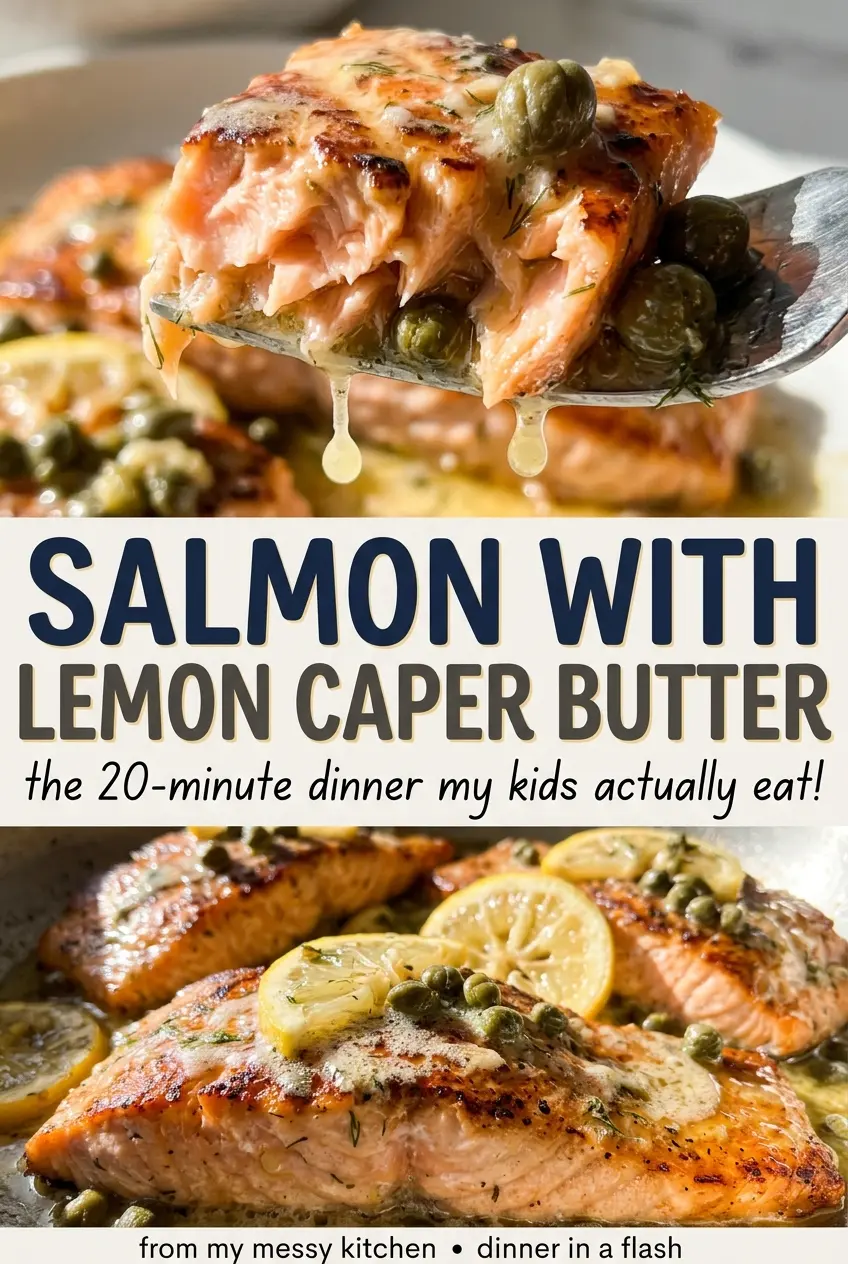
When the salmon comes out of the oven, the edges should look opaque while the thick center stays moist and tender. That short window is what makes this salmon with lemon caper butter feel special without asking much of you: the fish bakes on one pan, and the sauce comes together on the stove while it cooks.
I like this approach because the fish gets to be the main event. Center-cut fillets give you an even thickness, and a little olive oil keeps the surface from drying out as it bakes. The butter sauce brings lemony brightness and a salty pop from the capers, so each spoonful lands rich but not heavy. Serve it while the butter is warm and glossy, with plenty over each fillet.
Kitchen Note
Take the saucepan off the heat before stirring in the parsley. It keeps the fresh herb from getting dull and gives the warm butter sauce a clean, green finish.
Save this salmon with lemon caper butter for a dinner that pairs tender baked fish with a bright, buttery sauce.
Why Center-Cut Salmon Bakes More Evenly
Salmon isn’t the same thickness from end to end. A thin tail can dry out while the thickest part is still catching up, which is why center-cut fillets are such a useful choice here. Their more even shape helps the outer edges and center finish closer together, so you get moist flakes throughout instead of a dry end and an underdone middle.
Keeping the skin on also gives the fillets a natural layer between the fish and the baking sheet. Set each piece skin-side down and let the oven do its work without turning the fish over. The skin may not crisp the way it would in a skillet, but it stays beneath the salmon and helps the delicate flesh hold together when you serve it. If your fillets vary noticeably in thickness, use the thickest part as your guide rather than judging every piece by its thinner edge.
What Makes the Lemon Caper Butter Taste Balanced
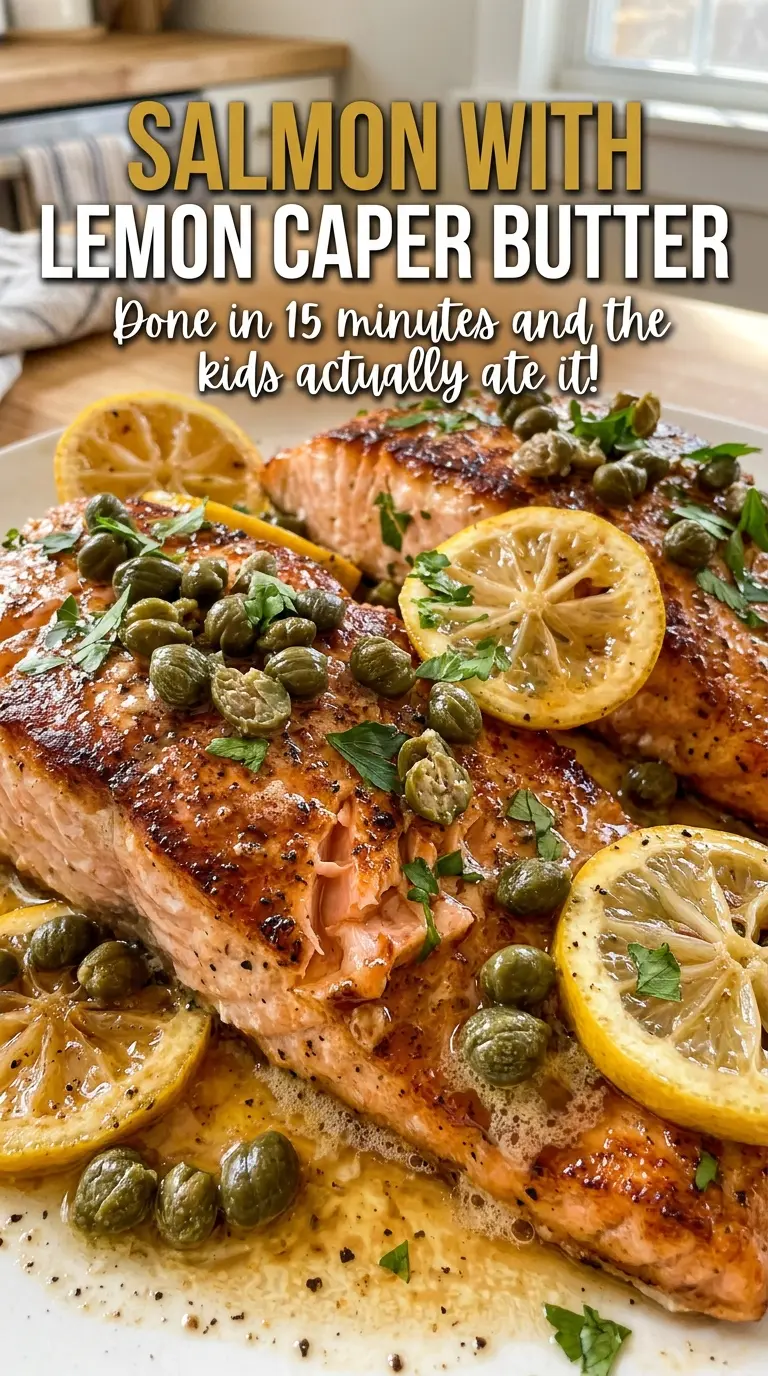
- Center-cut salmon — Choose fillets that are similar in thickness so they cook at a similar pace. Freshness matters more than a particular label; the skin-on pieces are what this method is built around.
- Unsalted butter — Unsalted butter lets the capers and the salmon seasoning provide the salt without making the sauce hard to control. There isn’t a direct dairy-free replacement with the same rich, silky finish; the olive-oil variation below makes a lighter sauce instead.
- Capers — Their briny, sharp taste cuts through the butter. Drain them well so excess brine doesn’t thin the sauce. If you leave them out, the sauce will be milder and lose that salty pop rather than tasting like a full caper-butter sauce.
- Lemon zest and juice — Zest gives the butter a fragrant citrus aroma, while juice adds tartness. Grate the zest before juicing the lemon, when the peel is easier to hold. Bottled juice can bring acidity, but it can’t replace the aroma of fresh zest.
- Fresh parsley — Chopped parsley brings a fresh finish to the warm sauce. Chop it shortly before using so it doesn’t sit in a damp pile; if you don’t have it, you can leave it out without changing how the butter sauce comes together.
- Olive oil — A light coating helps the salmon bake without looking dry. Use a neutral-tasting olive oil; an expensive finishing oil won’t make a noticeable difference under the sauce.
The Short Oven-and-Stovetop Rhythm
Set Up the Pan and Oven
Heat the oven to 400°F and line a rimmed baking sheet with parchment paper. The rim catches any juices, and parchment makes it easier to lift the fish off the pan. Arrange the salmon skin-side down with room around the fillets. Starting with the oven fully heated keeps the cooking window predictable.
Season the Fillets
Brush the tops with olive oil, then season with kosher salt and black pepper. A thin, even coating is all you need; pools of oil won’t help the salmon cook better. Keep the skin against the parchment and the seasoned flesh facing up. Don’t add the butter sauce before baking, since it belongs on the fish at serving.
Bake Until the Center Is Cooked
Bake for 10 to 15 minutes, until the thickest part reaches 145°F. The exact point in that range depends on the fillets, so check the thickest center rather than relying on color at the edge. The flesh should look opaque and separate into moist flakes when gently tested. If a thinner piece is ready sooner, take care not to leave it in the oven while waiting on a thicker one.
Warm the Butter Sauce and Serve
While the salmon bakes, melt the butter in a small saucepan over medium-low heat. Stir in the drained capers, lemon zest, and lemon juice, then warm the sauce for 1 to 2 minutes while stirring. It should be hot and fragrant, not bubbling hard. Take it off the heat, stir in the parsley, and spoon the sauce over the salmon as you serve.
Three Simple Ways to Adapt the Lemon Caper Butter
A Milder, Less Briny Sauce
Leave out the capers if you prefer a gentler lemon-butter finish. You’ll keep the buttery citrus flavor, but lose the salty, briny notes that make the original sauce stand up to the salmon.
A Dairy-Free Lemon Caper Oil
For a dairy-free version, use olive oil in place of the butter and warm it with the capers, lemon zest, and lemon juice. Stir in the parsley after taking the saucepan off the heat. The result is lighter and less velvety than butter, but still bright and savory.
Leave Out the Parsley
Skip the parsley for a simpler lemon-and-caper finish. The sauce will be a little less fresh-tasting, but the lemon and capers still give the butter plenty of character.
Storage and Reheating
- Refrigerator: Refrigerate leftover salmon and sauce in airtight containers within 2 hours. They keep for 3 to 4 days; the salmon will be less tender after chilling.
- Freezer: Freeze the salmon in an airtight freezer-safe container for up to 2 to 3 months for best quality. Freeze the sauce separately; butter sauce may look less smooth after thawing.
- Reheating: Cover the salmon and warm it gently in a 275°F oven until it reaches 165°F in the center. Reheat the sauce separately over low heat, stirring; high heat can make the butter greasy.
Questions That Come Up With Baked Salmon
Salmon with Lemon Caper Butter
Ingredients
Equipment
Method
- Heat the oven to 400°F.
- Line a rimmed baking sheet with parchment paper.
- Place the salmon skin-side down on the baking sheet.
- Brush the salmon with olive oil.
- Season with the kosher salt and black pepper.
- Bake for 10 to 15 minutes, until the thickest part reaches 145°F.
- While the salmon bakes, melt the butter in a small saucepan over medium-low heat, then stir in the capers, lemon zest, and lemon juice.
- Warm the sauce for 1 to 2 minutes, stirring.
- Remove the sauce from the heat and stir in the parsley.
- Serve the salmon with the lemon caper butter spooned over the top.