
Herb butter roasted turkey earns its place at the center of the table because it gives you two things at once: crisp, burnished skin and meat that stays juicy all the way to the carve. The butter melts under the skin as it roasts, carrying sage, thyme, rosemary, and garlic into the meat instead of just sitting on the surface. That’s the difference between a bird that tastes seasoned and one that tastes memorable.
The trick is in the way the butter is used. Softened butter spreads cleanly under the skin, where it bastes the breast from the inside as it cooks. The lemon and onion inside the cavity add a clean, aromatic steam that keeps the bird from tasting heavy, and the oven temperature stays moderate so the skin can brown without drying out the breast before the thigh is finished.
Below, you’ll find the exact method I rely on for a first-time Thanksgiving turkey, plus the one resting step that keeps the juices where they belong instead of all over the cutting board.
The skin turned out deep golden and the breast stayed juicy even after the rest. I was nervous about getting the herb butter under the skin, but it spread easily and the turkey carved beautifully.
For a golden herb butter turkey with juicy slices and crackly skin, save this one for your Thanksgiving menu.
The Butter Under the Skin Is What Keeps This Turkey Juicy
A lot of turkey recipes spend all their energy on the skin, but the part that matters most is the meat underneath it. Once turkey breast dries out, there’s no fixing it at the table. Sliding herb butter under the skin gives you direct contact with the meat, which is why this bird stays tender even after a long roast.
The skin must be loosened gently, not torn. If you rip it, the butter pools in the pan instead of staying where it can do its work. Soft butter is important here too; melted butter runs off before it can coat the bird evenly, while cold butter tears the skin and refuses to spread. This is one of those recipes where temperature matters more than effort.
The other failure point is roasting too hot. A 325°F oven gives the fat time to render and the skin time to brown without scorching the herbs. If the top is getting dark before the thigh reaches temperature, tent it loosely with foil and keep going.
What Each Ingredient Is Actually Doing in This Dish
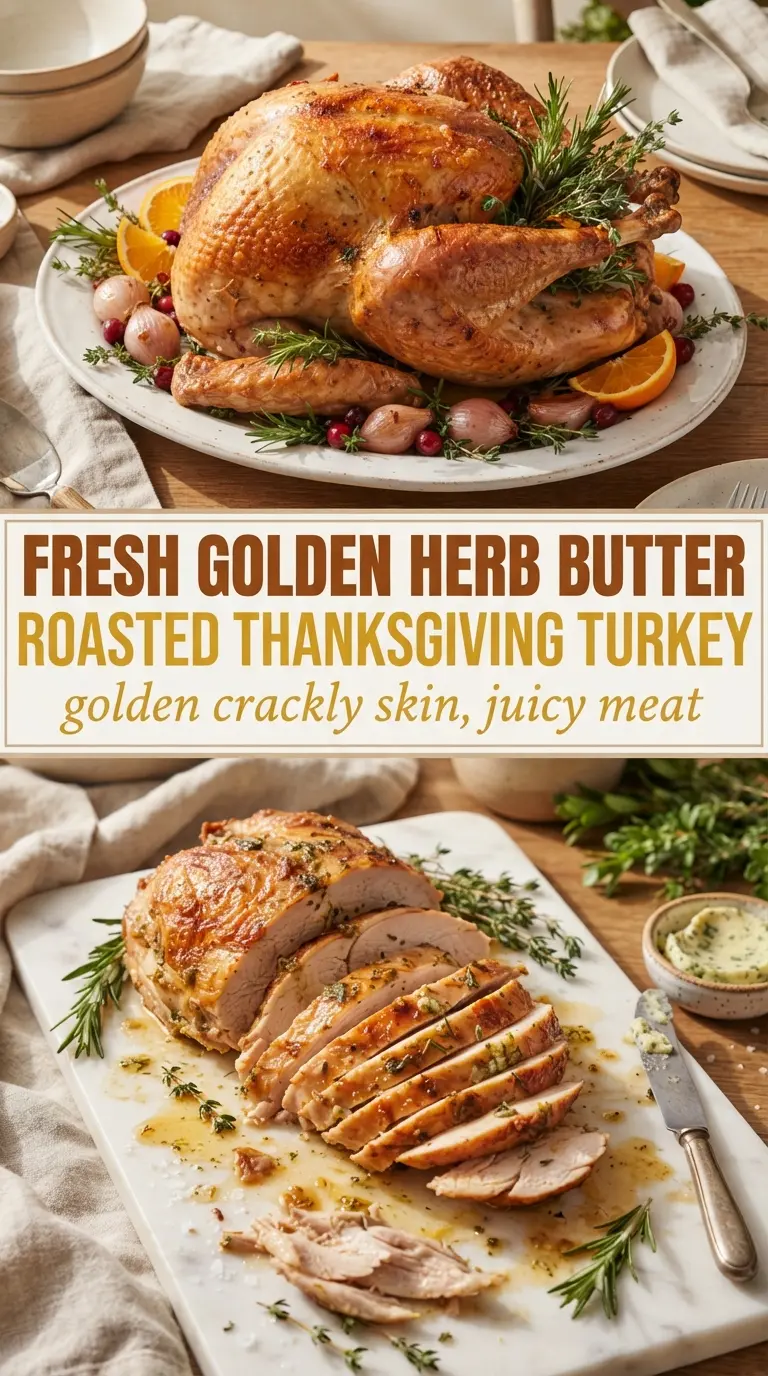
- Turkey — A 12- to 14-pound bird gives you the best balance of roast time and moisture. Larger turkeys can work, but the breast gets drier before the thighs finish unless you monitor temperature closely.
- Butter — This is the engine of the recipe. Softened butter spreads under the skin and carries the herbs into the meat; margarine won’t give you the same flavor or browning, and melted butter won’t cling as well.
- Sage, thyme, and rosemary — These herbs define the roast. Fresh is worth using here because dried herbs can taste dusty in a butter mixture, though you can substitute one-third the amount if that’s what you have.
- Garlic — It rounds out the butter and gives the skin a savory edge. Mince it finely so it disperses; large pieces can scorch during roasting.
- Lemon and onion — They go inside the cavity for aroma, not for eating. The goal is a subtle steam that lifts the richness of the butter and keeps the finished bird from tasting flat.
- Salt and pepper — They season the meat from the outside in. If your turkey was brined, cut the added salt way back so it doesn’t taste overdone.
How to Roast the Turkey So the Skin Turns Crisp and the Meat Stays Moist
Mixing the Herb Butter
Work the softened butter with the chopped herbs, garlic, salt, and pepper until it looks evenly speckled and smells sharp and green. You want a spreadable paste, not a loose herb slurry. If the butter is too hard, it won’t coat the bird evenly; if it’s oily, it has warmed too far and won’t stay in place under the skin.
Getting the Butter Where It Counts
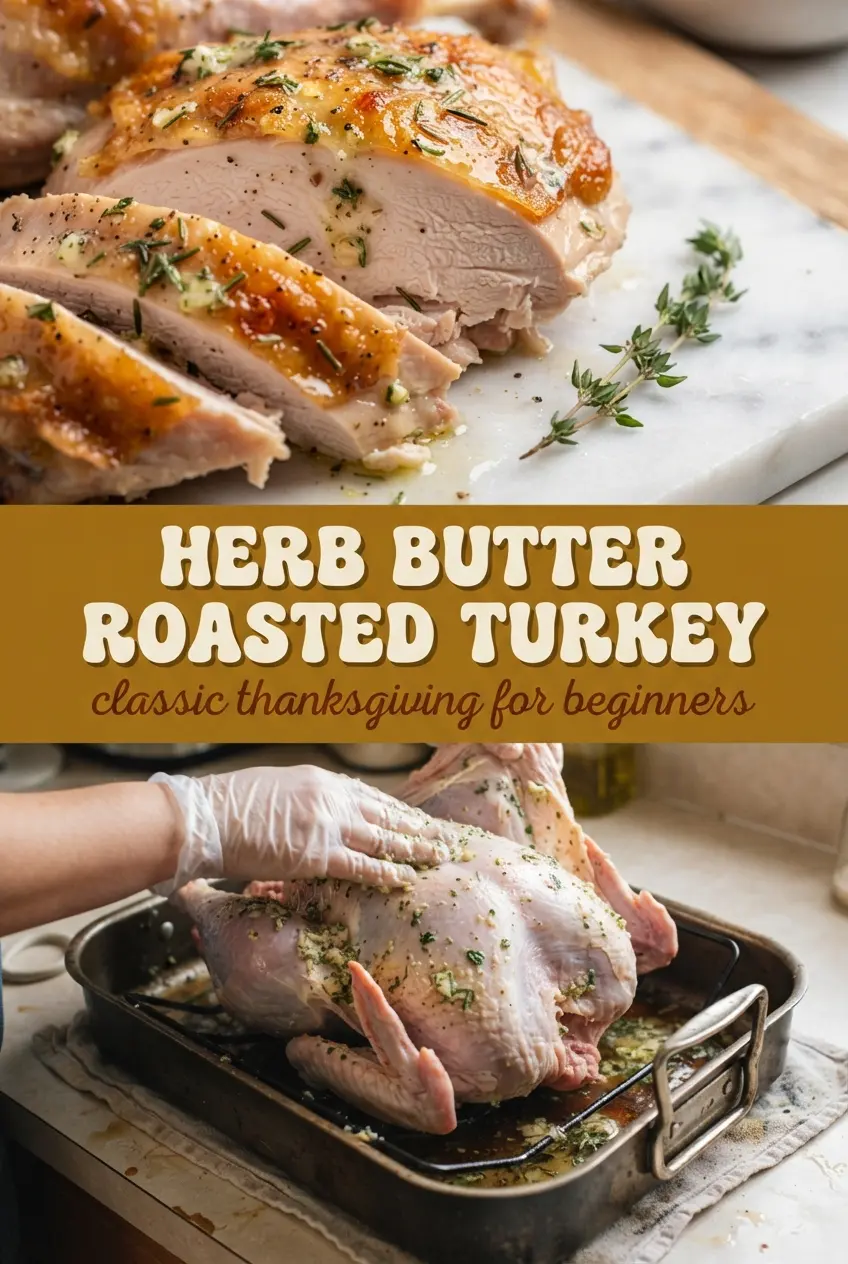
Slide your fingers between the skin and breast meat to create a pocket, then push the butter in a handful at a time and press it outward. The skin should look plump when you’re done, not shredded or flapping loose. Use the rest over the outside of the bird for browning, but keep the thickest layer under the skin where it protects the meat.
Roasting at the Right Pace
Set the turkey in a roasting pan and cook it at 325°F until the thigh reaches 165°F. Three hours is a good estimate for a 12- to 14-pound bird, but the thermometer is the only number that matters. If the breast starts to brown too quickly, cover it loosely with foil so the skin can keep crisping without overcooking the white meat.
The Rest That Protects the Juices
Let the turkey rest for 30 minutes before carving. That pause lets the muscle fibers relax and the juices settle back into the meat instead of running out the second the knife goes in. If you carve too early, the slices will look dry even if the roast was cooked perfectly.
How to Adapt This for a Bigger Table or Different Diet Needs
Dairy-Free Herb Roasted Turkey
Use a good plant-based butter that stays firm at room temperature. It won’t taste quite as rich as dairy butter, but it still gives you the herb coating and surface browning you need. Choose one without a strong coconut note so it doesn’t clash with the sage and rosemary.
Gluten-Free and Naturally Safe as Written
This turkey is already gluten-free as long as your butter and seasonings are certified safe. The only place people get tripped up is seasoning blends, which sometimes sneak in flour or additives. Plain herbs and single-ingredient spices keep this straightforward.
Using Dried Herbs Instead of Fresh
If fresh herbs aren’t available, use one-third the amount of dried herbs. Dried thyme and rosemary are stronger and more concentrated, but they need the butter to soften their edges. Crush them lightly between your fingers before mixing so the flavor distributes better.
Leftovers for Sandwiches and Soup
Carve what you need and store the rest in shallow containers so it cools quickly. The meat stays moist when sliced before chilling, and the bones can go straight into a stock pot for broth the next day. That’s the best way to stretch one roast into a second meal without drying it out.
Storage and Reheating
- Refrigerator: Store carved turkey in an airtight container for up to 4 days. The breast meat will dry out a little faster than the dark meat, so keep them together with a spoonful of pan juices if you have them.
- Freezer: Turkey meat freezes well for up to 3 months. Wrap portions tightly and press out as much air as possible to keep freezer burn from dulling the flavor.
- Reheating: Reheat sliced turkey covered with a splash of broth at low heat in the oven or on the stovetop. The common mistake is blasting it in the microwave until it turns rubbery; gentle heat keeps the meat from tightening up.
Answers to the Questions Worth Asking
Herb Butter Roasted Thanksgiving Turkey
Ingredients
Equipment
Method
- Mix the softened butter with the chopped sage, chopped thyme, chopped rosemary, minced garlic, salt, and pepper until evenly combined. The mixture should look uniform and speckled with herbs.
- Loosen the turkey skin gently with your fingers, starting at the breast and working carefully under the skin. Keep the skin intact so the butter can spread under it.
- Spread the herb butter under the skin and also over the outside skin, covering the breast and legs. Pat the skin lightly so the butter adheres.
- Stuff the cavity with the halved lemon and the quartered onion. Tuck them in so they sit firmly and won’t fall out during roasting.
- Preheat the oven to 325°F and place the turkey on a sheet pan. Roast for about 3 hours, basting as it roasts for juicy, buttery flavor.
- Continue roasting until the internal temperature reaches 165°F in the thigh. The skin should be deep golden and look crackly as the turkey finishes.
- Remove the turkey from the oven and let it rest for 30 minutes before carving. The juices should redistribute while the skin stays crisp.