
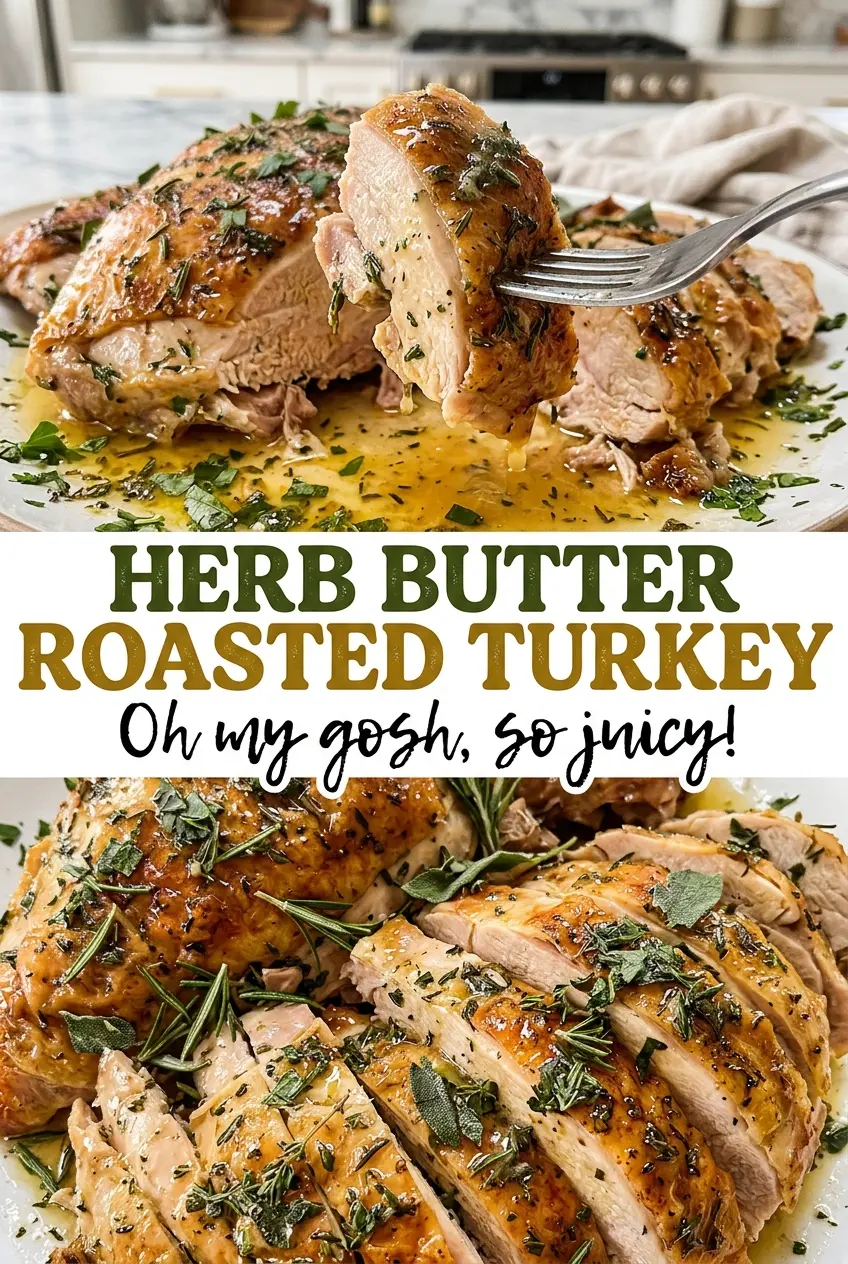
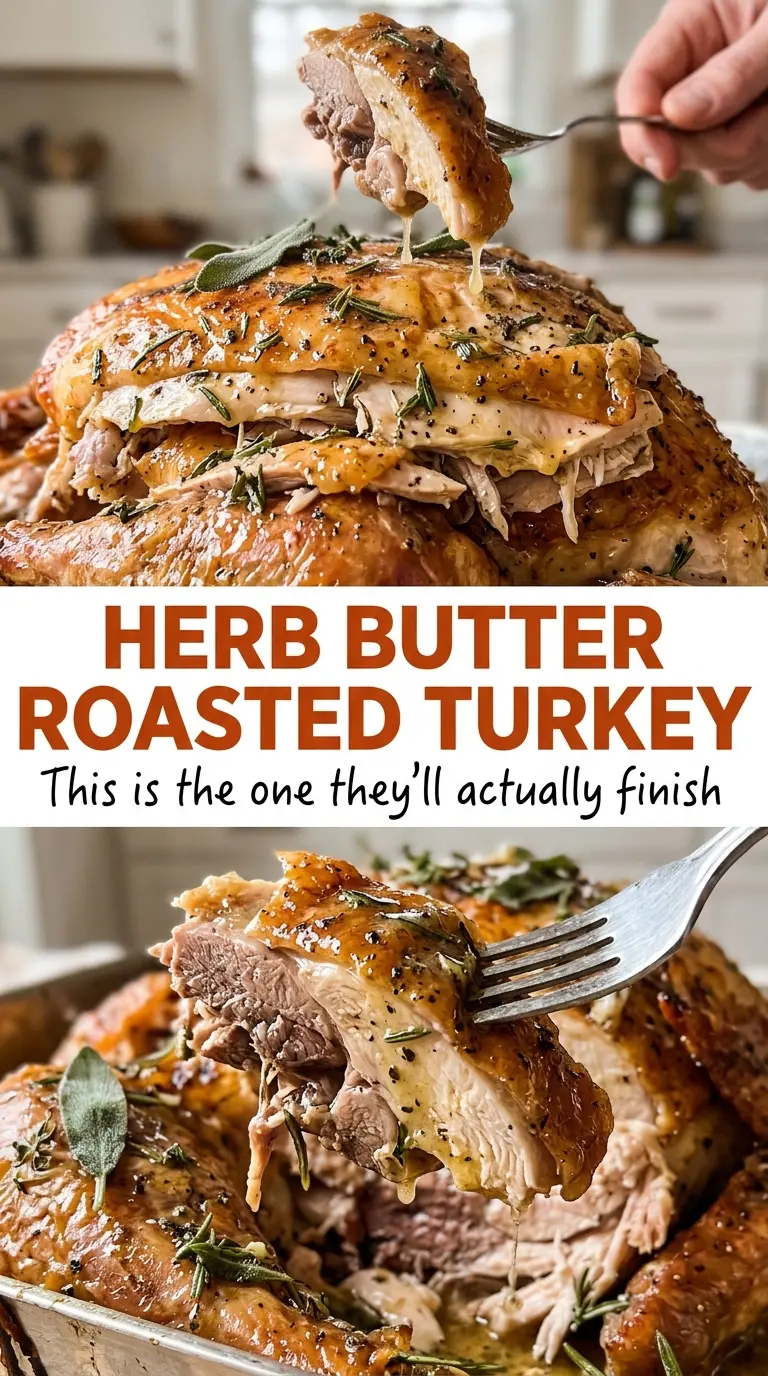
When a turkey’s breast skin starts to deepen in color while the meat still needs time, it’s easy to assume the whole bird is nearly there. I watch the color, but I let a thermometer call the finish; that distinction helps keep the breast from drying out while the thighs catch up. For this Herb Butter Roasted Turkey, fresh herbs are mixed into softened butter, then the butter goes beneath the breast skin and over the outside.
The turkey roasts breast-side up on a rack, with broth in the pan beneath it. Onion, lemon, and thyme go in the cavity, where they add gentle aroma without turning the bird into a stuffed turkey. The result is a deeply browned, herb-scented exterior and tender meat that’s ready to carve after a proper rest.
Kitchen Note
Loosen the breast skin slowly with your fingers rather than pulling hard from one spot. If you feel it resisting, work your fingertips a little farther along before spreading in the butter; keeping that skin intact makes the under-skin layer much easier to apply.
Save this Herb Butter Roasted Turkey for its fresh-herb butter, golden skin, and reliable whole-bird roasting method.
Why a Turkey Needs Two Temperature Checks, Not Just a Good Browning
A whole turkey doesn’t cook at one even pace from breast to thigh. The breast is lean, while the thighs are thicker and need to reach their own safe finish. That’s why a beautifully bronzed surface—or a cooking time that looks right on paper—can’t tell you whether every part of the bird is ready.
I treat the roasting time as a window for a bird in this size range, not a promise that the clock will finish the job. Start checking after 2 1/2 hours, then take a reading in the thickest part of the breast and another in the innermost thigh, keeping the thermometer away from bone. Both readings matter; checking only one spot can leave you guessing about the rest of the turkey. If the breast is browning too quickly before the inside is ready, a loose foil tent over the breast slows the color while roasting continues.
This approach also makes the final result easier to judge. The turkey can come out when both checked areas reach at least 165°F, even if the skin’s color made you expect a different finish time.
Fresh Herbs, Unsalted Butter, and the Aromatics That Matter
- Unsalted butter — It carries the chopped herbs across the turkey and is easier to season precisely than salted butter. A standard grocery-store butter works well; the important part is that it’s softened enough to mix and spread. Salted butter will make the finished bird saltier, so unsalted is the dependable choice here.
- Fresh parsley, sage, thyme, and rosemary — Fresh herbs give the butter a bright, green aroma that dried herbs won’t quite reproduce. Choose herbs that look fresh rather than wilted, but there’s no need to seek out a specialty brand. Dried herbs aren’t a direct swap in this mixture because their texture and concentration differ.
- Garlic — Minced garlic gives the butter a savory base that sits alongside the herbs instead of overpowering them. Fresh cloves mince smoothly into the softened butter; omitting garlic is the simplest way to make the herb mixture gentler.
- A fully thawed whole turkey — The size range here fits the roasting time and the cavity aromatics. Buy the bird that fits that range, and check that it’s fully thawed before you begin. A smaller or larger cut doesn’t follow the same roasting setup.
- Onion, lemon, thyme sprigs, and low-sodium chicken broth — The onion, lemon, and sprigs perfume the cavity, while the broth sits beneath the turkey in the roasting pan. Low-sodium broth keeps the pan liquid from starting overly salty. Regular broth works as a substitute, though the pan liquid will taste more seasoned.
The Roasting Stages That Take This Turkey from Prep to Carving
Mixing the Soft Herb Butter
Set out the butter until it’s soft enough to stir, then mix it with the chopped parsley, sage, thyme, and rosemary, along with the minced garlic, kosher salt, and black pepper. Keep mixing until the herbs and seasonings are distributed throughout rather than sitting in streaks. If the butter is still firm, it’s harder to spread evenly, so give it more time to soften instead of trying to force it into a smooth mixture.
Preparing the Bird and Its Cavity
Heat the oven to 325°F with a rack in the lower third. Remove the turkey’s neck and giblets, then pat the bird dry with paper towels. Gently loosen the skin over the breast, spread half the herb butter beneath it, and rub the rest over the outside. Put the quartered onion and lemon and the thyme sprigs in the cavity, tie the legs loosely with kitchen twine, and tuck the wing tips underneath.
Roasting Breast-Side Up
Pour the chicken broth into a 16-inch roasting pan fitted with a rack, then set the turkey breast-side up on the rack. Roast for 3 to 3 3/4 hours, beginning to check after 2 1/2 hours. If the breast starts browning too quickly, tent it loosely with foil rather than covering the whole bird tightly. Check the thickest breast and innermost thigh, away from bone; the turkey is ready when both readings are at least 165°F.
Resting Before Carving
Transfer the turkey to a cutting board and tent it loosely with foil. Let it rest for 30 minutes before carving so the meat has time to settle after roasting. Keep the tent loose rather than wrapping the bird tightly. Then carve and serve while the herb-buttered skin is still fragrant.
Small Changes That Shift the Herbs Without Changing the Roast
A Milder Herb Butter Without Garlic
Leave the minced garlic out and mix the remaining herbs into the butter as usual. You’ll get a softer, more herb-forward taste without changing how the butter spreads or how the turkey roasts.
A Less Citrusy Cavity
Leave out the lemon and keep the quartered onion and thyme sprigs in the cavity. The aroma will be more savory and less bright, while the rest of the roasting method stays the same.
A Softer Rosemary Note
Omit the rosemary from the butter if you prefer a less piney herbal taste. The parsley, sage, and thyme still make a fragrant coating, with no change to the turkey’s roasting setup.
Storage and Reheating
- Refrigerator: Store carved turkey in a covered container for 3 to 4 days. The skin softens in the refrigerator, but the meat stays tender when covered.
- Freezer: Freeze carved portions in airtight packaging for up to 4 months for best quality. Thaw in the refrigerator before reheating.
- Reheating: Warm carved portions covered with a small splash of chicken broth until hot throughout. Avoid heating them uncovered for a long stretch, which can dry out the breast meat.
Questions That Come Up While Roasting a Whole Turkey
Herb Butter Roasted Turkey
Ingredients
Equipment
Method
- Heat the oven to 325°F with a rack in the lower third.
- In a bowl, mix the softened butter with the parsley, sage, chopped thyme, rosemary, garlic, salt, and pepper until evenly combined.
- Remove the neck and giblets from the turkey and pat the turkey dry with paper towels.
- Gently loosen the skin over the breast with your fingers.
- Spread half the herb butter under the breast skin.
- Rub the remaining butter over the outside of the turkey.
- Place the onion, lemon, and thyme sprigs in the cavity.
- Tie the legs loosely with kitchen twine.
- Tuck the wing tips underneath.
- Pour the broth into a 16-inch roasting pan fitted with a rack.
- Set the turkey breast-side up on the rack.
- Roast for 3 to 3 3/4 hours, loosely tenting the breast with foil if it browns too quickly.
- Begin checking after 2 1/2 hours and roast until a thermometer in the thickest breast and innermost thigh, away from bone, reads at least 165°F.
- Transfer the turkey to a cutting board.
- Tent loosely with foil.
- Rest for 30 minutes before carving.