
Hobo Dinner Foil Packets turn a handful of plain ingredients into a complete meal that cooks up tender, buttery, and deeply satisfying. The potatoes pick up the beef drippings, the carrots soften just enough to keep a little bite, and the onions melt down into the kind of savory sweetness that makes you open the packet and immediately know dinner is handled.
What makes this version work is the balance between size and steam. The potatoes and carrots need to be cut small and close in size so they finish at the same time as the beef. Heavy-duty foil matters here, too, because thin foil tears once the butter melts and the packet starts moving around over coals or on a grill. A tight seal keeps the steam inside, which is what cooks the vegetables through without drying out the meat.
Below, I’ve included the small details that keep these packets from turning patchy or underdone, plus a few variations for changing up the meat or making the meal work a little differently at home or at camp.
The potatoes were tender, the beef stayed juicy, and the butter and paprika made the whole packet taste like a full meal instead of just meat and vegetables. I doubled the foil like suggested and had zero leaks over the coals.
Hobo Dinner Foil Packets are the kind of campfire meal that comes out juicy, buttery, and packed with tender potatoes every time.
The Trick to Evenly Cooked Foil Packets
The biggest mistake with foil packets is treating everything like it cooks at the same speed. It doesn’t. Beef patties can cook through while the potatoes are still hard in the center, which is why small, uniform cuts matter more here than almost anywhere else. If one potato chunk is twice the size of the others, that one piece will be the reason the packet feels underdone.
Steam is doing most of the work, so the packet has to stay sealed. If the foil opens even a little, the vegetables dry out and the butter runs away before it can baste anything. Heavy-duty foil gives you a little more forgiveness, especially if the packets are going straight on hot coals or over a grill grate.
- Uniform potato pieces — Cut them small enough to soften in 20 to 25 minutes. Bigger chunks need par-cooking first.
- Thin carrots — Slice them on the diagonal so they cook at the same pace as the potatoes instead of staying crunchy.
- Ground beef patties — Form them evenly so they cook through at the same time. Thick, uneven patties leave you with dry edges and a raw center.
- Heavy-duty foil — This isn’t the place for flimsy sheets. Double-wrap if you’re cooking over direct coals.
What Each Ingredient Is Actually Doing in This Packet
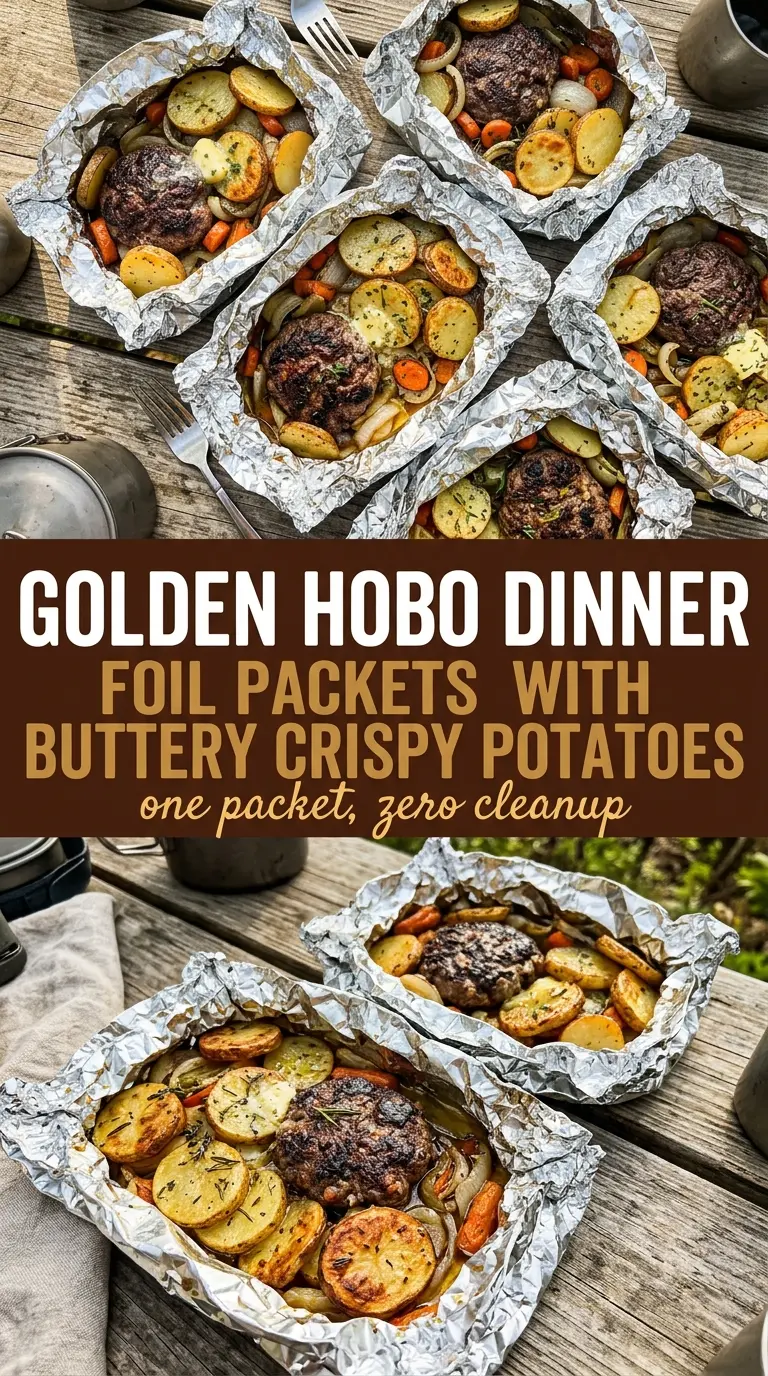
- Ground beef — The beef gives the packet its main savory base and releases just enough drippings to season the vegetables. An 80/20 blend works best because it stays juicy; extra-lean beef can turn dry in the foil.
- Potatoes — These soak up the butter and beef juices while providing the hearty, filling part of the meal. Yukon golds hold their shape well, but russets work if you keep the dice small and even.
- Carrots — They add sweetness and balance the richness of the beef. Slice them thin so they soften through before the packet comes off the heat.
- Onion — Onion melts down into the broth-like steam inside the packet and ties everything together. Yellow onion is the most flexible choice, but white onion gives a sharper bite.
- Butter — This is what keeps the whole packet from tasting dry or flat. It melts into the vegetables and helps carry the garlic and paprika, so don’t swap it for oil unless you need a dairy-free version.
- Garlic powder and paprika — These season the meat and vegetables without needing any extra sauce. Garlic powder spreads more evenly than fresh garlic in a foil packet, and paprika adds a little color and warmth.
Building the Packet So Nothing Turns Mushy or Undercooked
Lay Out the Foil Before You Start
Set out four large sheets of heavy-duty foil before you touch the meat. Once the beef and vegetables are portioned, the packets come together fast, and having the foil ready keeps the butter from sitting out too long. If you use regular foil, double it so the edges don’t split when you fold and move the packets.
Layer for Steam, Not Sogginess
Place the beef patty first, then scatter the potatoes, carrots, and onion over the top. That order lets the drippings move down into the vegetables while the steam circulates inside the packet. If you pile the vegetables too thickly in one spot, the center stays firm while the edges go soft.
Seal Tight and Cook Hot Enough
Fold the foil into a tight sealed packet with as little air as possible inside. Cook over campfire coals or on a grill for 20 to 25 minutes, turning once if the heat is uneven, until the beef is cooked through and the potatoes give easily when pierced. If the potatoes are still hard, the packet needs a few more minutes; opening it too early releases the steam that finishes the vegetables.
Three Ways to Change the Packet Without Losing the Point
Make It Dairy-Free
Swap the butter for olive oil or a dairy-free butter substitute. You lose a little of that classic rich, campfire flavor, but the packet still cooks properly and stays moist. Olive oil gives a cleaner finish, while a plant-based butter keeps the savory feel closer to the original.
Use Ground Turkey Instead of Beef
Ground turkey works well, but it needs the butter more than beef does because it brings less natural fat. Use an 85/15 or similar blend if you can, and keep the seasoning generous so the packet doesn’t taste bland once the vegetables soften.
Add More Vegetables for a Bigger Meal
Mushrooms, bell peppers, or green beans fit well here, but add them in small pieces so they cook at the same pace as the potatoes. Water-heavy vegetables can thin out the butter and make the packet a little wetter, which is fine as long as the foil stays sealed.
Storage and Reheating
- Refrigerator: Store leftovers in an airtight container for up to 3 days. The potatoes soften a little more after chilling, but the flavor holds up well.
- Freezer: These freeze better after cooking than before. Wrap tightly and freeze for up to 2 months, though the potatoes will be softer after thawing.
- Reheating: Reheat covered in a 350°F oven until hot, or warm in a skillet with a splash of water to bring back steam. Microwaving works in a pinch, but it can dry out the beef if you overdo it.
Questions I Get Asked About This Recipe
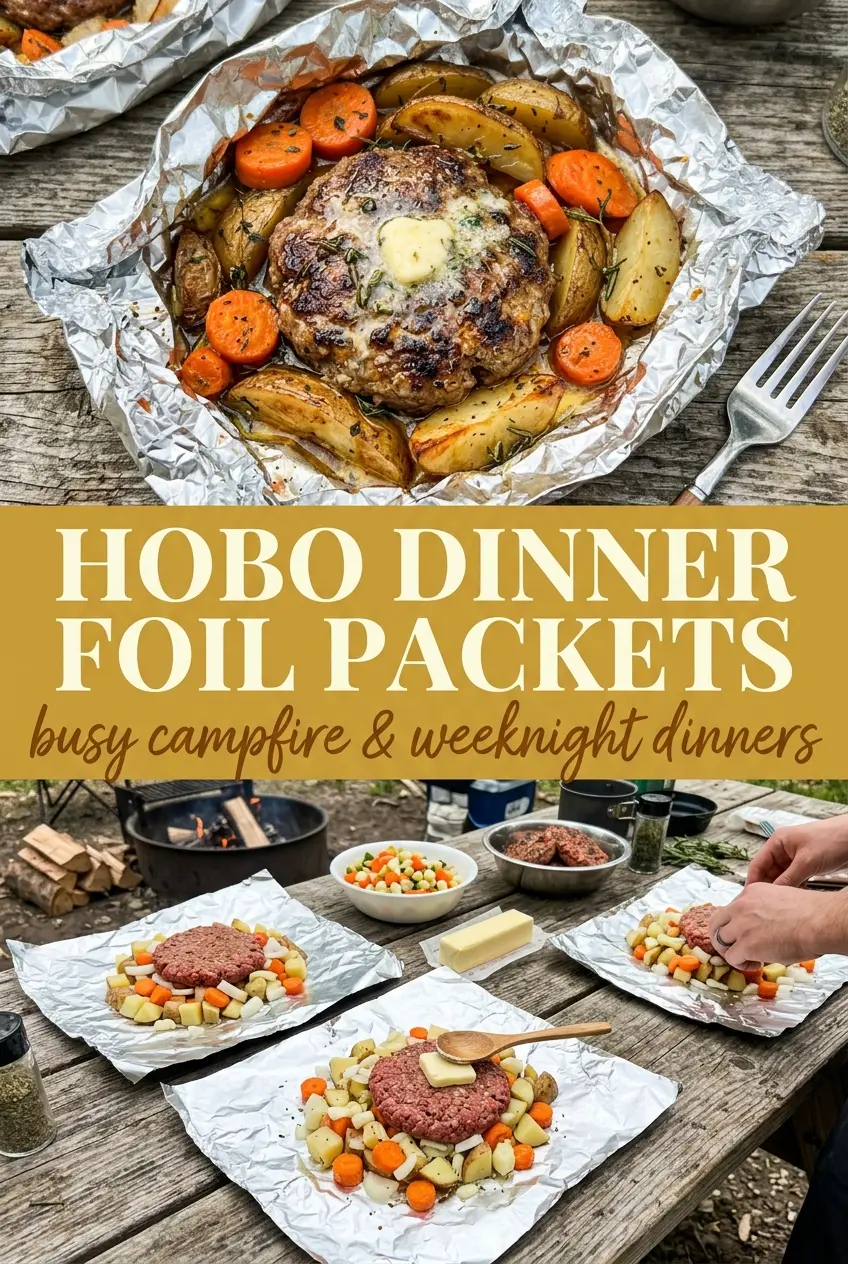
Hobo Dinner Foil Packets
Ingredients
Equipment
Method
- Lay out 4 large sheets of heavy-duty foil on a flat surface with space to fold each packet closed.
- Place a beef patty on each foil sheet and top with diced potatoes, sliced carrots, and sliced onion.
- Add 1 tbsp butter per packet, then season each one with garlic powder, paprika, salt, and pepper.
- Fold the foil over the filling and seal the edges tightly so steam stays trapped inside the packet.
- Cook the packets over campfire coals or on a grill at an active, covered heat for 20-25 minutes, until the potatoes are tender and the beef is cooked through.
- Carefully open one packet to check doneness, looking for soft potatoes with no pink in the beef before serving.