
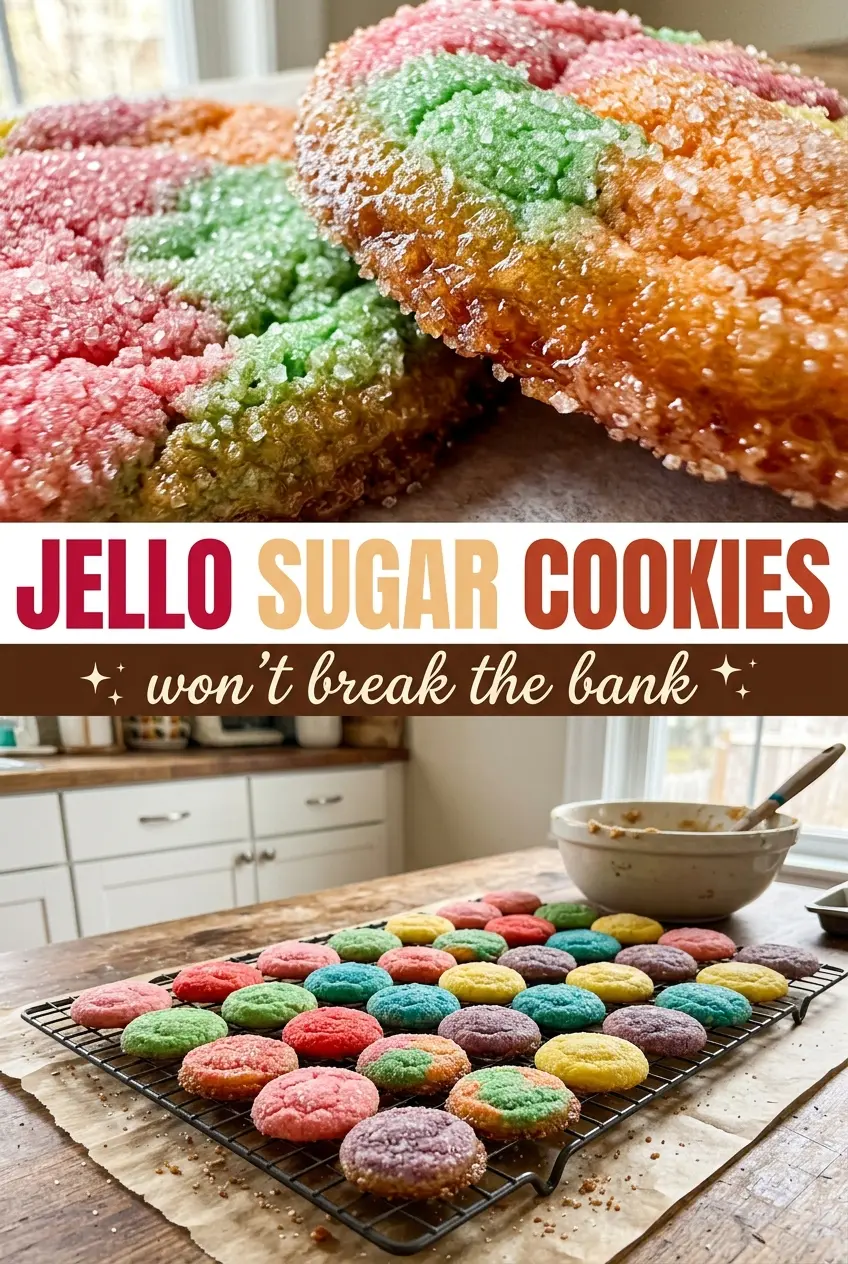
Jello sugar cookies bake up soft in the center, lightly crisp at the edges, and full of that bright, fruity flavor that makes people reach for a second one before they’ve finished the first. The gelatin mix does double duty here: it flavors the dough and gives each batch its cheerful color without needing frosting, food coloring, or extra fuss.
What makes this version work is balance. The butter and sugar get creamed until fluffy so the cookies stay tender, while the gelatin powder is mixed in with the eggs and vanilla so it disperses evenly through the dough. The flour goes in last and gets folded just until combined; overmixing turns these from soft and buttery into dense and tough. Rolling the dough balls in sugar before baking adds that classic sparkly finish and gives the outside a fine, delicate crunch.
Below, I’ve laid out the small details that keep the texture right, plus a few easy variations if you want to switch up the flavor or adapt the cookies for different diets.
The dough came together fast and the cookies stayed soft for days. Rolling them in sugar gave them the prettiest sparkle, and the strawberry batch had a strong fruity flavor without tasting artificial.
Jello sugar cookies are the kind of colorful, soft-baked cookies worth keeping the recipe for.
The Part That Keeps These Cookies Soft Instead of Dry
Most sugar cookies go wrong the moment the dough gets overworked or the bake goes a minute too long. These have a little more forgiveness because the gelatin mix brings flavor and color without changing the dough structure much, but they still depend on a short mix and a short bake. The goal is a cookie that looks slightly underdone in the center when it leaves the oven; it finishes setting on the hot sheet.
If you wait until the whole top looks firm in the oven, they’ll go from soft to dry fast. Pull them when the edges are just turning golden and the centers still look pale and slightly puffed. That’s the sweet spot for a tender middle and a cookie that stays nice even after it cools.
What Each Ingredient Is Actually Doing in This Dish

- Flavored gelatin mix — This is what gives the cookies their color and fruity punch. Strawberry, cherry, lime, and orange all work well. Use the full packet for the strongest flavor; cutting it down makes the color dull and the taste weaker.
- Butter — Softened butter creams properly and traps air, which keeps the cookies tender. Salted butter works if that’s what you have, but unsalted gives you a little more control over the flavor.
- Flour — All-purpose flour keeps the texture soft but sturdy. If you spoon and level it instead of scooping straight from the bag, you’ll avoid packing in too much flour, which is the fastest way to end up with dry cookies.
- Extra sugar for rolling — This isn’t just for looks. It gives the outside a thin crackly shell and keeps the cookies from looking flat and plain. Granulated sugar works, but finer sugar clings a little more evenly.
Getting the Dough Mixed Without Losing the Tender Crumb
Creaming the Butter and Sugar
Beat the softened butter and sugar together until the mixture looks pale and fluffy, not greasy and streaked. That step builds the cookie’s structure and helps keep the crumb light. If the butter is too cold, it won’t cream properly; if it’s melted, the dough spreads too much in the oven.
Adding the Gelatin, Eggs, and Vanilla
Mix in the gelatin powder with the eggs and vanilla until the color looks even. You want the powder fully dispersed before the flour goes in, or you’ll get streaks and uneven flavor. Scrape the bowl once or twice so the bottom doesn’t hide any dry pockets.
Bringing the Dough Together
Fold in the flour and baking powder just until the dough comes together. The dough should be soft and workable, not sticky like cake batter and not stiff like pie dough. If you keep mixing after the flour disappears, the cookies tighten up and lose that tender bite.
Rolling, Baking, and Stopping at the Right Moment
Scoop the dough into balls, roll them in sugar, and space them apart on the baking sheet so they have room to spread. Bake at 350°F until the edges are barely golden and the centers still look soft. Let them sit on the pan for a few minutes after baking; that carryover heat finishes the middle without drying them out.
How to Change the Flavor Without Breaking the Texture
Swap in a different gelatin flavor
Use any flavored gelatin packet you like, but expect the intensity to vary by brand and flavor. Cherry and strawberry usually give the boldest color, while lighter flavors like lemon or orange can taste a little subtler. The cookie texture stays the same either way.
Make them dairy-free
Swap the butter for a plant-based baking stick that’s meant for cookies, not tub-style spread. You’ll still get a soft cookie, though the flavor will be a little less rich. Choose one with a solid fat content so the dough doesn’t spread too much.
Make them a little more colorful
Roll the dough in colored sanding sugar instead of plain granulated sugar for extra sparkle. It won’t change the baking time, but it does give the cookies a crisper, more decorative exterior.
Storage and Reheating
- Refrigerator: Store in an airtight container for up to 5 days. They stay soft, though the sugar coating softens a bit after the first day.
- Freezer: These freeze well. Freeze baked cookies in a single layer, then transfer to a bag, or freeze the dough balls and bake straight from frozen with an extra 1 to 2 minutes.
- Reheating: Warm a cookie for 5 to 8 seconds in the microwave if you want that fresh-baked softness back. Longer than that and the sugar coating can get sticky instead of delicate.
Answers to the Questions Worth Asking
Jello Sugar Cookies
Ingredients
Equipment
Method
- Preheat oven to 350°F, and line a sheet pan if desired for easier release. Wait until the oven fully reaches temperature before baking.
- Cream butter and sugar together until fluffy. The mixture should look lighter in color and hold soft peaks.
- Beat in eggs, vanilla extract, and flavored gelatin mix until smooth. Stop when no streaks remain.
- Fold in flour and baking powder until just combined. Mix only until you no longer see dry flour.
- Roll dough into balls and coat in extra sugar. Aim for generous coverage so the tops look sparkly before baking.
- Bake for 9-11 minutes at 350°F until edges are just golden. The centers should still look slightly set, not fully browned.