
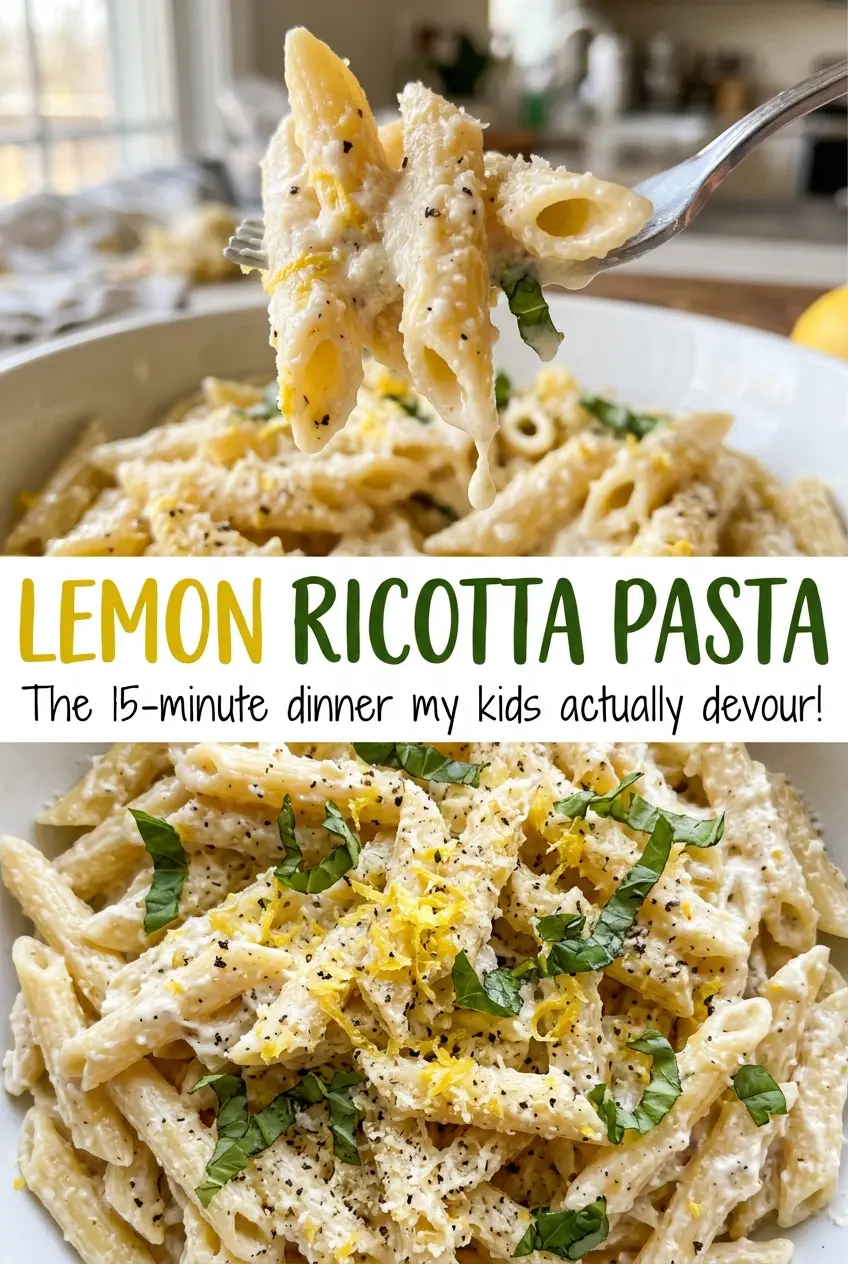
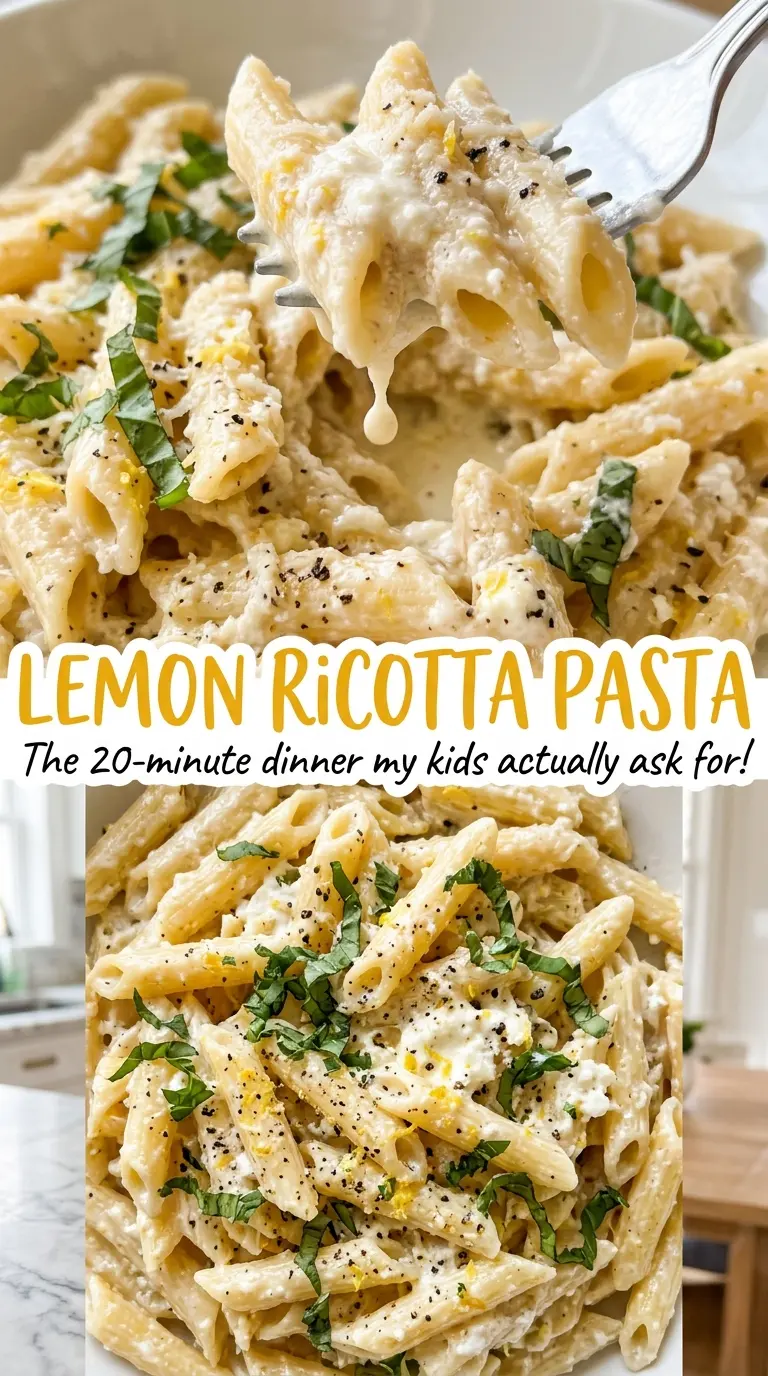
When the lemon zest hits the ricotta, the bowl smells bright before the pasta even goes in. I make this lemon ricotta pasta when I want a creamy coating without standing over a pan of sauce; the mixture comes together in the serving bowl while the noodles cook. The first toss can look a little thick, but hot pasta and a splash of its cooking water bring everything together.
There’s no need to simmer the sauce or wait for it to reduce. The pasta should be al dente, and the finished dish is best while the noodles are hot and the sauce is still loose enough to cling. You get a silky, lemony coating with enough Parmesan to make it savory, not heavy.
Kitchen Note
Set aside the full cup of pasta water before you drain the pot. Start with half a cup in the bowl, then add the rest a tablespoon at a time only if the sauce needs loosening.
Save this lemon ricotta pasta for a quick dinner with a creamy, bright sauce and no separate saucepan to watch.
Why the Ricotta Goes in the Serving Bowl, Not Over a Burner
Ricotta doesn’t need to be cooked into a separate sauce here. Mixing it in the serving bowl means the cheese stays soft while the hot pasta provides the warmth needed to turn it into a coating. A saucepan over direct heat would add an unnecessary step and could make the mixture tighten before the noodles are ready to take it up.
The other part of the texture comes from the pasta water. It carries starch from the noodles, which helps the ricotta mixture loosen and cling rather than sit in a dense mound at the bottom of the bowl. Add it with the hot pasta and toss; the sauce comes together as it moves around the noodles.
That’s also why I don’t pour in all the reserved water at once. Pasta shapes and brands can hold on to different amounts of water, so the sauce may need slightly more or less to reach a creamy consistency. Stop when the noodles look evenly coated and there’s no puddle of liquid collecting underneath.
What Whole-Milk Ricotta and Finely Grated Parmesan Bring to the Bowl
- Whole-milk ricotta — It gives the sauce its creamy body. Choose whole-milk rather than low-fat ricotta for the fuller, softer texture this dish is built around; a good everyday tub works well.
- Finely grated Parmesan — Fine shreds blend into the ricotta more evenly than coarse pieces, so each bite gets a little savory cheese. A wedge grated finely at home is a good choice, but finely grated packaged Parmesan is convenient too.
- Lemon — The zest brings fragrant citrus oils, while the juice adds a sharper, fresher note. Use a whole fresh lemon so you have both; bottled juice won’t replace the aroma of the zest.
- Olive oil — It helps make the ricotta mixture smooth and adds a rounded, fruity note. A basic olive oil is fine here; there’s no need to use an expensive finishing oil.
- Dried pasta — Spaghetti and rigatoni both work, but they give the sauce a different place to settle: around long strands or inside the tubes. Choose a shape you like eating, and follow its package timing.
- Black pepper — It adds a gentle savory bite that keeps the lemon and cheese from tasting flat. Measure it into the bowl with the other sauce ingredients so it’s distributed throughout.
Three Stages for a Sauce That Clings Instead of Pooling
Cook the Pasta Until It Still Has a Little Bite
Bring 8 cups of water to a boil in a large pot, stir in 1 tablespoon of kosher salt, and add 1 pound of dried pasta. Cook according to the package directions, usually 8–12 minutes, until al dente. Check the pasta near the shorter end of the package range so it doesn’t turn soft before you toss it. Before draining, reserve 1 cup of the pasta water.
Stir the Ricotta Mixture in the Serving Bowl
While the pasta cooks, stir together 1 cup of whole-milk ricotta, 1/2 cup of finely grated Parmesan, 2 tablespoons of olive oil, the zest and juice of 1 medium lemon, and 1/4 teaspoon of black pepper in a large serving bowl. Work the ingredients together until the mixture looks even, with no separate puddle of oil or lemon juice. It will be thick at this point; that’s expected. Keep it in the bowl so the hot pasta can go straight into it.
Toss While the Noodles Are Hot
Add the hot, drained pasta and 1/2 cup of reserved pasta water to the bowl. Toss until the ricotta mixture coats the noodles instead of clumping in one spot. If it still looks too thick, add more reserved water a tablespoon at a time and toss again. Stop when the coating looks creamy, then serve immediately.
Two Pasta Shapes, Two Ways to Catch the Lemon-Ricotta Sauce
Choose rigatoni for sauce in every tube
Use rigatoni instead of spaghetti when you want a sturdier bite. The open tubes give the creamy ricotta mixture somewhere to settle, while the pasta still gets coated as you toss it in the bowl.
Pick spaghetti for a delicate, twirlable bowl
Spaghetti gives you long strands with a light coating of sauce from end to end. It’s the better fit if you like twirling pasta, while rigatoni makes each bite a little more substantial.
Storage and Reheating
- Refrigerator: Store leftovers in an airtight container for 3–4 days. The sauce will firm up as it chills, and the pasta will absorb some of it.
- Freezer: I don’t recommend freezing this dish. Ricotta sauce can turn grainy after thawing, and the pasta tends to soften.
- Reheating: Warm a portion in the microwave at 50% power in 30-second bursts, stirring between each one. Add a small splash of water if the sauce looks tight; high heat can make the ricotta texture less smooth.
Questions That Come Up Before You Toss the Pasta
Lemon Ricotta Pasta
Ingredients
Method
- Bring the water to a boil in a large pot.
- Stir in the kosher salt and add the pasta.
- Cook according to the package directions, usually 8-12 minutes, until al dente.
- Reserve 1 cup of the pasta water, then drain the pasta.
- While the pasta cooks, stir the ricotta, Parmesan cheese, olive oil, lemon zest, lemon juice, and black pepper together in a large serving bowl.
- Add the hot drained pasta and 1/2 cup of the reserved pasta water to the bowl, then toss until the sauce coats the pasta.
- Add more reserved pasta water a tablespoon at a time as needed to make the sauce creamy, and serve immediately.