
A knife can skate across cold Brie instead of cutting a clean wedge, and cheese straight from the refrigerator tastes muted beside the rest of the spread. I build this Christmas Eve Charcuterie Dinner Board around contrast, but I also give every cheese and meat a little breathing room so it’s easy to see what’s there and easy to reach.
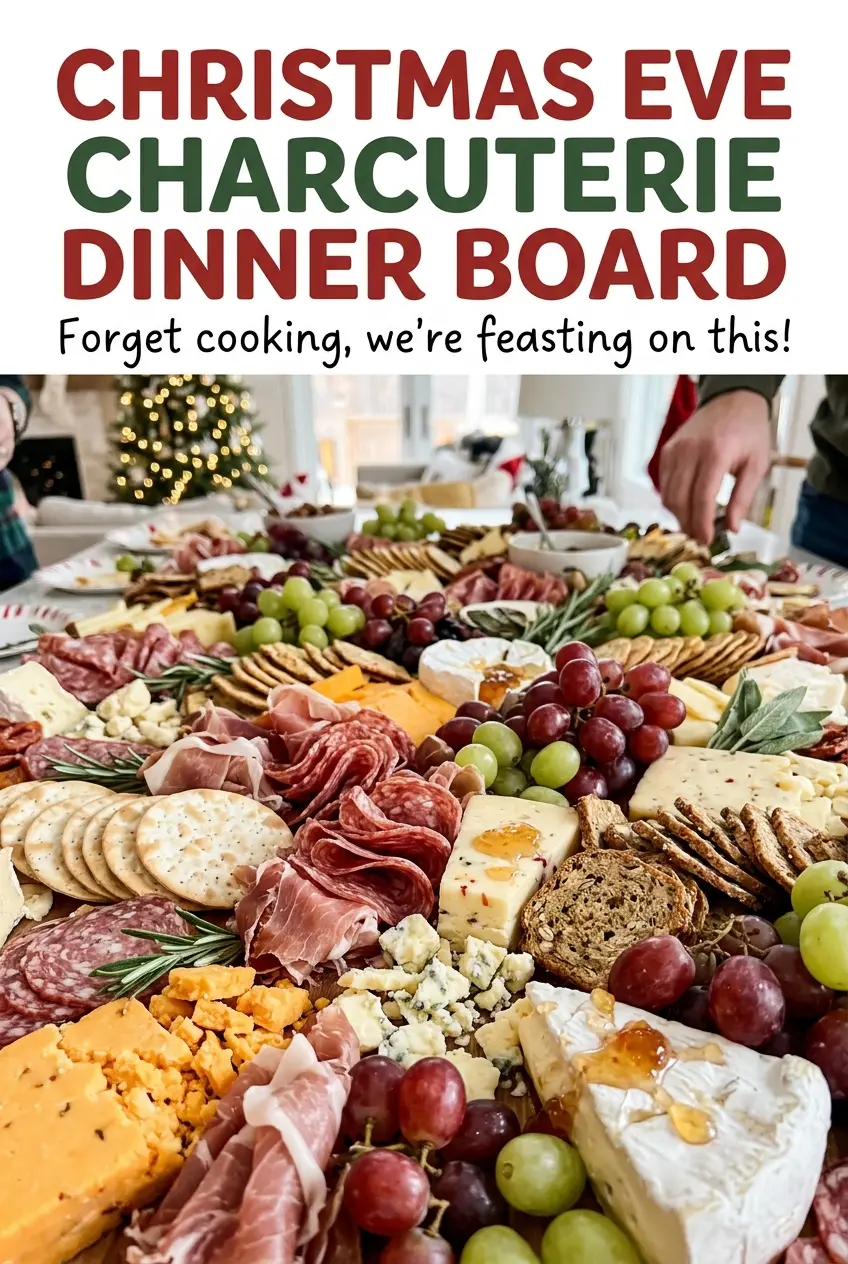
For eight, there’s a mix of soft and firm cheese, three cured meats, fresh produce, bread, crackers, and small bowls of salty and sweet accompaniments. The board feels abundant without asking you to cook anything, and guests can put together a bite that leans savory, sweet, or somewhere in between. Once everything is arranged, it goes straight to the table, where the different textures do the work.
Kitchen Note
Take the cheeses out about 30 minutes before serving. That short rest takes the refrigerator chill off without leaving them sitting out for hours.
Save this Christmas Eve Charcuterie Dinner Board for a no-cook spread with creamy Brie, savory cured meats, and sweet fig preserves.
Why a Charcuterie Board Needs Empty Space, Not One More Pile
A board can hold plenty of food and still be awkward to eat when its pieces blur together. Keeping the cheeses distinct gives people a clear starting point, while small bowls keep the wetter accompaniments from spreading into the bread and crackers. Those gaps aren’t wasted room; they make the board easier to navigate and give hands somewhere to reach without knocking over a pile of salami.
Think of the arrangement as a set of small, recognizable landing spots rather than a tightly packed mosaic. The three cheeses have different shapes, and the meats look more inviting when they aren’t all folded the same way. Fresh fruit and vegetables add color and a crisp bite between the richer foods. Leave enough open area for the almonds and the bowls, and the spread will look generous while staying practical to serve. On an 18×24-inch board, that balance is easier to manage; two large platters give you another way to create the same sense of space.
How the Cheeses, Cured Meats, and Accompaniments Balance Each Other

- The cheeses — Brie brings a soft, creamy texture, while sharp cheddar has a firmer bite and Gouda offers a different, smooth contrast. Their shapes help guests recognize each one at a glance. Pick cheeses you enjoy eating on their own; there isn’t a perfect stand-in for Brie’s soft texture among the firmer cheeses. If you leave Brie out, the cheddar and Gouda still make a satisfying cheese selection, but the board loses that creamy contrast.
- The cured meats — Genoa salami and soppressata hold their shape in loose folds, while prosciutto is delicate enough to separate into ribbons. That difference keeps the meat section from reading as one solid block. If one meat is unavailable, the other two can still be served, but they won’t recreate the same mix of textures.
- The baguette and crackers — The baguette gives you a tender center with a crust, and assorted crackers bring a dry, crisp option. You can lean on the crackers if you don’t have the baguette, though you’ll lose its softer bite. A fresh baguette is worth choosing when you can; the packaged crackers are fine for filling out the selection.
- The fruit and vegetables — Red grapes and cherry tomatoes bring juicy, fresh bites; pears add a gentle sweetness, and cucumber gives the board a cool crunch. Choose pears that are firm enough to slice cleanly, rather than very soft ones that will slump as you arrange them. Wash and dry the grapes and tomatoes so excess water doesn’t collect on the board.
- The accompaniments — Cornichons and olives bring a sharp, briny counterpoint to the richer cheese and meat. Fig preserves add sweetness, whole-grain mustard brings a savory edge, and roasted salted almonds contribute a crisp, nutty bite. The mix works because each small bowl offers a distinct accent; none needs to do the job of all the others.
Build the Board in Layers Without Crowding the Food
Set Out the Cheeses and Choose Your Surface
Set an 18×24-inch board or two large platters on the table, then bring out the cheeses about 30 minutes before serving. Cut the Brie into wedges, slice the cheddar, and cut the Gouda into cubes. Arrange the three cheeses with space between them so their separate shapes remain easy to identify. If the board starts to feel tight, use the two-platter option rather than squeezing everything together.
Shape the Meats Instead of Laying Them Flat
Fold the salami and soppressata into loose stacks and place them on the board. A relaxed fold gives each stack a little height and keeps the slices easy to pick up. Separate the prosciutto into ribbons and set it beside the other meats. Don’t press the delicate ribbons into a dense bundle; keeping their shape distinct makes the different cuts clear.
Add the Bread and Crackers Around the Main Sections
Slice the baguette into 1/2-inch pieces. Arrange the bread and assorted crackers around the cheeses and meats, using the open edges of the board rather than covering the center. The slices should be easy to reach without having to move the cheese. Keep the cracker assortment visible, so guests can choose a different crunchy bite as they move around the board.
Make Room for the Fresh Produce
Wash and dry the grapes and cherry tomatoes, then slice the pears and cucumber. Arrange all four around the board, distributing the colors so they break up the larger groupings of cheese and meat. Drying the grapes and tomatoes helps keep water from pooling around the other foods. Use the pear slices while they still look fresh, rather than leaving them cut on the counter for a long stretch.
Finish with Bowls and Almonds
Drain the cornichons and olives, then put them in separate small bowls. Put the fig preserves and whole-grain mustard in two more small bowls, and set all four bowls on the board. Scatter the almonds into the open spaces that remain. Serve the board immediately, while the crackers are crisp and the fresh produce still looks bright.
Two Easy Ways to Adapt This Christmas Eve Board
A Vegetarian Cheese-and-Produce Board
Leave off the salami, soppressata, and prosciutto, and arrange the cheeses, bread, crackers, produce, accompaniments, and almonds as the main spread. It becomes a vegetarian board with a stronger emphasis on cheese, fruit, and crunchy bites rather than a meat-forward dinner. Keep the meat off the serving surface if you’re preparing this version for someone avoiding it.
A Cracker-Led Board Without the Baguette
Skip the baguette and use the assorted crackers as the only bread-style option. The board will have more crunch and less of the baguette’s soft center, while the cheese, meats, and accompaniments stay the same. This is a format change, not a gluten-free adaptation; assorted crackers may contain wheat.
Storage and Reheating
- Refrigerator: Refrigerate perishable leftovers within 2 hours. Store them covered, with the wetter items kept separate from crackers and bread; for best quality, use leftovers within 3 to 4 days.
- Freezer: Don’t freeze the assembled board. The fresh produce and crackers lose their texture after thawing, and the cheeses may become crumbly.
- Reheating: No reheating is needed; this board is served cold. Keep leftover components chilled rather than warming the meats or produce.
Questions I Get Asked About This Charcuterie Board
Christmas Eve Charcuterie Dinner Board
Ingredients
Equipment
Method
- About 30 minutes before serving, take the Brie cheese, sharp cheddar cheese, and Gouda cheese out of the refrigerator to lose their chill.
- Set an 18x24-inch board or two large platters on the table.
- Cut the Brie cheese into wedges, slice the sharp cheddar cheese, and cut the Gouda cheese into cubes.
- Arrange the cheeses with space between each cheese.
- Fold the Genoa salami and soppressata into loose stacks and arrange them on the board.
- Separate the prosciutto into ribbons and add it beside the other meats.
- Slice the baguette into 1/2-inch pieces.
- Arrange the baguette pieces and assorted crackers around the cheeses and meats.
- Wash and dry the red grapes and cherry tomatoes.
- Slice the pears and English cucumber.
- Arrange the grapes, tomatoes, pears, and cucumber around the board.
- Drain the cornichons and pitted mixed olives, then place them in separate small bowls.
- Put the fig preserves and whole-grain mustard in two more small bowls.
- Set the bowls on the board and scatter the roasted salted almonds into the open spaces.
- Serve immediately, and refrigerate perishable leftovers within 2 hours.