
Bright lemon, tender chickpeas, and a broth that turns silky without any cream make this Greek chickpea soup the kind of bowl that disappears fast. It tastes light at first, then the chickpeas and olive oil give it enough body to feel genuinely satisfying. The finished soup lands in that sweet spot where it feels nourishing, not heavy, and the lemon keeps every spoonful lively right to the end.
What makes this version work is the balance of technique and restraint. The chickpeas simmer long enough to soften and share their starch with the broth, but the real trick is mashing a portion of them against the pot near the end. That gives the soup a naturally thick, velvety texture without turning it into puree. The lemon goes in off the heat so it stays sharp instead of flattening out, and a good olive oil adds roundness that ties the whole pot together.
Below, you’ll find the small decisions that matter here: how much to mash, when to add the lemon, and what to do if you want the soup a little brothy or a little richer. It’s a simple pot of food, but it rewards paying attention.
The broth turned silky after I mashed a few chickpeas, and the lemon at the end kept it from tasting flat. My husband said it tasted like something we’d order at a little café.
Save this Lemony Greek Chickpea Soup for a bright, brothy bowl with a creamy chickpea finish and fresh lemon at the end.
The Reason the Broth Tastes Rich Without Any Cream
A lot of chickpea soups miss the mark because they stay thin and taste like seasoned broth with beans in it. The texture here comes from using the chickpeas themselves as the thickener. Once some of them break down in the pot, they give the broth body and a faint buttery texture that feels much fuller than the ingredient list looks.
The other thing that matters is timing the lemon. Add it too early and the brightness dulls while the soup simmers. Add it at the end, after the heat is off, and the soup keeps that clean citrus edge that wakes up the chickpeas and oregano instead of hiding them. If the pot tastes flat, it usually needs two things: more salt than you think and one more squeeze of lemon.
What Each Ingredient Is Actually Doing in This Dish

- Chickpeas — Canned chickpeas are the practical choice here because they simmer into tenderness fast and give you a consistent texture. If you cook them from dry, you’ll get even better flavor, but the soup needs a longer simmer and a little more broth.
- Olive oil — This is one place where quality matters. The soup is built around it, so use one that tastes fresh and a little peppery. It rounds out the lemon and helps the broth feel lush instead of watery.
- Vegetable broth — Use a broth you’d actually drink. Since there aren’t many ingredients, a bland broth makes the whole pot taste dull. If yours is very salty, hold back on the added salt until the end.
- Lemon juice — Fresh lemon is non-negotiable. Bottled juice tastes muddy here and won’t give you that clean finish. Add it after the soup is off the heat so it stays bright and sharp.
- Oregano and bay leaf — These bring the Greek backbone to the soup. Dried oregano works fine, and the bay leaf adds a quiet herbal note that gives the broth depth while it simmers.
- Parsley — The garnish isn’t just for looks. It adds a fresh green note that keeps the soup from leaning too heavy or one-dimensional. Chop it right before serving so it stays lively.
Getting the Chickpeas to Thicken the Soup, Not Just Sit in It
Starting the Base the Right Way
Cook the onion and garlic in olive oil until the onion turns soft and translucent, not browned. If the garlic starts taking on color early, the pot is too hot and the flavor turns sharp instead of sweet. This first stage should smell mellow and fragrant, with the onion almost melting into the oil.
Letting the Simmer Do the Work
Add the chickpeas, broth, bay leaf, and oregano, then bring everything to a gentle simmer. A hard boil isn’t helpful here; it can make the chickpeas tough around the edges and keep the broth from settling into a smooth, even texture. You want small bubbles and a steady, lazy movement across the surface for about 20 minutes.
Mashing for Body
Remove the bay leaf, then mash some of the chickpeas against the side of the pot with a spoon or potato masher. Don’t puree the whole pot unless you want a much thicker, heavier soup. The goal is a mix of intact chickpeas and broken ones, which gives you a broth that looks brothy but eats creamy.
Finishing With Lemon and Balance
Turn off the heat before stirring in the lemon juice. Taste, then add salt and pepper until the broth tastes bright and full instead of flat. If it needs more lift, add another small squeeze of lemon rather than more oregano, since the citrus is what makes the soup pop at the end.
How to Adjust This Soup for Different Pantries and Different Cravings
Make It Dairy-Free and Naturally Vegan
This soup already fits a dairy-free and vegan table as written. The olive oil and mashed chickpeas give it the richness you’d normally get from cream or butter, so there’s nothing missing. If you want a little extra body, simmer it a few minutes longer after mashing.
Use Dry Chickpeas for a Bigger, Deeper Flavor
If you cook chickpeas from dry, soak and simmer them until tender before starting the soup. The texture turns a little creamier and the flavor gets nuttier, but the timing stretches out. Save some of the cooking liquid if you want to replace part of the broth with it for extra body.
Make It Heartier With Greens or Rice
Stir in chopped spinach, dill, or a handful of cooked rice at the end if you want the soup to eat more like a meal. Greens should go in just long enough to wilt. Rice soaks up broth fast, so add a splash more stock if you plan to serve it that way.
Storage and Reheating
- Refrigerator: Keeps for 4 days. It thickens as it chills, so don’t be surprised if it looks more stew-like the next day.
- Freezer: Freezes well for up to 3 months. Leave a little space in the container because the broth expands, and hold the parsley garnish until serving.
- Reheating: Reheat gently on the stove over low to medium-low heat with a splash of broth or water. A hard boil can make the chickpeas break down too much and dull the lemon, so warm it slowly and add a fresh squeeze of lemon at the end.
Answers to the Questions Worth Asking
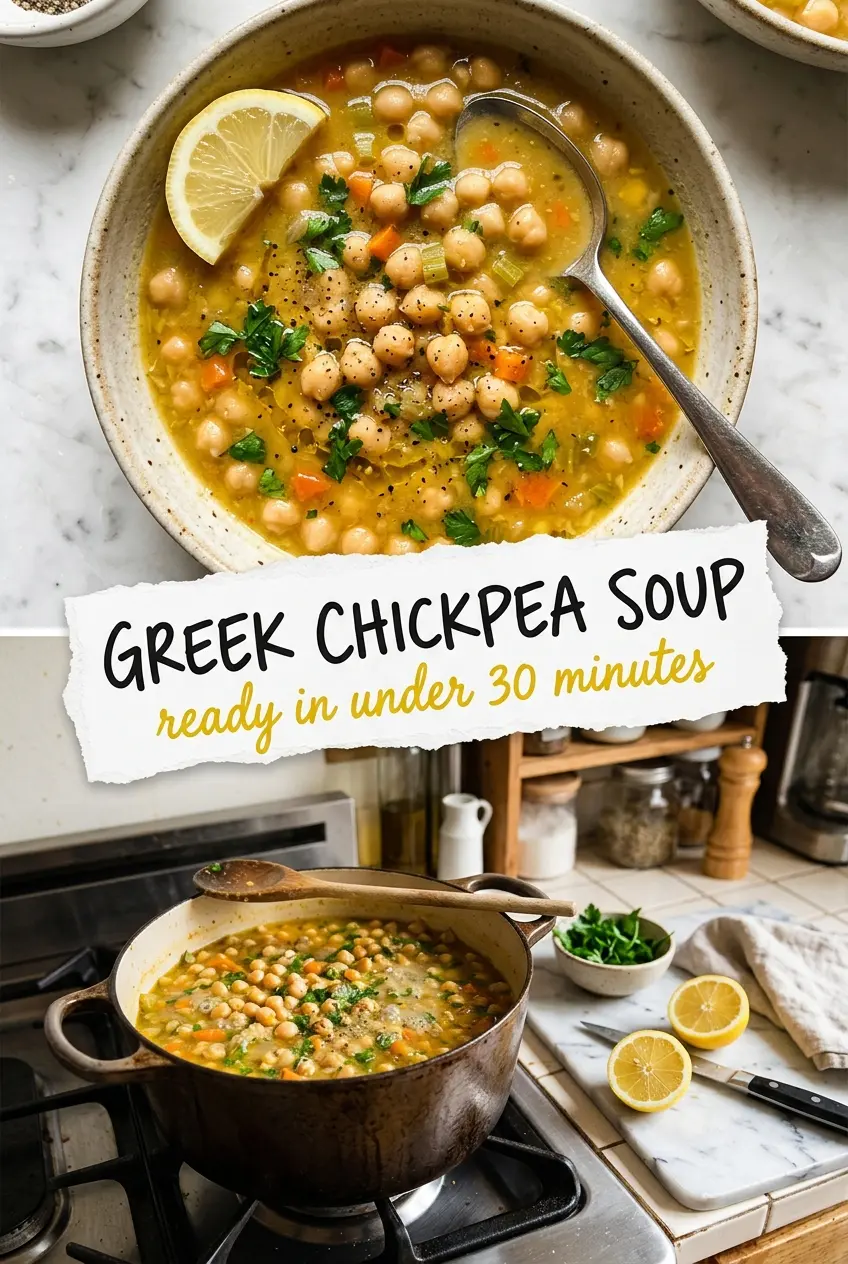
Lemony Greek Chickpea Soup
Ingredients
Equipment
Method
- Heat olive oil in a large pot over medium heat, then sauté onion and garlic until softened, about 5 minutes, stirring occasionally. You should see the onion turn translucent and the garlic become fragrant.
- Add chickpeas, vegetable broth, bay leaf, and dried oregano, then bring to a simmer over medium-high heat. Bubbles should form around the edges of the pot.
- Reduce to a gentle simmer and cook for 20 minutes, until chickpeas are tender and flavors meld. The soup should look cohesive and slightly thickened.
- Remove the bay leaf, then mash some chickpeas against the pot to thicken the broth to your preferred texture. The mixture should look creamier without adding dairy.
- Stir in fresh lemon juice, plus salt and pepper to taste. The soup should taste bright and tangy, and the surface should stay hot but not aggressively boiling.
- Garnish with fresh parsley and add an extra lemon squeeze right before serving. The top should look fresh and speckled with herbs.