
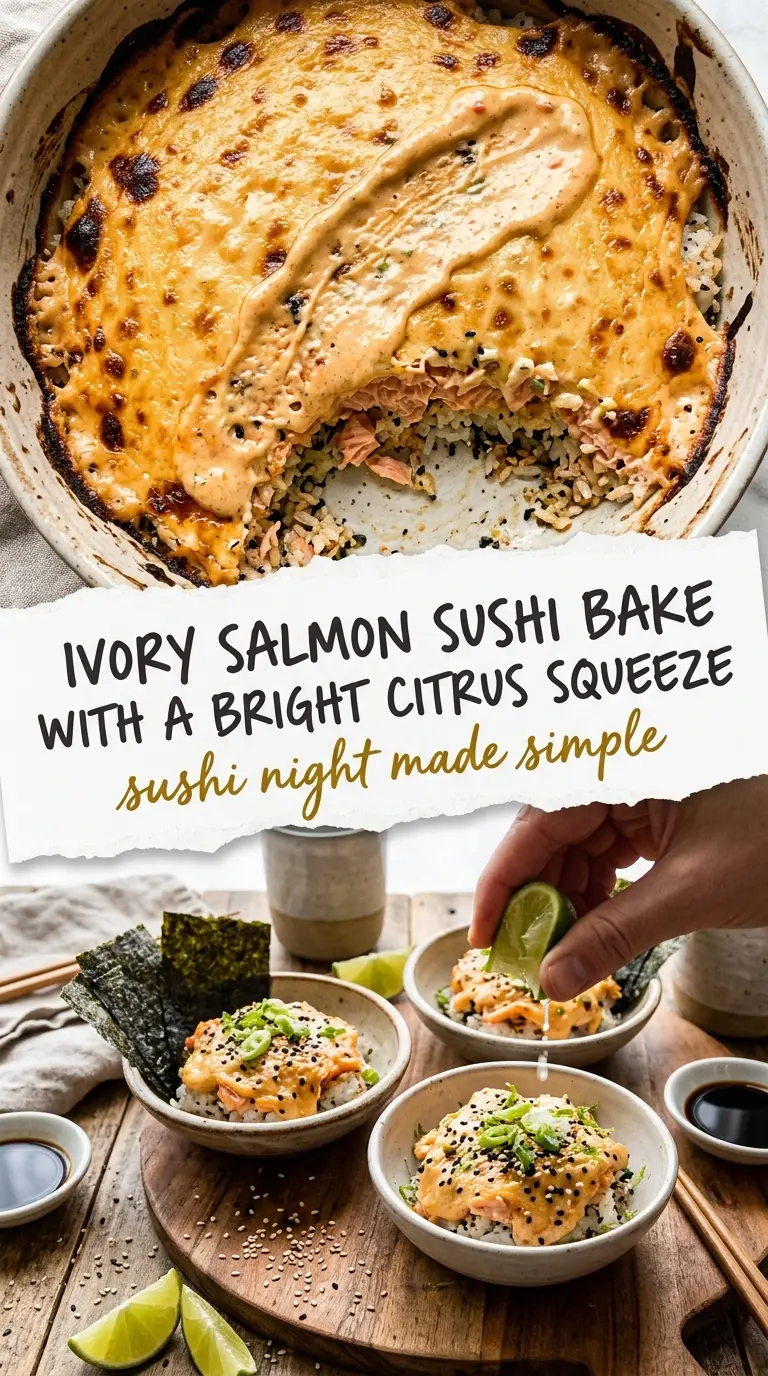
Warm sushi rice, creamy spiced salmon, and a golden baked top come together here in a way that feels a little indulgent and still practical enough for a weeknight. The rice stays soft and seasoned, the salmon mixture turns rich and bubbly in the oven, and every scoop wrapped in nori gives you that sushi-inspired bite without any rolling at all.
The part that makes this version work is balance. The rice gets a quick toss with vinegar and sugar while it’s still warm, so the seasoning sinks in instead of sitting on the surface. The salmon mixture leans on Japanese mayo for body, sriracha for heat, and a small amount of sesame oil for depth. That combination keeps the topping creamy without tasting heavy, and it bakes into a smooth layer instead of drying out.
Below, I’ve included the timing cue that keeps the top from overbaking, plus a few smart swaps if you’re using leftover salmon or want to adjust the heat. The little details matter with a dish this simple, and they’re what keep it tasting intentional instead of just thrown together.
The rice had the perfect tang and the salmon layer stayed creamy instead of drying out. I broiled it for the last minute and got that golden top everyone kept scooping off first.
Love the creamy salmon topping and golden baked rice? Save this Salmon Sushi Bake for an easy sushi-night dinner with no rolling required.
The One Thing That Keeps the Rice From Turning Mushy
The mistake that ruins a sushi bake most often happens before the pan even goes into the oven. If the rice is wet, overcooked, or left in a thick clump, it turns dense and gummy under the topping instead of staying soft and distinct. Warm rice mixed with the vinegar and sugar has enough steam to absorb the seasoning, but it still needs to be spread in an even layer so the bottom can set a little in the oven.
The other place people go wrong is piling the salmon layer too thick in the center. That looks generous, but it slows down the bake and leaves the middle loose while the edges overcook. A level layer gives you the best texture all the way through, and the brief broil at the end is what gives the top that light golden finish without drying out the fish.
What Each Ingredient Is Actually Doing in This Dish
- Sushi rice — Short-grain rice is worth using here because it gets sticky enough to hold together under the creamy topping. If you substitute a long-grain rice, the bake will still taste good, but it won’t scoop up in the same cohesive way.
- Rice vinegar and sugar — These season the rice with the bright, lightly sweet balance that makes the dish taste like sushi instead of plain rice with fish on top. Don’t skip the sugar; it rounds out the vinegar and keeps the rice from tasting sharp.
- Japanese mayo — This is the ingredient that gives the salmon layer its rich, silky texture. Regular mayo works in a pinch, but it tastes flatter and a little less custardy after baking.
- Sriracha — It brings heat and a little tang, and it cuts through the richness of the mayo. Start with the listed amount, then increase it only if you know you want a stronger kick.
- Sesame oil — A teaspoon is enough. It adds depth fast, and too much will take over the whole dish with a heavy, toasted flavor.
- Nori sheets — Serve them at the table rather than baking them. They stay crisp longer that way, and the contrast between the soft rice and the seaweed is part of what makes each bite feel complete.
Building the Layers So the Top Bakes Creamy, Not Greasy
Seasoning the Rice First
Stir the rice vinegar and sugar into warm cooked rice while the grains are still pliable. You want the mixture evenly distributed, not puddled in one spot, so use a gentle folding motion instead of smashing the rice. If the rice has cooled completely, warm it briefly before seasoning or it won’t absorb as well and the bottom layer can taste flat.
Mixing the Salmon Filling
Flake the cooked salmon into bite-size pieces before adding the mayo, sriracha, and sesame oil. Smaller flakes spread more evenly and give you a smoother scoop after baking. If the salmon mixture looks loose, that’s fine; it thickens in the oven as the mayo heats and clings to the fish.
Baking Until the Edges Bubble
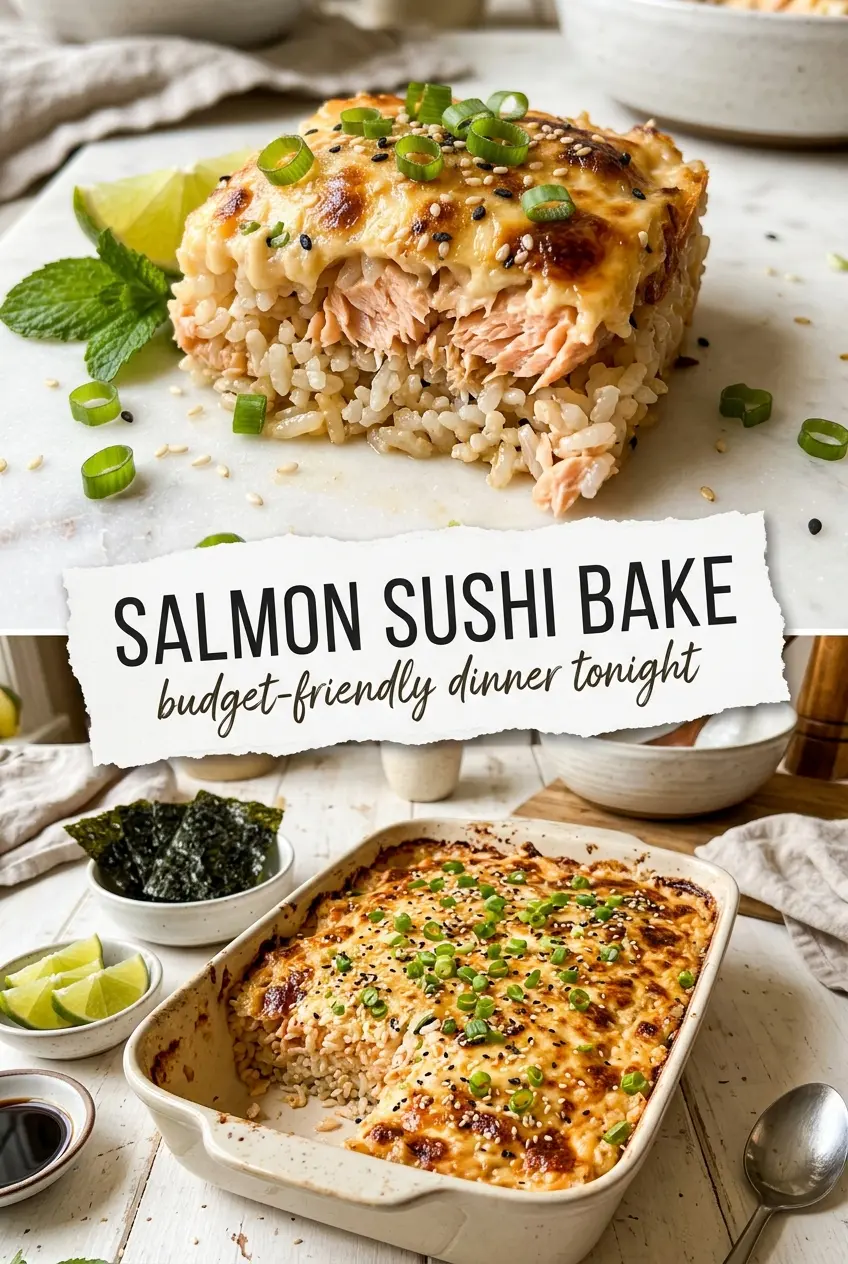
Spread the salmon mixture in a thin, even layer over the rice and bake at 400°F until the top looks hot, glossy, and lightly browned in spots. You’re not waiting for deep color all over; you’re looking for edges that bubble and a center that’s set but still soft. If the top starts to darken too fast, pull the pan early and finish under the broiler for a minute instead of letting it dry out.
Finishing for the Best Bite
Scatter the sesame seeds and green onion over the hot bake right before serving so they keep their brightness. A squeeze of lime wakes everything up and keeps the richness from feeling heavy. Serve immediately with nori sheets so each spoonful can be wrapped while the rice is still warm and the seaweed still snaps.
How to Adapt This for Leftovers, Lower Heat, or a Bigger Table
Use leftover cooked salmon
Leftover salmon works beautifully here, and it saves a full cooking step. Flake it gently and fold it with the mayo mixture just like freshly cooked fish. The texture stays tender in the oven, though the flavor will be a little cleaner and less rich than if you start from a freshly cooked fillet.
Make it milder for kids or heat-sensitive eaters
Cut the sriracha back to a teaspoon or leave it out and add a little extra sesame oil plus a squeeze of lime at the end. You’ll keep the creamy, savory base without the burn. This version tastes a little softer and more like a classic baked salmon rice bowl.
Dairy-free and gluten-free by default
This recipe already fits both styles as written, as long as your mayo and sriracha are brands you trust for gluten-free ingredients. The texture doesn’t suffer at all, which is part of why this dish is such an easy crowd option.
Stretch it for more servings
Add another half batch of rice and salmon and use a larger baking dish so the layers stay thin enough to heat through evenly. A deep pan can trap steam and make the center sluggish, so width matters more than height here. Keep the topping shallow and the bake will still finish with that same bubbly top.
Storage and Reheating
- Refrigerator: Store leftovers in an airtight container for up to 3 days. The rice firms up a bit as it chills, but the flavor holds well.
- Freezer: It freezes, but the texture of the rice and mayo topping softens after thawing. Freeze in portions only if you don’t mind a less polished texture.
- Reheating: Reheat covered in a 325°F oven until hot, or use short bursts in the microwave with a damp paper towel over the top. The biggest mistake is blasting it too long at high heat, which dries the salmon and makes the rice tough.
Answers to the Questions Worth Asking
Salmon Sushi Bake
Ingredients
Equipment
Method
- Toss the warm cooked sushi rice with rice vinegar and sugar, then spread it evenly in a baking dish.
- Press the rice layer into a level surface so the salmon mixture bakes cleanly on top.
- Mix the flaked salmon with Japanese mayo, sriracha, and sesame oil until evenly coated.
- Break up any larger salmon pieces so the bake has a uniform texture.
- Spread the salmon mixture evenly over the rice layer, covering it to the edges.
- Bake at 400°F for 12-15 minutes, until the top turns golden and bubbly.
- If you want extra browning, broil for the last 2 minutes, watching closely so it doesn’t burn.
- Garnish with sesame seeds and sliced green onion.
- Serve with nori sheets and fresh lime wedges for squeezing over each bite.