
Crispy fries under melted cheddar, seasoned beef, and a warm drizzle of queso hit that sweet spot between game-day snack and full-on dinner. The best version has contrast in every bite: shatter-crisp edges, stretchy cheese, savory beef, then cool sour cream and a little heat from jalapeños. When the fries stay firm enough to hold the toppings, the whole plate eats like nachos with better structure and a lot more crunch.
The trick is building the layers in the right order. The fries need to be fully baked before the cheese goes on, and the beef should be just saucy enough to cling without turning the fries soggy. I like cheddar for the main melt because it gives you that familiar sharp bite, then I finish with queso for extra richness instead of trying to use queso as the only cheese.
Below you’ll find the small details that matter most: how to keep the fries crisp under all those toppings, what to swap if you want to change the heat level, and the best way to serve these so they don’t sit around and go soft.
The fries stayed crispy under the cheese, and the beef had just enough seasoning to taste like actual nachos instead of plain taco meat. I served these as dinner and my husband went back for the last handful right off the tray.
Love the crispy fries, melty cheddar, and queso drizzle? Save these loaded nacho cheese fries for your next easy party tray or fast dinner.
The Reason These Fries Stay Crunchy Instead of Turning Soggy
Loaded fries go limp when the toppings are wet, heavy, or piled on before the base is hot enough to handle them. The fries need to come out deep golden and still audible when you tap them with a fork. If they soften in the oven before you even add the cheese, the rest of the toppings will only speed that up.
The other thing that protects the texture is keeping the beef thick, not soupy. A splash of water with the taco seasoning is enough to help the spices cling, but you don’t want liquid pooling at the bottom of the pan. Spoon the beef on after the cheese melts, then finish with cool toppings right before serving so the heat doesn’t steam everything underneath.
What Each Ingredient Is Actually Doing in This Dish
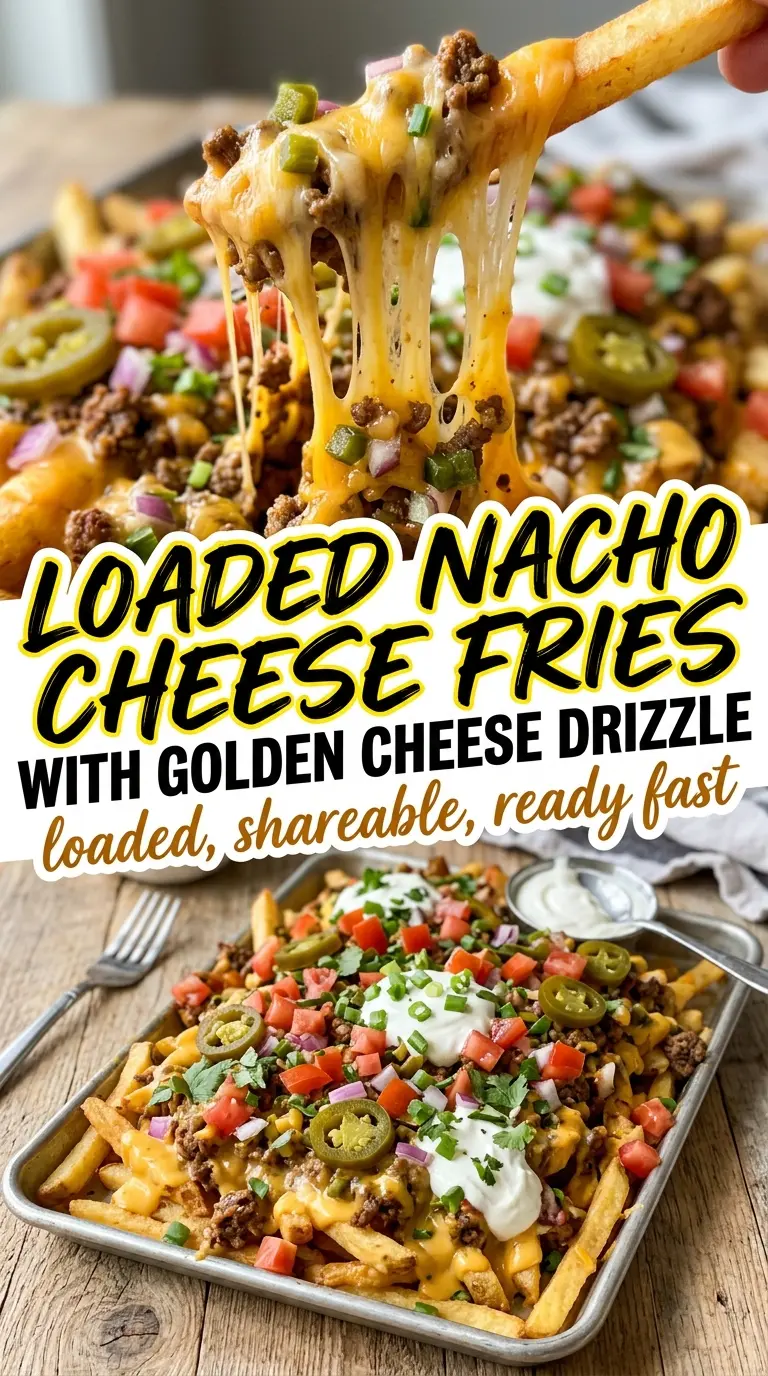
- Frozen crinkle-cut fries — Crinkle-cut fries hold toppings better than thin fries because the ridges catch the cheese and beef. Use a sturdy fry with plenty of surface area; shoestring fries turn soft too fast.
- Shredded cheddar cheese — Cheddar gives you the sharp, familiar melt you want under the queso. Buy a block and shred it yourself if you can; pre-shredded cheese melts fine, but it never gets quite as silky because of the anti-caking coating.
- Cooked ground beef — This brings the savory, taco-style backbone. If you want a lighter version, ground turkey works, but it tastes leaner and benefits from an extra pinch of salt plus a little more seasoning.
- Taco seasoning — This is where the nacho flavor comes from, so don’t under-season it. If your blend is low-salt, add a pinch of salt with the water; if it’s spicy, use less and lean on the queso for richness.
- Sour cream — It cools the heat and gives the plate that creamy contrast. Full-fat sour cream stays thickest on hot fries, while a thinner light version can slide off and disappear into the cheese.
- Jalapeños, tomatoes, and green onions — These are the fresh finish that keeps the dish from tasting heavy. Drain the tomatoes well so they don’t leak juice over the fries, and add the green onions at the very end so they stay bright.
- Golden queso sauce — Queso is the final gloss, not the base layer. Warm it until it pours smoothly, then drizzle it over the finished platter so it lands hot without soaking into the fries.
Building the Layers in the Right Order
Bake the Fries Until They Hold Their Shape
Cook the fries until the outside is deeply golden and the centers are fully hot. If they still look pale, they won’t support the toppings for long. Spread them in a single layer so the edges crisp instead of steaming against each other. The fries should feel firm enough to move around without collapsing.
Season the Beef Until It Clings
Stir the taco seasoning into the cooked beef with just a splash of water, then let it simmer briefly until the mixture turns saucy and thick. If it looks wet, keep cooking; liquid is what turns the bottom layer soggy. You want the meat to coat a spoon, not run off it.
Melt the Cheese Before the Cold Toppings Go On
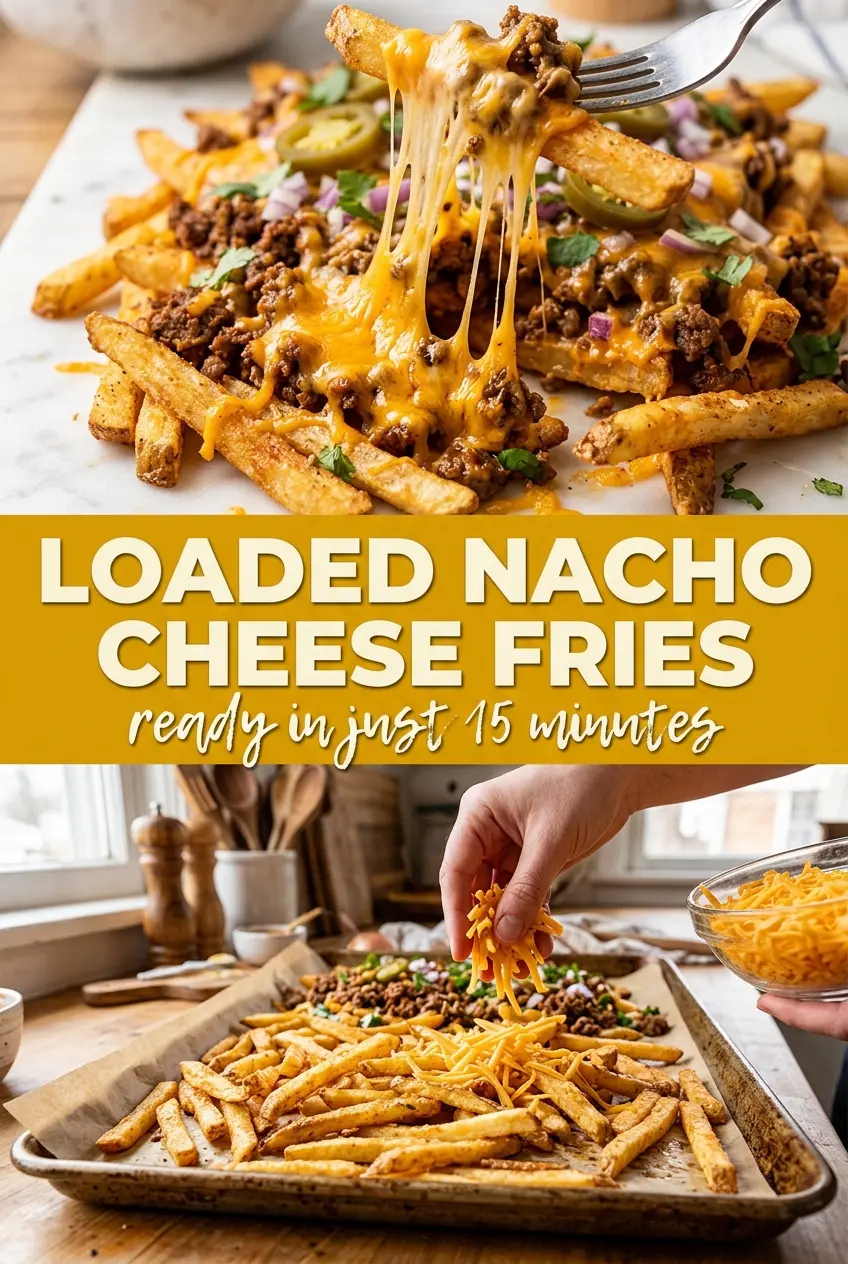
Scatter the cheddar over the hot fries and return the tray to the oven until the cheese is melted and bubbling at the edges. This is the point where the fries and cheese lock together. Pull it out as soon as the cheese is melted, because leaving it in too long dries out the fries before you even add the beef.
Finish Fast and Serve Hot
Spoon the beef over the melted cheese, then add the sour cream, jalapeños, tomatoes, and green onions. Drizzle the warm queso last so it sits on top instead of disappearing into the layers. Once the cold toppings go on, the clock starts ticking, and these are best eaten right away while the fries still crunch.
Three Ways to Make Them Fit What You Have on Hand
Make Them Vegetarian Without Losing the Loaded Feel
Swap the beef for seasoned black beans or a plant-based crumble. Black beans give you a softer, earthier bite, while a meat substitute keeps the texture closer to the original. Either way, warm the filling separately and keep it thick so it doesn’t soak the fries.
Make It Gluten-Free With the Right Seasoning
Use fries and taco seasoning that are certified gluten-free, since both can pick up hidden additives. The dish itself doesn’t need any changes beyond that. The flavor and texture stay the same, which is why this is one of the easiest gluten-free swaps to pull off.
Turn Up or Dial Down the Heat
Use pickled jalapeños and extra taco seasoning for a sharper kick, or leave the peppers off and let the queso do the talking. Fresh jalapeños bring a brighter heat, while pickled slices add tang. The rest of the plate stays the same; only the top layer changes the burn level.
Storage and Reheating
- Refrigerator: Store the toppings separately from the fries for up to 3 days. Once assembled, the fries soften fast.
- Freezer: The assembled dish doesn’t freeze well. Freeze the cooked beef on its own if you want to get ahead, then build fresh fries later.
- Reheating: Re-crisp the fries in a hot oven or air fryer, then add the cheese and toppings after they’re hot. Microwaving turns the fries limp and the cheese greasy.
Answers to the Questions Worth Asking
Loaded Nacho Cheese Fries
Ingredients
Equipment
Method
- Bake the frozen crinkle-cut fries according to package directions until golden and crispy. Spread them in a single layer on a sheet pan so the edges turn crisp (aim for crisp, browned spots).
- Toss the cooked crumbled ground beef with taco seasoning and a splash of water, then simmer until slightly saucy. You should see the beef coating look thicker and glossy, not watery.
- Layer the hot fries on a serving platter and sprinkle with shredded cheddar cheese. Keep the fries hot so the cheese starts to soften immediately.
- Return to the oven for 5 to 7 minutes until the cheese is melted and bubbly. Look for a lightly browned, bubbling top and fully melted shreds.
- Top with the seasoned beef, sour cream, jalapeños, diced tomatoes, and green onions. Distribute toppings evenly so every forkful has cheese, meat, and crunch.
- Drizzle with warm golden queso sauce and serve immediately. Add the drizzle last so it stays glossy and doesn’t soak in.